
If you’re searching for the perfect small pet snake, you’ve almost certainly narrowed your list down to two contenders: the Kenyan Sand Boa (Gongylophis colubrinus, formerly Eryx colubrinus) and the Western Hognose (Heterodon nasicus). Both are compact, charismatic, beginner-friendly snakes that won’t outgrow your apartment, and both are widely available from US breeders in a stunning array of morphs.
But they’re very different animals in temperament, behavior, and day-to-day care. One is a burrowing ambush predator that spends most of its life underground; the other is a theatrical, mildly venomous drama queen that flattens into a hood and plays dead. Choosing the wrong one for your lifestyle is one of the most common beginner mistakes in the reptile hobby.
This guide breaks down everything you need to know in a side-by-side Kenyan Sand Boa vs Western Hognose comparison — size, temperament, enclosure setup, feeding, handling, cost, and legal considerations — so you can make the right decision for your home. If you’re still weighing other options, see our best pet snakes for beginners guide for a wider comparison.
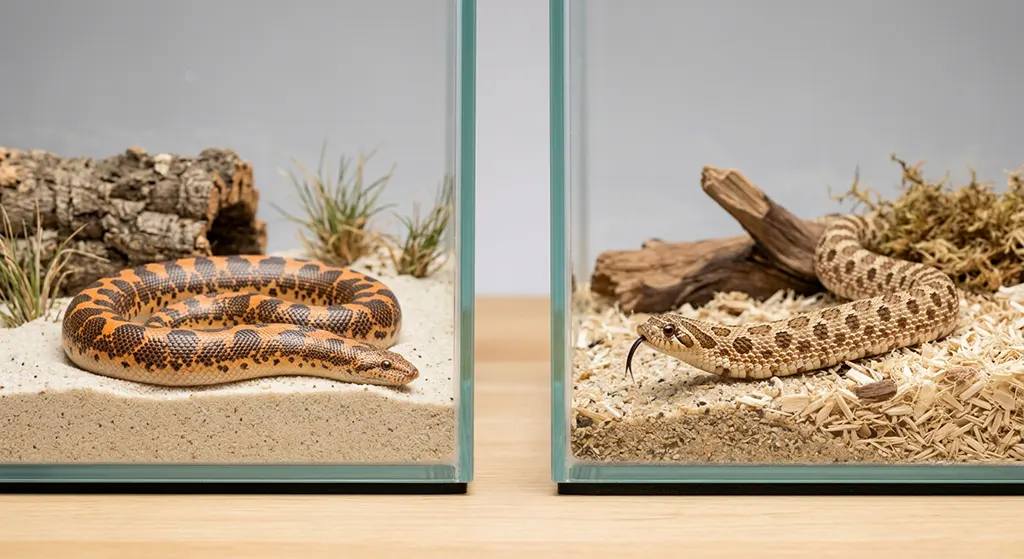
Quick Comparison Chart
Here’s the at-a-glance breakdown for both species:
| Category | Kenyan Sand Boa | Western Hognose |
|---|---|---|
| Scientific name | Gongylophis colubrinus | Heterodon nasicus |
| Adult male size | 15–20 inches | 14–24 inches |
| Adult female size | 24–36 inches | 28–36 inches |
| Body type | Thick, cylindrical, “sausage with a head” | Slender to moderately stout, upturned snout |
| Lifespan | 15–20+ years | 15–20 years |
| Temperament | Docile, shy, reclusive | Outgoing, dramatic, defensive display-prone |
| Venom | None | Rear-fanged, mild (rarely problematic) |
| Warm spot | 90–95°F | 90–95°F |
| Cool end | 75–82°F | 70–75°F |
| Humidity | 30–50% (low) | 30–50% (low–moderate) |
| Substrate | Deep sand or sand/soil mix | Shredded aspen or loose dry substrate |
| Typical price (normal morph) | $60–$150 | $100–$300 |
| High-end morphs | $300–$800+ | $500–$4,500+ |
| Feeding quirks | Strong feeding response; winter fasts (especially males) | Picky eaters; may need scenting in captivity |
| Legal notes | Generally unrestricted | Permit or restriction in some US states |
Size ranges align with herpetological collection data from university herpetarium records for both species — see the BGSU herpetarium Kenyan sand boa profile for additional husbandry references.
Meet the Species: A Quick Natural History
Before comparing care sheets, it helps to understand where each snake comes from — because their wild origins explain nearly everything about their behavior in captivity.
Kenyan Sand Boa: An East African Ambush Specialist
Kenyan Sand Boas are native to the arid scrublands, savannas, and semi-deserts of East Africa — Kenya, Tanzania, Somalia, Ethiopia, and surrounding regions. They belong to the boa family (Boidae) and are among the smallest members of it.
Their entire body plan is built around one hunting strategy: bury themselves in loose sand or soil with only their eyes and nostrils exposed, wait motionless for hours or days, and explode upward when a small rodent, lizard, or bird passes overhead. Their blunt snout shovels through substrate, their cylindrical body moves through loose soil with almost no friction, and their eyes sit high on the skull so they can watch the surface world while staying hidden.
In captivity, this means your sand boa isn’t lazy or sick when it burrows for days at a time — it’s doing exactly what two million years of evolution designed it to do.
Western Hognose: A Great Plains Toad Hunter
Western Hognoses are native to the Great Plains and prairie regions of North America, ranging from southern Canada down through Texas and New Mexico. They’re members of the colubrid family and are instantly recognizable by the sharply upturned snout they use to unearth toads — their favorite wild prey.
Unlike ambush predators, hognoses are active foragers that spend their days cruising through grassland in search of food. When threatened, they can’t burrow away fast enough, so they’ve evolved an entire theatrical repertoire instead: hooding like a cobra, hissing, vibrating the tail, bluff-striking with a closed mouth, and — as a last resort — rolling onto their back with tongue lolling out, playing dead (thanatosis) in one of the most convincing performances in the animal kingdom.
This combination of diurnal activity, boldness, and drama is exactly why hognoses have become social media stars — and why so many keepers fall in love with them.
Size & Lifespan: Western Hognose vs Sand Boa Size Breakdown
Kenyan Sand Boa Size
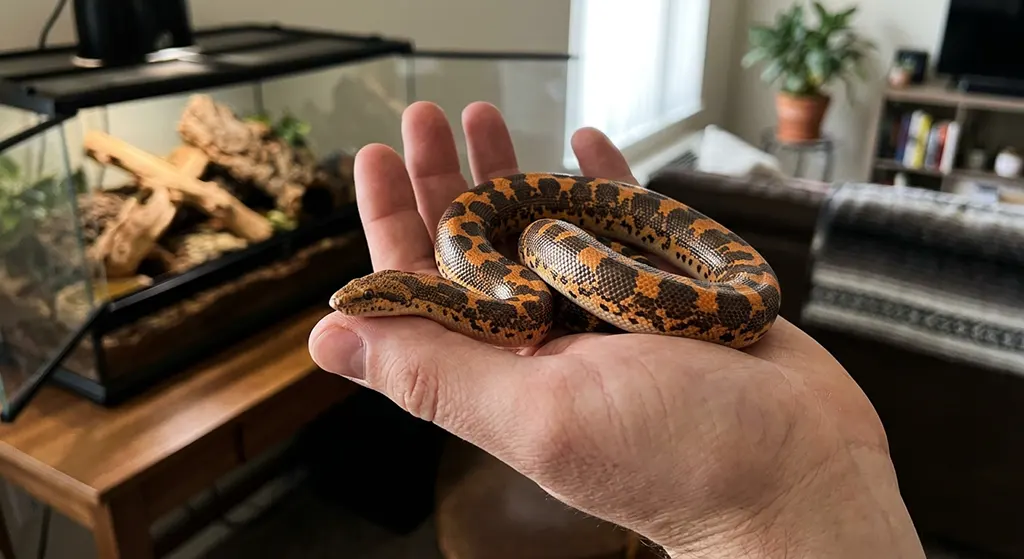
Kenyan Sand Boas are one of the most sexually dimorphic snakes in the pet trade. Adult males typically reach just 15 to 20 inches and 80–150 grams — genuinely palm-sized. Females are a different story entirely: they commonly reach 24 to 36 inches and can weigh 400–800+ grams, roughly five times the weight of a male.
Both sexes are stout and cylindrical, built like a burrowing machine, with a blunt head and tiny eyes set high on the skull so they can see above the sandline while the rest of their body stays buried.
One practical note for beginners: don’t buy a sand boa expecting it to stay “micro.” A female will end up roughly the length and girth of a large burrito — still very manageable, but noticeably bigger than the males you see in many breeder photos.
Western Hognose Size
Western Hognoses follow a similar male/female split but tend to be slightly more slender overall. Males usually stay between 14 and 24 inches, while females can reach 28 to 36 inches. Even the largest female hognose is manageable for most keepers, and males are among the smallest readily available pet snakes in the US market.
In terms of sheer mass, a female hognose and a female sand boa of the same length are quite different animals — the sand boa is dramatically thicker and heavier per inch. If you have limited grip strength, very young children, or simply prefer a lighter snake, the hognose has a slight edge.
Lifespan: A 20-Year Commitment
Few numbers surprise first-time owners more than this one: both species routinely live 15 to 20 years in captivity, and there are well-documented reports of Kenyan Sand Boas exceeding 25–30 years with excellent care. Western hognoses regularly surpass 20 years as well.
Whichever snake you choose, you’re signing up for a two-decade commitment — roughly the lifespan of a large dog. This isn’t an impulse purchase; plan accordingly. Consider where you’ll be living in ten years, whether your housing allows reptiles, and who would care for the snake if you travel or move.
Temperament & Defense Mechanisms
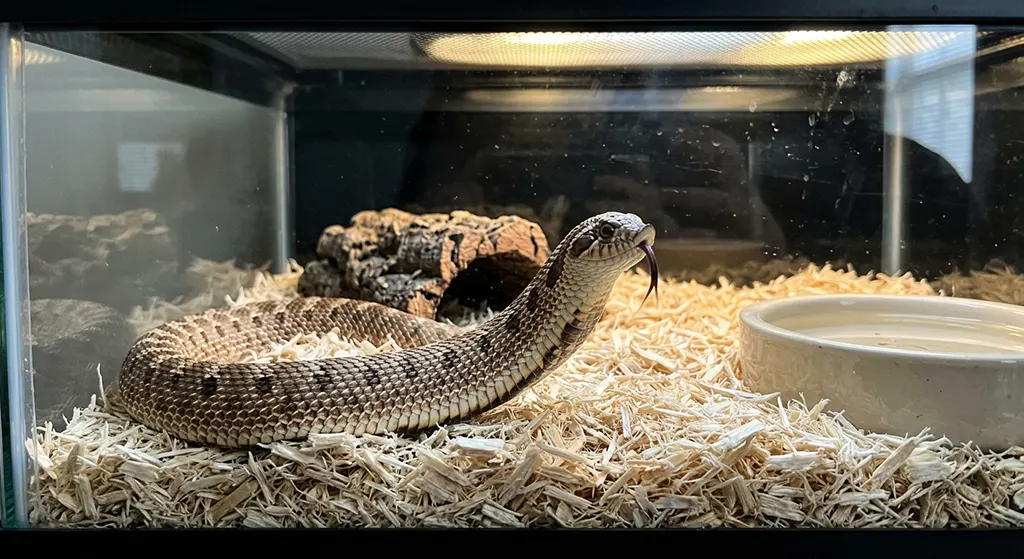
Few traits separate these two species as sharply as temperament.
Western Hognose: The Drama Queen
If you’ve spent any time on reptile social media, you’ve seen the hognose’s famous defensive display: they flatten their necks into a cobra-like hood, hiss loudly, bluff-strike with their mouth closed, and if all else fails, dramatically roll onto their back and play dead (a behavior called thanatosis).
And yet the venom angle is almost entirely overblown. Western hognoses are rear-fanged snakes with mild venom. The venom is delivered through grooved teeth at the back of the mouth, not fangs, and is generally harmless to humans. Bites in humans typically result in nothing more than localized swelling, itchiness, or mild irritation, mainly in sensitive individuals — and genuine bites are rare, since hognoses would much rather bluff. They almost never bite in defense, and most captive-bred animals calm down significantly with regular, gentle handling. Documented bite reactions in humans are typically limited to localized swelling and itching, as reported in published case reviews of western hognose envenomation.
The upturned snout that gives the species its name isn’t for digging alone — it’s part of an evolutionary toolkit built around intimidating predators into leaving them alone. In a household setting, this translates to an entertaining, expressive snake that gives you plenty of “personality” for your money.
One caveat: individual hognoses vary. Some are puppy-dog tame from day one; others put on their cobra impression every time you open the enclosure for the first year. Consistent, short, calm handling sessions (10–15 minutes, a few times per week) resolve most cases.
Kenyan Sand Boa: The Quiet Burrower
Kenyan Sand Boas don’t do drama. Their defense strategy is simple: disappear. They spend the vast majority of their time buried in substrate, emerging mainly at dawn and dusk to hunt or bask. When handled, most are calm and slow-moving, though individual temperaments vary — some are perfectly content to sit in your hands, while others make it clear they’d rather be underground.
Do Kenyan Sand Boas like to be held? The honest answer is: they tolerate it well, but they don’t seek it out the way some species do. They’re an observational pet more than an interactive one. If your dream is a snake you can watch burrow, tunnel, and ambush from just below the surface of its substrate, the sand boa delivers. If you want a snake that’s out and about during the day, you’ll be disappointed.
One behavioral quirk worth noting: Kenyan Sand Boas have a comically enthusiastic feeding response. Because they hunt by lunging from ambush at anything that moves overhead, they occasionally mistake fingers for food — a harmless but startling “tag” that fades with careful hook training. Always use a feeding tong or tap-train your sand boa with a hook before reaching in.
Husbandry & Enclosure Requirements
Kenyan Sand Boa Setup
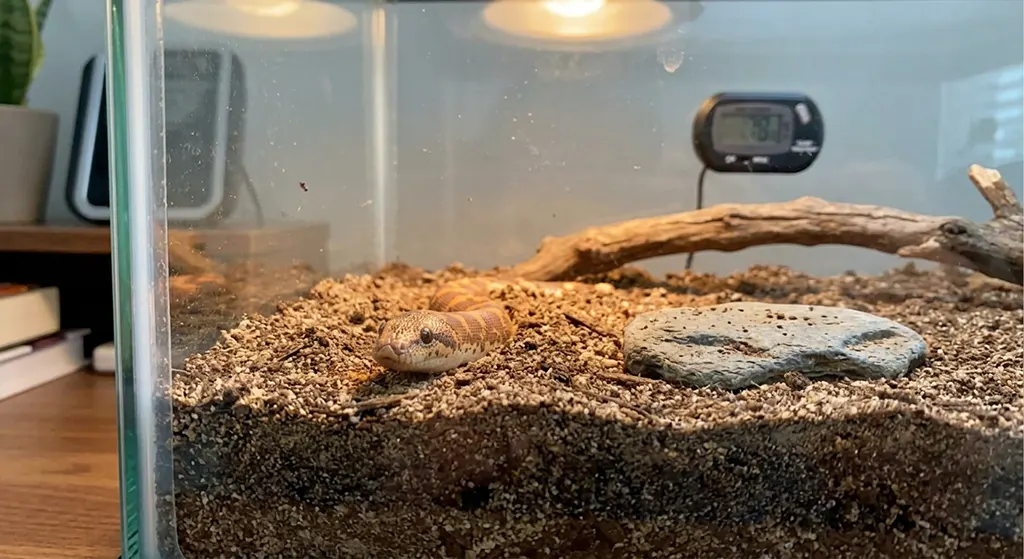
Kenyan Sand Boas come from the arid deserts and dry savannas of East Africa. Their enclosure needs reflect that — for a deep dive into the full setup, see our complete Kenyan sand boa care guide:
- Enclosure size: A male can live comfortably in a 24″ x 12″ footprint; plan on a 36″ x 18″ enclosure for a female. Front-opening enclosures are strongly recommended — reaching down from above triggers their ambush response and stresses them out.
- Substrate: This is the big one. Sand boas need 3–6+ inches of diggable substrate — a sand and topsoil mix, or play sand alone (opinions vary, but avoid calci-sand, which can cause impaction and eye irritation). They will spend nearly all their time in it.
- Temperature: Warm spot of 90–95°F, cool end of 75–82°F. Heat mats work well given their burrowing habits, but overhead heat is increasingly recommended for a proper gradient. Always use a thermostat — unregulated heat mats are one of the leading causes of burns and deaths in pet snakes.
- Humidity: Low — 30–50%. A water dish is still essential; low humidity doesn’t mean no water.
- Hides: Two minimum (warm and cool), though a deep substrate layer does much of the hiding work naturally.
Western Hognose Setup
Hognoses come from the arid prairies, grasslands, and sandy scrub of the North American Great Plains. Their setup is similar but with a few differences:
- Enclosure size: A 20-gallon long works for most males; a 40-gallon breeder or equivalent is better for adult females. As with sand boas, front-opening access makes handling far less stressful.
- Substrate: Shredded aspen is the classic choice — it’s dry, holds burrows well, and is easy to spot-clean. Paper towel works for quarantine setups, but hognoses love to dig, so give them something loose.
- Temperature: Basking surface of 90–95°F, cool zone of 70–75°F.
- Humidity: 30–50%. They’re adapted to dry conditions but appreciate a humid hide during shed cycles, consistent with professional herpetological care guidelines for the species.
Which Setup Is Easier?
Honestly, they’re nearly tied. Both are desert/semi-arid species that tolerate the temperature and humidity of a typical US household better than almost any other popular pet snake. Neither requires UVB (though low-level UVB is beneficial for both), neither needs daily misting, and neither will destroy your electric bill. The sand boa’s deeper substrate layer is slightly more expensive and labor-intensive to maintain, but it’s a minor difference.
Budget roughly $150–$400 for a complete setup for either species, including the enclosure, heating, thermostat, substrate, hides, and water dish.
Feeding & Handling Experience
Diet: Similar Food, Different Personalities
Both species eat frozen-thawed rodents in captivity, and both should be fed pre-killed prey exclusively (live feeding risks injury to your snake and is unnecessary).
- Kenyan Sand Boas are typically reliable eaters with a powerful ambush response. Juveniles take pinky or fuzzy mice; adults move up to adult mice. Feed juveniles weekly and adults every 10–14 days. Watch out for winter fasting — males especially may refuse food for weeks or months during the cooler season, which is normal as long as they maintain weight. Don’t panic and don’t force-feed; a healthy adult male sand boa can fast for months without harm.
- Western Hognoses are famous for being picky. In the wild, they eat primarily toads, so some individuals need their mice scented (with toad or frog scent products available from reptile suppliers) before they’ll accept them. Most captive-bred hognoses switch to unscented rodents without issue, but expect at least the possibility of a finicky eater. Feed juveniles every 5–7 days and adults every 7–10 days.
Handling Experience
When it comes to hands-on interaction, most keepers find Western Hognoses slightly more rewarding. They’re more active when handled, more visually engaging, and their “defensive” bluster usually fades into curious tongue-flicking within a few weeks of consistent, calm handling.
Kenyan Sand Boas are calm but passive. Many will simply sit still in your hands — which some owners find soothing and others find boring. They’re also masters of escape-by-burrowing-into-your-sleeve, so handle them seated, away from furniture crevices.
For both species: always support the body, avoid handling for 48 hours after feeding, and wash your hands before and after. This is especially relevant for hognoses given their mild venom — you don’t want your snake associating the scent of rodents (or your lunch) with your fingers.
Shedding
Both species shed every 4–8 weeks as juveniles and less frequently as adults. Signs of an incoming shed include dull coloration, cloudy blue eyes, and reclusiveness. Provide a humid hide or lightly mist one side of the enclosure during the shed cycle to help the old skin come off in one piece. Retained shed on the tail tip or eyecaps warrants a vet visit or a careful soak — never peel dry shed off by force.
Health, Vet Care & Common Problems
Both species are hardy, but beginners should know the warning signs:
- Respiratory infections: Wheezing, open-mouth breathing, or bubbling mucus — almost always caused by humidity that’s too high or temperatures that are too low.
- Stuck shed / retained eyecaps: Usually a humidity issue; addressed with humid hides and soaks.
- Regurgitation: Often caused by handling too soon after feeding, prey that’s too large, or temperatures that are too low. One regurgitation is a warning; repeated regurgitation needs a vet.
- Sand boa specific: Impaction is a debated risk with pure sand substrates; many keepers prefer a sand/soil mix to be safe.
- Hognose specific: Starving/picky eating is the number one hognose health concern in captivity, especially in juveniles. A hognose that refuses food for more than a few weeks as a baby needs intervention — scenting, smaller prey, or a vet check.
Find a reptile-experienced veterinarian before you need one. The Association of Reptilian and Amphibian Veterinarians (ARAV) find-a-vet directory is the best place to start. An annual wellness exam with fecal screening runs roughly $80–$150 and catches most problems early.
Price & Availability: Beginner Pet Snake Cost
Both species are captive-bred in large numbers in the US, so availability is excellent — you’ll find them at virtually every reptile expo and through dozens of reputable online breeders.
Kenyan Sand Boa Prices
- Normal/wild-type: $60–$150
- Common morphs (albino, anery, snow): $150–$400
- High-end/rare morphs: $400–$800+
Western Hognose Prices
- Normal/wild-type: $100–$300
- Common morphs (anery, albino, conda): $250–$600
- High-end morphs (super arctic, lavender, coral): $1,000–$4,500+
The hognose morph market is deeper and more expensive overall — with roughly 60 morphs in circulation and premium genetics commanding collector prices. If budget matters, normal-morph sand boas are usually the cheaper entry point.
Total Cost of Ownership
Don’t forget the setup. A complete enclosure (tank, heat source, thermostat, substrate, hides, water dish) runs roughly $150–$400 for either species. Ongoing costs — frozen rodents, substrate, electricity — are modest, typically $100–$300 per year. Over a 20-year lifespan, plan for a lifetime investment of roughly $2,000–$5,000 per snake, depending on your setup choices.
Where to Buy
Your best options, in order of preference:
- Reptile expos: You can inspect the animal in person, talk directly with the breeder, and often save on shipping. For hognose-specific breeder recommendations by state, see our guide to captive-bred western hognose in the US.
- Reputable online breeders: Look for established operations with reviews, health guarantees, and live-arrival policies.
- Local reptile shops: Quality varies widely — inspect the animal’s body condition, breathing, and enclosure cleanliness before buying.
Red flags that should stop a purchase: a seller who can’t tell you the snake’s feeding history, animals housed together (cohabitation signals poor husbandry), visible spine or hip bones, wheezing or open-mouth breathing, or prices that seem too good to be true.
Legal Considerations in the US
This is the one area where the two species differ meaningfully, and it’s essential to check your local laws before purchasing.
Kenyan Sand Boas are non-native to North America and face essentially no ownership restrictions in the US.
Western Hognoses, being native to North America, are regulated in several states — though the landscape shifted significantly in 2026. Rules vary widely and change over time, but here are the key situations to know:
- Colorado — newly legalized (2026): Colorado previously prohibited keeping captive-bred native colubrids, including Western hognoses. Under new Colorado Parks & Wildlife regulations (Chapter W-7) approved in March 2026 and effective May 1, 2026, residents may now legally keep, breed, and sell captive-bred Western hognoses — provided you retain documented proof of purchase showing the animal is captive-bred. Colorado keepers should keep their receipts.
- Illinois — permit required due to conservation status: Western hognoses are listed as state-threatened in Illinois, not because of their rear-fanged venom. Possession requires a free permit from the Illinois Department of Natural Resources, renewed annually, and private keepers are not permitted to breed them — only approved institutions may.
- Other states: Some states regulate hognoses as natives (Texas, Missouri, New Jersey, and others have permit, bag-limit, or documentation requirements), while a few jurisdictions restrict them under venomous-reptile catch-alls.
- Always verify current regulations with your state fish and wildlife agency before buying. Laws that applied last year may have changed — Colorado’s 2026 liberalization is proof of how quickly the landscape can shift.
If you live in a state with restrictions or simply want zero legal ambiguity, the Kenyan Sand Boa is the safe, hassle-free choice — no permits, no paperwork, no risk of confiscation.
Which Snake Fits Your Lifestyle?
Choose a Kenyan Sand Boa if you:
- Want the absolute easiest, lowest-maintenance pet snake available
- Find burrowing behavior fascinating and are happy observing rather than handling daily
- Have limited space (a male KSB needs a remarkably small enclosure)
- Prefer a snake with zero venom considerations and no legal gray areas
- Don’t mind a pet you might see only at feeding time some weeks
Choose a Western Hognose if you:
- Want a snake with big personality, drama, and daytime activity
- Enjoy handling and want a snake that’s engaging rather than passive
- Love the morph hobby and don’t mind paying more for striking color combinations
- Can handle occasional picky eating and scenting challenges
- Have confirmed hognoses are legal in your state — with any required permits in hand
Either way, avoid these mistakes: buying a wild-caught animal (always choose captive-bred), skipping the thermostat on your heat source, and underestimating the 20-year commitment.
FAQ
Which is better, Kenyan Sand Boa or Western Hognose?
Neither is objectively “better” — it depends on what you want from a pet. Sand boas are lower-maintenance and calmer but more reclusive; hognoses are more interactive and entertaining but can be pickier eaters and come with legal considerations in some states.
Are Western Hognoses good for beginners?
Yes, with caveats. Their care requirements are simple, they’re small, and captive-bred individuals tame down well. The main beginner challenges are picky eating (occasionally requiring scenting) and checking your state’s legal status before purchase.
Are Western Hognoses venomous?
They’re rear-fanged with mild venom, sometimes described as venomous and sometimes as non-venomous depending on the source. Practically speaking, bites are rare and typically cause only mild localized swelling or itching in humans. They’re not considered dangerous, but you should still wash your hands after handling and avoid handling after touching food.
Do Kenyan Sand Boas like to be held?
They tolerate handling well but don’t actively seek it. Most sand boas are content to sit still during short handling sessions. They should always be handled over a surface where they can’t burrow out of reach.
Can Kenyan Sand Boas and Western Hognoses live together?
No — and neither species should be housed with another snake of its own kind either, except during supervised breeding. Snakes are solitary animals, and cohabitation causes chronic stress and risks cannibalism, particularly with sand boas.
How big of a tank does each snake need?
A male Kenyan Sand Boa needs roughly a 24″ x 12″ footprint; females need 36″ x 18″. A male hognose does well in a 20-gallon long; adult females are better in a 40-gallon breeder. Bigger is always better if you can provide a proper temperature gradient.
What do they eat, and how often?
Both eat frozen-thawed mice sized appropriately to the snake’s girth. Juveniles of both species eat weekly (hognoses) or every 5–7 days; adults eat every 10–14 days (sand boas) or every 7–10 days (hognoses). Never feed live prey unless medically necessary and under a veterinarian’s direction.
How much does it cost to keep one of these snakes?
Expect $60–$300 for the snake itself (normal morph), $150–$400 for the initial enclosure setup, and $100–$300 per year in food, substrate, and vet care. Over the snake’s 15–20+ year lifespan, the total typically lands between $2,000 and $5,000.
The Bottom Line
In the Kenyan Sand Boa vs Western Hognose debate, there’s no wrong answer — only a wrong fit. Both are among the best beginner snakes in the US hobby: small, long-lived, manageable, and endlessly interesting.
If you want a set-it-and-forget-it snake whose natural history you can watch unfold under the surface, the Kenyan Sand Boa is nearly unbeatable. If you want a snake with charisma, daytime visibility, and one of the most exciting morph markets in the reptile world — and you’ve confirmed your state allows them — the Western Hognose is a fantastic choice.
Whichever you pick, buy captive-bred from a reputable breeder, set up the enclosure before the snake arrives, and schedule a wellness exam with a reptile veterinarian in your first year. Do that, and you’ve got a fascinating companion for the next two decades.
This content is for educational purposes only and does not substitute professional veterinary diagnosis or treatment. If you observe any symptoms of illness, injury, or abnormal behavior, please consult a qualified exotic animal veterinarian immediately.
For more details, please review our full Medical Disclaimer.