

If you have ever stared at your round-bellied dog or fluffy chubby cat and thought, “They are just adorably plump,” you are far from alone. The truth is pet obesity is far more dangerous than most owners realize. Most pet owners normalize extra weight on their companions, dismissing fat rolls and sagging bellies as harmless cuteness. As a dedicated pet wellness researcher and animal health data blogger, I’ve spent months analyzing weight loss failures, clinical studies, and feline/canine metabolic data to uncover one critical truth: pet obesity is not an adorable quirk—it is a chronic, progressive disease that shortens your pet’s lifespan.
The global pet health statistics are alarming. Roughly 56% of dogs and 60% of cats across the globe are classified as overweight or obese. The biggest hidden danger? Most owners suffer from “pet weight blindness.” They cannot recognize when their beloved companion crosses the line from fluffy to unhealthy.
A brand-new veterinary study released in May 2026 in the Animals journal confirms a frustrating trend I witness in clinics every single day. Over 50% of traditional pet weight loss plans fail. Simply cutting food portions does not deliver long-term results because pet obesity is never just about overeating. It is a combination of poor daily habits, inactive behavior, and broken metabolic health.
Obesity acts as a silent slow poison for cats and dogs. Excess body fat drastically raises the risk of diabetes, chronic arthritis, heart disease, and even malignant cancer. Data shows obese dogs lose up to 2.5 years of their average lifespan, while overweight cats face higher risks of fatal hepatic lipidosis and kidney failure. The good news is pet obesity is reversible. Below is my vet-approved 4-step science-backed weight loss method, designed to help your pet shed fat safely without constant hunger or stressful dieting cycles.
Step 1: Precise Assessment to Identify Early Pet Obesity
The most common mistake pet owners make is relying on visual judgment to track weight changes. Successful weight loss begins with accurate data, not guesswork. Before adjusting any meal plan, complete these three simple home assessments.
1.1 Master the Body Condition Score (BCS)
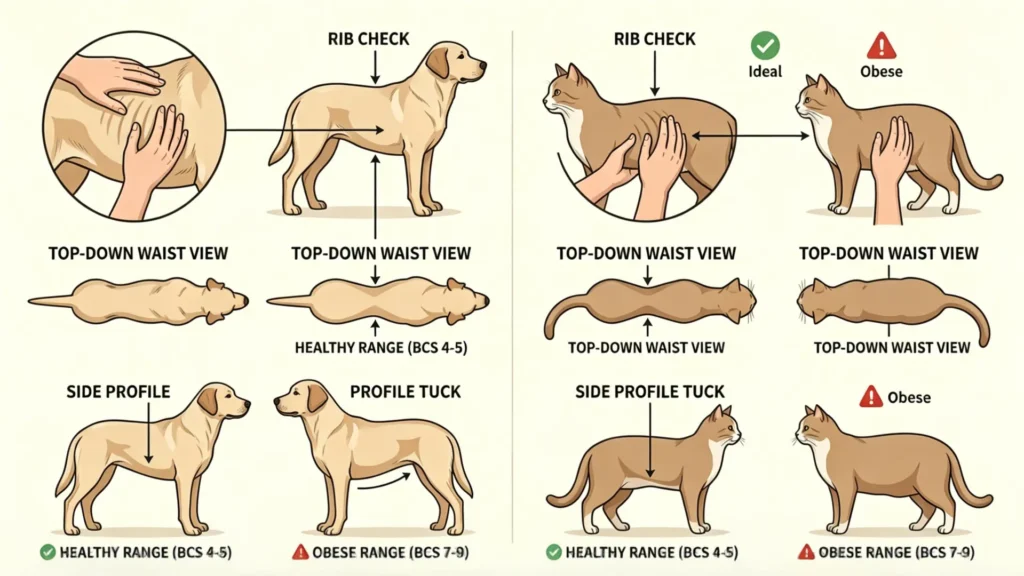
Veterinarians use the 9-point BCS system as the golden standard for evaluating pet body fat. A score between 3 and 5 represents a healthy weight, while 7 to 9 confirms obesity. You can complete this one-minute physical check at home:
- Rib Check: You should easily feel your pet’s ribs under a thin layer of skin and fat. If you cannot feel ribs with gentle pressure, your pet carries excessive fat.
- Top-Down Waist View: A healthy pet has a visible hourglass waist behind the ribcage. Straight, blocky body lines mean your pet is overweight.
- Side Abdominal Tuck: The abdomen should curve gently upward toward the hind legs. A sagging, droopy belly is a clear obesity warning sign.
1.2 Track Weight With a Digital Pet Scale
Human bathroom scales are inaccurate for small and medium-sized pets. Invest in a dedicated digital pet weight scale to record daily weight data. Weigh your pet every morning before meals for seven consecutive days to calculate a stable baseline weight. Consistent tracking prevents invisible weight gain and helps you adjust diet plans timely.
1.3 Rule Out Underlying Medical Conditions
Sudden unexplained weight gain does not always come from overfeeding. Hormonal disorders including canine hypothyroidism and Cushing’s disease frequently cause abnormal fat accumulation. Schedule a full blood test with your vet before starting any weight loss journey to exclude medical interference.
Step 2: Low-Calorie Diet to Manage Pet Obesity Safely
Cutting food portions blindly is the main reason most pet diets fail. Hungry pets become anxious, beg constantly, and even steal food around the house. The core of a sustainable diet is simple: reduce calorie intake while expanding food volume to maintain satiety.
2.1 Choose Vet-Approved Weight Management Kibble
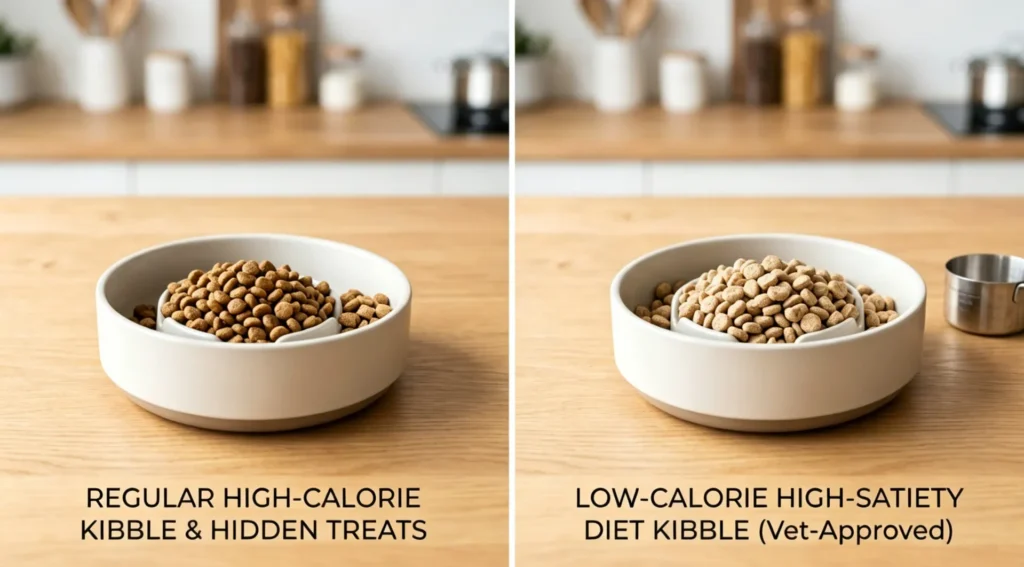
Generic “light formula” pet food from grocery stores lacks sufficient fiber and protein for healthy fat loss. Premium therapeutic weight-loss kibble such as Royal Canin Satiety and Hill’s Metabolic contains 30% to 50% fewer calories, doubled dietary fiber, and high lean protein. These formulas protect muscle mass, stabilize blood sugar, and keep your pet full for 6 to 8 hours.
2.2 Measure Every Single Meal Precisely
Never eyeball meal portions. Use measuring cups and a slow feeder bowl to control daily food intake. Always calculate calories based on your pet’s target healthy weight instead of their current overweight weight to avoid slow metabolic decline.
2.3 Eliminate Hidden Empty Calories
Hidden treats account for 20% to 30% of most pets’ daily calorie intake. Abandon high-calorie biscuits and greasy table scraps entirely. Replace snacks with low-calorie pet treats or fresh safe vegetables like green beans and carrots. Strictly limit treat calories to less than 10% of daily total intake.
Step 3: Foraging Games & Puzzle Feeders — Turn Meals Into Exercise
Mental and physical enrichment is one of the most underrated ways to control pet obesity. The 2026 Animals study proved a game-changing conclusion: adding food enrichment activities doubles pet weight loss success rates. Dogs and cats are natural hunters. Eating plain kibble from an open bowl triggers boredom and leaves their predatory instincts unfulfilled, which leads to persistent food cravings.
3.1 Replace Basic Bowls With Interactive Puzzle Feeders
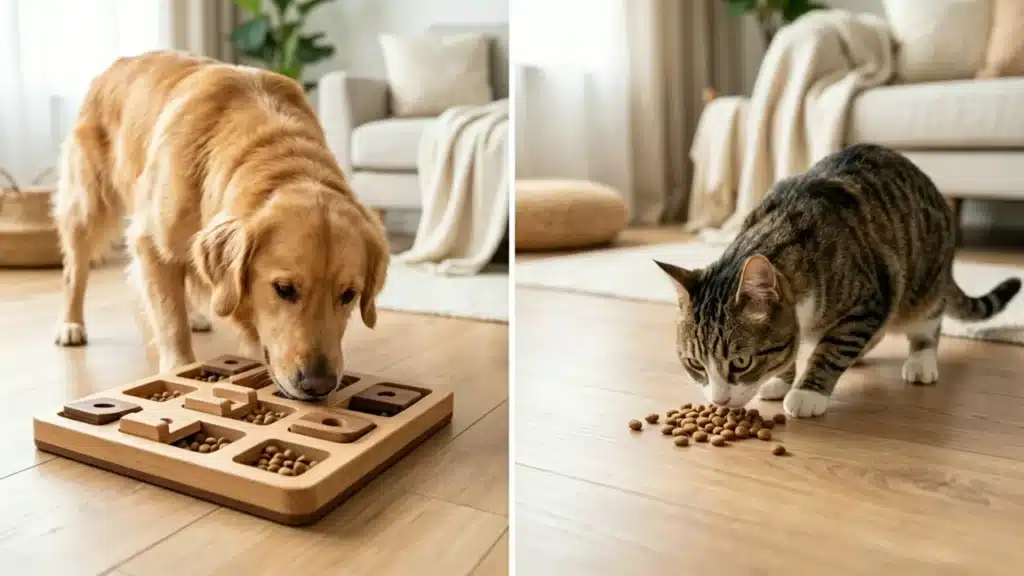
An interactive puzzle feeder forces pets to nudge, flip, and sniff to obtain kibble. A one-minute quick meal extends to 20 to 30 minutes of mental exercise. Mental exhaustion consumes extra calories and reduces obsessive food cravings, especially for indoor sedentary cats.
3.2 Create Daily Home Treasure Hunts
Hide small piles of kibble in safe corners, pet beds, and low platforms around your house. Let your pet hunt for food with their sensitive sense of smell. This simple daily game increases daily activity, relieves boredom, and simulates natural hunting behavior.
3.3 Slow Down Fast Eaters
Pets that inhale meals in seconds often suffer from indigestion and bloating. Slow feeder bowls with maze ridges physically slow down eating speed, extend satiety, and prevent post-meal hunger restlessness.
Step 4: Fix Begging Behavior to Prevent Pet Obesity Worsening
Behavioral problems are the biggest obstacle to stable pet weight loss. Every veterinarian knows that begging is not a sign of hunger—it is a conditioned bad habit. Giving in to those sad puppy or kitten eyes ruins weeks of dietary progress.
4.1 Never Reward Begging Actions
Even one tiny snack during begging reinforces the wrong logic: begging equals food. All family members must follow the same rule with zero exceptions. Consistency is the key to erase begging habits.
4.2 Provide Non-Food Distractions
Before your family mealtime, offer durable chew toys, stuffed Kongs, or short interactive play sessions to distract your pet. Redirect their attention from human food to entertainment to avoid food obsession.
4.3 Split Meals Into Small Servings
Long fasting intervals aggravate hunger and begging. Divide daily food into 3 to 4 small meals to maintain stable blood sugar. This feeding pattern perfectly fits cats’ natural intermittent hunting eating habits.
4.4 Build a Fixed No-Begging Zone
Train your pet to stay on their dedicated bed during family meals. Reward calm behavior with verbal praise and gentle pets instead of snacks. A fixed quiet space eliminates meal-time temptation effectively.

Final Action Plan: Slow Weight Loss Equals Permanent Results
Healthy pet weight loss follows a strict safe speed. Dogs should lose 1% to 2% of their body weight weekly, while cats require a slower rate of 0.5% to 1% per week. Rapid weight loss causes muscle loss, metabolic damage, and fatal fatty liver disease in cats. Record weight data every week and adjust meal portions if weight stagnates for over two weeks.
Pet obesity is a preventable, reversible disease. Abandon the cute “chubby pet” mindset and prioritize your companion’s long-term health. This four-step system combines scientific dieting and behavioral correction, solving the core reasons why most pet weight loss plans fail.
This content is for educational purposes only and does not substitute professional veterinary diagnosis or treatment. If you observe any symptoms of illness, injury, or abnormal behavior, please consult a qualified exotic animal veterinarian immediately.
For more details, please review our full Medical Disclaimer.
Pingback: French Bulldog Health Risks: 7 Hidden Dangers Every Owner Must Know