
Border Terrier for California Apartment New Owners will find plenty of practical solutions in this guide. If you’re a first-time dog parent sharing a compact California apartment with a Border Terrier, you’ve likely dealt with one or more frustrating issues: constant barking that irks neighbors, chewed baseboards and shoes, or a pup that never seems to run out of energy no matter how many walks you take.
This isn’t a generic breed overview for dog owners worldwide. Every tip here is built exclusively for California urban renters, tailored to our state’s dry year-round climate, strict rental rules, small city living spaces and busy 9-to-5 work schedules. After working with countless local terrier owners across LA, San Francisco and the Bay Area, I’ve rounded up the seven most common, costly mistakes new Border Terrier owners make in CA apartments — plus simple, actionable fixes you can start using today.
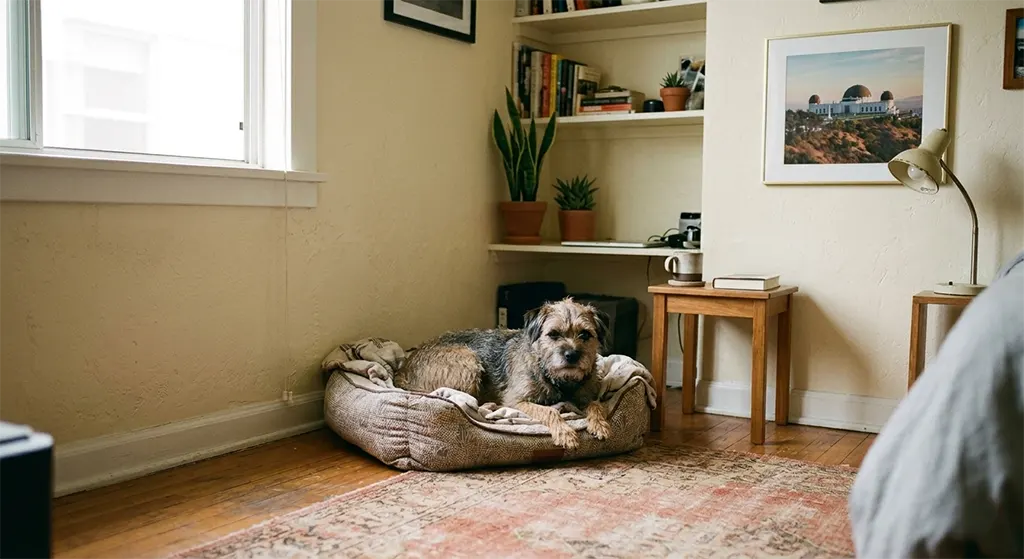
Mistake 1: Exercise Mistakes That Trouble Border Terrier for California Apartment New Owners
Local Pain Point
Nearly every new California apartment dweller assumes a small dog only needs a quick 15-minute walk around the city block. Border Terriers are working terriers bred for all-day outdoor activity, and the dry, warm air across most of California actually boosts their stamina. When their physical energy goes unspent in tight living quarters, destructive chewing and nonstop barking become daily problems.
CA-Exclusive Standard Routine (For Full-Time Working Renters)
This schedule fits standard US office hours and works for studios, one-bedroom apartments in LA, SF and San Diego. No big backyard required.
| Time Window | Activity | Exact Duration | California Local Adjustment |
|---|---|---|---|
| Early Morning (Before Work) | Brisk neighborhood walk | 45 minutes | Use hilly streets in Silver Lake, Mission District to add intensity; avoid mid-morning hot sun in Southern CA |
| Midday (Remote/Work From Home) | Scent games + puzzle toys | 25–30 minutes | Indoor activity to beat CA dry heat outdoors |
| Evening (After Work) | Interactive play + basic training | 30 minutes | Short walks after dark to avoid high daytime temperatures |
Local Pro Tip: Most California city sidewalks retain heat well into summer evenings. Keep paw wax handy to protect their paws — a common overlooked issue for urban terriers here. Many Border Terrier for California Apartment New Owners overlook paw protection during hot summer days.
Mistake 2: Skipping Dedicated Mental Stimulation (Bored Terriers Create Trouble)
Local Pain Point
Physical exercise alone will not calm a Border Terrier in California apartments. Our state’s quiet residential buildings, busy street noise and limited outdoor space leave these intelligent terriers understimulated. Boredom leads to carpet digging, window barking at passersby and persistent restlessness.
Apartment-Only Enrichment (California Dry Climate Adapted)
All ideas use affordable US retail products, no outdoor yard needed, and work well with CA’s dry indoor air:
- Indoor Scent Work: Hide dry treats around your living area. Their strong hunting instinct keeps them occupied for hours; perfect for hot summer days when staying inside is safer.
- Interactive Puzzle Feeders: Replace regular food bowls. Popular US brands like Kong and Outward Hound are widely available at California local pet stores and big-box retailers.
- DIY Mini Dig Bin: Use a plastic storage bin filled with clean play sand. It satisfies their digging drive without ruining carpets, and sand holds up well in dry CA indoor air.
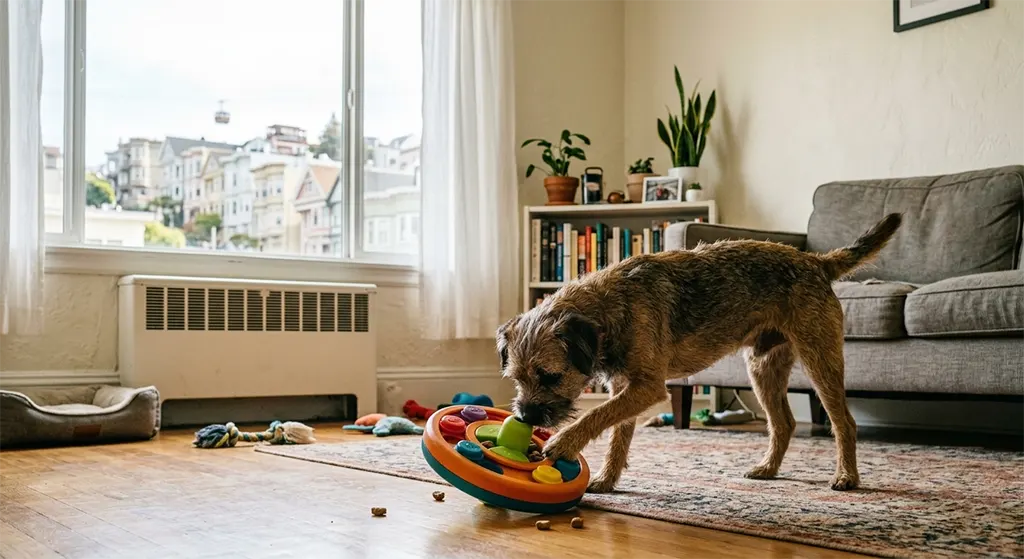
Mistake 3: Bad Space Planning for Border Terrier for California Apartment New Owners
Local Pain Point
California urban apartments often sit under 500 square feet, and many rentals ban large pet enclosures. New owners either let their terrier roam freely 24/7 (causing anxiety) or use crates that are too small, violating local rental pet guidelines.
CA Rental-Friendly 3-Zone Layout (Landlord Approved)
This layout works for studios and small one-bedrooms, follows most Bay Area and LA HOA rules, and uses minimal floor space:
- Quiet Rest Zone: Set up in a corner away from front doors and street noise. Use a low-profile dog bed and fixed water bowl. Choose a spot out of direct sunlight to avoid overheating in dry CA weather.
- Active Play Zone: Designate half of your living room open space for toys and training. Use non-slip mats — wooden apartment floors are standard in CA rentals and slippery for small terriers.
- Feeding Zone: Tuck bowls into a kitchen nook, away from high foot traffic. (If you share your compact space with a feline roommate, check out our litter box selection guide for semi-enclosed vs. fully enclosed models to keep small apartment odors and floor space under control.)
Crate Standard for CA Rentals: Stick to a 24-inch wire crate. This size meets nearly all California apartment building pet restrictions, gives your Border Terrier room to move, and does not violate space rules.
Mistake 4: Ignoring California State & Local Pet Rules (Risk of Fines or Lease Violations)
Local Pain Point
California has some of the strictest rental and public pet laws in the United States. New out-of-state transplants and first-time owners rarely review lease addenda or city ordinances, leading to noise fines, HOA warnings or even lease termination over barking dogs.
Must-Follow Local Rules (2026 CA Updated Standards)
- Leash Laws: All public sidewalks, trails and neighborhood parks require a maximum 6-foot leash. Off-leash play is only permitted in official city dog parks across LA, SF and San Diego.
- Noise Ordinances: Excessive continuous barking results in $100+ first-time fines in most California cities. Repeat violations can lead to eviction from rental properties.
- Pet Licensing & Vaccines: Rabies vaccination is mandatory by 4 months old. City dog licenses cost $20–$40 annually and are required for all owned dogs within city limits.
- Rental Deposit Rules: Per California Civil Code, pet security deposits cannot exceed one month’s rent — know your rights before signing a lease.
Critical Rental Check: 90% of CA apartment buildings label terrier breeds as “high-risk for noise”. Read your pet addendum thoroughly before moving in with a Border Terrier. Following local laws keeps Border Terrier for California Apartment New Owners away from fines.
Mistake 5: Inconsistent Short Training Sessions (Terriers Respond to CA City Micro-Training)
Local Pain Point
Most California urban owners work long hours and do not have 30+ minute blocks for training. Irregular, long training sessions fail for independent Border Terriers, who pick up on inconsistent commands quickly.
5-Minute Micro-Training Method (For Busy CA Working Owners)
Stick to three 5-minute sessions per day, the most sustainable routine for city professionals. Focus only on life-saving apartment commands:
- Quiet: Stops barking for neighbor harmony
- Go to Rest Zone: Directs them to their calm corner when guests arrive
- Leave It: Prevents eating street debris on busy California sidewalks
- Recall: Keeps them safe near busy city roads. Because terriers naturally react to moving objects, learn how to actually stop your dog’s prey drive to keep them secure along fast-paced California streets.
Training rule for this breed: Use only positive reinforcement (treats, verbal praise, play). Harsh correction worsens anxiety and barking in tight apartment environments across California. Short daily training works best for Border Terrier for California Apartment New Owners.
Mistake 6: Neglecting Grooming for California’s Dry Climate
Local Pain Point
Border Terriers have a dense wiry double coat. California’s low humidity and dry air cause itchy skin, brittle fur and painful matting — issues far more common here than in humid US states. New owners mistake their short outer coat for “low-maintenance” and skip regular care. If your dog experiences persistent skin irritation or severe matting, consult a licensed veterinarian for professional guidance.
CA Dry Climate Grooming Routine (Local Salon & At-Home Options)
- Weekly Brushing: Use a slicker brush to remove loose fur; prevents matting aggravated by dry indoor heat.
- Hand-Stripping: Schedule 2–3 times per year. Professional grooming across California costs $80–$120 per session. Budget-friendly owners can learn basic at-home stripping with affordable US pet tools.
- Nail Trims: Every 3–4 weeks. City walking wears nails down partially, but dry hard pavement in LA/SF still causes overgrowth.
Mistake 7: Unrealistic Expectations From Social Media Content
Local Pain Point
California pet owners rely heavily on social media for breed tips, but curated posts show perfectly behaved terriers. New owners get frustrated when their young dog chews or barks during the first few months of apartment life.
Realistic Mindset for CA Apartment Owners
Training and behavior adjustment for a Border Terrier takes 3 to 6 months for full results. Embrace their natural terrier curiosity — digging, sniffing and energetic play are part of their personality. Join local California Border Terrier owner groups on Nextdoor and Facebook to connect with nearby owners for real local advice.
Core Summary
Living with a Border Terrier in a California apartment is absolutely achievable when you avoid these seven mistakes. The core rules for local success are simple: stick to a climate-adjusted daily exercise schedule, design zoned living spaces for small rentals, follow all CA pet and rental laws, use short consistent training, and adapt grooming for our state’s dry air.
This breed is loyal, compact and great for city life — they just need a routine built specifically for California urban living, not generic national pet advice.
FAQ Section
Below are common questions from Border Terrier for California Apartment New Owners.
Q1: How much daily exercise does a Border Terrier need in a California studio apartment?
A1: Aim for a total of 1 hour 45 minutes of combined physical and mental activity daily. Split it into morning walks, midday indoor games and evening play to avoid Southern California’s extreme daytime heat.
Q2: Are Border Terriers allowed in most California rental apartments?
A2: Most CA buildings accept Border Terriers due to their small size (under 25 lbs). Always review your lease pet addendum and HOA noise rules first, as many complexes have strict barking policies for terrier breeds.
Q3: How do I stop my Border Terrier from barking at neighbors in San Francisco/LA apartment buildings?
A3: Combine daily mental enrichment, the “Quiet” micro-training command, and block window views of busy sidewalks. Consistent routine is the most effective fix for apartment barking in California cities.
Q4: Does California’s dry weather affect a Border Terrier’s skin and coat?
A4: Yes. Low humidity causes dry, itchy skin and fur matting. Brush weekly and avoid over-bathing; use coat moisturizer made for wirehaired breeds to adapt to CA’s dry climate.
This content is for educational purposes only and does not substitute professional veterinary diagnosis or treatment. If you observe any symptoms of illness, injury, or abnormal behavior, please consult a qualified exotic animal veterinarian immediately.
For more details, please review our full Medical Disclaimer.
Pingback: Dry Climate Double Coat Grooming: Stop Static & Matting