
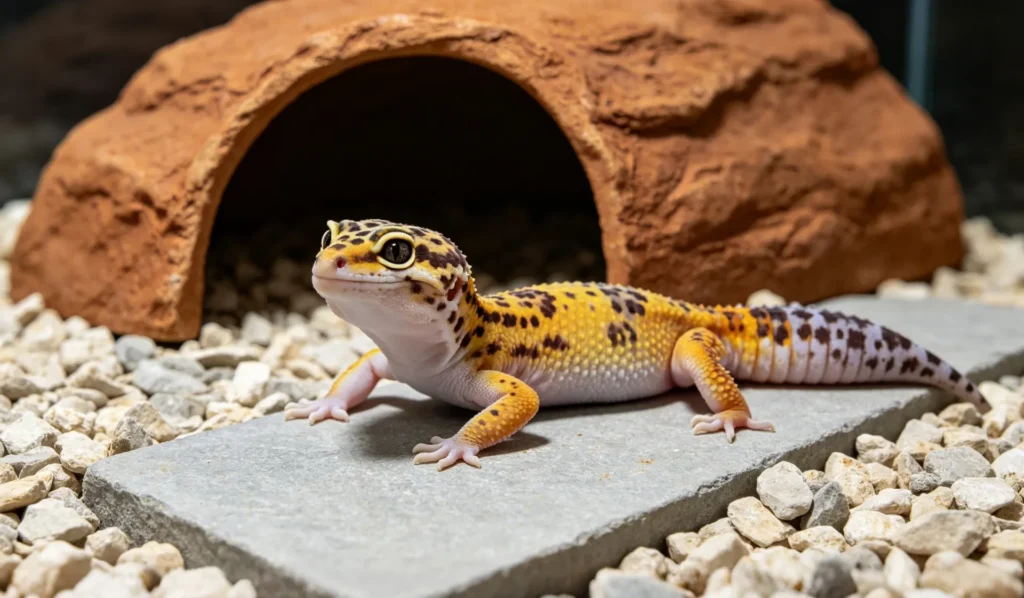
This professional Leopard Gecko Care Guide is designed for keepers who want to raise a healthy, stress-free leopard gecko beyond basic beginner care. If you’ve moved past the beginner phase and want your leopard gecko to thrive—not just survive—this masterclass is for you. Leopard geckos (Eublepharis macularius) are hardy reptiles, but their long lifespan (15–20+ years) depends on precise care: optimal habitat setup, species-specific nutrition, stress-free bonding, and quick action when health issues arise. Unlike generic care guides, we’ll dive into evidence-based practices, real keeper hacks, and solutions to the most overlooked pain points. Whether you’re refining your setup or troubleshooting stubborn shedding, this guide turns you into a confident, pro-level leopard gecko parent.
1. Leopard Gecko Care Guide: Perfect Habitat Setup for Long-Term Health
A perfect enclosure balances temperature, humidity, substrate, and enrichment—critical for digestion, shedding, and immune function. Skip guesswork; follow these expert rules.
Enclosure Size & Structure
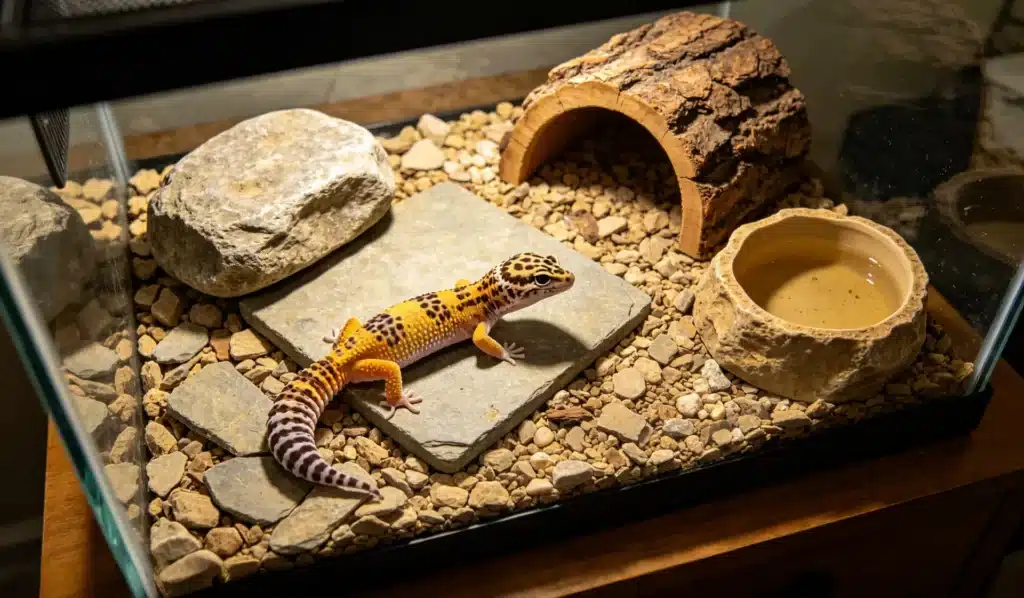
Minimum 20-gallon long tank (30”x12”x12”) for adults; juveniles can start in 10 gallons. Floor space matters more than height—leopard geckos are terrestrial. Use a screen top for ventilation (prevents respiratory infections) but cover 1/3 to retain heat.
Temperature Gradient (Non-Negotiable)
Leopard geckos are ectotherms—they need a thermal gradient to regulate body temperature:
- Basking spot: 88–92°F (31–33°C) (use a ceramic heat emitter (CHE) or under-tank heater (UTH); avoid hot rocks—they cause burns)
- Cool side: 75–80°F (24–27°C)
- Nighttime: 70–75°F (21–24°C) (no heat needed if room temp stays here)Pro tip: Use two digital thermometers (one on each side)—stick-on analog ones are often inaccurate.
Following these temperature rules is essential in any reliable Leopard Gecko Care Guide.
Humidity: Dry Air + Humid Hide = Perfect Balance
Wild leopard geckos live in arid deserts—low ambient humidity (30–40%) prevents skin and respiratory issues. But they need a humid hide (50–70%) for shedding: a small plastic container with a damp paper towel or sphagnum moss. Place it on the cool side—this is non-negotiable for healthy sheds.
Substrate: Safety First (Avoid These Mistakes!)
Substrate choice directly impacts impaction risk (a life-threatening issue where geckos ingest bedding). Follow this hierarchy:
- ✅ Best for juveniles/adults: Paper towels (100% safe, easy to clean, monitors waste)、slate tile (natural look, retains heat, no impaction)
- ✅ Natural option (adults only): 70% organic topsoil + 30% play sand (allows digging; avoid for juveniles)
- ❌ Never use: Calcium sand, walnut shells, wood chips, or loose sand (high impaction risk)
Lighting: UVB Is Optional (But Beneficial)
Leopard geckos are crepuscular (active at dawn/dusk)—they don’t need UVB like diurnal lizards. However, low-level UVB (5–7% T5 bulb) improves bone density, coloration, and appetite. If you skip UVB, dust all food with calcium+D3. Run lights 10–12 hours daily; replace UVB bulbs every 12 months (they lose potency before burning out). For exact bulb wattage, distance, and testing steps, our complete leopard gecko UVB guide covers every parameter you need.
Hides & Enrichment
Provide three hides (warm, cool, humid) to reduce stress—leopard geckos are shy and need security. Add a basking rock (slate/flagstone), cork bark, and artificial plants for climbing and hiding. Enrichment prevents boredom and encourages natural behaviors like exploring and hunting.
2. Leopard Gecko Care Guide: Nutrition & Professional Feeding Rules
Leopard geckos are obligate insectivores—they eat only insects (no veggies/fruits). Poor diet causes metabolic bone disease (MBD), obesity, and organ failure. Master these rules for a healthy, plump tail (fat storage = good health).
Feeding Schedule by Age
Age dictates frequency and prey size (prey no wider than the gecko’s head to prevent choking):
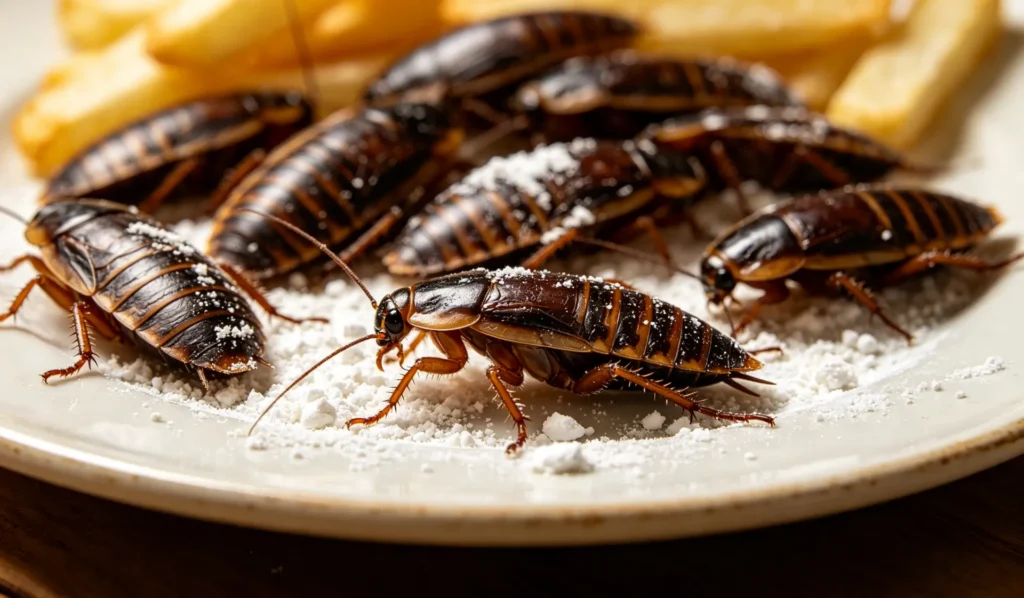
- Hatchlings (0–3 months): 5–7 small insects daily (dubia roach nymphs, black soldier fly larvae (BSFL); no mealworms—hard chitin)
- Juveniles (3–8 months): 5–8 medium insects every other day (rotate roaches, BSFL, silkworms)
- Adults (8+ months): 4–8 insects every 2–3 days (staples: dubia roaches, BSFL; treats: waxworms, hornworms 1x/week)
- Overweight adults: 3–5 lean insects every 3–4 days (no mealworms/waxworms)
Gut-Loading: The “Pre-Meal” Power-Up
Feeding insects nutrient-dense food 24–48 hours before offering to your gecko ensures nutrients pass to your pet. Best gut-load foods: dark leafy greens (kale, collard), carrots, squash, and commercial gut-load mixes. Avoid plain oats/bran—they lack nutrients.
Supplements: Non-Negotiable for Bone Health
Supplements prevent MBD (soft jaw, kinked tail, tremors)—the #1 nutritional issue in leopard geckos. Follow this schedule:
- Every feeding: Dust staples with calcium+D3 powder
- 2–3x/week: Offer BSFL (natural calcium; no dusting needed)
- 1x/week: Dust with multivitamin
- Always available: Small dish of plain calcium in the enclosure (geckos self-regulate intake)
Water: Simple but Critical
Provide a shallow water dish (no deep bowls—drowning risk) with fresh water daily. Dehydration causes poor shedding and organ damage. Some geckos rarely drink—they get moisture from prey, but always have water available.
3. Leopard Gecko Care Guide: Bonding and Owner Recognition Tips
Unlike dogs/cats, leopard geckos don’t feel “love” in the human sense—but they recognize owners via scent, sight, and sound. They learn to associate you with food, safety, and comfort. Many owners report their geckos greet them at the glass or calm down only when handled by them. Here’s how to build trust and positive association.
How Leopard Geckos Recognize You
- Scent (primary): They have a keen sense of smell—they learn your unique scent (avoid strong perfumes/soaps, which mask it).
- Sight: Good eyesight for movement—they track your shape and movements.
- Sound: They learn your voice and footsteps, especially around feeding time.
Pro Bonding Tips (Stress-Free & Effective)
- Start slow: Wait 3–7 days after bringing home—let them acclimate. Rushing causes stress and biting.
- Hand-feeding: Offer treats (waxworms, hornworms) with tweezers—links your hand to food. Do this 2–3x/week.
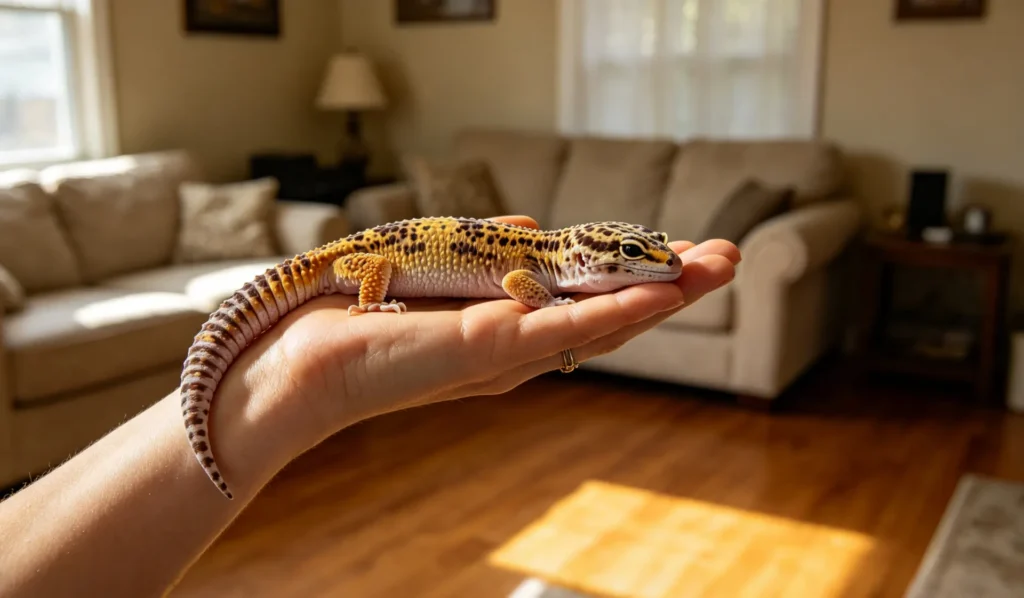
- Gentle handling: Hold for 5–10 minutes daily. Support their body (never grab the tail—it can drop!). Move slowly—sudden movements scare them.
- Scent familiarization: Place a small piece of your unwashed clothing in their enclosure—helps them get used to your scent.
- Consistency: Handle at the same time daily (evening, when active). Consistency builds trust faster.
Signs Your Gecko Trusts You
- Approaches the glass when you enter the room
- Calmly sits on your hand (no squirming/biting)
- Eats from your hand without hesitation
- Closes eyes slightly when petted (relaxed)
4. Leopard Gecko Care Guide: Shedding Process & Stuck Shed Solutions
Shedding is natural—leopard geckos shed every 4–8 weeks (juveniles more often, adults less) as they grow. A healthy shed comes off in one piece; stuck shed causes toe loss, eye issues, and infection. Learn the signs, process, and troubleshooting.
Signs of Impending Shed
- Dull, pale skin (cloudy eyes 1–2 days before)
- Decreased appetite (normal—don’t force feed)
- Increased hiding and grumpiness
- Rubbing face/body against decor (loosens skin)
Normal Shedding Process
- Skin loosens starting from the head
- Gecko peels skin off with mouth and feet
- Eats the shed (recycles nutrients—normal behavior)
- Process takes 10–30 minutes; complete within 24 hours
Fixing Stuck Shed (Common Pain Point)
Causes: Low humidity, lack of humid hide, dehydration, or poor health. Treatment:
- Lukewarm soak: Place gecko in shallow water (up to chest) for 10–15 minutes. Water softens stuck skin.
- Gentle removal: Use a damp cotton swab to gently rub stuck shed (toes, tail tip, eyes). Never pull hard—tears skin.
- Boost humidity: Increase humid hide moisture; mist enclosure lightly 1x/day until shed is complete.
- Vet visit: If stuck shed persists >48 hours or affects toes/eyes—see a reptile vet (prevents permanent damage).
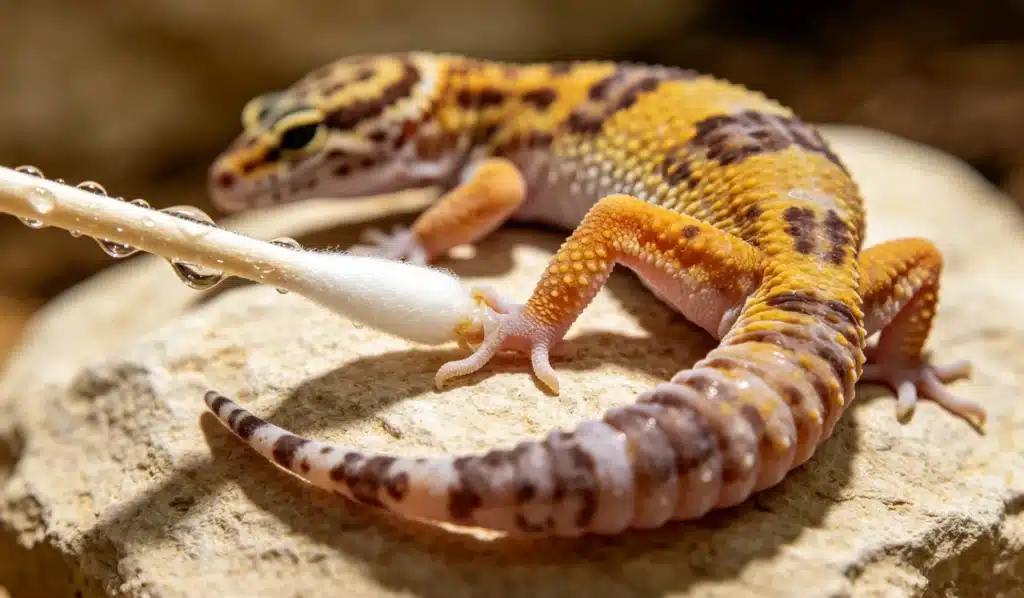
Knowing how to fix stuck shed is a key part of a practical Leopard Gecko Care Guide.
5. Leopard Gecko Care Guide: Common Health Issues & Quick Fixes
Leopard geckos are hardy, but poor care leads to predictable issues. Early detection saves lives—learn the most common problems and how to address them.
1. Metabolic Bone Disease (MBD)
- Symptoms: Soft/rubbery jaw, kinked tail/spine, trembling limbs, difficulty catching prey, swollen joints
- Causes: Lack of calcium/D3, no UVB, poor diet
- Fix: Increase calcium+D3 dusting, add UVB light, feed gut-loaded prey. Advanced cases need vet calcium injections.
Preventing metabolic bone disease is highlighted in every expert Leopard Gecko Care Guide.
2. Impaction
- Symptoms: No bowel movements >1 week, decreased appetite, lethargy, swollen abdomen, regurgitation
- Causes: Ingesting substrate (sand/calcium sand), eating prey too large, dehydration
- Fix: Warm soak daily, offer wet food (BSFL), remove loose substrate. Severe impaction needs vet surgery.
3. Stuck Shed (Retained Skin)
- Symptoms: Dry skin patches on toes/tail/eyes, constricted toes, difficulty moving
- Causes: Low humidity, no humid hide, dehydration
- Fix: Lukewarm soak + gentle removal, boost humidity, add humid hide.
4. Respiratory Infection (RI)
- Symptoms: Open-mouth breathing, bubbling mucus from nose/mouth, wheezing, lethargy, loss of appetite
- Causes: High humidity, cold temperatures, poor ventilation
- Fix: Lower humidity, increase basking temp to 90°F, improve ventilation. Severe cases need vet antibiotics.
5. Parasites (Internal/External)
- Symptoms: Weight loss despite good appetite, lethargy, visible mites/ticks on skin. Note that not all loose stool stems from bugs; review leopard gecko diarrhea causes beyond parasites to prevent unnecessary panic.
- Causes: Wild-caught prey, unsanitary enclosure, contact with infected geckos
- Fix: Vet fecal test for internal parasites (deworming meds); external mites: reptile-safe mite spray + clean enclosure thoroughly.
6. Tail Drop
- Symptoms: Tail detaches from body, bleeding (minor)
- Causes: Stress, rough handling, predator attack, tail injury
- Fix: Keep enclosure clean (prevent infection), monitor bleeding. Tail regrows in 2–3 months (shorter, less fat). Never pick up a gecko by the tail!
6. Final Pro Tips for Long-Term Success
- Quarantine new geckos: 30–60 days in a separate enclosure to prevent disease spread.
- Track health: Keep a log of feeding, shedding, and behavior—spot changes early.
- Avoid overhandling: Limit to 10–15 minutes daily—stress suppresses immune function.
- Annual vet checkups: Reptile vet exam + fecal test—catch hidden issues early.
- Research before modifying setup: Every change (substrate, lighting) impacts health—stick to proven methods.
Conclusion
Leopard gecko care isn’t just about meeting basic needs—it’s about mastering the details that turn a “pet” into a thriving companion. With the right habitat, precise nutrition, patient bonding, and quick action on health issues, your leopard gecko will live a long, happy life. Remember: consistency beats perfection. Small, daily efforts (proper dusting, gentle handling, humidity checks) add up to decades of health. Now go apply these tips—your gecko will thank you with a plump tail, bright eyes, and trust.
This content is for educational purposes only and does not substitute professional veterinary diagnosis or treatment. If you observe any symptoms of illness, injury, or abnormal behavior, please consult a qualified exotic animal veterinarian immediately.
For more details, please review our full Medical Disclaimer.
Pingback: Dented Gecko Eggs Rescue: How to Fix & Hatch Them Before It's Too Late