
This honest corn snake morphs comparison breaks down four beginner-friendly morphs: If you’ve ever researched pet corn snakes, you’ve likely seen four names everywhere: normal, albino, snow, and butter. These are the most common morphs (genetic color variations) in the hobby, each with distinct looks, origins, and care traits. But what exactly makes them different? Are these colors natural or human-created? And which one should you choose as a beginner?
This guide breaks down the subtle visual differences, genetic origins, and hobby popularity of these four iconic corn snake morphs. This guide breaks down the subtle visual differences, genetic origins, and hobby popularity of these four iconic corn snake morphs. Essential solutions for common pain points are also addressed—so you can pick a snake that fits your lifestyle and avoid costly mistakes.
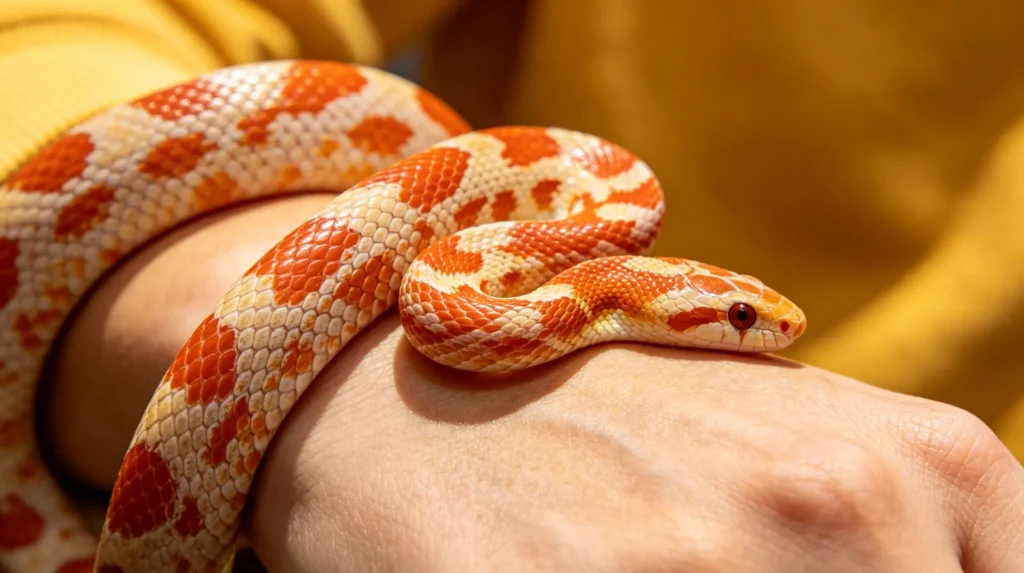
What Are Corn Snake Morphs, Anyway?
To continue this corn snake morphs comparison, First, a quick basics refresh: corn snakes (Pantherophis guttatus) are small, docile North American colubrids that have been captive-bred for over 60 years. In the wild, they’re all “normal” (wild-type) coloration—but captive breeding has unlocked 800+ morphs by selecting for recessive, dominant, or co-dominant color genes.
Crucially: All corn snake morphs are the same species. They have identical care requirements, temperaments, and lifespans (15–20 years). The only differences are skin color/pattern and genetics. This is why morph choice comes down to aesthetics and personal preference—not difficulty level; species choice is the opposite, so if you haven’t settled that yet, our pet snake tier list ranks 15 captive-bred snakes on exactly those difficulty factors.
Learning basic corn snake morphs knowledge helps you avoid misbuying low-quality specimens.
1. Normal (Wild-Type) Corn Snake: The Natural Classic
Visual Traits
The normal corn snake is the wild, unmodified version—what you’d find in the forests of the southeastern U.S.
- Base color: Orange, reddish-brown, or tan
- Pattern: Bold red/orange blotches (saddles) with thick black borders down the back
- Belly: Black-and-white “checkerboard” pattern (a signature corn snake trait)
- Eyes: Dark brown or black

Genetics: 100% Natural
No mutations here! Normal corn snakes have wild-type genes for all pigments:
- Melanin: Produces black/brown (for borders and eyes)
- Carotenoids: Produces red/orange (for saddles and base color)
Popularity & Price
- Hobby rank: #2 most popular (behind albino)
- Price: $30–$50 (cheapest morph, great for beginners)
- Why people love it: Timeless, hardy, and “authentic” look. Breeders use normals to strengthen genetic diversity in morph lines.
Common Pain Points
- New owners often confuse normals with other morphs (e.g., Okeetee, which is a high-contrast normal with thicker black borders).
- Wild-caught normals may carry parasites—always buy captive-bred.
2. Albino (Amelanistic) Corn Snake: The Bright Red Beauty
Visual Traits
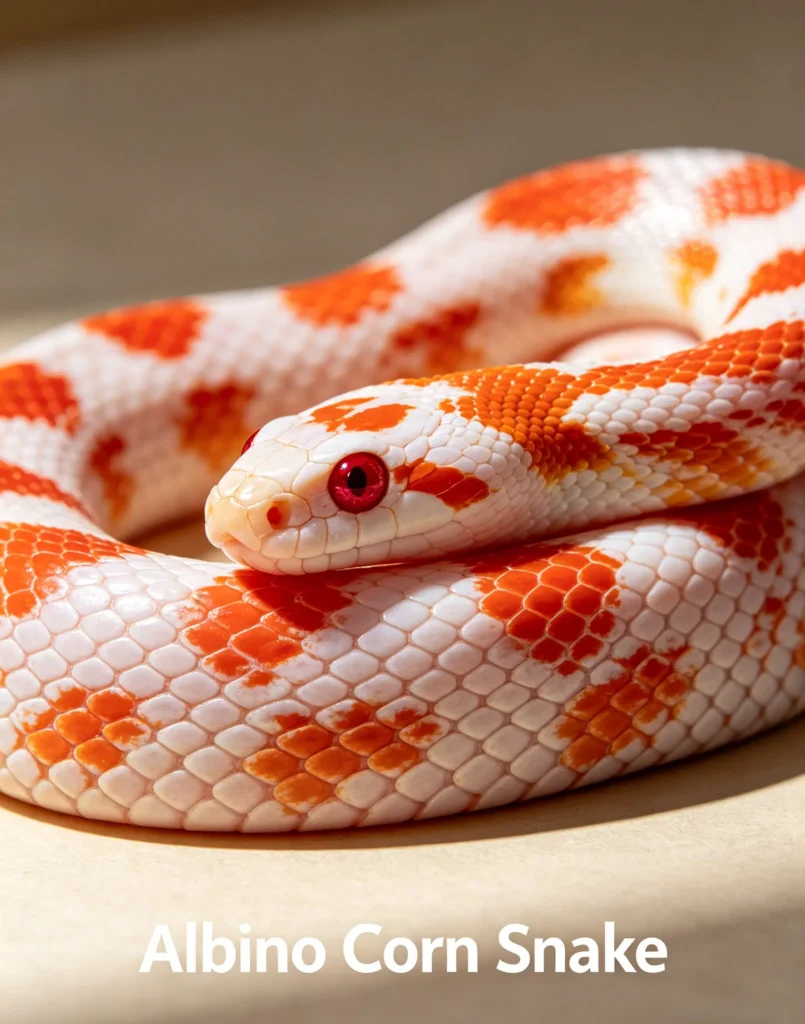
Albinos (or “amels”) are the most iconic morph—often called “living jewels” for their glowing colors.
- Base color: White, pale pink, or light yellow
- Pattern: Bright red, orange, or yellow saddles—no black borders (melanin-free)
- Eyes: Ruby-red or pink (blood vessels show through, no melanin in irises)
Genetics: Recessive Mutation (Captive-Selected)
Albinism in corn snakes comes from a recessive amelanistic gene that blocks melanin production.
- How it’s made: Two normal-looking “het albino” (heterozygous) parents breed—each carries one copy of the recessive gene. Offspring have a 25% chance of being albino.
- Natural occurrence: Extremely rare in the wild (albino animals struggle with camouflage and UV protection). All pet albinos are captive-bred.
Popularity & Price
- Hobby rank: #1 most popular morph (top choice for beginners)
- Price: $40–$70 (affordable, widely available)
- Why people love it: Striking, vibrant colors that “pop” in any enclosure. Albinos are the foundation for hundreds of other morphs (e.g., snow, butter).
Common Pain Points
- Light sensitivity: No melanin means albino eyes are prone to glare. Avoid bright white UVB lights—use low-wattage, warm-colored bulbs instead.
- Feeding hesitation: Some albinos are slightly more skittish than normals—give 1–2 weeks of quiet acclimation before handling.
3. Snow Corn Snake: The Ethereal White-Pink Ghost
Visual Traits
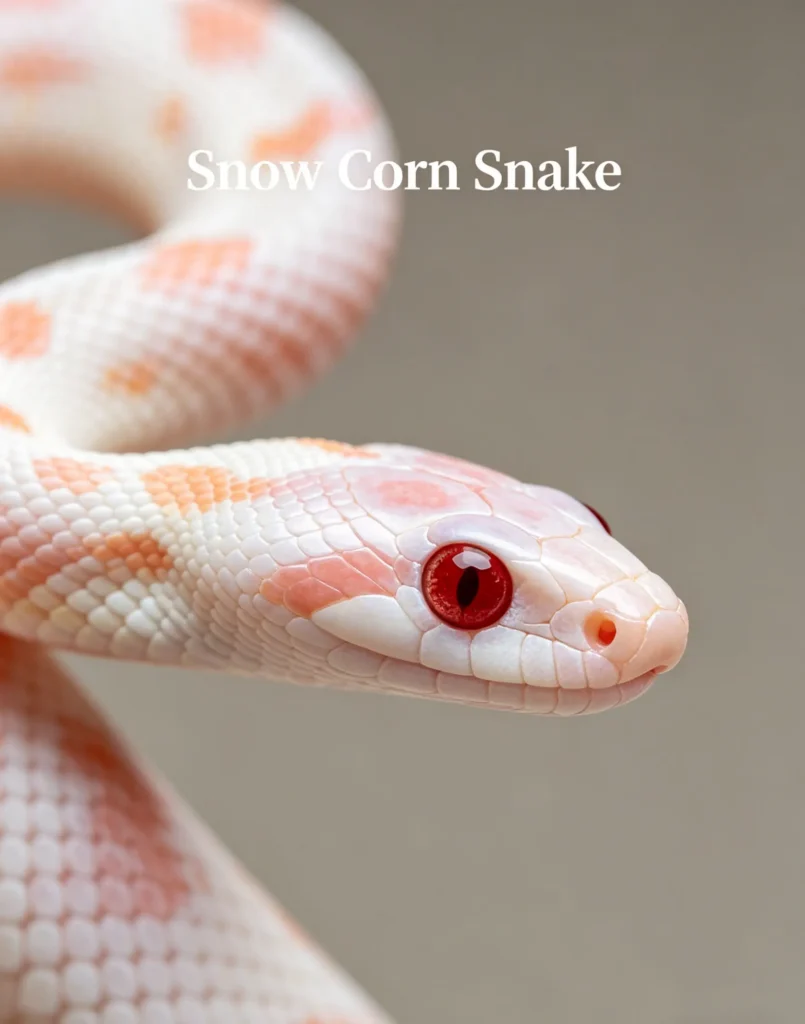
Snows are double recessive morphs—pale, clean, and almost otherworldly.
- Base color: Pure white, ivory, or light gray
- Pattern: Soft pink, peach, or lavender blotches (no black or red)
- Belly: White or pale pink (faint checkerboard may remain)
- Eyes: Ruby-red (same as albino)
Genetics: Double Recessive (Albino + Anerythristic)
Snows are created by combining two recessive genes:
- Amelanistic (albino): Blocks melanin (no black)
- Anerythristic: Blocks red/orange carotenoids
- Result: No black, no red—only white base + pink/yellow accents (yellow comes from diet carotenoids as adults).
- Natural occurrence: Impossible in the wild—requires two rare recessive genes. Exclusively captive-bred.
Popularity & Price
- Hobby rank: Top 5 most popular (favorite for “clean” color lovers)
- Price: $80–$150 (mid-range, more expensive than albino/normal)
- Why people love it: Unique, minimalist look that stands out in any collection. Snows have a calm, docile reputation.
Common Pain Points
- Color fading: Juvenile snows are bright white/pink—adults may develop faint yellow or beige hues (normal, diet-dependent).
- Mislabeling: Breeders sometimes sell “high-white albinos” as snows—verify genetics with a trusted breeder.
4. Butter Corn Snake: The Sunny Yellow-Albino
Visual Traits
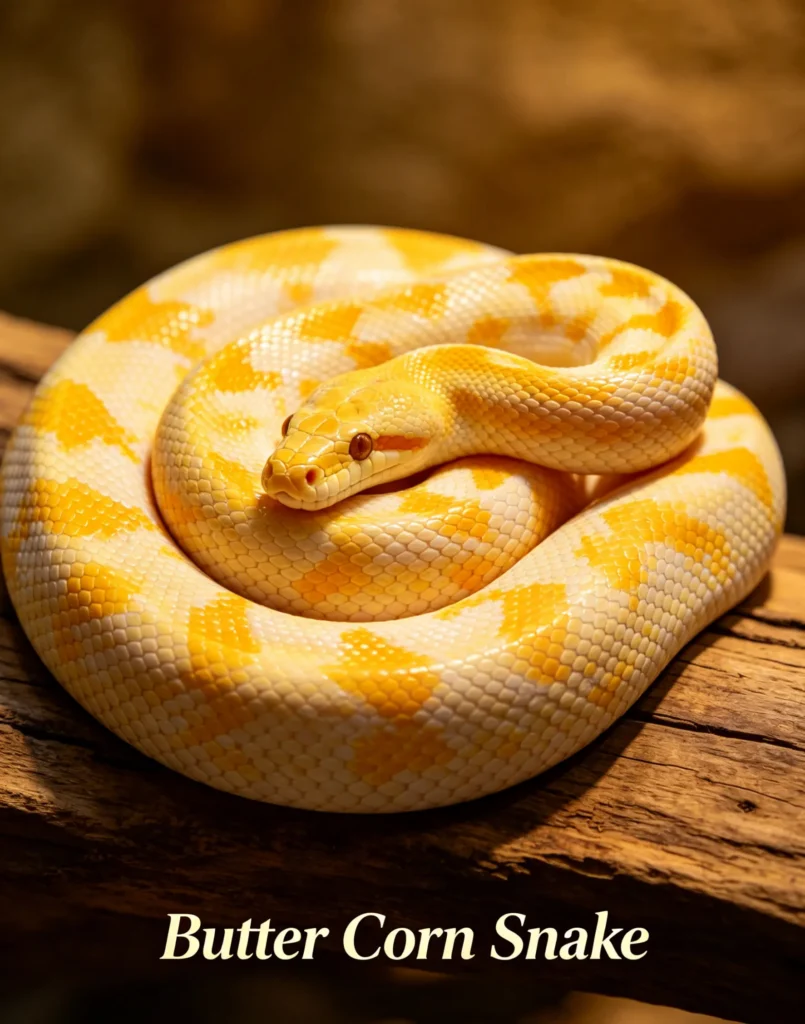
Butters are a vibrant, warm morph—often described as “albino with caramel tones”.
- Base color: Pale yellow, cream, or light orange
- Pattern: Bright yellow, orange, or peach saddles (no black borders)
- Belly: White or pale yellow
- Eyes: Ruby-red (albino-like)
Genetics: Double Recessive (Albino + Caramel)
Butters combine two recessive genes:
- Amelanistic (albino): Blocks melanin (no black)
- Caramel: Enhances yellow/orange carotenoids (deepens warm tones)
- Difference from albino: Albinos have white/pale pink bases; butters have yellow/cream bases (caramel gene amplifies yellow).
- Natural occurrence: Also impossible in the wild—100% captive-bred.
Popularity & Price
- Hobby rank: Top 10 most popular (loved for sunny, upbeat colors)
- Price: $70–$120 (mid-range, similar to snow)
- Why people love it: Warmer than albino, brighter than normal—perfect for anyone who loves yellow/orange tones. Butters are active and curious.
Common Pain Points
- Color variation: Juvenile butters are pale yellow—adults may darken to deep orange (genetics + diet play a role).
- Confusion with “sunglow”: Sunglows are hyper-vibrant albinos with zero white borders, while butters have a distinct pastel yellow base driven by the caramel gene.
Quick Comparison Table: Normal vs Albino vs Snow vs Butter
| Trait | Normal | Albino | Snow | Butter |
|---|---|---|---|---|
| Base Color | Orange/red-brown | White/pink | White/ivory | Yellow/cream |
| Pattern Color | Red/orange (black borders) | Red/orange (no black) | Pink/peach | Yellow/orange |
| Eye Color | Dark brown | Ruby-red | Ruby-red | Ruby-red |
| Genetics | Wild-type (natural) | Recessive (albino) | Double recessive (albino + anery) | Double recessive (albino + caramel) |
| Natural? | Yes | No (rare wild mutation) | No (captive-only) | No (captive-only) |
| Price | $30–$50 | $40–$70 | $80–$150 | $70–$120 |
| Best For | Beginners, classic look | Beginners, bright colors | Collectors, clean white look | Collectors, warm yellow tones |
Which Morph Should You Choose?
For Beginners: Normal or Albino
- Normal: Cheapest, hardiest, and easiest to find. Great if you want a “natural” snake with no extra care needs. (If you are still comparing species and prefer a smaller, low-humidity option, check our rosy boa beginner guide to evaluate another top-rated starter snake.)
- Albino: Most popular, vibrant, and widely available. Perfect if you love bright colors—just avoid bright lights.
For Collectors / Aesthetic Lovers: Snow or Butter
- Snow: Go for it if you want a unique, minimalist white/pink snake with a calm demeanor.
- Butter: Choose it if you prefer warm, sunny yellow/orange tones over cool white/pink.
Critical Rule for All Morphs: Buy Captive-Bred
Wild-caught corn snakes are stressed, parasite-prone, and often illegal. Captive-bred snakes are healthier, calmer, and better adapted to life in an enclosure.
Final Thoughts
Learning about different corn snake morphs lets you pick a snake that matches your taste perfectly. It’s well worth your time to study popular corn snake morphs before making your final decision.
The four core corn snake morphs—normal, albino, snow, and butter—all share the same gentle nature and easy care. The only real difference is color and genetics: normals are natural classics, albinos are bright fan favorites, snows are ethereal white ghosts, and butters are sunny yellow beauties.
No matter which you pick, you’ll get a rewarding, low-maintenance pet that can live 15+ years. Just remember: choose based on your favorite look, buy captive-bred, and avoid common pitfalls like bright lights for albinos or mislabeled morphs.
Have you owned a corn snake morph? Share your experience in the comments below to help fellow hobbyists decide which one is their favorite!
If you’re ready to bring your new snake home, be sure to review our essential corn snake care tips for first-time keepers.
Explore more beginner‑safe snake and tarantula options via our reptile pet matching quiz.
This content is for educational purposes only and does not substitute professional veterinary diagnosis or treatment. If you observe any symptoms of illness, injury, or abnormal behavior, please consult a qualified exotic animal veterinarian immediately.
For more details, please review our full Medical Disclaimer.
Pingback: Corn Snake Care for Beginners | Complete 2026 Setup & Feeding Guide