
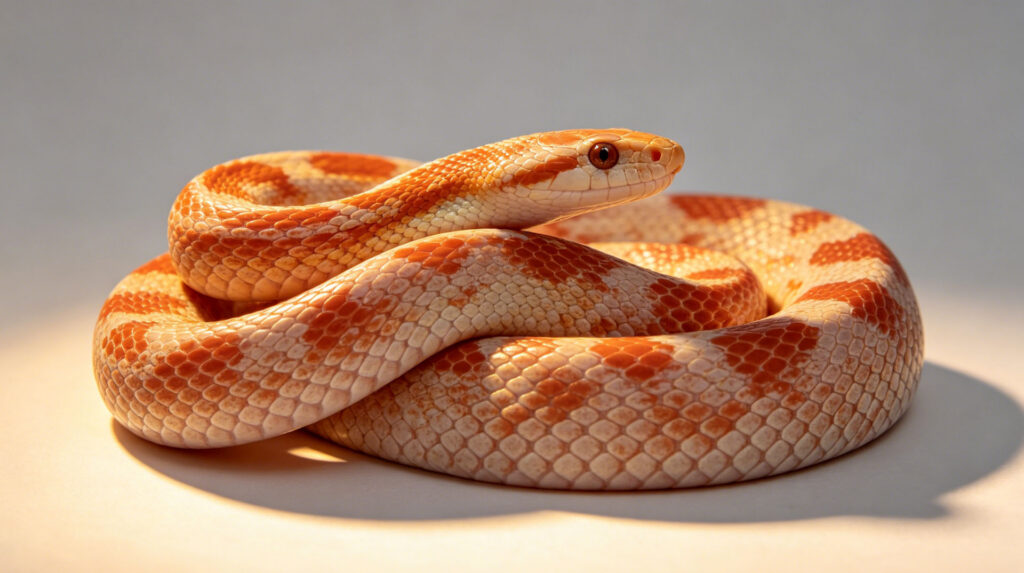
Corn Snake Care for Beginners: Ultimate 2026 Vet Approved Guide
If you’re new to reptile keeping, corn snakes are hands down one of the best beginner pets you can choose. They’re docile, low-maintenance, affordable, and have a calm temperament that makes them perfect for first-time snake owners, college students, apartment dwellers, and even responsible teens.
Based on data from clinical veterinarians specializing in exotic pets, helping new corn snake owners avoid common mistakes, fix improper tank setups, and resolve feeding issues is highly effective for long-term health. Many of the questions frequently raised in forums match exactly the concerns from new hobbyists: How much does a corn snake setup cost? Can I keep one in a dorm? How big do they get? What do I feed them, and is it expensive long-term?
In this complete corn snake care for beginners guide, this article covers every essential detail, addresses real owner pain points from reptile community discussions, and gives you straightforward, vet-backed advice tailored for US keepers.
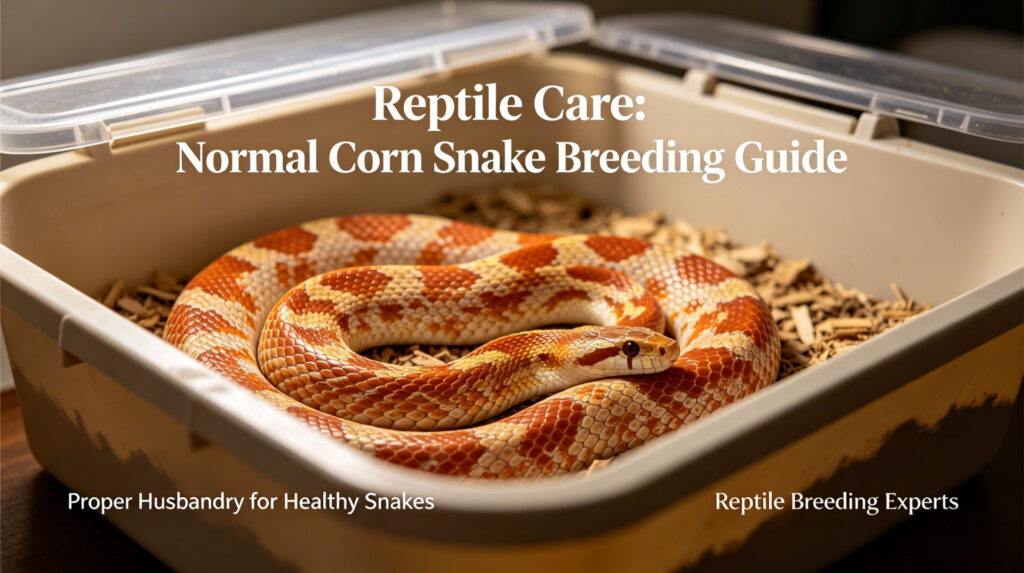
Are Corn Snakes Good Pets | Corn Snake Care for Beginners
Before jumping into supplies and feeding, let’s start with the most asked question: should a complete beginner get a corn snake?
From a professional veterinary perspective, absolutely yes.
Corn snakes are non-venomous, gentle, rarely aggressive, and easy to tame. Juveniles can be a little skittish and jumpy when handled, but adults become incredibly calm, lazy, and comfortable with regular gentle handling.
One big advantage highlighted by many owners in reptile forums is cost efficiency. Compared to dogs, cats, and other exotic pets, corn snakes are extremely budget-friendly. Most equipment is a one-time purchase, monthly feeding costs are minimal, and they don’t need daily walks, constant attention, or expensive grooming.
Common owner concerns frequently highlighted in community discussions include fear of feeding frozen mice, worrying about size, wondering if family or roommates will agree, and stress about overheating or cooling issues. These comprehensive solutions are fully broken down below.
If you are highly visual and want to explore the dazzling array of captive-bred colors available, checking out a dedicated corn snake morphs breakdown can help you choose the most stunning pet — but color only matters once the species is settled, and our pet snake tier list ranks all 15 candidates on difficulty, hardiness, and handleability. Beyond corn snakes, the western hognose is another popular entry-level snake — to find captive-bred individuals, see our guide on captive-bred western hognose for purchase sources.
Corn Snake Lifespan & Full Adult Size
Understanding lifespan and adult size is critical before committing to a corn snake, because this is a long-term pet.
Lifespan
In proper captive care, corn snakes live 15 to 20 years. Many well-cared individuals even live longer. Veterinary experts always emphasize this: getting a corn snake is not a short-term hobby. You’re committing to nearly two decades of care, routine feeding, and habitat maintenance.
Adult Size & Thickness
New owners often worry corn snakes will grow large enough to constrict humans or take up massive space. The reality is very different.
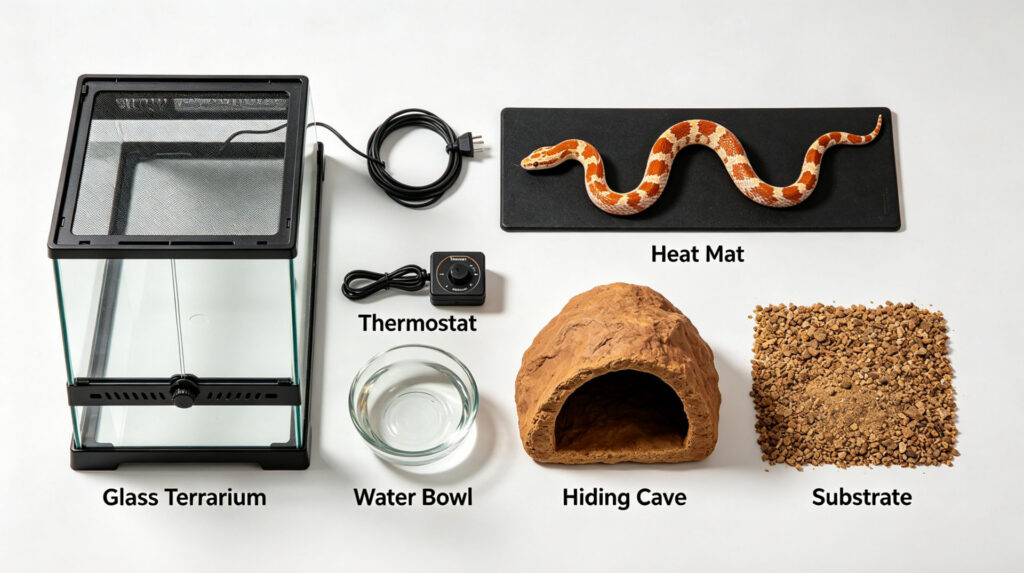
- Length: Adult corn snakes typically reach 3.5 to 5 feet long.
- Thickness: Juveniles are about the thickness of a pinky finger. Full-grown adults are roughly the thickness of an average woman’s wrist.
They are never large enough to wrap fully around a human body, and their mild temperament makes them completely safe for regular handling.
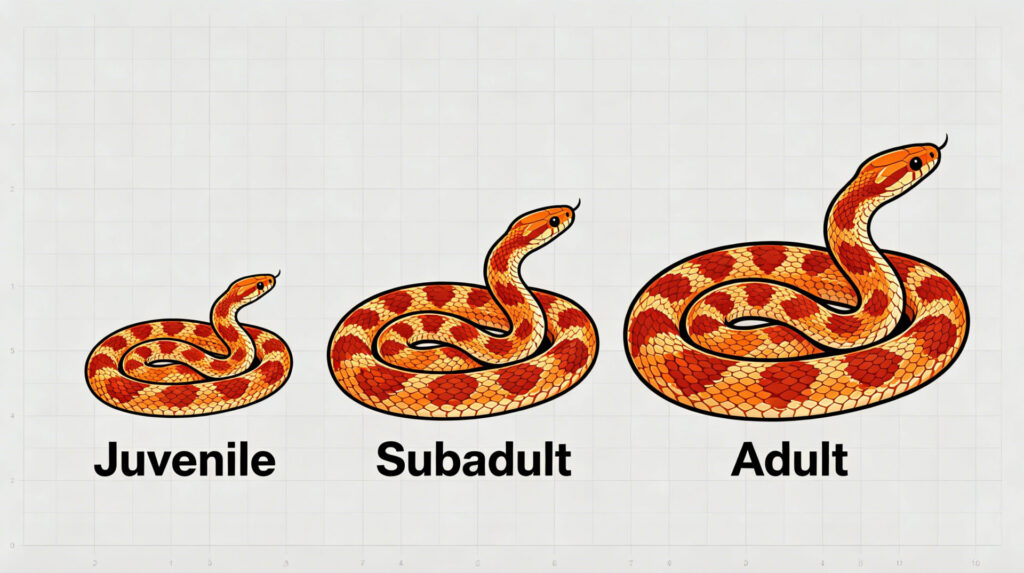
Essential Corn Snake Setup & Equipment Cost (US Market)
One of the biggest beginner pain points is figuring out exactly what supplies you need and how much to budget. Based on community feedback and established veterinary guidelines, here is the complete must-have list with realistic US pricing.
Core Required Supplies
- Enclosure / Habitat
- Plastic breeding tub: $8–$25 (budget choice perfect for juveniles)
- Acrylic terrarium: $100–$200
- Glass reptile tank: $150–$300 (premium “permanent home” setup for adults)
- Thermostat & Heat Mat
- Basic budget thermostat: $20–$40
- High-quality professional thermostat: $120–$160
- Heat mat: $15–$35
As many experienced keepers commented, skimping on a thermostat is dangerous. Overheating is one of the top reasons corn snakes end up in exotic vet clinics. Never run a heat mat without a reliable thermostat.
- Substrate / Bedding
- Aspen shavings: $10–$25 per bag
- Paper towels (budget option): very low cost, great for juveniles and quarantine
- Water Dish & Thermometer/Hygrometer
- Basic accessories bundle: $30–$50 total
Total Startup Budget
- Budget basic setup: $80–$150
- Mid-range complete setup: $180–$300
- Premium glass tank setup: $350+
Most keepers agree: the biggest expense is one-time equipment. After that, monthly upkeep is extremely cheap.
Monthly Feeding Cost & Feeding Guide
Another top beginner worry is feeding mice—many new owners are nervous about frozen or live rodents, and others ask if keeping a corn snake is affordable long-term.
Feeding Schedule
- Juvenile corn snake: Feed every 4–5 days
- Adult corn snake: Feed once every 7 days
Prey Cost (US Standard Pricing)
- Newborn pinky mice: $1.50–$3 each
- Adult feeder mice: $4–$5 each
Even feeding weekly, your monthly food cost will only be $15–$25 on average. This is far cheaper than caring for dogs, cats, birds, or other pets.
Frozen vs Live Mice
From a veterinary standpoint, frozen-thawed mice are strongly recommended. Live mice can bite and injure your snake, cause stress, and even transmit parasites. Frozen feeders are safer, easier to store, and more convenient for busy owners.
Many commenters mentioned they cannot handle live mice—frozen is the perfect solution and completely healthy for corn snakes.
Can You Keep a Corn Snake in a Dorm or At Home?
This is one of the most frequent questions from student keepers.
College Dorm Keeping
The only real requirement is roommate approval. Corn snakes are quiet, odorless, escape-proof with a secure enclosure, and nocturnal, so they won’t disturb daily dorm life. They make ideal low-key pets for college students.
Keeping at Home
The only barrier is parent or household agreement. Corn snakes are clean, don’t make noise, don’t shed fur, and cause no mess if maintained properly. Once family members understand they are harmless and easy to care for, most will agree.
A common comment from teen keepers: if your family is uncomfortable with snakes, wait until you have your own independent living space before getting one. Never impulse buy a corn snake if household approval is uncertain.
Corn Snake Temperament & Handling Tips
Understanding temperament helps new owners avoid stress for both themselves and their snake.
Juvenile Corn Snakes
Baby and juvenile corn snakes are naturally skittish, jumpy, and easily startled. Many new owners panic when their snake jolts or relieves waste on them during first handling—this is completely normal stress behavior, not aggression.
Adult Corn Snakes
Once mature, corn snakes become extremely laid-back, docile, and relaxed with handling. They move slowly, enjoy exploring hands and arms, and rarely show any defensive behavior.
Vet handling tip: Always handle gently, support their body fully, and avoid handling for 48 hours after feeding to prevent regurgitation.
Common Beginner Problems & Quick Fixes (From Real Keeper Comments)
The most common pain points have been compiled from reptile community comments alongside professional veterinary solutions:
- Snake stays hidden all the time, not activeNormal behavior—corn snakes are nocturnal and naturally hide in dark spots. As long as it eats regularly and sheds properly, there is no health concern.
- How thick should aspen substrate be?2–3 inches is ideal for burrowing; avoid overly deep bedding that increases humidity risk.
- Temperature too high or too lowAlways use a thermostat, never guess temperatures. Cool side 70–75°F, warm side 80–85°F.
- Snake acting lethargic and staying in open lightThis can signal incorrect temperature, improper humidity, or early illness. Check enclosure parameters first; if behavior continues, visit an exotic vet.
Final Vet Advice for New Corn Snake Owners
Corn snakes are undeniably one of the easiest, most affordable, and most rewarding beginner reptiles you can own. They fit perfectly for students, apartment dwellers, and first-time reptile keepers.
Before purchasing, confirm long-term commitment, budget for proper one-time setup, secure roommate or family approval, and learn basic temperature and feeding routines. Avoid cutting corners on thermostats, always feed frozen-thawed prey, and respect your snake’s shy personality especially when young.
With simple routine care, your corn snake will live a healthy, calm life by your side for 15–20 years.
Follow this Corn Snake Care for Beginners routine to keep your pet healthy for decades.
Match your home environment to the perfect reptile with our reptile species finder quiz.
This content is for educational purposes only and does not substitute professional veterinary diagnosis or treatment. If you observe any symptoms of illness, injury, or abnormal behavior, please consult a qualified exotic animal veterinarian immediately.
For more details, please review our full Medical Disclaimer.
Pingback: 5 Best Pet Snakes For Beginners: Easy Care Non-Venomous Reptiles Guide
Pingback: 6 Beginner Tips How To Avoid Overpriced Leopard Gecko Feed in California (2026 Updated Warning)
Pingback: Corn Snake Care Guide: Expert Tips for New Keepers
Pingback: 6 Trusted Breeders to Buy Captive Bred Western Hognose USA | No Wild Caught Specimens