
You built a beautiful bioactive enclosure for your ball python. There is living greenery, natural leaf litter, deep substrate, and a cleanup crew of isopods and springtails.
For the first few weeks, everything looks great.
Then Month 3 arrives.
Your springtails seem to have disappeared. You barely see any isopods. The soil feels heavier and wetter than it did when you first built the enclosure. Your ball python has just left a massive dropping in the corner, and somehow, it is still there days later.
So much for a self-cleaning enclosure.
Here is the uncomfortable truth: a ball python bioactive setup is not a self-cleaning toilet, and it is certainly not maintenance-free.
Bioactive enclosures can work beautifully, but they depend on conditions that are easy to get wrong: moisture distribution, ventilation, soil structure, cleanup crew survival, and waste management.
The problem is that a ball python is not a tiny dart frog. It is a heavy, ground-dwelling snake that repeatedly travels across the same substrate, squeezes into hides, and produces waste that a colony of tiny invertebrates cannot reliably handle on its own.
This guide breaks down what happens over 12 months, why common setups fail, which cleanup crew options make sense, and how to keep the substrate functional without compromising your snake’s health.
One important distinction: The month-by-month timeline below is a practical troubleshooting framework, not a controlled 12-month experiment or a scientifically established failure schedule. Every enclosure develops differently.
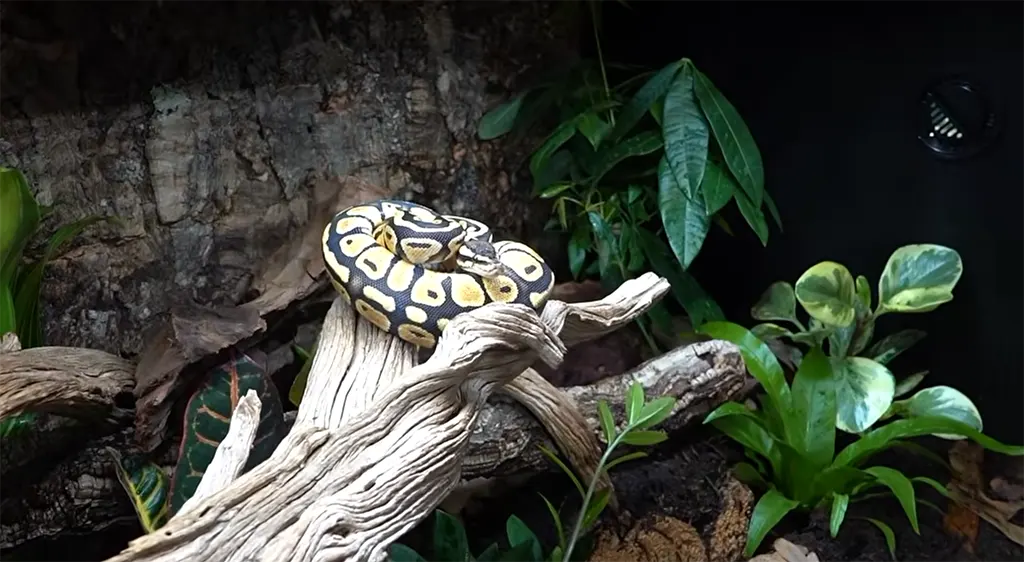
Photo via YouTube (The Bio Dude)
What Is Ball Python Bioactive Substrate, Really?
A ball python bioactive substrate is a living substrate system designed to support plants, microorganisms, and a cleanup crew, usually including isopods and springtails.
Unlike ordinary bedding, a bioactive enclosure attempts to establish a functioning soil ecosystem — but the temperature, humidity, and hide requirements underneath it do not change, and our ball python enclosure setup guide covers those first principles.
A typical setup may contain:
- A substrate blend that retains moisture while maintaining structure.
- Leaf litter that provides food and shelter for decomposers.
- Live plants suited to the enclosure’s conditions.
- Isopods that consume decaying organic material.
- Springtails that feed on fungi and other microscopic organic resources.
- Microorganisms involved in decomposition and nutrient cycling.
The objective is not to eliminate every piece of waste.
It is to create a more stable, naturalistic environment while reducing certain maintenance tasks.
That distinction matters because bioactive is just shifting maintenance from scraping glass to managing soil biology — and it adds line items of its own, which our ball python setup cost breakdown covers alongside the conventional build.
If you expect the cleanup crew to handle everything, you are setting yourself up for disappointment.
The Biggest Bioactive Myth: Zero Maintenance
A mature bioactive enclosure may need less routine substrate replacement than a conventional setup, but that does not mean it requires less attention in every category.
You still need to:
- Remove fresh feces and urates.
- Inspect the snake’s belly and skin.
- Monitor humidity and temperatures.
- Check for standing water and persistent wet patches.
- Maintain the cleanup crew.
- Prune plants and remove decaying plant material when necessary.
- Inspect hides, water bowls, and inaccessible corners.
- Remove contaminated substrate when needed.
A healthy-looking enclosure can still hide a problem underneath the surface.
A thick layer of leaf litter may conceal waste. A drainage layer may contain standing water. A large hide may trap moisture against the substrate.
Bioactive is a biological system, not a substitute for husbandry.
What a cleanup crew actually does
A cleanup crew, often called CUC, is made up of organisms that consume or help break down certain organic materials.
Different members play different roles.
| Cleanup crew member | What it contributes | What it cannot guarantee |
|---|---|---|
| Isopods | Consume leaf litter, decaying plant matter and some organic waste | Complete removal of snake feces |
| Springtails | Feed on fungi and decaying organic matter | Sanitation or elimination of pathogens |
| Soil microorganisms | Help decompose organic matter and cycle nutrients | Safe handling of every type of waste or contamination |
These organisms are useful, but they do not sterilize the enclosure.
Reptiles can carry infectious organisms, including Salmonella. A thriving cleanup crew does not make reptile waste harmless or eliminate the need for hygiene.
Month 1: The Setup Looks Amazing, but the Biology Is Still Developing
The first month is when many keepers become overly confident.
The plants are green. The leaf litter looks fresh. The isopods are moving around, and the substrate smells like soil.
But a newly assembled enclosure is not necessarily a stable bioactive ecosystem.
What should you expect?
During the first several weeks, the cleanup crew is adapting to:
- The enclosure’s temperature gradient.
- Available moisture and humidity.
- Food availability.
- Hiding spaces and competition.
- The physical structure of the substrate.
Some organisms may establish successfully. Others may die or remain hidden.
You should not judge colony health entirely by how many isopods you see on the surface.
Many isopods are nocturnal or spend much of their time under bark, litter, and other cover. Springtails are also easy to underestimate because they are tiny and may concentrate in damp microhabitats.
Month 1 mistakes to avoid
Mistake 1: Flooding the substrate to keep the cleanup crew alive.
Isopods need access to moisture, but that does not mean the entire enclosure should be wet.
Instead, establish a moisture gradient.
Provide damp refuges with leaf litter, suitable substrate, and cork bark, while keeping the snake’s main travel surfaces from becoming persistently wet.
Mistake 2: Adding too many organisms without fixing the habitat.
If the soil is unsuitable, adding more isopods simply increases the number of animals exposed to the same problem.
Mistake 3: Introducing the snake before the enclosure is ready.
Establish the enclosure’s heating, humidity, drainage behavior, and plant stability first. If possible, allow the biological components time to establish before introducing the snake.
There is no universal number of days that proves a bioactive enclosure is ready. A calendar alone is not a readiness test.
Month 3: Reality Sets In — Why Isopods Are Dying in Your Ball Python Tank
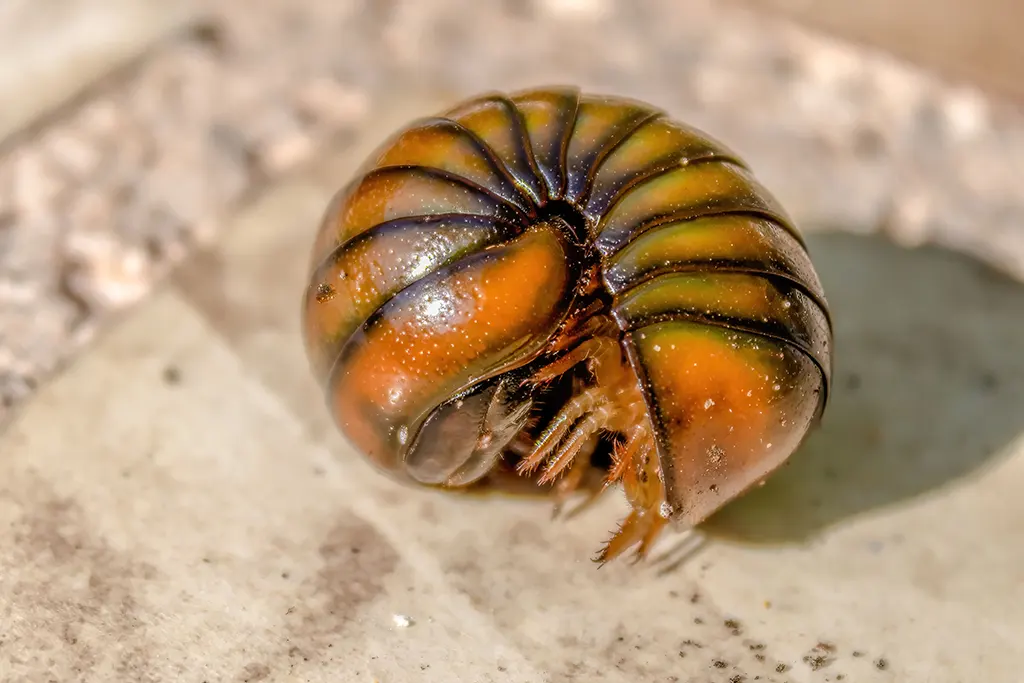
Month 3 is a useful checkpoint because it gives keepers time to notice whether the enclosure is actually functioning.
It is not a scientifically established deadline for bioactive failure.
If your cleanup crew appears to be disappearing, investigate the environment before buying replacements.
Problem 1: Your soil is too wet
This is one of the first things to investigate.
A substrate can retain too much water when:
- You repeatedly pour water into the same location.
- The drainage layer has become saturated.
- Water leaks or spills beneath a water bowl.
- The enclosure has inadequate moisture removal.
- Fine substrate has settled into dense, poorly aerated layers.
- The soil mix holds more moisture than the enclosure can safely accommodate.
Persistent saturation can reduce air-filled pore space, creating conditions unfavorable to plant roots and many soil organisms.
However, wet soil does not automatically mean the entire substrate is anaerobic. Actual conditions vary with particle size, organic matter, temperature, compaction, and water distribution.
Warning signs include:
- Standing water that remains for extended periods.
- A sour, rotten, or sewage-like odor.
- Black, slimy patches accompanied by persistent wetness.
- Plants declining despite apparently adequate watering.
- Substrate that remains saturated instead of gradually draining and aerating.
An earthy smell alone is not evidence of failure.
Problem 2: The substrate is being compacted
This is where ball pythons introduce a challenge that many generic bioactive guides underestimate.
A mature ball python can weigh well over 1.5 kg, with some individuals exceeding 2 kg.
Its weight is not distributed evenly across the substrate.
When a snake repeatedly moves through the same narrow pathways, presses against hides, or settles in one location, the soil underneath experiences repeated loading.
Over time, some substrate mixes may become denser.
Fine particles can migrate into larger pores. Organic components can break down. Repeated moisture cycles and physical disturbance can alter soil structure.
The result may be:
- Reduced pore space.
- Poorer local drainage.
- Fewer suitable refuges for some cleanup crew organisms.
- Reduced root aeration.
- Wet, compressed pockets beneath heavy furnishings.
This does not mean every ball python will crush an isopod colony.
The effect depends on the substrate, the snake, the enclosure design, and the availability of undisturbed refuges.
But it explains why a setup that works for a lightly stocked planted terrarium may struggle under a large terrestrial snake.
Problem 3: Your cleanup crew is starving
Many keepers assume that a snake produces enough waste to feed an entire colony.
That assumption can be wrong.
Isopods need suitable decaying plant material, leaf litter, and other appropriate food resources. Springtails depend on suitable microscopic food sources, including fungi.
A clean enclosure with little leaf litter, few refuges, and no supplemental food may not support a large cleanup crew.
On the other hand, dumping vegetables and excess food into the soil can create mold, attract unwanted pests, and worsen sanitation.
The solution is controlled feeding.
Maintain clean leaf litter and provide modest amounts of appropriate supplementary food if needed. Remove uneaten fresh food before it rots.
Problem 4: Your colony was never established
A small starting population, unsuitable species, accidental pesticide exposure, or a poorly designed moisture gradient can all undermine establishment.
Before blaming the snake, check:
- Is there a reliably damp refuge?
- Is there enough leaf litter?
- Are there pesticide-free hiding places?
- Is the substrate structurally suitable?
- Is the colony actually declining, or are the animals simply hidden?
- Could cleaning products, insecticides, or contaminated materials have affected the population?
If a colony genuinely collapses, rebuild the habitat conditions first.
Do not introduce replacement organisms into an enclosure with unresolved contamination, waterlogging, or a suspected infectious problem.
A Common Bioactive Failure Story: The Three-Month Trap
Consider this illustrative composite scenario, not a verified real keeper’s case.
A first-time keeper builds a beautiful bioactive enclosure with deep soil, plants, leaf litter, and a cleanup crew.
The sales pitch sounds reassuring: the cleanup crew will take care of the waste.
For several weeks, the setup looks excellent.
Then the keeper stops checking beneath the hides.
The snake defecates in a corner. Some waste is covered by leaf litter, and a little gets pressed into the substrate. The keeper assumes the cleanup crew will handle it.
Meanwhile, the same damp corner receives repeated watering. The lower substrate becomes increasingly wet, and compressed material around the hide drains poorly.
Eventually, the enclosure develops an unpleasant odor. The keeper notices fewer visible springtails and isopods.
During a routine inspection, the snake’s belly has a suspicious reddish patch.
The keeper finally removes the contaminated substrate and discovers how wet the lower layers have become.
The entire setup needs to be dismantled.
The lesson is not that bioactive causes scale rot, or that every three-month-old enclosure will fail.
It is that several maintenance failures can compound:
Missed waste + persistent wetness + poor substrate structure + delayed inspection = preventable risk.
And once the snake develops abnormal belly discoloration, the priority is veterinary assessment, not saving the planted display.
Month 6: The Enclosure Either Finds Its Balance or Shows You Its Weak Points
By Month 6, the most useful question is no longer whether your plants are growing.
It is whether the entire enclosure remains manageable.
A functioning setup should have a reasonably predictable maintenance routine. You should know where the cleanup crew hides, which areas stay damp, how the substrate behaves after watering, and where waste tends to accumulate.
What can change by Month 6?
1. Leaf litter becomes thinner.
This is normal to some extent. Decomposers consume and fragment organic material.
However, if the litter disappears faster than you replace it, the cleanup crew may lose important food and shelter.
Keep replenishing clean, pesticide-free leaf litter as necessary.
2. The substrate surface becomes uneven.
Burrowing organisms, plant roots, snake movement, and decomposition can change the surface.
Some settling is expected. Deep hollows, persistent wet depressions, or exposed drainage materials deserve investigation.
3. Plants begin competing with the enclosure’s layout.
A plant that looked harmless during setup can eventually block access to a hide, interfere with cleaning, or create a damp pocket against the glass.
Prune plants before they become an obstacle.
Keep the snake’s hides accessible and stable.
4. Hidden waste becomes a bigger issue.
Bioactive substrate does not make old waste disappear on command.
Organic material can break into smaller particles and become difficult to locate, but disappearance is not proof of complete decomposition or pathogen elimination.
The Month 6 maintenance audit
Perform a thorough inspection.
| Check | What you want to see |
|---|---|
| Main surface | No persistent wet film or muddy patches |
| Substrate | No extensive compacted, saturated areas |
| Drainage layer | No uncontrolled standing water |
| Leaf litter | Available in sufficient quantity for the CUC |
| Plants | Stable, healthy, not obstructing access |
| Hides | Secure, cleanable, no trapped waste |
| Snake’s belly | No suspicious discoloration, lesions, or damaged scales |
| Waste | Fresh feces and urates removed promptly |
If everything is functioning, you do not need to dismantle the enclosure just because it has reached six months.
If there are signs of failure, do not wait for Month 12.
Month 12: What a Successful Ball Python Bioactive Setup Actually Looks Like
A successful 12-month bioactive enclosure is not necessarily the one with the most plants or the largest cleanup crew.
It is the one that continues meeting the snake’s needs without requiring risky compromises.
A good long-term setup should have:
- Stable heating and appropriate humidity.
- A substrate that retains moisture without becoming persistently saturated.
- Accessible refuges for isopods and springtails.
- Healthy plant growth, where live plants are used.
- A manageable waste-removal routine.
- No persistent foul odors or extensive wet, degraded substrate.
- A snake whose skin, behavior, appetite, and body condition can be monitored.
Some enclosures will need partial substrate replacement. Others may require a full rebuild.
Neither outcome automatically means the keeper failed.
Bioactive systems have biological limits, and their long-term maintenance needs depend heavily on design and husbandry.
Should you replace bioactive substrate every year?
There is no universally validated annual replacement schedule for all ball python bioactive enclosures.
A functioning, well-maintained system may not need a complete annual substrate change.
But you should remove contaminated material whenever necessary and replace substrate that has become persistently waterlogged, foul, structurally degraded, or otherwise unsuitable.
If the entire enclosure becomes contaminated or a disease concern requires a different sanitation approach, a full teardown may be appropriate.
A conventional substrate setup can be easier to inspect, clean, and disinfect. That is a legitimate advantage, not a downgrade.
Best Isopods for Ball Pythons: Which Cleanup Crew Actually Makes Sense?
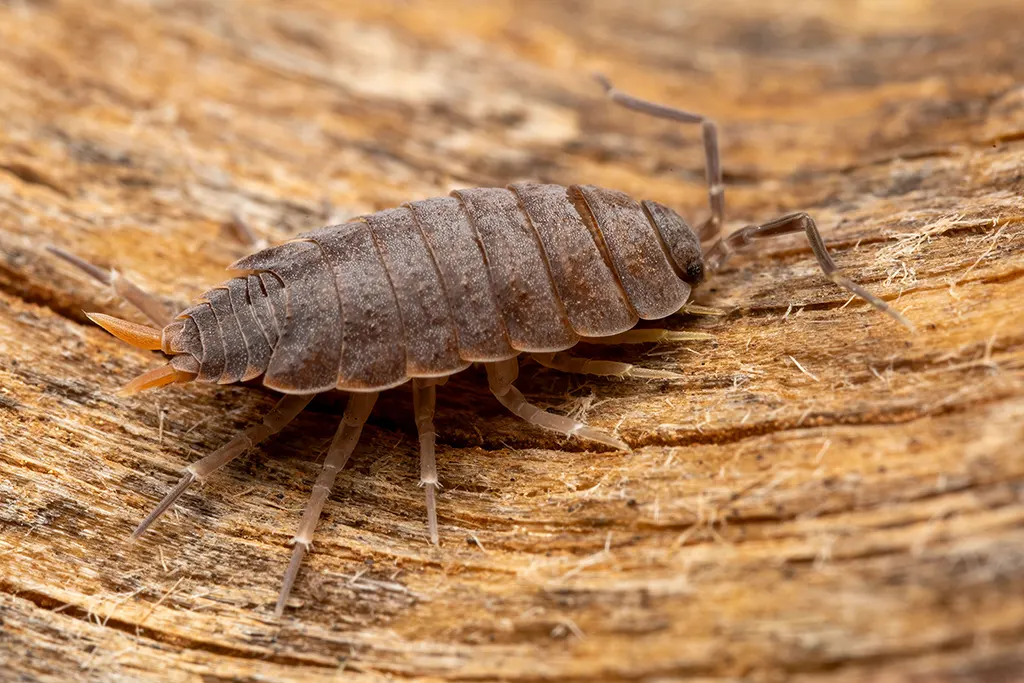
Not all isopods are equally suitable for every enclosure.
The most important factors are moisture requirements, temperature compatibility, reproduction, hiding behavior, food availability, and whether the species can establish itself without constant intervention.
There are no reliable, universally applicable comparative survival percentages proving that one isopod species survives ball python weight loads better than all the others.
That distinction matters.
A species can be hardy in a culture container and still struggle in a heavily disturbed enclosure.
Isopod comparison for a ball python bioactive enclosure
1. Porcellionides pruinosus — Powder Blue / Powder Orange
Practical starting option
A commonly recommended, adaptable isopod for bioactive setups. It can be a reasonable choice when the enclosure offers suitable moist refuges and enough food.
Best for: Keepers who want an active, visible colony and can provide appropriate conditions.
Limitation: Adaptability does not mean immunity to drying, flooding, compaction, or predation.
2. Trichorhina tomentosa — Dwarf White Isopods
Small, secretive isopods that live largely within the substrate.
Best for: Setups with protected substrate refuges and a stable moisture gradient.
Limitation: Their small size makes population monitoring difficult. Their presence does not prove the substrate is healthy.
3. Armadillidium vulgare — Common Pill Bug
A familiar terrestrial isopod, but not automatically the best choice for a warm, humid tropical-style enclosure.
Best for: Carefully designed setups with appropriate species-specific conditions and a moisture gradient.
Limitation: Its ecology and husbandry needs may not match a uniformly warm, damp bioactive enclosure.
4. Cubaris murina — Little Sea Isopod
A tropical isopod sometimes kept in humid terrarium environments.
Best for: Keepers familiar with species-specific isopod husbandry.
Limitation: There is insufficient comparative evidence to recommend it as a superior choice under heavy ball python traffic.
My practical recommendation
For a keeper building their first ball python bioactive enclosure, I would prioritize a suitable, established colony of powder isopods or dwarf white isopods over expensive or unusual species.
That is a husbandry-based starting recommendation, not a proven ranking of survival rates.
The setup itself matters more than buying a premium morph.
Also, be cautious about mixing multiple isopod species simply because a seller advertises a more diverse cleanup crew. Different species can have different environmental needs and may compete.
Start simple.
What about springtails?
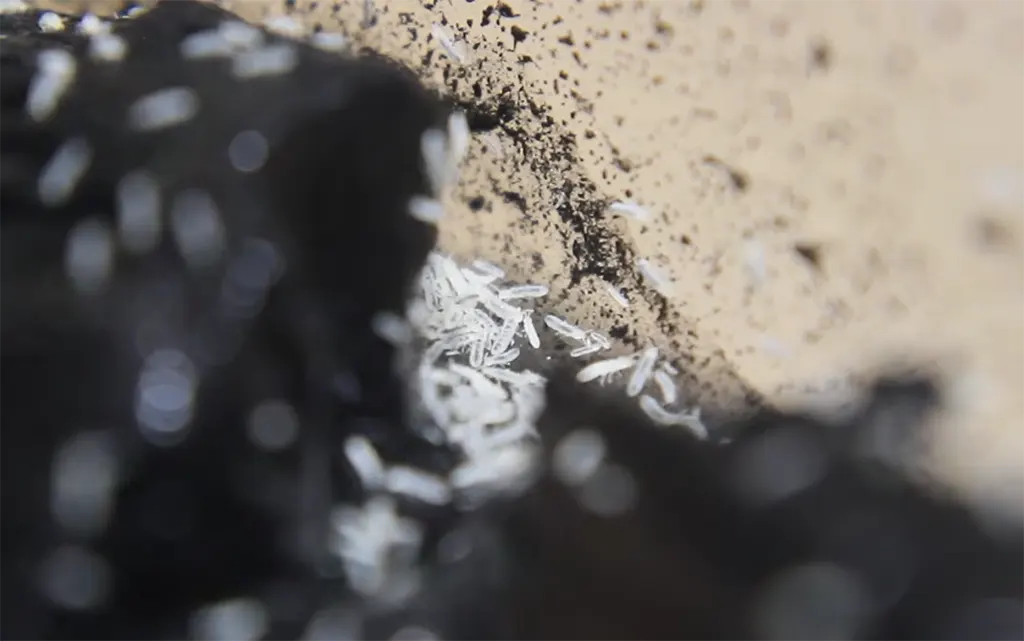
Photo via YouTube (SerpaDesign)
Springtails are valuable partners for isopods, especially where fungal growth and decomposing plant material are present.
They are not a substitute for isopods, and isopods are not a substitute for springtails.
The two groups have overlapping but different feeding habits.
A healthy springtail population can help manage some fungal growth, but mold control is not guaranteed. Persistent mold, wet substrate, and decaying food still require investigation.
Why the Heaviest Ball Pythons Can Be the Hardest on Bioactive Substrate
This is an important consideration when choosing between a naturalistic substrate and a full bioactive build.
A ball python weighing 2 kg is not necessarily a problem for bioactive.
The real issue is the interaction between weight, substrate depth, particle structure, moisture, and repeated traffic — and the snake’s own weight is worth checking too, since a genuinely overweight ball python puts more load on the same soil.
The hidden problem: compaction
Think of the substrate as a network of small spaces.
Those spaces hold air and water.
Many soil organisms and plant roots depend on a balance between them.
When the substrate becomes compacted, some of those spaces shrink or disappear.
The soil may then drain poorly and stay wet longer.
This is particularly concerning in areas under:
- Heavy hides.
- Large water bowls.
- Repeated snake resting spots.
- Frequently used travel routes.
- Dense decorations with broad contact surfaces.
A compacted area is not automatically anoxic, and not every isopod requires loose, fluffy soil.
Different species use different microhabitats.
The problem is that severe compaction can reduce habitat quality and create moisture conditions that are difficult to manage.
How to reduce compaction
Use structure, not just depth.
A deeper layer is not necessarily better if the mix collapses into a dense, saturated mass.
Choose a substrate blend appropriate for the plants and animals involved, with sufficient structural stability.
Use leaf litter and suitable bark refuges.
Avoid placing massive, unstable decorations directly on loose soil.
Where heavy hides are necessary, use a stable base designed to support the structure without creating inaccessible, contaminated cavities.
Inspect common resting areas regularly.
Do not repeatedly dig through the entire substrate to look for isopods. This can disturb roots and refuges.
Urates Are Not Ordinary Poop: Why Your Cleanup Crew Cannot Handle Everything
One of the most misleading ideas in bioactive reptile keeping is that all animal waste eventually becomes fertilizer.
Ball python waste commonly includes feces and a pale, solid or pasty urate mass.
Urates are a concentrated nitrogenous waste product, largely consisting of uric acid and associated compounds.
They are not equivalent to ordinary mammalian feces.
Their consistency and composition vary with hydration, diet, and health.
Why urates can create problems
A concentrated waste deposit can create a localized organic and mineral load.
When waste remains in one location, moisture and decomposition can alter the surrounding substrate.
However, a critical distinction is necessary:
There is no sound basis for claiming that every urate deposit inevitably makes the soil alkaline, releases dangerous ammonia, or poisons the cleanup crew.
The actual outcome depends on the chemistry of the waste, microbial activity, moisture, temperature, and the substrate.
Urates are not instant toxins to every decomposer.
But they are also not something you should deliberately leave behind for your cleanup crew.
Where does ball python poop go in bioactive?
The answer is simple: sometimes it breaks down, sometimes it becomes hidden, and sometimes it remains recognizable for days or longer.
Your cleanup crew may consume some accessible organic material.
Microorganisms may contribute to decomposition.
But a large dropping can remain intact, particularly when it is fresh or contains a substantial urate deposit.
You should not wait for it to disappear.
The correct waste-removal protocol
- Inspect the enclosure daily.
- Remove feces and urates promptly when discovered.
- Remove visibly contaminated leaf litter and surrounding substrate as needed.
- Replace the removed material with clean, suitable substrate.
- Inspect the area underneath and around the waste.
- Wash your hands after handling the snake, substrate, or enclosure materials.
Use dedicated tools and avoid spreading waste across the enclosure.
Do not use household disinfectants, insecticides, or chemical cleaners directly in the bioactive substrate.
If the snake has diarrhea, unusual urates, blood, repeated abnormal stools, or other concerning symptoms, seek veterinary advice.
Bioactive does not change the rule: fresh snake waste is your responsibility.
Ball Python Substrate Moisture: How to Keep the Bottom Damp Without Making the Surface Wet
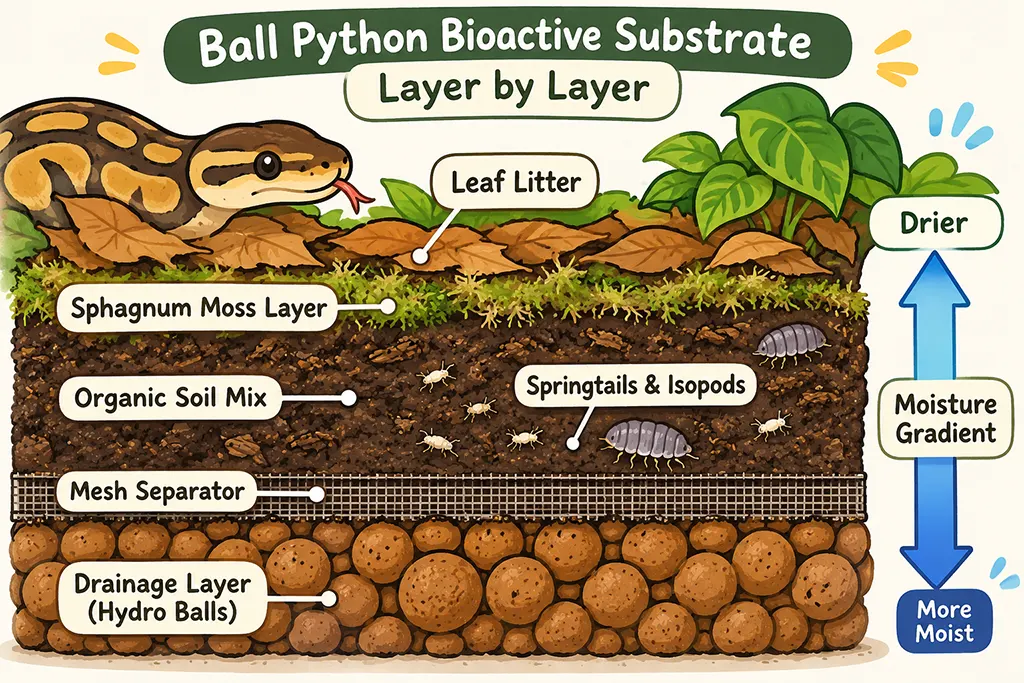
This is probably the most important section of the entire guide.
A ball python needs appropriate humidity, but high air humidity and constantly wet belly-contact surfaces are not the same thing.
Some keepers solve low humidity by repeatedly spraying the surface.
That can temporarily increase humidity readings, but it may also leave the substrate surface persistently wet.
A better approach is to manage moisture inside the substrate and monitor the enclosure’s actual conditions — and if the readings are still low after that, the cause is usually enclosure-level rather than substrate-level, which our ball python low humidity fix breaks down.
What humidity should a ball python bioactive enclosure have?
For many captive ball pythons, a practical husbandry target is approximately 60–80% relative humidity, with conditions monitored across the enclosure.
Care recommendations vary by source, measurement location, and husbandry approach. Some veterinary and husbandry guides recommend somewhat different targets or gradients.
ReptiFiles discusses a humidity range of 45–75% in its ball python care sheet, while other care resources recommend higher humidity in parts of the enclosure. These differences are one reason not to treat a single number as a universal safety threshold.
For practical management:
- Use a reliable digital hygrometer.
- Measure conditions at the snake’s level, not just near the enclosure lid.
- Monitor more than one location when possible.
- Maintain an appropriate temperature gradient.
- Provide a humid hide when useful.
- Avoid persistently wet substrate surfaces.
Humidity should be interpreted alongside temperature, ventilation, and the snake’s condition.
A reading of 75% does not tell you whether the substrate underneath a hide is saturated.
The moisture gradient method
The goal is not to make every layer equally damp.
Instead, establish different moisture zones.
| Area | Practical objective |
|---|---|
| Main travel surface | Generally dry to the touch, not muddy or persistently wet |
| Substrate beneath leaf litter | May be moderately moist |
| Protected CUC refuge | Reliably damp, with airflow and no standing water |
| Root zone | Moisture appropriate for plant species, without chronic saturation |
| Drainage layer | A functional drainage space, not an indefinitely accumulating reservoir |
These are qualitative management goals, not laboratory-validated moisture percentages.
You do not need a specific surface moisture percentage to keep a ball python safe.
You need a substrate that behaves predictably and allows you to monitor the snake.
How to water the substrate correctly
Instead of spraying the whole enclosure every time humidity drops:
- Check the hygrometer and temperature readings.
- Check the substrate under the leaf litter.
- Identify whether the problem is insufficient moisture, poor ventilation, excessive heating, or another issue.
- Add measured water to appropriate substrate areas when needed.
- Avoid repeatedly soaking the same corner.
- Recheck the surface and lower substrate after watering.
If the surface becomes wet every time you correct humidity, reconsider your setup.
Possible adjustments include improving moisture retention deeper in the substrate, reducing excessive ventilation where appropriate, using a humid hide, or changing the substrate blend.
Do not seal a poorly ventilated enclosure simply to force the humidity reading upward.
Drainage Layer: Do You Really Need 2 Inches of LECA?
A drainage layer can be useful in some planted bioactive enclosures, but it is not a universal requirement for ball pythons — in a humid climate you may never need one, while a dry indoor room is a different calculation, as our ball python regional climate control guide explains.
Some setups use expanded clay aggregate (LECA), sometimes called Hydroton, or other drainage materials.
Others use substrate designs without a separate drainage reservoir.
Both approaches have trade-offs.
What a drainage layer actually does
A drainage layer provides space where excess water can collect below the main substrate.
A mesh or suitable separation barrier can help prevent the substrate from migrating into the drainage material.
However, a drainage layer does not make overwatering safe.
It does not remove water automatically.
It does not guarantee oxygenated soil.
It does not prevent scale rot.
A drainage reservoir that is never inspected can become another hidden problem.
Is 2 inches the correct drainage depth?
A 2-inch drainage layer is a design option, not a scientifically established minimum for every ball python bioactive enclosure.
The appropriate depth depends on:
- Enclosure footprint.
- Substrate composition.
- Plant requirements.
- Watering volume.
- Drainage design.
- Whether accumulated water can be safely removed.
Some tropical bioactive designs use drainage layers of this approximate depth or greater, while other setups use different approaches.
A larger drainage layer does not necessarily provide better drainage if water cannot escape or be removed.
If you choose a drainage layer
A reasonable design sequence is:
- Create a stable, level drainage base.
- Install a durable, suitable separation mesh.
- Add the substrate blend.
- Establish plants and leaf litter.
- Provide protected CUC refuges.
- Ensure the reservoir can be inspected and emptied safely.
Avoid sharp materials or exposed edges.
Make sure the snake cannot access or ingest loose drainage components.
Do not allow the substrate to sit in accumulated water.
If water repeatedly accumulates, reduce watering and investigate the cause instead of simply increasing the drainage depth.
A simpler alternative: no drainage reservoir
For some ball python keepers, a carefully managed substrate without a separate drainage reservoir may be easier to monitor.
This can work when the substrate mix, moisture management, and watering approach are appropriate.
The advantage is fewer hidden water-storage spaces.
The disadvantage is that excess water has nowhere to collect beneath the soil, so overwatering may directly saturate the root zone.
There is no single design that is best for every enclosure.
Scale Rot From Wet Bioactive Substrate: What Actually Causes It?
Scale rot is a common keeper term for inflammatory or infectious skin disease affecting the scales, often associated with prolonged exposure to unfavorable environmental conditions.
It may involve bacterial infection and other skin damage.
Persistent dampness, contaminated substrate, poor hygiene, and unsuitable environmental conditions can increase concern, but the disease should not be reduced to one simple formula.
Wet substrate is a risk factor, not an automatic diagnosis.
Likewise, the presence of anaerobic microorganisms does not prove that scale rot will develop.
Why persistent wetness is concerning
When the belly repeatedly contacts wet, contaminated surfaces, the skin may be exposed to prolonged moisture and environmental irritants.
If the substrate also contains accumulated waste or decaying material, the situation becomes harder to manage hygienically.
A healthy enclosure should provide adequate humidity without requiring the snake to remain on wet flooring.
Early warning signs
Check for:
- New reddish or pink discoloration on belly scales.
- Unusual brown or dark patches.
- Blisters, sores, or crusting.
- Damaged or lifting scales.
- Persistent abnormal discoloration.
- Swelling or discharge.
Not every red patch is scale rot — our guide to ball python scale rot covers the early signs, how to tell them apart from premolt coloration and thermal burns, and when home care stops being appropriate.
Pigmentation, normal skin variation, friction, trauma, and other conditions can look similar.
If you notice suspicious lesions, arrange an assessment with a reptile-experienced veterinarian.
Do not attempt to diagnose or treat a potentially infected lesion solely from a photograph or internet checklist.
What to do if you suspect scale rot
- Move the snake to a clean, secure temporary enclosure with appropriate heating and humidity.
- Use clean, easily replaceable paper substrate as advised by your veterinarian.
- Avoid applying disinfectants, essential oils, or random topical products to the snake.
- Photograph the affected area for comparison.
- Arrange veterinary assessment, especially if lesions are spreading, blistering, ulcerated, or accompanied by other symptoms.
- Correct the original husbandry problem before rebuilding the bioactive enclosure.
If you suspect infectious disease, ask your veterinarian whether dedicated equipment, isolation procedures, or additional testing is needed.
Do not try to preserve the CUC at the expense of your snake’s health.
How to Rescue a Failing Bioactive Enclosure
If your cleanup crew is declining, resist the temptation to tear everything apart immediately.
First, determine what is failing.
Bioactive Troubleshooting Checklist
Isopods are rarely visible
Inspect refuges at night. Check food, moisture, and colony condition before assuming a die-off.
Springtails seem gone
Check damp refuges and organic material. Surface visibility alone is not a reliable population test.
Soil smells rotten
Inspect underneath hides and wet areas. Remove contaminated material and investigate saturation.
Water collects in the drainage layer
Reduce watering, inspect the reservoir, and safely remove accumulated water.
Substrate is hard and compacted
Inspect affected areas. Replace unsuitable material and restore a more stable structure.
Snake has suspicious belly lesions
Prioritize veterinary assessment and a clean temporary enclosure. Do not wait for the CUC to recover.
Reset checklist
When should you rebuild the entire enclosure?
A full rebuild may be the most sensible choice when:
- The substrate is extensively contaminated.
- Persistent waterlogging cannot be corrected in place.
- The soil has become structurally unsuitable.
- There is suspected disease transmission or chemical contamination.
- The enclosure design prevents reliable inspection and cleaning.
A partial replacement can be reasonable if the problem is genuinely localized and the remaining substrate is suitable.
Do not automatically discard every healthy plant or every isopod colony because one patch of substrate became wet.
However, do not transfer potentially contaminated organisms or substrate into a new enclosure without considering the source of contamination and any veterinary advice.
The Maintenance Schedule That Actually Works
Bioactive setups benefit from predictable routines.
Here is a practical starting schedule. It should be adjusted to the individual snake and enclosure.
| Frequency | Maintenance task |
|---|---|
| Daily | Check snake condition, water, temperatures, humidity, and visible waste |
| As soon as found | Remove feces, urates, and contaminated material |
| Weekly | Inspect hides, common waste locations, leaf litter, plant condition, and damp refuges |
| Monthly | Review substrate structure, moisture patterns, drainage, and CUC condition |
| Every 3–6 months | Perform a deeper condition assessment; this is a review interval, not an automatic replacement schedule |
| Annually | Conduct a comprehensive enclosure review; replace material according to condition, not age alone |
A quick daily check should not become an excuse to skip proper sanitation.
If the snake has a health problem, a routine bioactive maintenance schedule is no longer the priority.
FAQ: Ball Python Bioactive Substrate
Is bioactive substrate safe for ball pythons?
It can be suitable when properly designed and maintained.
The main concerns are excessive moisture, contamination, ingestion hazards, inappropriate materials, poor heating, and inadequate waste removal.
A naturalistic appearance does not automatically mean an enclosure is safe.
Why are my isopods dying in my ball python tank?
Potential reasons include desiccation, waterlogging, inadequate food, unsuitable temperature, pesticide exposure, habitat disturbance, and physical damage.
Start by checking their refuges, moisture gradient, substrate condition, and available food.
Do not assume the snake’s weight is the only cause.
What are the best isopods for heavy snakes?
There is no validated universal ranking based on survival under ball python weight loads.
Powder isopods (Porcellionides pruinosus) and dwarf white isopods (Trichorhina tomentosa) are reasonable candidates to investigate, depending on the enclosure’s conditions.
For heavier snakes, protected refuges and substrate structure may matter more than chasing a supposedly indestructible species.
Do springtails eat ball python poop?
Springtails consume microscopic organic resources, including fungi and decomposing material.
They are not reliable waste-removal organisms for large fecal deposits.
Remove snake feces and urates yourself.
Where does ball python poop go in bioactive?
It may remain intact, fragment, become buried, or undergo partial decomposition.
Some organic components can be consumed by decomposers, but disappearance does not prove the material has been completely or safely processed.
Always spot-clean.
Does bioactive substrate cause scale rot?
Not inherently.
Bioactive substrate can provide appropriate environmental conditions, but persistently wet or contaminated surfaces may increase skin-health risks.
The objective is appropriate humidity with a substrate surface that does not remain excessively wet.
Do I need a drainage layer for a ball python?
Not necessarily.
A drainage layer can help manage excess water in some designs, but it can also become a hidden reservoir if poorly managed.
Good substrate structure, measured watering, and inspection are essential either way.
How deep should ball python bioactive substrate be?
There is no universal depth requirement for every setup.
Some keepers use approximately 4–6 inches or more, especially in planted enclosures, but the right depth depends on the substrate, plant roots, drainage design, enclosure dimensions, and maintenance strategy.
A deeper layer can hold more moisture, but it can also make inspection harder.
Depth alone does not guarantee success.
Can I use coconut coir or coco fiber?
Coconut-based materials are commonly used in reptile husbandry, but pure fine coir may compact or retain moisture differently from a mixed substrate.
Its suitability depends on the complete substrate blend and enclosure design.
Avoid assuming that any product marketed as reptile bedding is automatically ideal for a living soil system.
Use clean materials without inappropriate additives or contaminants.
Should I remove the ball python when cleaning the substrate?
For routine spot-cleaning, follow safe handling practices and avoid unnecessary disturbance.
For extensive substrate replacement, major cleaning, or any procedure involving chemicals or suspected contamination, secure the snake in an appropriate temporary enclosure.
Never leave the snake in the enclosure during cleaning or disinfection procedures that could expose it to chemicals, unsafe temperatures, or loose materials.
Can bioactive substrate eliminate the need for full cleaning?
No.
A stable bioactive enclosure may reduce the need for routine full substrate replacement, but there is no guarantee.
Waste removal, hygiene, inspections, and occasional substrate replacement remain necessary.
Final Verdict: Should You Build a Ball Python Bioactive Enclosure?
My recommendation depends on what you actually want.
Bioactive makes sense if…
- You enjoy planted enclosure design.
- You are willing to manage soil moisture and cleanup crew populations.
- You can inspect waste locations regularly.
- You understand that the cleanup crew is supplementary.
- You have a practical backup plan if the ecosystem fails.
A simpler substrate may be better if…
- You want straightforward cleaning.
- Your snake has ongoing skin-health concerns.
- You need reliable waste visibility.
- Your enclosure frequently develops standing water.
- You cannot consistently maintain a living substrate system.
For keepers who want naturalistic aesthetics without the biological complexity, a well-maintained naturalistic enclosure without an intentionally established cleanup crew is a perfectly reasonable middle ground.
You can still use suitable substrate, sturdy hides, climbing opportunities, and carefully chosen plants.
You do not have to turn every reptile enclosure into a miniature ecosystem.
The bottom line: A ball python bioactive setup succeeds when the keeper manages the conditions, not when the keeper trusts the bugs.
The cleanup crew is there to assist you.
It is not there to replace you.
Printable Ball Python Bioactive Setup & Maintenance Checklist
Building a successful bioactive enclosure takes more than choosing attractive plants and adding a few isopods. You need the right substrate materials, a balanced moisture gradient, an established cleanup crew, and a consistent maintenance routine.
Use this practical checklist to evaluate your setup from the initial material selection to long-term maintenance. You can also use it as a printable reference when inspecting your ball python’s enclosure.
1. Material Selection Checklist
Choose safe, suitable materials before building your enclosure.
Enclosure & Structure
- The enclosure provides adequate space for the snake to stretch out and move naturally.
- The enclosure has secure doors, ventilation, and escape-proof openings.
- Heating equipment is suitable for the enclosure and controlled by an appropriate thermostat.
- Heat sources are guarded or otherwise inaccessible to prevent burns.
- Hides, branches, rocks, and decorations are stable and cannot collapse or trap the snake.
- Heavy furnishings have secure support and will not sink into loose substrate.
Substrate Selection
- The substrate is free from pesticides, fertilizers, chemical treatments, and unsuitable additives.
- The substrate is appropriate for ball pythons and compatible with the intended plants and cleanup crew.
- The substrate mix retains some moisture without becoming persistently saturated.
- The mix has sufficient structure to resist excessive compaction.
- Fine, dusty, sharp, or easily ingested loose materials have been avoided where inappropriate.
- The substrate depth suits the enclosure design, plant roots, and maintenance requirements.
- A small sample has been checked for drainage, moisture retention, and structural stability.
Leaf Litter, Moss & Decorations
- Leaf litter is clean, pesticide-free, and suitable for terrarium use.
- Bark and wood are safe, clean, and free from pests or chemical treatments.
- Sphagnum moss is used selectively where moisture retention is needed.
- Loose moss cannot easily become entangled with prey or be accidentally ingested.
- Plants are correctly identified and suitable for reptile enclosures.
- Plants have not been treated with pesticides or systemic chemicals of concern.
- Plant roots and pots do not introduce unsuitable fertilizers or contaminated materials.
Drainage & Water Management
- I have decided whether this enclosure actually needs a drainage layer.
- If used, the drainage layer has an appropriate separation barrier.
- The mesh is durable, suitable for enclosure use, and prevents substrate migration.
- Drainage materials cannot be accessed or swallowed by the snake.
- The drainage reservoir, if present, can be inspected and safely emptied.
- I understand that a drainage layer stores excess water; it does not automatically remove it.
2. Bioactive Ecosystem Setup Checklist
Build a functional ecosystem instead of simply adding plants and bugs.
Establish the Environment
- The enclosure’s temperature gradient has been tested.
- Warm-side and cool-side temperatures have been measured using reliable instruments.
- Humidity is monitored at the snake’s level.
- Humidity readings are checked in more than one location when practical.
- The enclosure maintains an appropriate humidity range without leaving the main surface persistently wet.
- A suitable humid hide is available when needed.
- Water bowls are stable, accessible, and unlikely to flood the substrate.
- Ventilation is adequate without causing excessive drying.
Build the Moisture Gradient
- The main travel surface is generally dry to the touch.
- The substrate beneath leaf litter is checked for excessive wetness.
- Suitable damp refuges are available for the cleanup crew.
- The substrate is not uniformly soaked.
- There are no persistent puddles or uncontrolled wet pockets.
- Watering is measured and adjusted according to actual conditions.
- I have checked moisture beneath hides and around water bowls.
Establish the Cleanup Crew (CUC)
- I selected isopods suitable for the enclosure’s temperature and moisture conditions.
- I selected compatible springtails where appropriate.
- The cleanup crew comes from a reputable source.
- The colony is introduced only after the habitat conditions are suitable.
- There are protected refuges beneath cork bark, leaf litter, or other suitable cover.
- The cleanup crew has access to appropriate food resources.
- Supplemental food is offered conservatively when necessary.
- Uneaten food is removed before it becomes a sanitation problem.
- I understand that isopods and springtails cannot replace manual waste removal.
- I have a backup plan if the cleanup crew declines.
Plant & Habitat Placement
- Plants are positioned without blocking access to hides.
- Plant placement does not create inaccessible waste traps.
- There are open areas for movement and observation.
- The snake has secure, appropriately sized hides.
- Plants and decorations cannot injure the snake.
- The enclosure can be cleaned without dismantling the entire habitat.
3. Before Introducing the Ball Python
Do not use a fixed number of days as the only readiness test.
- Heating and temperature control have been tested.
- Humidity remains reasonably stable under normal operating conditions.
- The substrate drains and behaves as expected after watering.
- No persistent waterlogging or foul odors are present.
- Plants are stable and loose materials are secured.
- The cleanup crew has suitable habitat and food.
- The enclosure is free from visible chemical contamination.
- The snake’s hides, water bowl, and movement areas are ready.
- I have a clean backup enclosure available.
- I have a plan for daily inspections and spot-cleaning.
- I have identified a reptile-experienced veterinarian.
Ready for introduction?
- Yes — all critical husbandry and safety checks are satisfactory.
- No — outstanding problems need to be corrected first.
4. Daily Maintenance Checklist
Complete daily, and whenever waste or a problem is discovered.
- Check the snake’s behavior and general condition.
- Check temperature readings and thermostat operation.
- Check humidity readings.
- Check water quality and refill or replace water as needed.
- Inspect visible substrate surfaces for wet patches.
- Check accessible hides and common waste locations.
- Remove feces and urates promptly when found.
- Remove visibly contaminated substrate or leaf litter as needed.
- Check for spills, flooding, or unusual odors.
- Confirm that the snake has access to clean, dry resting areas.
Important: Do not wait for the cleanup crew to consume feces or urates.
5. Weekly Maintenance Checklist
- Inspect beneath accessible hides and leaf litter.
- Check the substrate around the water bowl.
- Look for compacted or persistently wet areas.
- Check drainage accumulation, if a drainage layer is installed.
- Inspect plant health and remove unsuitable decaying plant material.
- Replenish clean leaf litter when necessary.
- Check whether the cleanup crew has suitable refuges and food.
- Observe the colony without unnecessarily disturbing it.
- Inspect furnishings for movement, damage, or instability.
- Check the snake’s skin for unusual discoloration, blisters, sores, or damaged scales.
- Clean contaminated equipment and wash hands after handling waste.
6. Monthly Bioactive Health Check
Substrate Condition
- The substrate still has a suitable structure.
- There is no extensive compaction.
- The substrate does not remain excessively wet.
- No persistent rotten or sewage-like odor is present.
- There are no widespread slimy or deteriorating areas.
- The surface remains suitable for normal snake movement.
- The substrate has not settled in a way that compromises hide stability.
Cleanup Crew Condition
- Isopods or other cleanup crew organisms are observed in suitable refuges, if visible.
- I checked appropriate refuges before assuming the colony has declined.
- There are no obvious widespread unexplained die-offs.
- Suitable food and moisture remain available.
- I have investigated possible pesticide exposure or other contamination if mortality occurs.
Snake Health
- The snake’s body condition is monitored over time.
- Feeding and shedding records are updated.
- The belly and scales are checked during appropriate handling.
- There are no suspicious lesions or persistent abnormal discoloration.
- Weight is recorded periodically using a consistent method.
- Any concerning changes are documented and discussed with a veterinarian.
7. Troubleshooting & Corrective Action Checklist
If Isopods or Springtails Seem to Disappear
- Inspect their normal refuges.
- Check moisture levels and temperature.
- Check food availability.
- Check for excessive disturbance or compaction.
- Investigate possible pesticide or chemical exposure.
- Correct the underlying issue before introducing replacements.
If the Substrate Becomes Waterlogged
- Stop unnecessary watering.
- Check for water bowl leaks or spills.
- Inspect the substrate beneath hides.
- Check the drainage reservoir, if present.
- Remove accumulated water safely.
- Remove contaminated or unsuitable substrate.
- Reassess ventilation and substrate composition.
- Confirm that the snake has appropriate resting surfaces.
If the Substrate Smells Rotten
- Inspect the source of the odor.
- Check for hidden feces, urates, decaying food, or plant material.
- Inspect saturated or compacted areas.
- Remove contaminated material.
- Investigate whether partial replacement or a complete rebuild is needed.
- Do not cover the odor with fragrances or chemical products.
If the Snake Develops Suspicious Skin Changes
- Prioritize the snake’s health over preserving the bioactive ecosystem.
- Arrange assessment by a reptile-experienced veterinarian.
- Use a clean, appropriate temporary enclosure if advised or needed.
- Document the appearance and progression of lesions.
- Review moisture, sanitation, and potential injury sources.
- Follow veterinary guidance on cleaning and disinfection.
8. Long-Term Maintenance Review
Every 3–6 Months
- Review substrate structure and moisture distribution.
- Inspect hidden areas and drainage.
- Review the cleanup crew’s condition.
- Assess whether plants or decorations need adjustment.
- Review waste-removal consistency.
- Decide whether localized substrate replacement is needed.
Annually
- Conduct a comprehensive enclosure review.
- Assess whether the current setup still meets the snake’s needs.
- Review equipment condition and safety.
- Replace substrate based on condition, contamination, and suitability—not simply age.
- Consider whether bioactive remains practical for this individual snake.
9. Monthly Inspection Log
Use this table to record changes and identify recurring problems before they become serious.
| Date | Humidity | Warm / Cool Temps | Substrate Condition | CUC Observations | Action Taken |
|---|---|---|---|---|---|
| ______ | ______ | ______ | ______ | ______ | ______ |
| ______ | ______ | ______ | ______ | ______ | ______ |
| ______ | ______ | ______ | ______ | ______ | ______ |
| ______ | ______ | ______ | ______ | ______ | ______ |
Final Keeper Self-Assessment
- I can maintain the enclosure without relying on the cleanup crew to remove snake waste.
- I can identify early signs of waterlogging and substrate deterioration.
- I can monitor my snake’s health without compromising the ecosystem.
- I understand that bioactive is not maintenance-free.
- I am prepared to simplify or rebuild the enclosure if necessary.
My next maintenance priority:
Additional Notes:
Husbandry reminder: This checklist is a practical management aid, not a veterinary diagnostic tool. Environmental requirements vary by animal, enclosure, and husbandry method. Seek reptile veterinary advice for suspected disease or persistent health concerns.
References & Further Reading
These resources are useful starting points for understanding ball python husbandry, bioactive substrate structure, and cleanup crew biology. They do not establish a scientifically proven 12-month failure timeline or a universal isopod survival ranking for ball python enclosures.
1. Reptile & Rescue — Ball Python Care Guide
Husbandry guidance covering substrate, humidity, waste removal, and skin-health monitoring.
Read the Ball Python Care Guide
2. Reptile & Rescue — The Clean-Up Crew
Overview of isopods, springtails, food sources, moisture needs, and species selection.
Read the Clean-Up Crew Guide
3. Reptile & Rescue — Core Elements
Explains drainage layers, substrate layers, mesh barriers, leaf litter, and moisture retention in bioactive setups.
Read the Bioactive Core Elements Guide
4. ReptiFiles — Ball Python Care Sheet
Husbandry reference for temperature, humidity, substrate, and enclosure management.
Read the Ball Python Care Sheet
5. PetMD — Ball Python Care Sheet
General veterinary-oriented care information, including substrate considerations and enclosure cleaning.
Read the PetMD Care Sheet
6. Dr. Mark — Ball Python Husbandry
Additional husbandry guidance on substrate, humidity, and avoiding excessively wet bedding.
Read the Husbandry Guide
This content is for educational purposes only and does not substitute professional veterinary diagnosis or treatment. If you observe any symptoms of illness, injury, or abnormal behavior, please consult a qualified exotic animal veterinarian immediately.
For more details, please review our full Medical Disclaimer.