
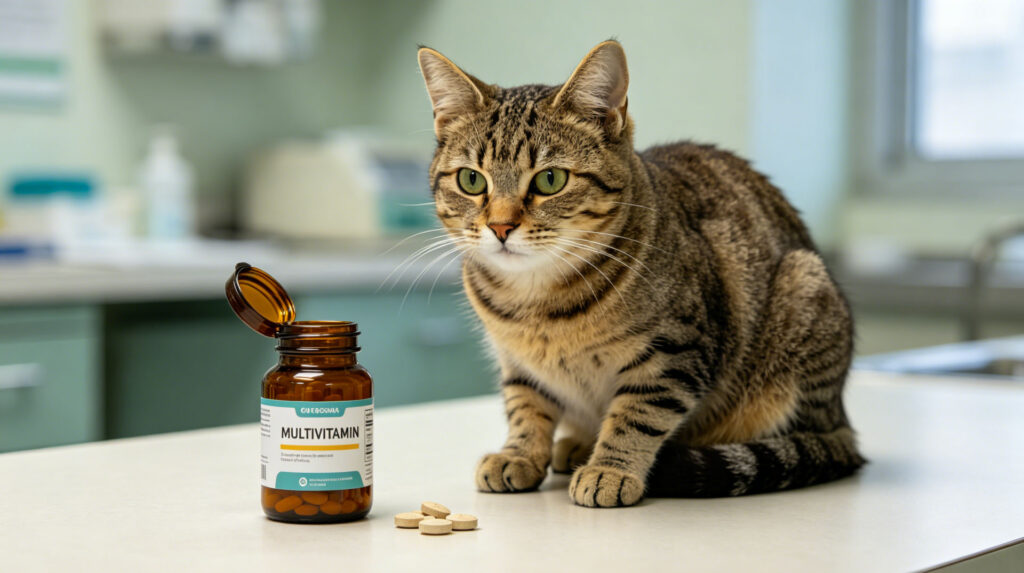
Introduction: Why Vitamin Safety Matters for Your Cat
Vitamins are essential to your cat’s health, supporting everything from immune function to bone development. However, many US cat owners overlook a critical truth: Cat Vitamin Toxicity is a real and potentially deadly threat. Unlike humans, cats have a unique metabolism that processes nutrients differently. Nutrition is only half the equation for indoor cats — the other half is environmental stimulation, since inactivity is the main driver of obesity and metabolic issues. See our roundup of indoor cat enrichment ideas.
According to clinical veterinary data, countless cases of feline illness occur when well-intentioned owners over-supplement. Based on professional veterinary insights, this guide breaks down the risks of Cat Vitamin Toxicity, specifically focusing on the dangers of fat-soluble vitamins and how to provide supplements safely.
Fat-Soluble vs. Water-Soluble Vitamins: The Science of Overdose
To understand Cat Vitamin Toxicity, you must distinguish between how vitamins are stored in the body.
- Fat-Soluble Vitamins (A, D, E, K): These are the primary culprits in most toxicity cases. They are stored in the liver and fatty tissues. Because they are not flushed out daily, they can accumulate to toxic levels over months.
- Water-Soluble Vitamins (B-complex, C): These are generally safer. Any excess is usually excreted in the urine. While “mega-dosing” isn’t recommended, the risk of poisoning is extremely low.
Quick Comparison Table
| Vitamin Type | Examples | Toxicity Risk | Storage |
| Fat-Soluble | A, D, E, K | High Risk | Stored in Liver/Fat |
| Water-Soluble | B12, B6, C | Low Risk | Excreted in Urine |
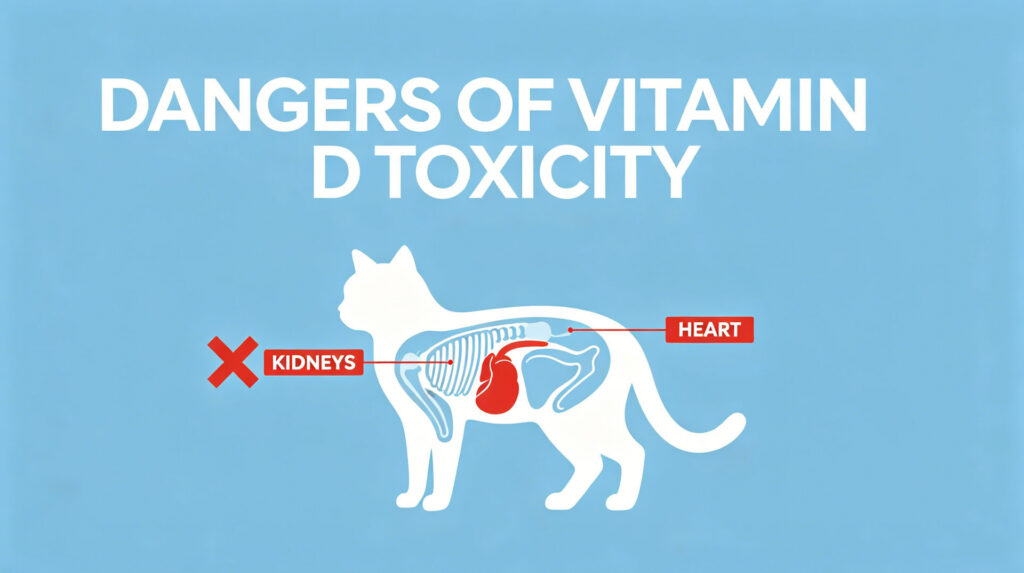
Vitamin D Toxicity: The Most Urgent Threat
Vitamin D Toxicity is historically one of the most common acute poisonings reported in veterinary clinics nationwide. While Vitamin D is essential for calcium regulation, but in excess, it turns into a poison that destroys organs. Vitamin D toxicity often presents with vomiting and hypercalcemia — if your cat develops vomiting while on supplements, distinguish it from fasting-related bilious vomiting. See our guide on cat vomiting yellow bile for differential causes.
Common Causes of Vitamin D Overdose
- Rodenticides: Many US rat poisons use cholecalciferol (Vitamin D3). If your cat eats the poison or a poisoned rodent, it can lead to fatal Cat Vitamin Toxicity.
- Over-Supplementation: Giving human-grade Vitamin D drops to cats is extremely dangerous.
- Dietary Errors: Some commercial treats or unbalanced “all-fish” diets contain hidden, excessive levels of Vitamin D.
Vitamin A Toxicity: The Silent Crippler
While Vitamin D hits fast, Vitamin A Toxicity in cats is often a slow, agonizing process. Cats cannot convert plant-based pigments into Vitamin A; they must get it from animal tissues.
The “Liver Diet” Danger
The most common cause of Vitamin A overdose is a homemade diet too heavy on liver. While liver is nutritious, feeding it daily—or even in large weekly portions—leads to permanent skeletal damage.
- Clinical Signs: Look for joint stiffness, difficulty grooming (due to neck pain), and “bone spurs” that can eventually fuse the spine, leading to paralysis. If you notice any of these signs, seek an emergency veterinary consultation immediately for professional diagnostic X-rays and imaging.
- Vet Advice: Liver should never exceed 5% of your cat’s total caloric intake.
Vitamin E and Other Supplement Risks
While Vitamin E has a higher safety margin, Cat Vitamin Toxicity can still occur. High doses of Vitamin E can interfere with Vitamin K absorption, leading to internal bleeding issues.
Pro Tip: Always avoid using human multivitamins for cats. Many contain Xylitol or concentrations of minerals that are safe for a 150lb human but lethal for a 10lb cat.
How to Prevent Cat Vitamin Toxicity (Vet-Approved Tips)
To keep your pet safe, follow these professional guidelines:
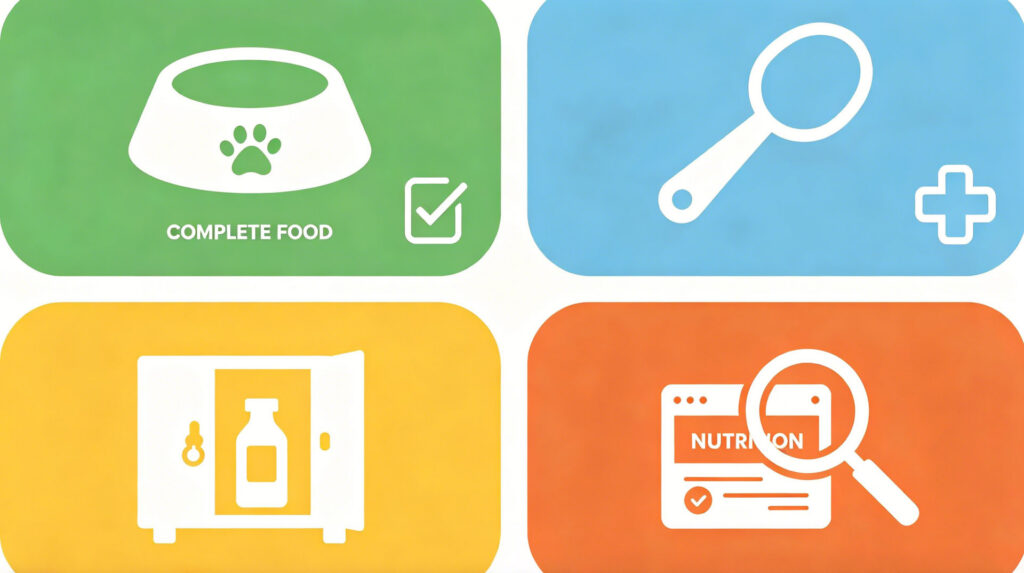
- Stick to AAFCO-Approved Foods: Most premium US cat foods are already perfectly balanced. If the label says “Complete and Balanced,” your cat likely doesn’t need extra vitamins.
- The 5% Rule for Liver: If you feed fresh liver as a treat, keep it tiny.
- Lock Up Supplements: Treat your vitamins like medicine. Keep them in a closed cabinet.
- Regular Blood Work: If you are feeding a homemade diet, tell your vet. Annual blood tests can catch rising calcium or liver enzyme levels before symptoms appear.
Final Thoughts on Safe Feline Nutrition
Managing your cat’s nutrition is a balance of science and love. If you are also managing a household with other unique pets, you might find our guide on Leopard Gecko Care helpful, as reptiles also face severe metabolic bone diseases from vitamin imbalances. For more general pet advice, visit our Cat Guide for Busy Professionals.
In conclusion, Cat Vitamin Toxicity is entirely preventable. By choosing high-quality food and consulting your vet before adding any powders or oils, you can ensure your cat lives a long, healthy life without the risk of overdose.
By keeping these safety margins in mind, you can protect your feline companion from hidden dietary hazards.
This content is for educational purposes only and does not substitute professional veterinary diagnosis or treatment. If you observe any symptoms of illness, injury, or abnormal behavior, please consult a qualified exotic animal veterinarian immediately.
For more details, please review our full Medical Disclaimer.
Pingback: Cat Vomiting Yellow Bile: Real Vet Causes & At-Home Fixes (2026) - All Common & Rare Pet Care Hub