
Note: All costs are estimated based on 2026 North American market averages for pet supplies. Prices may vary by region and current inflation rates.
Introduction
When someone searches “Leopard gecko price,” they’re often seeking the initial purchase cost. What they rarely consider—what sellers rarely volunteer—is the ongoing financial commitment that transforms a “$50 reptile” into a decade-long investment requiring consistent resources.
The Leopard gecko (Eublepharis macularius) reputation as an “inexpensive beginner reptile” reflects purchase price reality, not lifecycle cost accounting.
Part 1: Initial Acquisition Costs
If you are still selecting your gecko, read our detailed Leopard Gecko Price Guide to understand morph-based valuation and factors influencing purchase prices.
Standard captive-bred Leopard geckos from reputable breeders occupy the accessible end of the market. Pet stores sometimes offer animals at lower initial prices, though sourcing and genetic documentation vary.
Premium morphs—documented albino lines, multiple genetic combinations—command higher prices. These differences reflect breeding investment and lineage documentation, not husbandry requirements. All Leopard geckos require identical housing and dietary infrastructure regardless of morph.
Budget $50-$150 for a healthy, well-sourced Leopard gecko from a verifiable breeder.
Part 2: Essential Equipment Investment
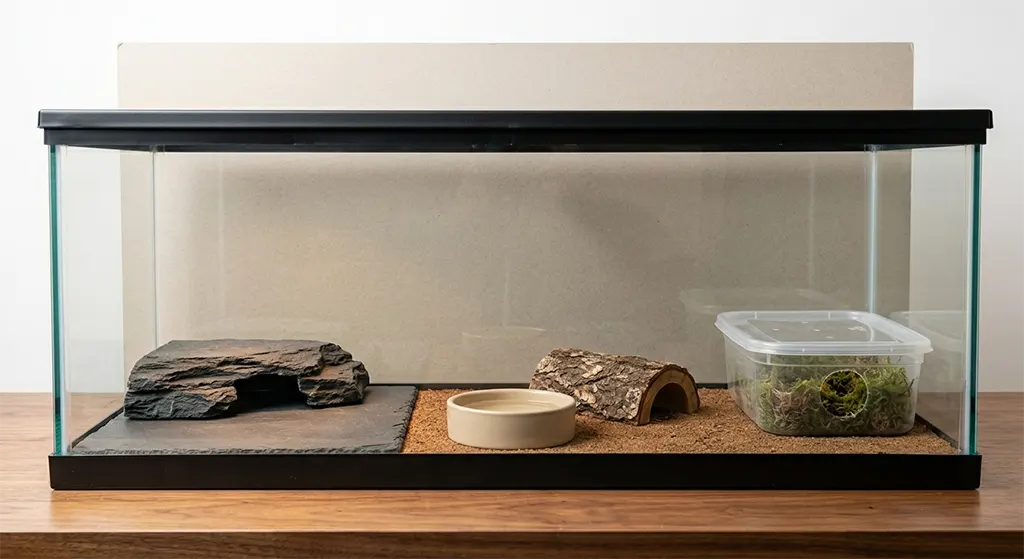
A complete starter setup requires:
| Category | Components | Purpose |
|---|---|---|
| Enclosure | 20-gallon min (juvenile), 40-gallon (adult) | Housing and security |
| Heating | Under-tank mat OR ceramic heat emitter | Core temperature maintenance |
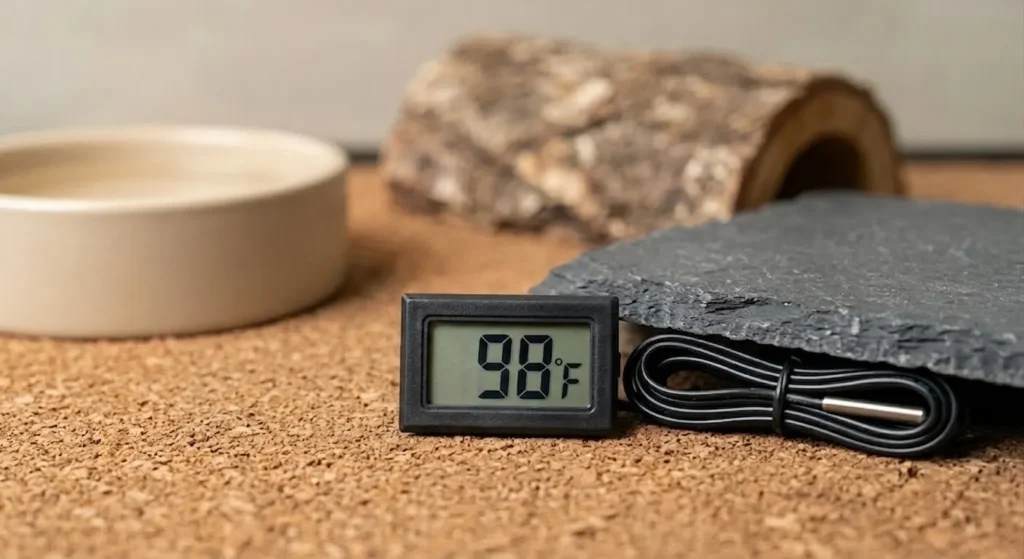
| Temperature control | Digital thermostat | Prevents overheating, maintains gradient |
| Monitoring | Digital thermometer (x2: warm + cool side) | Verifies thermal gradient |
| Humidity tracking | Hygrometer | Ensures appropriate moisture levels |
| Shelter | Minimum two hides (warm + cool side) | Behavioral security |
| Water | Ceramic dish | Hydration and humidity support |
| Substrate | Paper-based, reptile carpet, or loose | Floor covering and waste management |
Each component serves husbandry functions. Removing equipment to save costs creates compromises that typically generate larger expenses later.
If you’re setting up for the first time, use our Reptile Environment Checker to verify your thermal gradient and humidity levels.
Heating Philosophy
Leopard geckos require thermal gradients: warm side 88-92°F; cool side 75-80°F.
- Under-tank heating mats: Require thermostat control ($30-$50 quality unit) to prevent burns
- Ceramic heat emitters: Ambient warmth without light disruption
- Radiant heat panels: Higher initial cost, often more efficient long-term
Part 3: Monthly Operational Costs
Calculate your monthly feeding costs and supplementation needs with our Reptile Feeding & Health Checker.
Feeding Economics
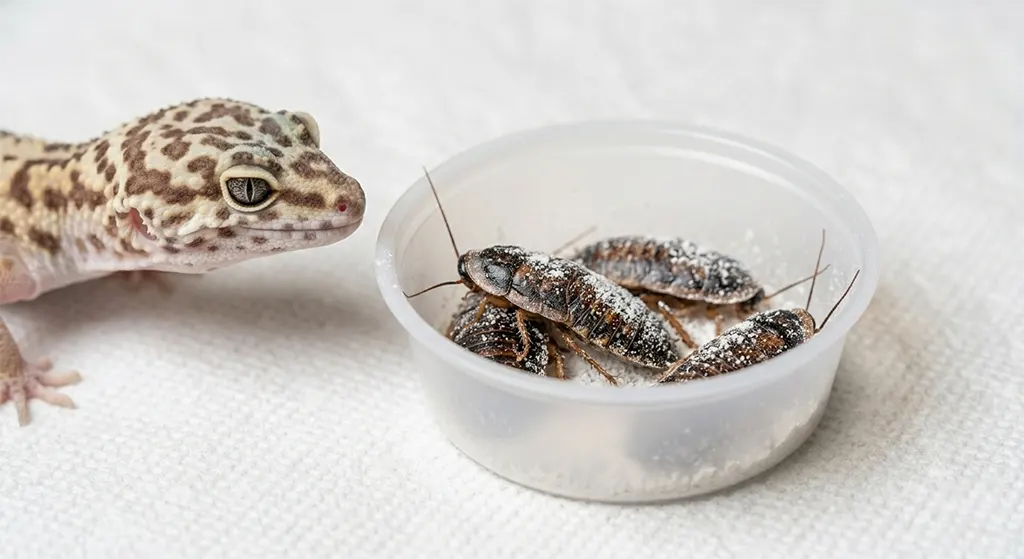
Leopard geckos are insectivores. For an adult fed 2-3 times weekly, monthly insect costs typically range from $10-$30 depending on sourcing.
- Dubia roach colonies: Initial investment $30-$50, produces self-sufficiency
- Crickets: More expensive per item but no cultivation required
Supplementation
Calcium and vitamin D3 supplementation prevents metabolic bone disease. Budget $5-$10 monthly for supplementation.
Electricity
Under-tank mats draw 8-25 watts; ceramic emitters 60-150 watts. Annual electricity costs may range from $50-$150 depending on heating method and climate.
Part 4: Where to Save Versus Where to Invest
Legitimate Cost-Cutting Opportunities
- DIY enrichment: Cardboard boxes, PVC pipe sections, cork bark pieces at minimal cost
- Dubia roach colonies: $30-$50 initial investment eliminates ongoing cricket purchases
- Bulk purchasing: Volume discounts reduce per-item costs
Expenses That Don’t Merit Reduction
- Quality thermostat: $40 thermostat prevents far costlier veterinary bills
- Temperature verification equipment: Monitoring isn’t optional
- Quality insects: Source from reliable suppliers
Medical Reserve Recommendations
Recommended: Consider exotic pet insurance as an alternative to lump-sum reserves—policies typically cost $10-$20 monthly and cover unexpected veterinary expenses. This spreads costs predictably rather than maintaining a dedicated emergency fund.
Annual wellness examinations with a reptile veterinarian (budget $100-$200 annually) support preventive care.
Part 5: Enrichment and Quality of Life: Moving Beyond the Basics
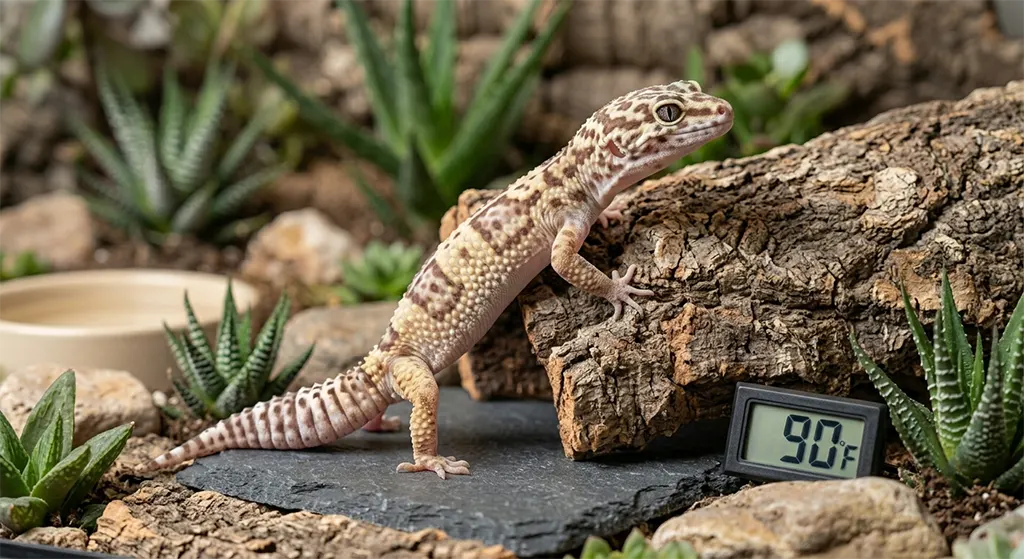
While many hobbyists focus primarily on temperature and humidity, long-term vitality in Eublepharis macularius (Leopard Gecko) depends heavily on environmental complexity. A stagnant, sterile environment is a leading cause of lethargy and “boredom-related” stress.
1. Functional Enrichment: Promoting Natural Behaviors
- Varied Textures for Tactile Stimulation: Avoid using only smooth plastic hides or uniform slate. Incorporate natural cork bark, driftwood, and rough-textured stones.
- Pro-Tip: These textures are essential for eCD (ecdysis/shedding) management, allowing the gecko to rub against surfaces to loosen stubborn skin around toes and tail tips.
- CRITICAL PITFALL: Never use gravel, fine sand, or walnut shells as substrate, even if the packaging claims it’s “safe.” These materials cause impaction if accidentally ingested. Stick to slate, paper towels, or bioactive soil mixes with excavator clay.
- Verticality & Climbing: Though ground-dwelling, these geckos are adept climbers. Provide multi-level platforms, magnetic ledges, or secure driftwood branches. Utilizing the vertical space increases the gecko’s total “usable square footage,” keeping them physically fit.
2. Foraging Opportunities: Simulating the Hunt
- Scatter Feeding: Instead of always using a feeding bowl, occasionally release appropriately sized feeder insects (dubia roaches or crickets) into the enclosure.
- Why: This encourages natural predatory instincts and provides necessary mental stimulation.
- CRITICAL PITFALL: Never leave crickets in the enclosure overnight. They are opportunistic biters and can inflict painful wounds on a sleeping or shedding gecko. Always monitor the hunt.
- The “Hide-and-Seek” Strategy: Use hollow logs or stone crevices to partially block the gecko’s view of the insects, forcing them to stalk their prey rather than just finding it in a bowl.
3. Visual Complexity & Privacy
- Creating Sight Lines: Leopard geckos are prey animals. An open, exposed enclosure triggers a permanent state of “fight-or-flight,” which suppresses their appetite. Use silk or plastic plants (safe for reptiles) to create “corridors” of cover.
- The “Security Bubble”: Ensure your gecko has at least three distinct types of hides: a cool hide, a warm hide, and a humid hide (crucial for shedding).
- Observation: If your gecko constantly hides and refuses to emerge even at night, the enclosure likely lacks sufficient visual barriers, leaving them feeling “exposed” to perceived threats.
4. The “Light & Life” Factor: UVB Integration
- While they are crepuscular, providing low-level UVB (e.g., Arcadia ShadeDweller 7% or similar) is essential for Vitamin $D_3$ synthesis and overall mental alertness.
- Pitfall Note: Do not assume UVB replaces calcium + $D_3$ supplementation. It complements it. Ensure your UVB bulb is replaced every 6–12 months as the phosphors degrade, even if the light still appears “bright” to human eyes.
Frequently Asked Questions
What is the total first-year cost?
$400-$800 total: animal ($50-$150) + housing setup ($150-$300) + operational costs ($100-$200).
How much does feeding cost monthly?
$10-$30 for adults, plus $5-$10 for supplementation.
Can I keep multiple Leopard geckos together?
No. Leopard geckos are solitary. Each requires its own complete setup.
How long do Leopard geckos live?
15-20 year lifespans in captivity. Quality equipment investment spreads across many years.
Conclusion
Key takeaways:
- First-year investment: $400-$800
- Ongoing annual costs: $150-$400
- Equipment quality reduces failure risk and replacement cycling
- Medical preparedness via dedicated savings or exotic pet insurance
Don’t guess what your gecko needs. Access our interactive Reptile Equipment Checklist to generate a comprehensive supply list based on your specific setup, ensuring your habitat meets all safety and comfort standards from day one.
For health concerns, consult a reptile-specialist veterinarian.
This content is for educational purposes only and does not substitute professional veterinary diagnosis or treatment. If you observe any symptoms of illness, injury, or abnormal behavior, please consult a qualified exotic animal veterinarian immediately.
For more details, please review our full Medical Disclaimer.
Pingback: Leopard Gecko Starter Kit Evaluation Guide 2026: Don't Buy the Kit, Build the Setup - The Pets Care Hub