
Is your ball python eating the same frozen-thawed rat every week? You might wonder whether adding quail, chicks, or other prey could improve its nutrition, solve picky eating, or simply make its diet more natural.
The answer is yes: ball pythons can eat appropriately sized whole birds, but dietary variety is an option—not a requirement or a guaranteed cure for feeding problems.
Ball pythons (Python regius) are not exclusively rat-eaters. Research on wild populations has documented both mammalian and avian prey, with meaningful differences related to sex, body size, and behavior.
However, introducing new prey requires more than swapping a rat for a chick. Prey size, nutritional composition, safe handling, feeding history, and your snake’s health all matter.
This guide explains the science behind ball python diet variety, how to choose between quail and chicks, and how to approach a gradual 30-day introduction without creating unnecessary feeding stress.
Important: The 30-day protocol below is a flexible observation and decision framework, not a clinically validated transition schedule or a requirement to complete a diet change within 30 days.
Can Ball Pythons Eat Quail and Chicks?
Yes. Healthy ball pythons can eat appropriately sized, commercially sourced whole quail and chicks.
These are recognized feeder options in reptile husbandry. Whole-prey feeding is important because it provides more than isolated muscle meat.
Depending on the prey species, age, and composition, whole prey supplies:
- Protein and fat for energy and tissue maintenance.
- Calcium and phosphorus from the skeleton.
- Vitamins and trace minerals from organs and other tissues.
- Water, which contributes to the snake’s hydration.
For most pet ball pythons, appropriately sized frozen-thawed rodents remain a practical staple.
Quail and chicks can provide additional prey options, but there is no strong clinical evidence that every ball python needs bird prey to remain healthy.
Why Feeding Only Rats Isn’t Necessarily a Problem
A properly selected, nutritionally suitable whole rat can provide an appropriate prey item for a ball python.
The important distinction is between prey variety and nutritional adequacy.
Eating one prey species does not automatically mean a snake is malnourished. Conversely, feeding multiple prey species does not automatically guarantee better nutrition.
The outcome depends on prey quality, prey size, feeding frequency, body condition, and husbandry.
Variety is best viewed as an optional way to expand feeding flexibility rather than a nutritional emergency.
What Wild Ball Python Diet Research Actually Reveals
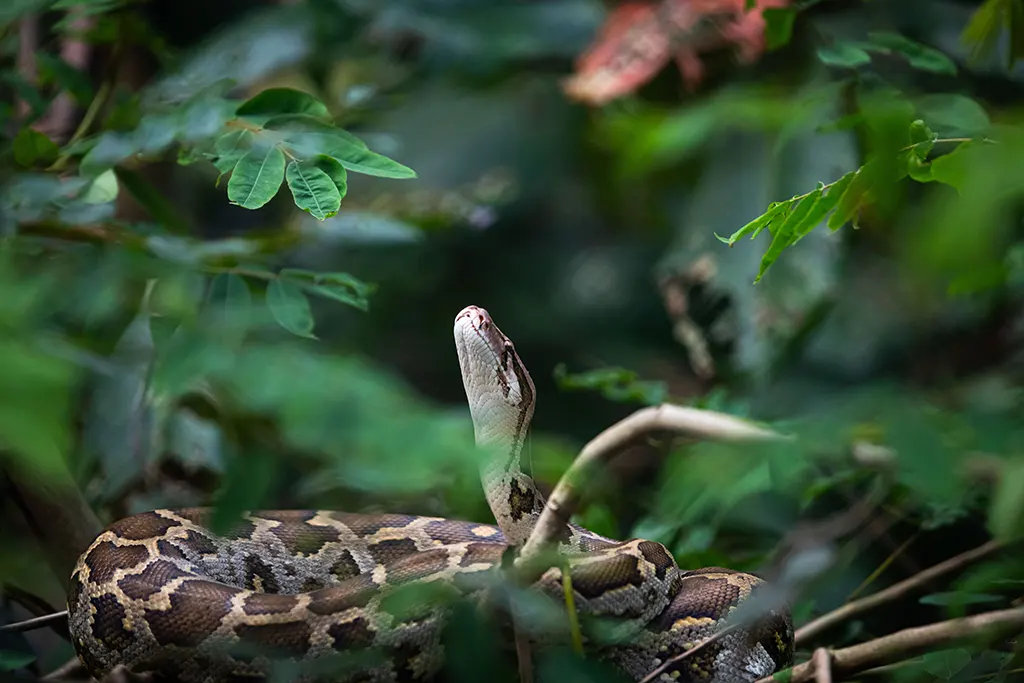
The idea that ball pythons naturally eat only rodents overlooks some interesting ecological findings.
One frequently cited study is:
Luiselli, L., & Angelici, F. M. (1998). Sexual size dimorphism and natural history traits are correlated with intersexual dietary divergence in royal pythons (Python regius) from the rainforests of southeastern Nigeria. Italian Journal of Zoology, 65(2), 183–185.
The researchers investigated food habits using fecal analysis and forced regurgitation of living individuals.
Their reported findings included:
- Male ball pythons consumed birds more frequently, accounting for 70.2% of recorded prey items.
- Female ball pythons consumed mammals more frequently, accounting for 66.7% of recorded prey items.
- Snakes shorter than 70 cm (27.6 in) total length preyed almost exclusively on small birds, including nestlings and immature birds.
- Snakes longer than 100 cm (39.4 in) preyed almost entirely on small mammals in the studied sample.
The authors suggested that differences in natural history, including greater arboreal tendencies among males, might help explain these dietary differences.
Does This Mean 70% of All Male Ball Pythons Eat Birds?
No.
The 70.2% figure refers to the proportion of recorded prey items attributed to birds in that study’s male sample. It does not mean that 70.2% of male ball pythons eat birds, nor does it establish a universal percentage across all wild populations.
Likewise, the findings about smaller snakes should not be interpreted as proof that all juvenile ball pythons require chicks.
The study provides evidence of natural dietary flexibility, not a captive feeding prescription.
Wild diets also vary with habitat, prey availability, and ecological circumstances.
The practical takeaway: Bird prey is biologically plausible for ball pythons, but your pet does not need to imitate every aspect of its wild diet.
Mice vs. Rats vs. Quail vs. Chicks: Which Is More Nutritious?
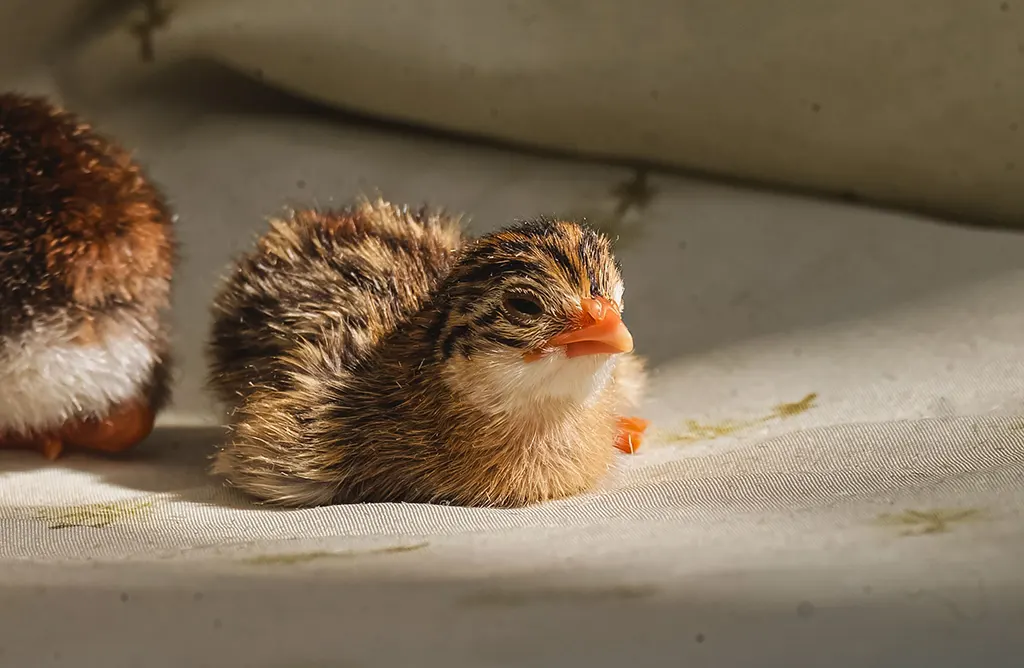
One of the most common questions about ball python prey variety is whether birds provide better nutrition than rodents.
Unfortunately, simple comparisons can be misleading.
Nutritional values vary with:
- Prey species and age.
- Sex and body condition.
- Commercial breeding diet.
- Whole-prey composition.
- Moisture content.
- Freezer storage duration.
- Whether values are reported on a wet-weight or dry-matter basis.
A chick, adult quail, adult mouse, and adult rat are not nutritionally interchangeable simply because they are all whole prey.
Whole-Prey Nutritional Comparison
The following table summarizes what can reasonably be concluded from published reptile nutrition references.
| Prey | Protein and Fat | Calcium and Phosphorus | Practical Role |
|---|---|---|---|
| Adult mice | Protein- and fat-containing whole prey; composition varies | Published reference values available | Useful for smaller snakes and prey-size flexibility |
| Rats | Protein- and fat-containing whole prey; composition varies | Published reference values available | Common staple prey |
| Quail | Composition depends on age, species, and production | No single universal feeder-quail ratio | Optional avian prey |
| Chicks | Composition varies considerably with age and size | Whole-prey balance differs from isolated chicken meat | Optional avian prey |
| Guinea pigs | Composition varies with age and body composition | Whole-prey composition differs from rodents and birds | Not a necessary routine addition |
A critical detail: Do not use the nutrient profile of chicken breast to estimate the nutritional value of a whole chick.
Muscle meat contains a different proportion of bone, organs, skin, and other tissues.
Similarly, the nutrition of a whole feeder quail cannot reliably be inferred from a generic quail meat nutrition label.
What Published Nutrient Figures Can Tell Us
The Merck Veterinary Manual’s reptile nutrition reference includes representative values for some prey items.
For example, its adult mouse reference lists:
| Nutrient | Adult Mouse |
|---|---|
| Dry matter | 28.1% |
| Crude protein | 54.9% of dry matter |
| Crude fat | 28.4% of dry matter |
| Calcium | 1.9% of dry matter |
| Phosphorus | 1.5% of dry matter |
| Ca ratio | Approximately 1.27:1 |
These are reference values, not guaranteed specifications for every frozen feeder mouse.
The same source lists adult rats at:
| Nutrient | Adult Rat |
|---|---|
| Dry matter | 29.8% |
| Crude protein | 59.7% of dry matter |
| Crude fat | 26.5% of dry matter |
| Calcium | 2.8% of dry matter |
| Phosphorus | 1.7% of dry matter |
| Ca ratio | Approximately 1.65:1 |
These representative figures illustrate why comparisons must use consistent analytical methods.
The ratios above are calculated from the rounded calcium and phosphorus figures, so minor differences from published rounded ratios may occur.
Important: These are dry-matter percentages, not percentages of the prey’s total wet weight.
They should not be compared directly with fresh-meat nutrition labels.
Reference: Merck Veterinary Manual — Nutrition in Reptiles.
What About Quail and Chick Protein, Fat, Moisture, and Ca Ratios?
There is no single verified set of universal values that accurately represents every frozen feeder quail and chick.
Age differences alone can significantly change the composition of avian prey.
For that reason, this guide does not assign fabricated average protein percentages, fat percentages, moisture levels, or calcium-to-phosphorus ratios to feeder chicks or quail.
If a supplier provides a nutritional analysis, check:
- Whether the analysis covers whole prey or muscle meat.
- Whether the percentages are reported on a dry-matter or as-fed basis.
- Whether calcium and phosphorus are both measured.
- Whether the sample represents the actual feeder age and species you purchase.
This is more useful than treating an unsupported universal nutrition chart as fact.
Does Bird Prey Provide a Special Nutritional Advantage?
Potentially, it can change the nutritional profile of the overall diet.
However, a different nutritional profile does not automatically mean a superior one.
The quality of a feeding program depends on the complete prey item, not just its protein content.
For most keepers, consistent prey quality, sensible feeding intervals, and healthy body condition matter more than chasing an idealized prey rotation.
Do Feathers and Fur Change Digestion?
This is an interesting question because bird prey introduces feathers, while rodents introduce fur.
Both are natural components of whole prey.
However, the effects of feathers and fur on digestion are often exaggerated in online feeding discussions.
Are Feathers Difficult to Digest?
Feathers contain keratin, a structural protein that is resistant to digestion.
The digestive handling of feathers depends on factors such as their amount, structure, and the prey item consumed.
There is insufficient ball-python-specific clinical evidence to establish a universal feather digestion time or to claim that feathers reliably improve gut motility.
Small amounts of feathers within appropriately sized whole bird prey are not automatically a problem.
However, this does not justify feeding loose feathers or unusually feather-heavy material.
Do Feathers Improve Bowel Movements?
There is no established clinical rule that feeding feathers will regulate a ball python’s bowel movements.
Similarly, fur should not be considered a guaranteed treatment for constipation.
Stool production depends on several factors, including:
- Meal size.
- Hydration.
- Temperature.
- Feeding interval.
- Individual digestive physiology.
- Underlying disease.
Some keepers observe differences in stool appearance after changing prey species. Such observations can be useful, but they do not establish a reliable physiological benefit.
Why Might Bird-Fed Snakes Produce Softer Stools?
A change in stool consistency after introducing chicks or quail may reflect several factors, including prey composition, meal size, hydration, or individual variation.
Differences in bone proportion or prey age may also influence the composition of the meal.
But it is not scientifically established that avian prey invariably has softer bones or that feeding chicks predictably causes loose stools.
One unusual bowel movement is not necessarily an emergency.
Repeated watery diarrhea, blood, foul-smelling abnormal discharge, straining, or lethargy deserves veterinary attention.
Do not keep changing prey species to mask a potential medical problem.
How to Choose the Right Quail or Chick Size
Prey sizing is one of the most important parts of introducing ball python diet variety.
An appropriately sized chick can be a sensible meal for one snake and an unsuitable meal for another.
The Two Measurements That Matter
Use these measurements:
1. Snake weight
Record the snake’s current weight using a reliable digital scale.
For example, 1,000 g is approximately 2.2 lb.
2. Widest body diameter
Estimate the snake’s body diameter at its widest point, excluding an unusually large recent meal.
Compare prey size to the snake’s body width rather than relying only on the snake’s age.
The 10–15% Prey-Weight Rule: How Should You Use It?
A commonly circulated husbandry guideline suggests prey weighing approximately 10–15% of a snake’s body weight.
This is a rough reference, not a universal feeding target.
It should not be treated as permission to feed any prey item below that percentage.
For example, a 1,000 g (2.2 lb) ball python would have the following arithmetic ranges:
| Percentage | Prey Weight |
|---|---|
| 10% | 100 g (3.5 oz) |
| 15% | 150 g (5.3 oz) |
These figures are examples of percentage calculations, not feeding recommendations.
A snake’s age, body condition, growth rate, health, prey dimensions, and feeding interval must also be considered.
A prey item weighing 15% of a snake’s body weight may be unsuitable for that individual, particularly if the prey is unusually bulky.
What About the 1.0–1.5× Body-Width Rule?
A commonly used husbandry guideline compares prey width with the snake’s widest body point.
For example, if a snake’s widest body diameter is 2 in (5.1 cm), a 1.0–1.5× comparison would be approximately 2–3 in (5.1–7.6 cm).
This is a sizing reference, not a guarantee that the prey is appropriate.
Prey shape, bulk, and rigidity also matter, especially with broad-bodied birds.
For a conservative first introduction, select prey toward the smaller end of the appropriate range, particularly if the snake has never eaten birds.
Do not choose an oversized quail simply because its weight falls within a percentage range.
Quick Prey Selection Examples
| Widest Snake Body Diameter | 1.5× Comparison |
|---|---|
| 1 in (2.5 cm) | 1.5 in (3.8 cm) |
| 1.5 in (3.8 cm) | 2.25 in (5.7 cm) |
| 2 in (5.1 cm) | 3 in (7.6 cm) |
| 2.5 in (6.4 cm) | 3.75 in (9.5 cm) |
These are comparison measurements, not guarantees of safe swallowing.
A broad-bodied quail may be harder to accommodate than a similarly weighted, more compact prey item.
Best practice: Measure the actual prey item. Don’t select quail or chicks solely by labels such as “small,” “medium,” or “large.”
If the snake is growing, underweight, overweight, recovering from illness, or has a history of regurgitation, establish an individualized feeding plan with a reptile veterinarian — and if a meal has already come back up, our ball python regurgitation guide covers the first 24 hours and how long to wait before refeeding.
The 30-Day Ball Python Diet Variety Transition Protocol
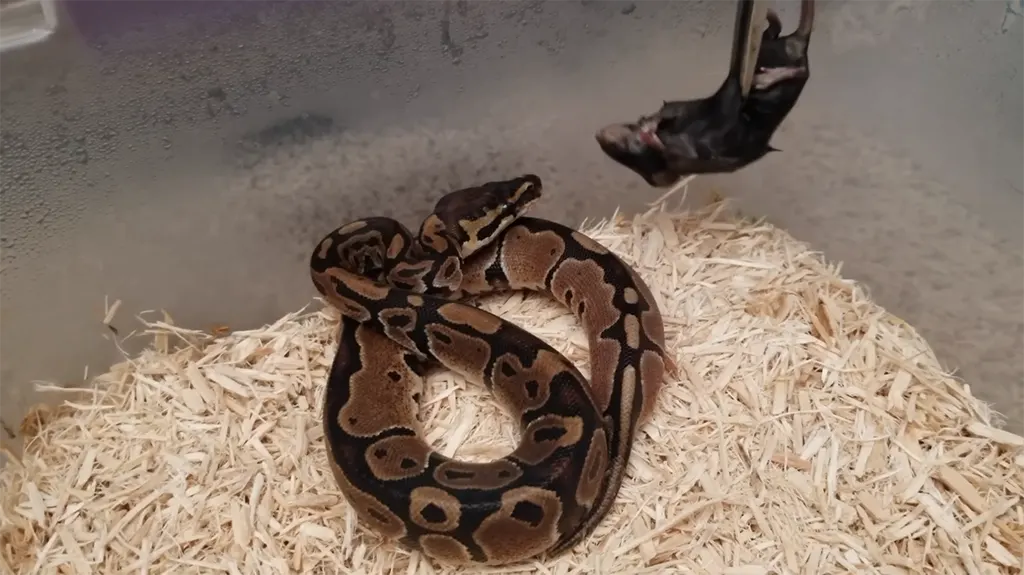
Photo via YouTube (Snake Discovery)
A gradual introduction is intended to reduce unnecessary feeding disruption, not to force a snake to accept birds within a deadline.
Thirty days is a planning window, not a medically validated transition schedule.
Some ball pythons accept new prey immediately. Others may refuse it repeatedly.
The safest approach is to preserve the snake’s established feeding routine and introduce one manageable change at a time.
Before Starting: Establish a Baseline
Record:
- Current body weight.
- Current prey species and prey weight.
- Feeding interval.
- Last successful meal.
- Last defecation, if known.
- Warm-side and cool-side temperatures.
- Recent shedding and any abnormal symptoms.
Confirm that the enclosure has secure hides, appropriate temperatures, clean water, and sufficient privacy.
For an established healthy snake, do not suddenly change the enclosure, prey species, feeding schedule, and handling routine simultaneously.
That makes it much harder to identify what is causing a feeding response or refusal.
Week 1: Keep the Normal Meal Routine
Continue offering the snake’s established prey.
If the snake eats rats reliably, keep the regular rat meal.
Do not introduce a chick and a quail on the same feeding opportunity.
During this week:
- Check temperature readings with appropriate digital thermometers.
- Confirm that the snake’s body condition is appropriate.
- Record normal feeding behavior.
- Source appropriately sized frozen-thawed quail or chicks from a reputable feeder supplier.
- Verify that prey has been properly stored and handled.
Avoid experimenting with scenting if the snake is currently refusing meals for unexplained reasons.
A feeding refusal should trigger an assessment, not an automatic diet intervention.
Week 2: Introduce a Scent Cue Cautiously
If the snake is healthy and eating normally, you can try a controlled scenting approach at its next scheduled feeding.
One method is to use a small amount of scent from a clean, commercially sourced quail or chick to scent the exterior of the usual prey item.
For example:
- Use the normal prey item.
- Apply a small amount of appropriate bird-prey scent to its exterior.
- Present the prey using the snake’s established feeding method.
- Allow the snake to respond without repeated disturbance.
Use clean equipment and avoid cross-contamination.
Do not smear raw bird material throughout the enclosure.
Scenting is a husbandry technique based largely on keeper experience. It is not a guaranteed behavioral treatment supported by strong controlled ball python trials.
If the snake refuses, remove the prey after the feeding attempt and return to the normal routine at the next appropriate feeding opportunity.
Do not repeatedly offer food every day.
Week 3: Consider a Small Whole-Prey Introduction
If the snake remains healthy and accepts food normally, consider offering an appropriately sized frozen-thawed chick or quail at a scheduled meal.
Choose one species, not both.
For many keepers, a small chick may be easier to size consistently than an unfamiliar quail, but availability and actual prey dimensions vary.
Offer the prey with feeding tongs, keeping your hands clear of the strike zone.
Observe the response.
If the snake eats:
- Leave it undisturbed.
- Maintain the normal thermal gradient.
- Avoid handling during digestion.
- Record the prey species and weight.
- Observe the next bowel movement without overinterpreting it.
If the snake refuses:
- Do not force-feed.
- Do not immediately offer another prey species.
- Do not shorten the feeding interval.
- Resume the established feeding plan when appropriate.
A refusal is not evidence that the snake needs a more exciting menu.
Week 4: Evaluate Rather Than Escalate
At the end of the fourth week, review the results.
Ask:
- Did the snake accept the new prey?
- Was the prey appropriately sized?
- Was digestion uneventful?
- Did body weight remain appropriate?
- Were there abnormal stools or signs of discomfort?
- Did the transition introduce unnecessary stress?
If the snake accepted bird prey and remains healthy, you can decide whether to include it occasionally.
There is no requirement to establish a rigid rat-quail-chick rotation.
If the snake refused every new prey item, there is no need to keep escalating.
A healthy ball python may simply prefer familiar prey.
A Practical Transition Decision Tree
| Result | Recommended Action |
|---|---|
| Eats new prey and remains healthy | Record results; optional future inclusion |
| Refuses once | Remove prey; resume normal routine |
| Refuses repeatedly | Review husbandry, feeding history, and body condition |
| Regurgitates | Stop experimentation; seek reptile veterinary advice |
| Shows weight loss or illness | Prioritize medical evaluation |
Do not wait 30 days if the snake develops concerning symptoms.
Likewise, do not interpret a normal seasonal appetite variation as proof that the diet needs changing.
Real-World Feeding Lessons: What Keeper Experiences Can and Cannot Prove
A common keeper-reported scenario involves an adult ball python that eats rats consistently for months but begins refusing meals during winter.
The keeper tries a different prey scent, then introduces a chick or quail. Eventually, the snake accepts food again.
Stories like this are appealing because they suggest an easy solution to picky eating.
However, a feeding success story does not establish that dietary monotony caused the refusal.
A snake may resume eating because:
- Seasonal appetite changes resolve.
- Environmental conditions improve.
- The normal fasting interval becomes sufficient.
- The new scent increases prey recognition.
- The snake was ready to eat regardless of the intervention.
There is no verified case record available here supporting the specific story of an adult snake eating freeze-dried rats, refusing food for three winter months every year, and subsequently achieving healthier body condition through quail scenting and feathered prey.
That story should not be presented as a real clinical case.
There is also an important distinction between freeze-dried prey and frozen-thawed whole prey. They are not interchangeable feeding methods.
For a healthy adult snake that experiences a seasonal feeding slowdown, the more useful approach is to document weight, body condition, temperature, and feeding history.
If the animal remains stable, a veterinarian may recommend monitoring rather than unnecessary dietary experimentation.
If it is losing weight, appears unwell, or has repeated feeding problems, investigate the cause.
The lesson is simple: successful prey acceptance can be encouraging, but it should never replace objective health monitoring.
Feeding Safety: How to Prepare Frozen Quail and Chicks
Frozen-thawed prey is generally preferred over live prey because it reduces the risk of prey-inflicted injuries and improves practical feeding safety.
Bird prey requires the same food hygiene precautions as other raw animal products.
1. Buy Prey From a Reputable Feeder Supplier
Photo via YouTube (Lori Torrini)
Choose prey specifically raised and sold for reptile feeding.
Look for:
- Clear species identification.
- Appropriate prey sizing.
- Proper frozen storage.
- Intact packaging.
- Reliable sourcing and handling practices.
Avoid wild-caught birds, backyard chicks, and birds of uncertain health status.
Do not assume that poultry intended for human consumption is automatically an appropriate feeder product.
2. Thaw Safely
A practical approach is:
- Remove the required prey item from the freezer.
- Place it in a sealed, leakproof bag.
- Thaw it in a dedicated refrigerator or other controlled cold-thawing environment.
- Confirm that the prey is completely thawed through the center.
- Warm it gently in a sealed bag using warm water.
- Check that it is appropriately warm throughout before feeding.
Some husbandry guides recommend warming prey to approximately 100°F (38°C).
A temperature around 100–104°F (38–40°C) is sometimes used as a feeding presentation target, but this is not a universally validated safety requirement.
Avoid overheating.
Never microwave prey, and never leave raw prey sitting at room temperature for extended periods.
Merck recommends refrigerated thawing and feeding prey at room temperature or warmer.
Reference: Merck Veterinary Manual — Nutrition in Snakes.
3. Prevent Bacterial Contamination
Frozen-thawed prey is not sterile.
Freezing does not reliably eliminate Salmonella or all other pathogens.
Follow these precautions:
- Wash hands before and after handling prey.
- Use dedicated thawing containers and equipment.
- Keep raw prey away from human food.
- Clean and disinfect contaminated surfaces.
- Dispose of uneaten prey promptly.
- Never refreeze prey that has been thawed for feeding.
Do not rely on freezing for 30 days as a universal parasite-killing procedure.
Freezing effectiveness depends on the parasite, temperature, duration, and other factors. A generic 30-day rule does not establish that prey is pathogen-free.
Commercially raised, properly handled feeder prey is preferable to attempting to make questionable prey safe through home freezing.
4. Avoid Live Bird Feeding
Live chicks and quail are unnecessary for routine feeding.
Live prey can injure snakes and creates avoidable animal-welfare concerns.
A snake refusing frozen-thawed prey should not automatically be switched to live birds.
Investigate feeding conditions and health first.
Why Your Ball Python Might Refuse Rats After Eating Birds
One concern among keepers is that introducing quail or chicks will make a snake reject its normal prey.
This is possible as an individual feeding preference, but it is not inevitable.
Some snakes respond differently to prey odors, temperature, movement, and presentation.
However, there is no established evidence that bird scent universally causes a permanent loss of interest in rats.
How to Minimize Feeding Preference Problems
If your snake has a reliable feeding history:
- Keep its usual prey as the default.
- Introduce only one alternative species at a time.
- Avoid changing the normal feeding interval.
- Do not offer multiple prey items in rapid succession.
- Track acceptance rates.
If your ball python eats quail but refuses rats on subsequent occasions, do not immediately assume that it has developed nutritional dependency on birds.
Review prey presentation, body condition, and feeding history first.
A varied diet should improve flexibility, not create a new source of feeding stress.
What If Your Ball Python Is a Picky Eater?
The phrase “picky eating” can hide several different problems.
A snake that occasionally refuses a meal is not necessarily a picky eater.
A snake that consistently refuses food may have a husbandry, behavioral, seasonal, or medical issue.
A single refused meal doesn’t necessarily mean something is wrong. However, if your snake repeatedly refuses food, loses weight, or shows other symptoms, it’s important to look beyond prey preference.
Common Causes of Feeding Refusal
Temperature problems
Incorrect thermal conditions can affect appetite and digestion.
Check the actual warm-side and cool-side temperatures rather than relying on thermostat settings alone — our ball python enclosure setup guide covers where the probes go and what the gradient should actually read.
Insufficient security
Ball pythons often feed more comfortably when they have appropriately sized hides and low-disturbance surroundings.
Recent handling or relocation
Frequent handling, enclosure changes, and environmental instability may interfere with feeding behavior.
Seasonal changes
Some individuals show seasonal changes in appetite. These patterns should be evaluated alongside weight and body condition.
Medical problems
Respiratory disease, parasites, oral disease, gastrointestinal issues, and other illnesses may affect appetite.
A persistent refusal should not be diagnosed as nutritional monotony without considering these causes.
When Should You Seek Veterinary Care?
Arrange a reptile-experienced veterinary evaluation if your snake has:
- Progressive or unexplained weight loss.
- Repeated regurgitation.
- Respiratory discharge or abnormal breathing.
- Mouth swelling or oral lesions.
- Persistent diarrhea.
- Lethargy or other abnormal behavior.
- Repeated feeding refusal accompanied by declining body condition.
Juveniles, underweight snakes, and medically compromised animals may need earlier assessment.
Do not use a fixed fasting-duration threshold for every snake. Age, starting body condition, weight trend, and clinical symptoms all affect the urgency.
How to Monitor Body Condition During a Diet Change
A new prey species should never distract you from monitoring the snake’s overall health.
Weight alone is not enough.
A snake may gain weight while accumulating excess fat, or maintain a similar weight while experiencing changes in body condition.
Tracking both weight and appearance provides a more useful picture.
Prey size is only one part of maintaining a healthy feeding routine. Tracking body condition over time is equally important.
Use our Ball Python Obesity and Body Condition Guide to help distinguish healthy body shape from excess fat or inadequate body condition.
A Simple Monitoring Checklist
Record the following information after each scheduled feeding:
- Date.
- Prey species.
- Prey weight.
- Feeding acceptance or refusal.
- Any unusual feeding behavior.
- Regurgitation or abnormal digestive signs.
- Body weight at appropriate monitoring intervals.
- Changes in body condition.
Avoid repeatedly weighing or handling a snake immediately after feeding.
For a healthy established adult, periodic weight checks are generally more useful than daily measurements.
Growing juveniles and snakes with health concerns may need a more individualized monitoring schedule.
Frequently Asked Questions
Can Ball Pythons Eat Quail?
Yes. Appropriately sized whole quail can be offered to healthy ball pythons as an alternative prey item.
Choose frozen-thawed feeder quail from a reputable supplier and assess both weight and body dimensions.
Can Ball Pythons Eat Chicks?
Yes. Appropriately sized whole feeder chicks can be suitable prey.
Young birds may be appropriate for smaller snakes, but the actual size and composition of the prey matter more than its label.
How Do I Transition a Ball Python From Rats to Chicks?
First, establish why you want to make the change.
If your snake is eating well and maintaining healthy body condition, introduce a small, appropriately sized chick at a normal scheduled feeding opportunity.
Scenting the usual prey is an optional technique.
Do not force a transition or repeatedly offer food after refusal.
Will Feeding Quail Make My Ball Python Healthier?
Not necessarily.
Quail can add prey variety, but there is insufficient evidence that adding it routinely improves the health of every captive ball python.
Appropriate prey size, nutritional quality, husbandry, and body condition remain the priorities.
Why Is My Ball Python Refusing Rats After Eating Chicks?
Possible explanations include individual prey preference, feeding schedule, environmental changes, seasonal appetite, or health problems.
One refusal does not prove that the snake has developed a permanent preference.
Return to the established routine and monitor the snake.
Do Ball Pythons Need Prey Variety?
No universal requirement for rotating prey species has been established.
A consistent, nutritionally appropriate whole-prey diet can be suitable.
Variety may be useful for feeding flexibility and access to different prey options, but it is not mandatory.
Can Chicks Cause Constipation or Impaction?
An appropriately sized whole chick is not automatically a cause of impaction.
Constipation and gastrointestinal obstruction can have several causes, including unsuitable temperatures, dehydration, inappropriate prey size, and underlying disease.
Repeated straining, abdominal swelling, or abnormal behavior warrants veterinary evaluation.
Do not use bird prey as a constipation treatment.
Are Frozen Feeder Chicks Safe From Parasites?
Not automatically.
Freezing can reduce certain parasite risks under specific conditions, but it does not reliably eliminate every parasite or pathogen.
Source prey responsibly and maintain appropriate food hygiene.
Should I Feed Quail, Chicks, Mice, and Rats in a Rotation?
There is no evidence-based universal rotation schedule.
You can maintain rats as the staple and occasionally introduce another suitable prey species if your snake accepts it.
Avoid unnecessary changes to a feeding program that is already working.
Can I Feed Chicken Meat Instead of Whole Chicks?
Chicken meat alone is not nutritionally equivalent to whole prey.
Muscle meat does not provide the same balance of bone, organs, and other tissues.
Routine feeding should prioritize appropriately sized whole prey unless a reptile veterinarian prescribes a different diet.
Final Verdict: Is Ball Python Diet Variety Worth It?
For most keepers, the answer is yes, if it is introduced carefully and serves a practical purpose.
Ball pythons naturally consume both birds and mammals, and research from southeastern Nigeria demonstrates that prey selection can differ substantially among wild individuals.
That ecological evidence supports dietary flexibility, but it does not establish that captive snakes must eat birds.
For a healthy pet, the best strategy is straightforward:
- Maintain an appropriate staple prey.
- Select prey using both weight and body dimensions.
- Use reputable frozen-thawed feeders.
- Introduce alternatives gradually, if desired.
- Monitor weight, body condition, and digestion.
- Investigate repeated feeding refusal rather than automatically blaming dietary monotony.
If your ball python is already refusing meals, changing prey species shouldn’t be your first troubleshooting step. Start with our Ball Python Not Eating Guide before experimenting with a new feeding routine.
The goal is not to build the most diverse menu possible. It is to maintain a healthy snake with a safe, nutritionally appropriate, sustainable feeding routine.
References and Further Reading
- Luiselli, L., & Angelici, F. M. (1998). Sexual size dimorphism and natural history traits are correlated with intersexual dietary divergence in royal pythons (Python regius) from the rainforests of southeastern Nigeria. Italian Journal of Zoology, 65(2), 183–185. https://doi.org/10.1080/11250009809386744
- Merck Veterinary Manual. Nutrition in Reptiles. Nutritional composition references and discussion of whole-prey feeding. https://www.merckvetmanual.com/management-and-nutrition/nutrition-exotic-and-zoo-animals/nutrition-in-reptiles
- Merck Veterinary Manual. Nutrition in Snakes. Feeding, thawing, and nutritional management. https://www.merckvetmanual.com/management-and-nutrition/nutrition-exotic-and-zoo-animals/nutrition-in-snakes
- ReptiFiles. What to Feed a Ball Python: Diet & Feeding Guide. https://reptifiles.com/ball-python/care-guide/ball-python-feeding
- University of California, Davis, California Veterinary Emergency Team. Avian, Small Mammal, and Exotics Animal Care and Feeding Guide. January 2025. Feeding guide PDF
Editorial note: The nutritional figures in this article are representative reference values, not universal feeder specifications. The 30-day protocol is a practical husbandry framework rather than a clinically validated feeding intervention. This article provides educational information and is not a substitute for individualized veterinary care.
This content is for educational purposes only and does not substitute professional veterinary diagnosis or treatment. If you observe any symptoms of illness, injury, or abnormal behavior, please consult a qualified exotic animal veterinarian immediately.
For more details, please review our full Medical Disclaimer.