
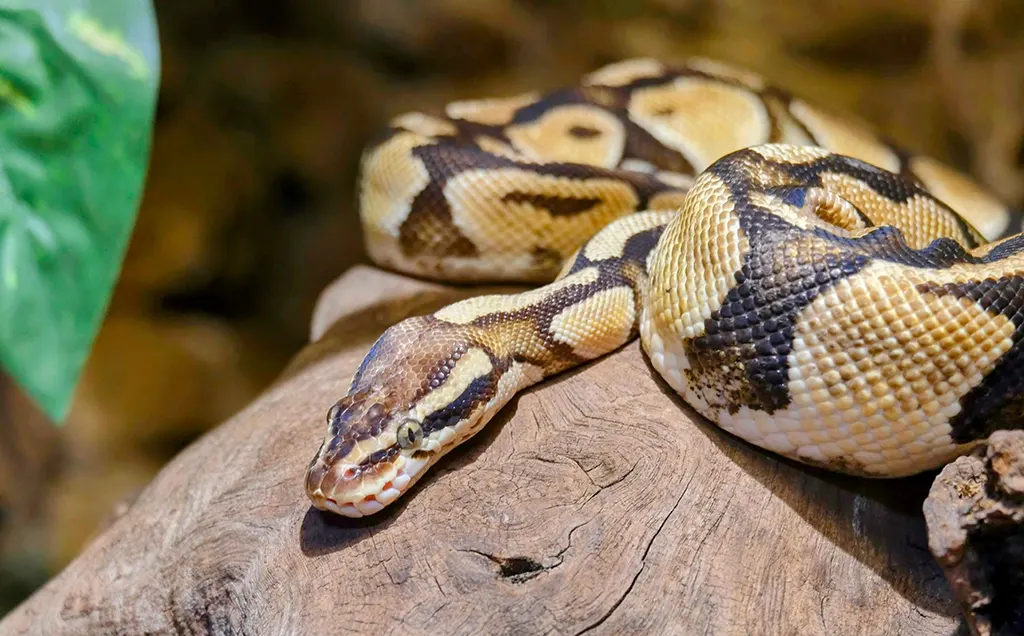
Few experiences stress ball python keepers more than a sudden feeding refusal. You thaw a perfectly sized frozen-thawed rat, lower it into the enclosure with tongs, and your snake pulls back, looks away, or coils into a defensive ball. Week after week, the feeder goes wastefully uneaten, and anxiety sets in.
If you turn to standard care guides, you are usually met with the same generic advice: “Check your temperatures, verify your humidity, and wait it out.” But that leaves the most critical question unanswered: How long is too long?
For keepers navigating North American homes—where summer central air conditioning and winter forced-air heating constantly fluctuate—relying on a “gut feeling” is a recipe for disaster. This guide replaces guesswork with a quantitative, gram-by-gram decision framework to help you determine precisely when a ball python not eating is undergoing a normal biological fast versus when it requires veterinary intervention.
Disclaimer: This content is for informational purposes only and is not a substitute for professional veterinary advice, diagnosis, or treatment.
1. Why Do Ball Pythons Stop Eating? (8 Common Causes Ranked by Likelihood)
Before panicking over a ball python fasting, it helps to understand why these snakes stop feeding in captivity. In U.S. residential setups, refusals generally trace back to these root causes:
- Seasonal Winter Photoperiod Shifts: Mature snakes naturally slow down or stop eating as daylight shortens, even if indoor temperatures appear stable.
- Suboptimal Thermal Gradients: Warm-hide surface temperatures falling below 87∘F shut down digestion and metabolic drive.
- Chronically Low Humidity (HVAC Dryness): Indoor air dropping below 50% relative humidity causes low-grade respiratory stress and dehydration.
- Pre-Shed Cycles (“Blue Phase”): Temporary, instinctual fasting while scales cloud over and vision is temporarily impaired.
- Enclosure Exposure and Stress: Open, oversized hides, high-traffic rooms, or clear glass walls leaving the snake feeling vulnerable.
- Improper Prey Thermal Signatures: Thawed rodents falling below 95∘F fail to trigger the snake’s labial heat-sensing pits.
- Over-Handling During Feeding Windows: Frequent container opening or hovering creates stress responses that override feeding instincts.
- Underlying Parasites or Pathogens: Medical issues ranging from heavy parasite loads to respiratory infections.
2. Real-Keeper Pitfall: When “Waiting It Out” Goes Wrong
Real-Life Case Note: A first-time keeper in Chicago noticed their 1,400-gram adult male ball python refused meals for four straight weeks during November. Panicked by internet horror stories about weight loss and force-feeding, the owner aggressively raised the enclosure temperature to 95∘F and repeatedly tried to force dead rat pups into the snake’s mouth using tongs.
The result? Minor abrasions along the snake’s labial scales, total behavioral shutdown, and a severe defensive strike reaction. When the owner finally brought the snake to an exotic vet, a simple digital scale check revealed the snake had only lost 18 grams (1.2% of its body weight). It was a textbook, harmless winter fast. The forced interference had caused more physical trauma than the fasting ever could.
The lesson is simple: Weigh your snake. Let the gram scale guide your actions, not your anxiety.
3. Normal Fasting vs. Problem Fasting: The Gram Weight Threshold
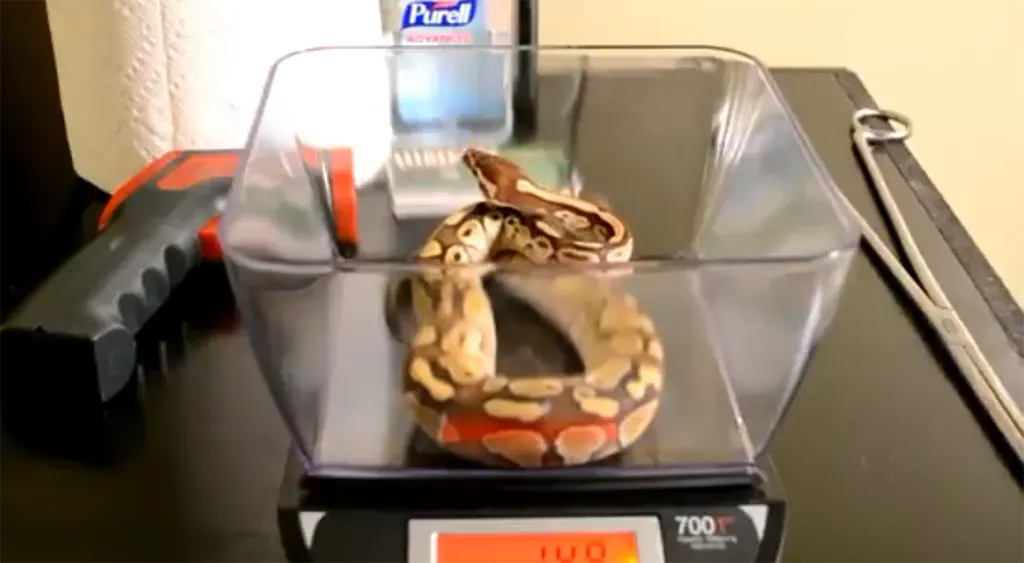
Image credit: YouTube / [CD Exotics]
To stop second-guessing every missed meal, evaluate your pet using a structured metric rather than a calendar.
The Gram Weight Loss Thresholds
- < 5% Weight Loss: Safe Zone. Completely normal variation for any adult snake. Continue monitoring husbandry metrics weekly.
- 5% – 10% Weight Loss: Observation Zone. Normal for seasonal winter fasts or extended pre-shed cycles. Double-check your thermal gradients and humidity.
- 10% – 15% Weight Loss: Warning Zone. Indicates prolonged refusal or hidden environmental stress. Troubleshoot immediately and prepare a backup plan.
- > 15% Weight Loss: Emergency Zone. High risk of hepatic lipidosis (fatty liver disease) or underlying systemic illness. Schedule an exotic veterinary exam.
4. Body Condition Scoring: How to Tell If Your Ball Python Is Losing Too Much Weight
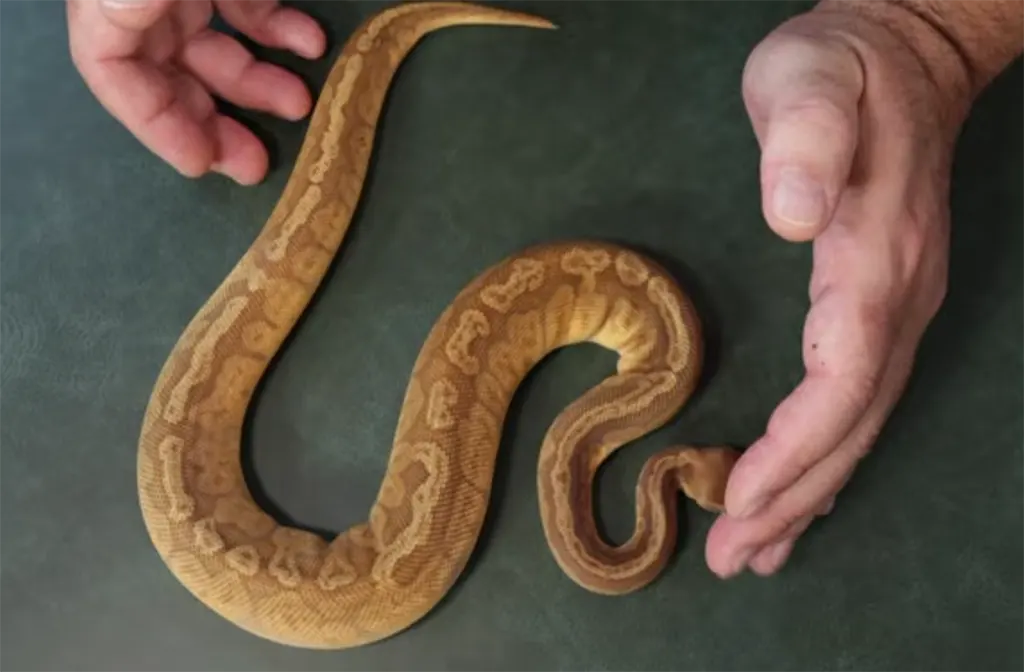
Image credit: YouTube / [GreenRoomPythons]
Scales tell part of the story, but visual and tactile body condition scoring provides the rest. Use this 3-point system during your monthly weigh-in:
- Healthy / Optimal: The body cross-section resembles a smooth, rounded dome or a hotdog shape. The spine is softly padded, barely palpable, and never visually raised.
- Slim / Transitional: The spine becomes slightly more distinct, though muscle mass along the sides of the back remains firm and full. Common during late-winter seasonal fasts.
- Emaciated / Danger: A distinct, sharp V-shaped spinal ridge is visible down the back. Flanks appear sunken, and the skin looks loose or wrinkled. This demands immediate veterinary diagnostics, regardless of how long the snake has been refusing food.
5. Age Matters: Juvenile vs. Adult Fasting — Why Juvenile Refusal Is an Emergency
Age dictates how you must respond to a ball python refusing food:
- Juveniles (< 12 Months): Young ball pythons grow rapidly and have high metabolic demands. They possess virtually no fat reserves. A food refusal lasting longer than 3 weeks in a juvenile under 1 year old is an urgent red flag requiring immediate temperature, humidity, and setup auditing.
- Adults (18+ Months): Mature snakes—especially males—are built for feast-and-famine cycles. A healthy adult can comfortably drop meals for 2 to 4 months during seasonal shifts without structural health decline, provided their weight remains stable within the safe thresholds.
6. Seasonal Fasting: The Winter Appetite Drop and What’s Normal
For keepers in North America, seasonal winter fasting is often misunderstood. Driven by barometric and photoperiod shifts from October through March, mature ball pythons frequently reject meals.
- How to verify it’s seasonal: The snake remains active during evening hours, shifts smoothly between thermal zones, maintains smooth skin elasticity, and displays a stable weight graph with less than 5% total mass fluctuation.
- Action plan: Do not force-feed, do not raise temperatures to unnatural extremes, and stop changing enclosure decor every week. Maintain stable husbandry and offer food once every 3 to 4 weeks until spring daylight cues their appetite back online.
7. The 7-Day Quantitative Troubleshooting Protocol
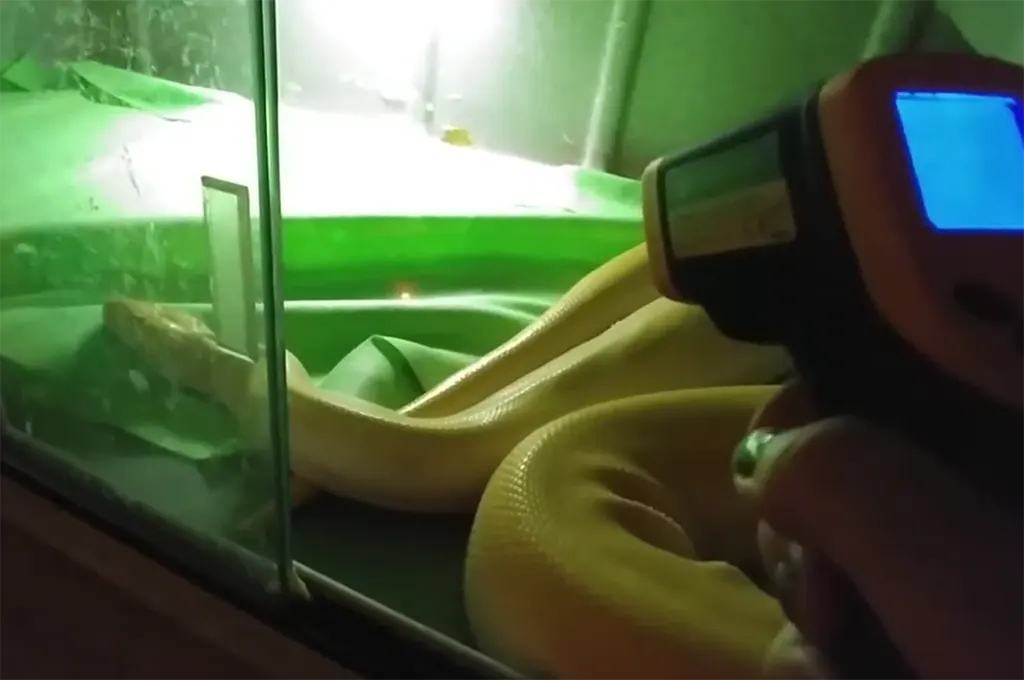
Image credit: YouTube / [Rumple Snake Skin]
If your juvenile is past the 3-week mark, or your adult is showing concerning weight loss, work through this systematic, U.S. home-optimized protocol before attempting to feed again:
- Day 1: Calibrate Thermal Gradients
- Check your warm-hide surface temperature with an infrared temp gun or digital probe. It must read 88°F – 92°F. Summer home AC units can drop floors below metabolic thresholds; winter heating creates erratic swings. Ensure a reliable thermostat controls your heating element.
- Day 2: Stabilize Ambient Humidity
- Combat HVAC dryness by maintaining a baseline of 60% – 75% humidity (bumping to 75% – 80% if a shed cycle is approaching). Use damp sphagnum moss inside a dedicated hide rather than short-lived daily misting.
- Day 3: Audit Enclosure Security
- Replace large, open hides with snug, single-exit alternatives on both the warm and cool sides. Cover three glass sides of the enclosure to replicate an underground burrow and eliminate visual stress.
- Day 4: Verify Prey Size and Quality
- Confirm your feeder’s thickest point matches 1.0 to 1.25 times your snake’s mid-body girth. Oversized prey routinely causes strike fear in hesitant eaters.
- Day 5: Silence the Environment
- Move enclosures away from high-traffic household areas, loud televisions, and direct pathways.
- Day 6: Prepare the Thermal Signature
- Thaw frozen rodents safely in cool water. Bring the core temperature to 100°F – 105°F, and use a low-noise hair dryer on the rodent’s head for a few seconds to hit a target heat signature of 105°F – 108°F to activate labial heat pits.
- Day 7: Execute a Nighttime Presentation
- Offer the prey at dusk or total night in complete darkness. Leave the food near the hide opening for 30–45 minutes undisturbed, then remove it if ignored.
8. When to See a Vet: Red Line Signs You Can’t Ignore
Stop troubleshooting and contact an exotic veterinarian immediately if you observe any of the following:
- Cumulative weight loss exceeding 10%–15% of baseline mass.
- A sharp, V-shaped spinal ridge with loose, tenting skin.
- Wheezing, bubbles around the nostrils, or excess mucus in the mouth (signs of a respiratory infection).
- Neurological head-twisting, loss of righting reflex, or severe lethargy.
Critical Note: Never attempt at-home force-feeding or assist-feeding. Inexperienced force-feeding frequently results in torn esophageal tissues, aspiration pneumonia, and fatal stress trauma. Only trained reptile veterinarians should perform medical assist-feeding.
FAQ
How long can a healthy adult ball python safely go without eating?
Healthy adult ball pythons can safely fast for 2 to 4 months during winter cycles, provided their weight loss stays below the 10% threshold. Juveniles under 12 months cannot sustain extended fasts and require intervention after 3 weeks of refusal.
Should I move my ball python to a separate feeding tub?
Generally, no. Moving a stressed snake into a separate plastic container often increases handling anxiety and makes refusal more likely. Feeding inside their secure enclosure—or using a quiet, dark hide box within the tank—is far safer and less disruptive.
How do I know if my ball python’s weight loss is dangerous?
Use a digital kitchen scale to track mass bi-weekly. If a snake drops past 10% of its normal operating weight or develops a visible V-shaped spine, it has crossed out of normal seasonal fasting and into a medical priority zone.
Ball Python Fasting & Gram-Weight Action Checklist
Phase 1: The Gram Scale & Body Condition Audit (Done Bi-Weekly)
- [ ] Weigh Your Snake: Use a digital kitchen scale (in grams). Compare against your last recorded baseline.
- [< 5% loss]: Safe Zone — Normal variance. Continue routine monitoring.
- [5% – 10% loss]: Observation Zone — Common in winter fasts or pre-shed. Check your temperatures.
- [10% – 15% loss]: Warning Zone — Prolonged refusal. Initiate the 7-day troubleshooting protocol.
- [> 15% loss]: Emergency Zone — Stop troubleshooting and schedule an exotic vet visit immediately.
- [ ] Tactile Spine Check: Run your finger gently down the spine.
- [ ] Optimal: Softly padded, rounded dome, barely palpable.
- [ ] Slim: Slightly distinct spine, but full muscle mass on the sides.
- [ ] Emaciated (Danger): Sharp V-shaped ridge, sunken flanks, loose skin.
Phase 2: The 7-Day Troubleshooting Protocol
- [ ] Day 1 — Thermal Gradient Check:
- [ ] Warm hide surface temperature is between 88°F – 92°F (measured with a digital probe or temp gun, controlled by a thermostat).
- [ ] Cool zone surface is between 78°F – 80°F.
- [ ] Day 2 — Humidity & HVAC Audit:
- [ ] Baseline humidity reads 60% – 75% (or 75% – 80% if entering a shed cycle).
- [ ] Added a damp sphagnum moss hide to counter central AC/heating dryness.
- [ ] Day 3 — Enclosure Security Audit:
- [ ] Two snug-fit, single-exit hides are in place (one on the warm side, one on the cool side).
- [ ] Three glass sides of the tank are covered to block outside movement and mimic a dark underground burrow.
- [ ] Day 4 — Prey Sizing Check:
- [ ] Feeder’s thickest point matches 1.0 to 1.25 times your snake’s mid-body girth (avoiding oversized prey).
- [ ] Day 5 — Environmental Noise Reduction:
- [ ] Enclosure is relocated away from high-traffic hallways, loud speakers, and direct household activity.
- [ ] Day 6 — Prey Thermal Signature Activation:
- [ ] Feeder thawed safely in cool water and warmed to a core temperature of 100°F – 105°F.
- [ ] Used a low-noise hair dryer on the rodent’s head to reach a target heat signature of 105°F – 108°F (activating labial heat pits).
- [ ] Day 7 — Nighttime Presentation:
- [ ] Offered food at dusk or total night in complete darkness. Left undisturbed for 30–45 minutes.
Phase 3: Veterinary Red Line Flags
- [ ] Is the refusal lasting past 3 weeks for a juvenile under 12 months old? -> Vet Check Needed
- [ ] Are there respiratory signs (wheezing, bubble-bubbles near nostrils, mouth rot)? -> Vet Check Needed
- [ ] Is there neurological twisting or a complete loss of the righting reflex? -> Vet Check Needed
Printable PDF Version: Need a clean, printable copy to attach to your reptile rack or share with your vet? Preview or download the complete 7-Day Checklist below.
This content is for educational purposes only and does not substitute professional veterinary diagnosis or treatment. If you observe any symptoms of illness, injury, or abnormal behavior, please consult a qualified exotic animal veterinarian immediately.
For more details, please review our full Medical Disclaimer.