
With 20 years of professional experience caring for reptiles, I’ve put together this practical leopard gecko UVB guide to fix the most frequent lighting errors. One common lighting error leads to avoidable eye damage in pet leopard geckos. Many reptile owners share stories of their geckos squinting and shying away from light due to poor bulb choices. They pick high-wattage UVB bulbs under the common assumption that stronger light equals healthier reptiles.
The harsh reality is quite the opposite. Excess wattage leads to corneal burns, chronic photophobia, and in worst-case permanent blindness. On top of that, countless new hobbyists accidentally purchase decorative full-spectrum lights that produce zero functional UVB. This complete leopard gecko UVB care guide walks you through safe lighting setups for 40cm and 60cm tanks, simple UVB testing steps, and reliable bulb picks to protect your gecko year-round.
Leopard Gecko UVB Guide: Why Wattage Does Not Equal Better Lighting
Let’s clear up the biggest myth in reptile lighting. Wattage only measures energy consumption, not usable UVB radiation. A 50W bulb does not automatically deliver better UVB than a 15W alternative. Leopard geckos are crepuscular creatures, naturally active during faint dawn and dusk light. They fall into Ferguson Zone 1, requiring an extremely mild UVI range of 0.0 to 0.7, as outlined in the definitive Arcadia Reptile Lighting Guide.
Most beginner-friendly reptile tanks are small or medium-sized, so overpowered bulbs flood the confined space with harsh ultraviolet rays. I have observed dozens of albino and hypo morph geckos, which have minimal natural light protection, suffer from painful UVB burns caused by oversized bulbs. Always consult a licensed reptile veterinarian if your gecko shows signs of light-related injury or discomfort. If you want to skip trial-and-error, stick to measured, low-intensity UVB rather than chasing higher wattage ratings.
Real Harm Caused By Misused High-Wattage UVB Bulbs
- Acute eye irritation: Persistent squinting, watery eyes, and constant face rubbing against tank decor. This is the most common early warning sign hobbyists ignore.
- Corneal scarring: Long-term UV overexposure leads to permanent eye tissue damage, which many new keepers mistake for a minor eye infection. Always consult a licensed reptile veterinarian if your gecko displays eye irritation or vision trouble.
- Complete blindness: Extended heavy UV exposure causes cataracts and permanent retinal harm. If you notice vision issues with your gecko, reach out to a licensed reptile veterinarian right away.
- Suppressed appetite and immunity: Chronic light stress disrupts their natural circadian rhythm, weakening their immune system over time.
The Full-Spectrum Light Scam Every New Keeper Falls For
Walk into any mainstream pet store, and you will see cheap bulbs labeled “full-spectrum daylight for reptiles”. These budget-friendly options look appealing, but they only emit visible light. They contain no UVB wavelengths needed for vitamin D3 synthesis. Without proper UVB exposure, geckos cannot absorb dietary calcium, which can lead to the gradual development of metabolic bone disease. Always consult a licensed reptile veterinarian if you suspect your pet has developed any nutritional or skeletal health issues. You can learn more about early warning signs and clinical prevention in the authoritative PetMD Guide on Reptile Metabolic Bone Disease.
Pro Care Tip: If a bulb packaging does not clearly list a UVI rating or UVB percentage, it never belongs in a leopard gecko tank.
Leopard Gecko UVB Guide: Standard Setup For 40cm & 60cm Tanks
Tank dimensions directly dictate every lighting choice. A bulb that works perfectly for a compact 40cm habitat will harm geckos in poorly ventilated tight spaces, while underpowered bulbs fail to create a usable light gradient in 60cm tanks. The table below simplifies every critical parameter for beginners, with zero guesswork.
| Enclosure Size | Bulb Type | UVB Percentage | Safe Wattage | Basking Spot Distance | Daily Usage Time |
|---|---|---|---|---|---|
| 40cm (Small Tank) | T5 HO Linear | 5–6% | 8–15W | 15–20cm | 10–12 Hours |
| 40cm (Small Tank) | Compact Fluorescent | 5.0% | 13W | 10–15cm | 10–12 Hours |
| 60cm (Medium Tank) | T5 HO Linear | 6–7% | 24–39W | 20–25cm | 10–12 Hours |
| 60cm (Medium Tank) | Compact Fluorescent | 6.0% | 26W | 15–20cm | 10–12 Hours |
Quick Real-World Notes:
- Metal mesh tank tops block 30% to 50% of functional UVB. Always lower the bulb by roughly 5 centimeters to compensate for light loss.
- Standard glass lids block 100% of UVB rays. Never place any UVB bulb above sealed glass.
- T5 linear bulbs outperform compact options with longer lifespans and even light distribution, making them my top daily recommendation.
UVI Intensity Curve: Distance vs Radiation Output
Most new keepers cannot visualize how quickly UVB intensity drops with distance. We share real UVB test data to explain why high-wattage bulbs pose risks inside small terrariums. This visual breakdown covers all core lighting rules every leopard gecko owner needs to follow. Every data point reflects real readings taken with a Solarmeter 6.5R in a standard glass terrarium.
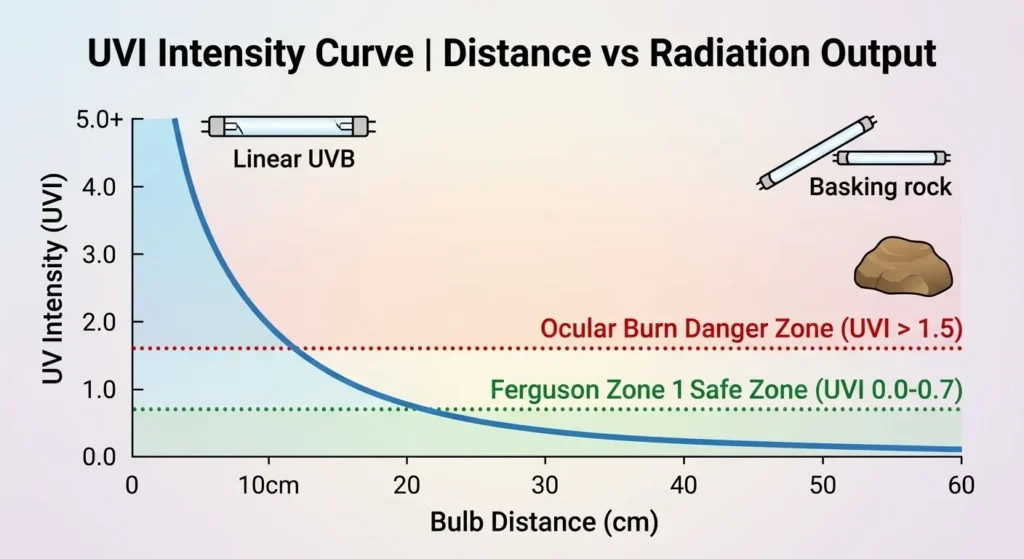
Chart Interpretation: A high-wattage 10% desert bulb hits a UVI of 3.0 at 10 centimeters, five times the safe limit for leopard geckos. Meanwhile, a low-wattage 6% T5 bulb maintains a perfect 0.5 UVI at 20 centimeters, sitting comfortably within the Ferguson Zone 1 safe range.
How To Test Your UVB Bulb (No Guesswork Required)
Here is an industry secret pet retailers rarely mention: UVB bulbs degrade long before they stop glowing. A bulb may look bright to the human eye but lose over half its ultraviolet output within six months. Visual inspection is never enough, which is why a handheld meter is non-negotiable for serious keepers.
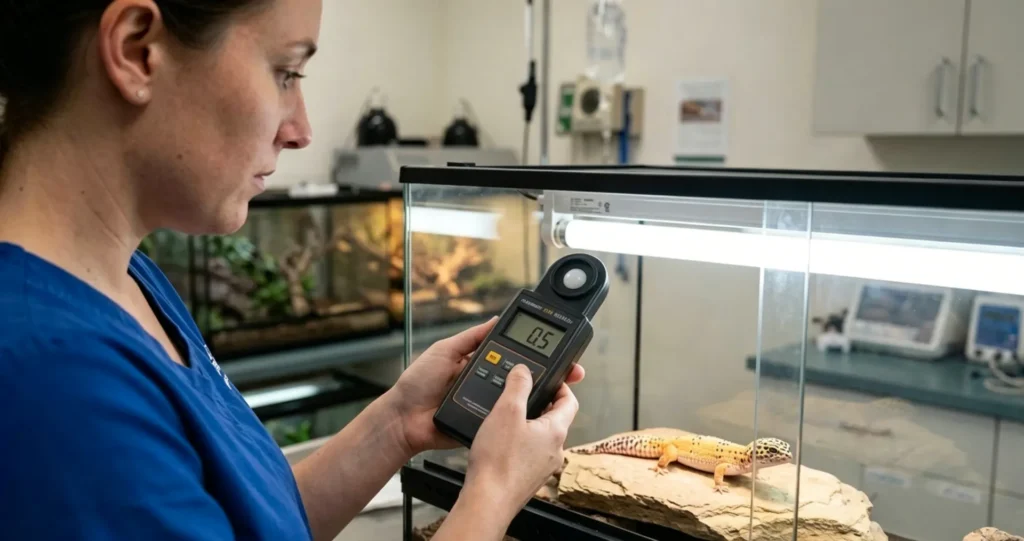
Step-by-Step UVB Testing Routine
- Warm up the bulb: Leave the light on for 10 minutes to reach stable radiation output, as cold bulbs produce inconsistent UVB levels.
- Set meter height: Place the sensor at your gecko’s back level, the exact height they rest while basking.
- Take multiple readings: Test the left, center, and right sections of the basking zone to confirm even coverage.
- Adjust accordingly: Keep readings between 0.3–0.7 UVI. Raise bulbs for high readings, replace bulbs for consistently low output.
Pair accurate lighting with stable habitat temperatures to eliminate gecko stress.
Expert Curated Safe UVB Shopping List
I’ve tested dozens of generic and premium bulbs. Low-quality unbranded bulbs have unstable radiation output and often overheat in small tanks. Use the trusted product picks listed below to select safe, stable reptile lighting for your gecko’s enclosure. Stick to this vetted list to avoid common beginner purchases. If you’re starting from scratch, our leopard gecko starter kit evaluation guide breaks down what’s actually worth buying and what to avoid.
| Product Category | Brand & Model | Best Tank Size | Estimated Price (USD) |
|---|---|---|---|
| Premium T5 Bulb | Arcadia 6% ShadeDweller | 40cm / 60cm | $25–$35 |
| Budget T5 Bulb | Zoo Med ReptiSun 5.0 T5 HO | 40cm / 60cm | $20–$30 |
| Compact Bulb | Exo Terra 5.0 UVB Compact | 40cm Small Tanks | $15–$20 |
| UVB Testing Meter | Solarmeter 6.5R UVI Meter | All Enclosure Sizes | $80–$100 |
Items To Avoid Completely: Any 10.0 desert UVB bulbs, unmarked no-brand cheap lights, and decorative full-spectrum lights with no listed UVI rating.
4 Common UVB Setup Mistakes Beginners Keep Making
1. Using One Bulb Size For All Tanks
A compact 13W bulb works great for compact 40cm habitats but cannot generate usable UVB for larger 60cm tanks. Geckos will hide constantly to escape weak, scattered light, leading to chronic stress.
2. Zero Dark Cycle For Night Rest
Leopard geckos require full darkness overnight to regulate hormones and sleep. Never leave UVB or ambient lights running 24/7. A basic outlet timer set to 10–12 daily hours is more than enough.
3. Ignoring Morph-Specific Sensitivity
Albino and patternless morphs lack protective melanin in their skin and eyes. These delicate geckos need 5% low-intensity bulbs and extra mounting distance. For tailored care tips, visit our dedicated post for albino leopard gecko care tips.
4. Mounting Bulbs Above Hiding Spots
Every tank needs a clear light gradient. Mount bulbs above the basking platform, and place moisture hides on the cool, dark end of the tank. Geckos must freely choose between UVB exposure and complete shade. If your gecko is still struggling with dry, patchy skin despite correct humidity, improper lighting may be the culprit — check our guide on leopard gecko stuck shed for the full troubleshooting checklist.
Final Thoughts From A Reptile Care Specialist
After two decades working with captive leopard geckos, I can confidently say improper UVB lighting is one of the most preventable health hazards. Always consult a licensed reptile veterinarian for any health concerns with your pet. Forget the misleading wattage hype; your gecko does not need overpowered lights to thrive. Consistent low-intensity UVB, correct mounting distance, and routine bulb replacement are the only three factors that truly matter.
Keep your setup simple, test your bulbs regularly, and prioritize your gecko’s delicate eye health over unnecessary upgrades. With the help of this practical leopard gecko UVB guide, both new and seasoned keepers can build a low-stress, biologically appropriate habitat for their pet.
This content is for educational purposes only and does not substitute professional veterinary diagnosis or treatment. If you observe any symptoms of illness, injury, or abnormal behavior, please consult a qualified exotic animal veterinarian immediately.
For more details, please review our full Medical Disclaimer.
Pingback: Leopard Gecko Thermostat for California: 3 Safe Picks to Avoid Burns (2026 LA Guide)
Pingback: Leopard Gecko Care Guide: 20 Expert Tips for Health, Shedding & Bonding