
Many new reptile keepers instantly think their pets are underfed once they notice leopard gecko tail thinning, so they immediately feed their geckos more often without proper research. With twenty years of hands-on reptile care experience and long-term reptile pet content creation, I have witnessed countless leopard geckos miss the best treatment period just because owners misjudge the real reason behind slimming tail issue in geckos.
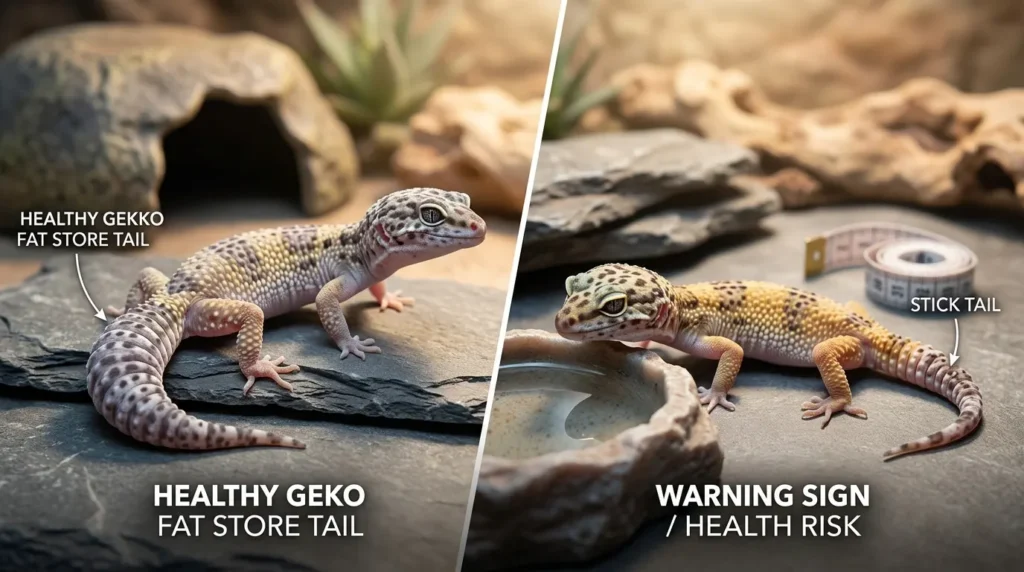
The thick, plump tail of leopard geckos serves as a natural fat storage site. It holds energy, nutrients and fat reserves to sustain them through brumation, illness and periods without food. Mild food scarcity only leads to slow, minor fat loss in the tail. A rapidly thinning tail is nearly always an early sign of underlying health issues. For captive leopard geckos, internal parasites, chronic gut inflammation and prolonged stress are the most common causes of tail shrinkage, more so than simply not getting enough food. Stress-induced appetite loss is often missed by owners—our deep dive into hidden causes of leopard gecko not eating walks through the de-stress protocol.
If you only rely on visual observation to judge the health status, you will easily ignore subtle physical changes. This article will teach you to use the scientific tail thickness change curve to monitor pet health status all year round, and share practical family diagnosis methods and safe nursing solutions for parasite infection and intestinal inflammation,help every gecko owner fix improper care routines and help their gecko rebuild healthy fat reserves in its tail.
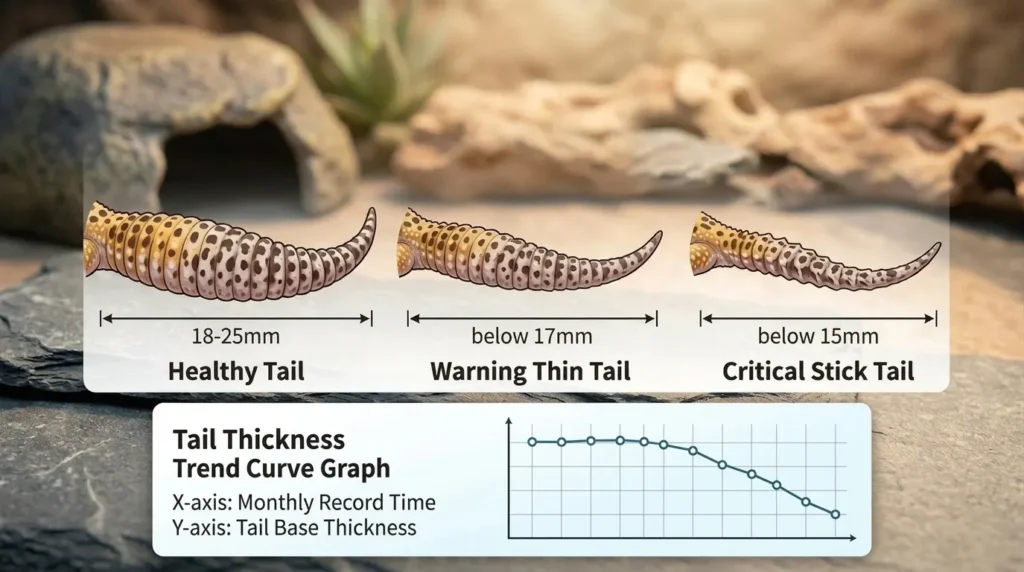
Reasons Your Leopard Gecko Has a Thin Tail (Other Than Underfeeding)
1. Internal Parasite Infestation (Most Common Hidden Danger)
Internal parasites are the primary reason for unexplained leopard gecko tail thinning. Common infectious parasites include pinworms, coccidia and giardia, and severe cryptosporidium infection will directly destroy the intestinal absorption function. Even if your leopard gecko maintains normal appetite and eating volume, nutrients cannot be absorbed normally by the intestinal tract, and the body can only continuously consume tail fat reserves, resulting in obvious slimming tail issue in geckos in a short period of time.
Typical accompanying symptoms include loose unformed feces, mucus mixed in excrement, listless mental state and sunken eye sockets. Newly purchased juvenile geckos and geckos living in unsanitary environments have the highest infection probability. Many owners ignore fecal inspection, and only find severe physical decline when leopard gecko tail thinning becomes obvious.
You can refer to reptile fecal examination guide to complete simple home preliminary screening. Once abnormal excrement is found, send fresh fecal samples to a licensed reptile care specialist facility for laboratory testing in time to confirm parasite types. Always consult a licensed reptile vet for official health assessments and care guidance.
2. Chronic Enteritis Damaging Intestinal Function
Long-term improper feeding, low living temperature and mild bacterial infection will gradually induce chronic enteritis in leopard geckos. Inflamed intestinal mucosa will lose normal digestion and absorption capacity, creating a cycle where your gecko cannot absorb nutrients and slowly burns its stored fat.
Different from acute enteritis with obvious vomiting and diarrhea, chronic enteritis has mild symptoms in the early stage, only showing slow body weight drop and invisible leopard gecko tail thinning. Most keepers cannot detect the problem in time until the tail becomes obviously shriveled. If your gecko struggles with digestion, you can adjust its food and add reptile-safe probiotics to gently support gut comfort. Always check in with a licensed reptile vet for long-term digestive concerns.
3. Long-Term Chronic Stress Suppressing Body Metabolism
Leopard geckos belong to extremely sensitive reptiles, and unstable living environment will bring continuous mental stress. Excessively frequent manual handling, noisy living environment, unreasonable temperature gradient and lack of safe hiding places will all cause chronic stress responses.
Under stress state, the digestive metabolism system of leopard geckos will be inhibited, the body automatically activates fat consumption mode, and then gradual leopard gecko tail thinning appears. This kind of health problem has no obvious abnormal symptoms in the early stage, and this silent health issue often flies under the radar for new and experienced owners alike
Redesign your gecko’s tank based on standard leopard gecko enclosure guidelines and use simple calming methods to remove stress-related health risks entirely. Chronic stress is a leading driver of weight loss, and sustained summer heat is one of the most overlooked stressors — if your tank wont cool down, see our guide on an overheated leopard gecko tank for relief methods.
4. True Insufficient Feeding (Limited Applicable Crowd)
Insufficient feeding can indeed cause leopard gecko tail thinning, but it is only limited to growing juvenile leopard geckos within six months. Adult leopard geckos with stable body shape have strong fat reserve regulation ability, and intermittent fasting for two to four weeks will not cause obvious tail shrinkage. Only long-term severe hunger will affect tail fat thickness, which is far less frequent than the above three hidden diseases.
Track Tail Size Shifts To Catch Weight Loss Early In Leopard Geckos
Visual judgment has great errors, and establishing a fixed tail thickness measurement record curve is the most effective early warning method to avoid irreversible leopard gecko tail thinning. Regular fixed-point measurement can capture subtle physical changes one to two months in advance, leaving sufficient adjustment and treatment time.
Standard Measurement Operation Steps
First, prepare a soft flexible measuring tape, select the tail base where the tail is connected to the body as the fixed measurement position, record the numerical value in millimeters every fixed month, and record the pet weight synchronously to form a complete health change curve.
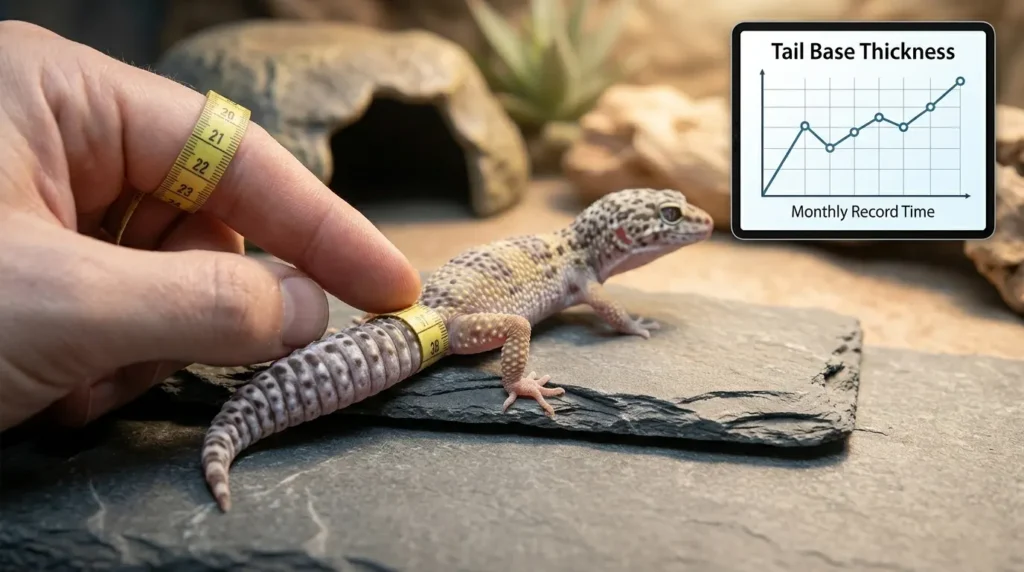
Health Thickness Reference Standard Table
| Age Stage | Healthy Tail Base Thickness | Early Warning Thin State | Critical Stick Tail State |
|---|---|---|---|
| 0-6 Months Juvenile | 8-12mm | Below 7mm | Below 5mm |
| 6-12 Months Subadult | 12-18mm | Below 11mm | Below 9mm |
| Over 1 Year Adult | 18-25mm | Below 17mm | Below 15mm |
Curve Data Health Judgment Rule
If monthly tail measurements drop steadily over time, your gecko may struggle with gut sensitivity or unseen parasites, and you should reach out to a reptile vet for professional guidance quickly; A sudden big drop in tail thickness within a single month signals urgent health trouble; book a visit with a licensed reptile vet without delay; stable or slowly rising data means the living state is healthy, just keep the current feeding mode.
Many long-time gecko owners use this measurement system to spot thin tail warning signs early, so they can get professional vet help before their gecko develops severe, hard-to-manage stick tail symptoms.
Practical Home Nursing Solutions To Improve Leopard Gecko Tail Thinning
1. Home Nursing Plan For Parasite Infection
Separate geckos showing unusual health signs to lower the risk of germ spread between pets. Swap loose tank bedding for easy-to-clean paper towels and remove waste daily to keep a clean living space. You can mix pet-safe electrolyte additives into drinking water to replenish lost hydration and nutrients; you can find safe mixing guidelines on trusted reptile care resources. During sensitive recovery phases, offer tiny, easy-to-digest feeder bugs to ease gut strain and help your gecko regain energy. Always get formal health checks and guidance from a licensed reptile vet for suspected parasite concerns.
2. Four-Week Gentle Support Routine For Geckos With Sensitive Digestion
For the first two weeks of gentle support, skip tough hard-shell bugs and only offer soft, easy-to-digest feeders. You may add reptile-safe probiotics daily to support balanced gut bacteria while caring for sensitive digestion. Keep your warm basking spot steady at 88-92 degrees Fahrenheit to support natural digestion. Always consult a licensed reptile vet if your gecko’s digestive troubles do not improve quickly.
During weeks three and four, slowly add more feeder options while watching your gecko’s waste closely. You can go back to regular feeding habits once their droppings look consistent and healthy. Limit extra handling throughout this supportive routine to prevent added discomfort. Reach out to a licensed reptile vet if digestive issues persist.
3. Full Range Adjustment To Eliminate Chronic Stress
Optimize the internal layout of the feeding box, configure warm area hiding caves, cold area hiding caves and moist shedding hiding caves to meet the pet’s sense of security needs. Keep the feeding box in a quiet and stable position away from loud noise and frequent walking areas.
Strictly control the frequency of manual handling, and the daily interaction time should not be too long. Form a fixed regular work and rest feeding rule, and refer to leopard gecko stress reduction tips to comprehensively optimize the feeding environment, so that pets can stay in a relaxed state for a long time.
Balanced Feeding Habits To Stop Repeating Thin Tail Issues
Sticking to consistent, balanced feeding habits is the best way to stop thin tail issues from coming back. Juvenile leopard geckos in the growth period need regular daily feeding to meet growth needs, while adult individuals only need regular feeding 3 to 4 times a week.
Offer balanced calcium and multivitamin supplements to cover key minerals, and avoid feeding only one type of feeder insect to prevent nutritional gaps. All keepers can formulate exclusive feeding plans according to leopard gecko daily feeding schedule, which can not only ensure sufficient nutritional intake, but also avoid physical burden caused by excessive feeding.
Final Summary
Many new gecko owners mistakenly believe thin tails only come from not feeding enough. Good gecko care means moving past guesswork. Thin tails act as a warning sign from your pet, so tracking tail size changes lets you spot stress, intestinal upset or parasites before issues worsen.
Timely follow gentle at-home support steps, tweak your gecko’s living space and daily feeding schedule, and most mild thin tail symptoms can see noticeable positive changes. For lasting healthy tail fat stores, always coordinate with a licensed reptile vet for personalized care advice. Every quiet physical change of leopard geckos needs careful observation from keepers, and early detection and early intervention are always the most effective way to protect reptile pets.
This content is for educational purposes only and does not substitute professional veterinary diagnosis or treatment. If you observe any symptoms of illness, injury, or abnormal behavior, please consult a qualified exotic animal veterinarian immediately.
For more details, please review our full Medical Disclaimer.
Pingback: Leopard Gecko Diarrhea: Non-Parasite Causes & Easy Home Fixes
Pingback: Leopard Gecko Feeding Schedule by Season: Expert Care Guide