
Choosing the right leopard gecko enclosure size is the foundation of healthy reptile care. If you just brought home a leopard gecko or are planning an upgrade, you have likely run into one persistent piece of old advice: a standard 20-gallon long tank works perfectly for any leopard gecko. Walk into most local pet shops across the US, scroll casual reptile forums, or browse basic care posts, and this line repeats constantly.
The hard reality for North American keepers: most new owners get their leopard gecko enclosure size wrong and select enclosures that are far too small. this simple mistake does not just limit your pet’s movement. It directly triggers reduced appetite, ongoing stress, improper shedding and even tail loss — common issues reptile hobbyists across California, Florida and other US states deal with every single day. Always reach out to a reptile vet if your gecko struggles with persistent health or behavioral troubles.
This guide follows the 2026 updated US reptile habitat standards to break down the ideal leopard gecko enclosure size for hatchlings, juveniles, single adults and paired leopard geckos. We will cover seven widespread sizing mistakes to avoid, plus region-specific adjustments tailored for the dry climate of California and Arizona, and the high-humidity environment of Florida and the Southeast. Every tip here is built for indoor home setups common across North America, easy to follow and implement right away.
1. Why the 20-Gallon Long Tank Is No Longer Acceptable for Adult Leopard Geckos
For decades, the 20-gallon long tank (30” × 12” × 12”) was incorrectly treated as the baseline leopard gecko enclosure size for adult leopard geckos. Modern reptile care research and updated 2026 US industry standards have fully moved away from this rule, and for clear, practical reasons tied to how leopard geckos behave and thrive indoors.
When picking your leopard gecko enclosure size, floor space is everything for this species. Leopard geckos are fully terrestrial. They do not climb vertical surfaces actively, so extra height adds no value. A 20-gallon tank offers very limited ground area, making it nearly impossible to build a stable thermal gradient. In US households, room temperatures usually sit between 68°F and 74°F year-round. A tank this compact means the warm basking zone and cool resting zone blend together. Your gecko cannot move between temperature ranges to regulate its body heat, which slows digestion and gradually makes it avoid food. Reach out to a reptile vet for support if your pet refuses food long-term.
Second, there is no room for essential habitat accessories. Every functional leopard gecko setup requires three core hides: a warm hide near the heat source, a cool hide on the opposite side, and a moist hide dedicated to shedding. A 20-gallon tank can barely fit these three items, leaving zero space for flat basking rocks, visual barriers or extra exploration areas. When geckos cannot move freely or choose their own resting spots, they stay in a constant state of low-level stress.
Third, this cramped living space amplifies defensive behaviors. Many keepers in California and Florida report their geckos pacing glass walls nonstop or hiding 24 hours a day in small tanks. In extreme cases, prolonged stress leads to tail loss — a natural defense response for leopard geckos when they feel trapped or threatened. Consult a reptile vet to ease chronic stress and treat tail injuries.
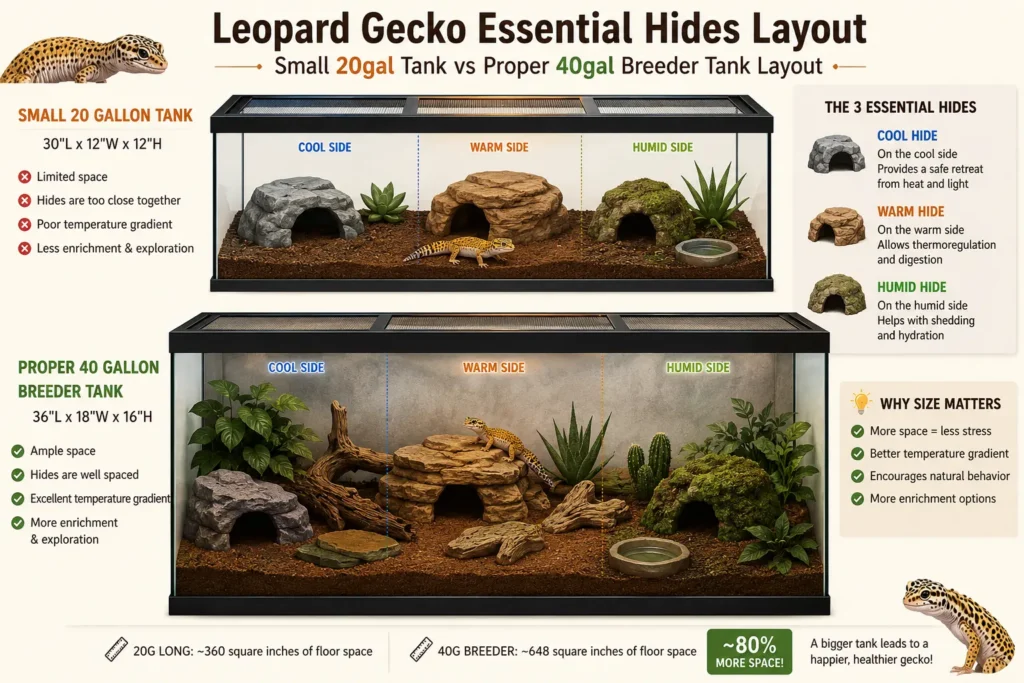
Mistake 1: Sticking to a 20-gallon tank for fully grown adult leopard geckos
Quick Fix per 2026 US Standards: When setting your leopard gecko enclosure size, retire 20-gallon long tanks for adult geckos entirely. Reserve this size only for mid-stage juveniles before their 12-month growth mark.
2. Official 2026 US Enclosure Size Breakdown (Juvenile, Adult & Pairs)
Below are the minimum and recommended leopard gecko enclosure size options aligned with current North American reptile care standards. All measurements focus on floor dimensions first, as height plays a minor role for ground-dwelling leopard geckos. We split sizes by age group and living situation for straightforward selection.
2.1 Hatchlings & Young Juveniles (0 – 6 Months Old)
Baby leopard geckos grow quickly but feel vulnerable in overly large spaces right after hatching. A tiny enclosure helps them find food, water and hides easily without feeling overwhelmed.
- Minimum Size: 10-gallon standard tank (20” × 10” × 12”)
- Recommended Size: 15-gallon tank (24” × 12” × 12”)
- US Keeper Note: This size works for all regions across the country. Do not upgrade early; sudden large spaces can cause young geckos to stop eating. Plan a tank swap once they reach 6 months old.
2.2 Mid-Stage Juveniles (6 – 12 Months Old)
At this age, geckos become more active and their body size increases noticeably. This is the only life stage where a 20-gallon long tank is appropriate.
- Minimum Size: 20-gallon long (30” × 12” × 12”)
- Recommended Size: 30-gallon breeder tank (36” × 18” × 12”)
2.3 Single Adult Leopard Geckos (12+ Months Old)
This is the most critical category for US keepers, as choosing the proper leopard gecko enclosure size directly impacts long-term health. The 2026 standard raises the minimum requirement significantly to support long-term health.
| Gecko Type | Minimum Tank Size | Exact Dimensions (L×W×H) | Best For US Homes |
|---|---|---|---|
| Standard Adult Leopard Gecko | 40-gallon breeder | 36” × 18” × 16” | Most households nationwide |
| Giant / Super Giant Morph | 55-gallon standard | 48” × 18” × 16” | Larger morphs common in US reptile collections |
Mistake 2: Upgrading to a tall, narrow tank instead of a wide breeder tank
Many new keepers pick tall aquariums thinking bigger equals better. Tall tanks waste space. Always choose wide, low-profile breeder-style tanks for adult leopard geckos.
2.4 Paired Leopard Geckos (Cohabitation Setups)
Leopard geckos prefer living alone in the wild and in home habitats. If you plan to house two geckos together, your leopard gecko enclosure size needs to follow these strict size rules. Never house two mature males together — territorial fighting is guaranteed, no matter the tank size.
| Pair Combination | Minimum Tank Size | Core Setup Rules for US Keepers |
|---|---|---|
| Female + Female | 55-gallon tank | Double all hides; add cork bark or fake plants for visual barriers |
| Male + Female (Breeding Pairs) | 75-gallon tank | Separate basking spots; move the male out after mating to prevent female stress |
Mistake 3: Housing pairs in the same size tank as a single adult
Even calm female pairs need extra room to avoid food guarding and minor nipping. Always size up when cohabiting.
3. Regional Adaptations: Dry West Coast (CA/AZ) vs Humid Southeast (FL)
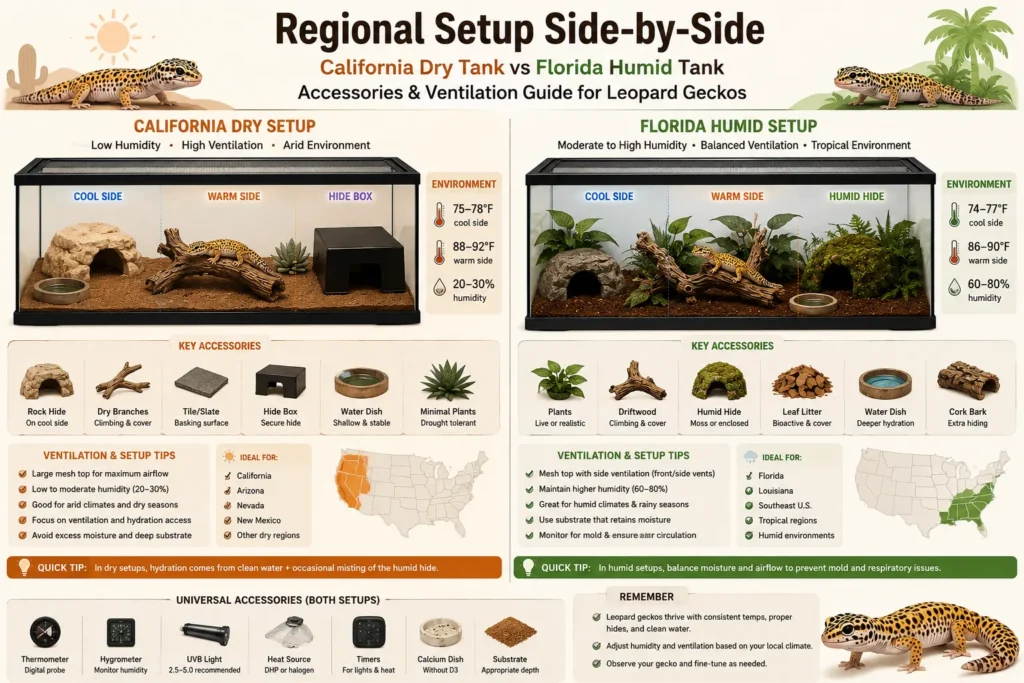
When adjusting your leopard gecko enclosure size for local climates, this is the key local adjustment that separates generic global guides from actionable North American advice. Tank size minimums stay the same across the US, but ventilation, tank material and slight size upgrades are required based on regional climate. These tweaks solve the most common local issues: dry-air shedding problems in California, and mold/respiratory issues in Florida.
3.1 Dry Climate: California, Arizona & Western US
Western US states feature low ambient humidity (30% – 40% RH) all year long. The biggest local challenges are dehydration and stuck shed on toes, eyes and tails. Talk to a reptile vet when shedding or hydration issues do not improve with habitat tweaks.
- Tank Size Rule: Follow the standard 2026 minimum sizes. No forced upgrade needed, but larger tanks hold stable humidity better in dry indoor air.
- Tank Material & Top Cover: Use glass enclosures. Replace full screen tops with partial screen covers (50% open). Full screen tops let precious moisture escape too quickly in dry homes.
- Humidity Routine: Keep overall enclosure humidity at 35% – 40%. Mist only the cool side 2 to 3 times per week. Maintain a fully stocked moist hide with damp sphagnum moss for shedding support.
Mistake 4: Using full screen tops in California homes
This dries out the habitat rapidly and leads to frequent bad sheds.
3.2 Humid Climate: Florida & Southeast US
Florida and surrounding areas have persistent high humidity (60% – 80% RH) indoors and outdoors. Excess moisture causes mold on substrate, bacteria growth and respiratory irritation for leopard geckos, which evolved in arid desert environments.
- Tank Size Rule: Always size up one tier from the official minimum. For example, use a 55-gallon tank instead of a 40-gallon for single adults. Extra floor space improves natural air circulation.
- Tank Material & Top Cover: PVC enclosures or glass with full screen tops work best. Maximum ventilation is non-negotiable here.
- Humidity Routine: Keep overall humidity below 35%. Do not mist the main enclosure at all. Use non-porous substrate like tile or paper towels to stop mold growth.
Mistake 5: Using loose organic substrate in Florida habitats
Coconut fiber and soil retain moisture and grow mold within days in humid Florida homes.
Quick Regional Reference Checklist
| Category | California / Dry West | Florida / Humid Southeast |
|---|---|---|
| Adult Base Size | 40gal Breeder (Standard) | 55gal (Upgraded for airflow) |
| Tank Top | Partial Screen | Full Screen |
| Ambient RH Target | 35% – 40% | Under 35% |
| Top Local Risk | Stuck shed, dehydration | Mold, respiratory stress |
4. Two More Common Sizing & Setup Mistakes to Avoid
We have covered five major mistakes so far. The final two errors appear constantly among new US keepers and directly impact gecko comfort.
Mistake 6: Skipping space for enrichment after filling hides and dishes
When calculating tank size, many owners only account for hides, food and water dishes. Leopard geckos need open floor space to walk, explore and bask. Crowded enclosures keep stress levels high. Leave at least one-third of the tank floor completely open.
Mistake 7: Delaying tank upgrades for growing juveniles
If your 6-month-old juvenile is still in a 10-gallon tank, upgrade immediately. Stunted activity space during growth can weaken their immune system long-term. Check in with a reptile vet to monitor your gecko’s growth and overall physical condition. Stick to a strict timeline for tank swaps to match their developing size.
5. Step-by-Step Tank Upgrade Guide (US Home Friendly)
If your leopard gecko is currently in an undersized enclosure, use this simple routine to move them with minimal stress — tailored for standard US indoor living spaces.
- Set up the new tank 24 hours early. Let temperatures and humidity stabilize to match your home environment.
- Complete the move in the evening. Leopard geckos are crepuscular, so they feel calmer during dusk hours.
- Reuse familiar hides and decor from the old tank. Scents from their existing items reduce anxiety instantly.
- Place food and fresh water in the same relative position as before.
- Leave the gecko undisturbed for 24 hours. Avoid handling or checking on them constantly.
6. Final Summary
Choosing the right enclosure size is the foundation of good leopard gecko care for every keeper in the United States. The outdated 20-gallon standard no longer meets modern welfare requirements for adult geckos. Follow the 2026 US reptile guidelines: 10–15 gallon for hatchlings, 20–30 gallon for juveniles under 12 months, 40+ gallon breeder tanks for single adults, and 55–75 gallon tanks for cohabiting pairs.
Always adjust your tank setup based on your local climate: retain gentle humidity with partial screens in dry California homes, and prioritize full ventilation and larger tanks in humid Florida areas. Avoid the seven common sizing mistakes listed above, and your leopard gecko will maintain a healthy appetite, regular shedding and calm behavior for years.
Before setting up your habitat, you can use our quick leopard gecko equipment checklist tool to generate a full, personalized list of everything you need for a healthy setup:Leopard Gecko Reptile Equipment Checklist
FAQ Section
Q1: Can an adult leopard gecko live permanently in a 20-gallon long tank in the US?
A: Per 2026 US reptile habitat standards, no. A 20-gallon tank is too small for adult geckos long-term. It cannot support a proper thermal gradient and causes chronic stress, appetite loss and tail loss issues. Reserve this size only for juveniles aged 6 to 12 months.
Q2: Do I need a different tank size for California versus Florida?
A: The official minimum size stays the same nationwide. Florida keepers are recommended to size up one tier for better air circulation in high humidity. California keepers can use the standard minimum sizes with modified tank tops to retain moisture.
Q3: What size tank do I need for two female leopard geckos living together?
A: The minimum size for a female pair in the US is a 55-gallon tank. Add extra hides and visual barriers to prevent competition and stress between the two geckos.
Q4: Is a tall aquarium better than a breeder tank for leopard geckos?
A: No. Leopard geckos are terrestrial. Wide, low breeder tanks provide more usable floor space, which is far more important than extra vertical height.
This content is for educational purposes only and does not substitute professional veterinary diagnosis or treatment. If you observe any symptoms of illness, injury, or abnormal behavior, please consult a qualified exotic animal veterinarian immediately.
For more details, please review our full Medical Disclaimer.
Pingback: Leopard Gecko 40Gal Heat Setup: 9 Proven US Steps to Fix Frustrating Temp Gradient Issues (2026)