
Let me guess: You walked past your cat this morning, gave them a quick pet, and felt it— that weird, damp, sticky fur around the base of their tail. This is the classic cat wet tail but not diarrhea puzzle that stumps thousands of new owners every year. You panicked, ran straight to the litter box, and stared at perfectly normal, firm stool. No diarrhea, no loose stools, nothing out of the ordinary.
I’ve been there. Three years ago, my tabby Mochi developed cat wet tail but not diarrhea for three straight weeks. I spent hours scrolling Reddit at 2 a.m., convinced she had some rare intestinal parasite, only to drop $180 at the vet on completely unnecessary fecal tests and deworming medication. Turns out she had a mild case of FLUTD causing tiny amounts of urine leakage that I never even saw her produce.
Thousands of cat owners across the US post this exact same panic every single week. Generic online guides always jump straight to diarrhea or worms, but they completely miss the four most common causes of wet tail base when stool is 100% normal. This guide is everything I wish someone had told me back then— no fluff, no vague advice, just what actually works, based on real owner experiences and AAHA 2026 feline clinical standards.
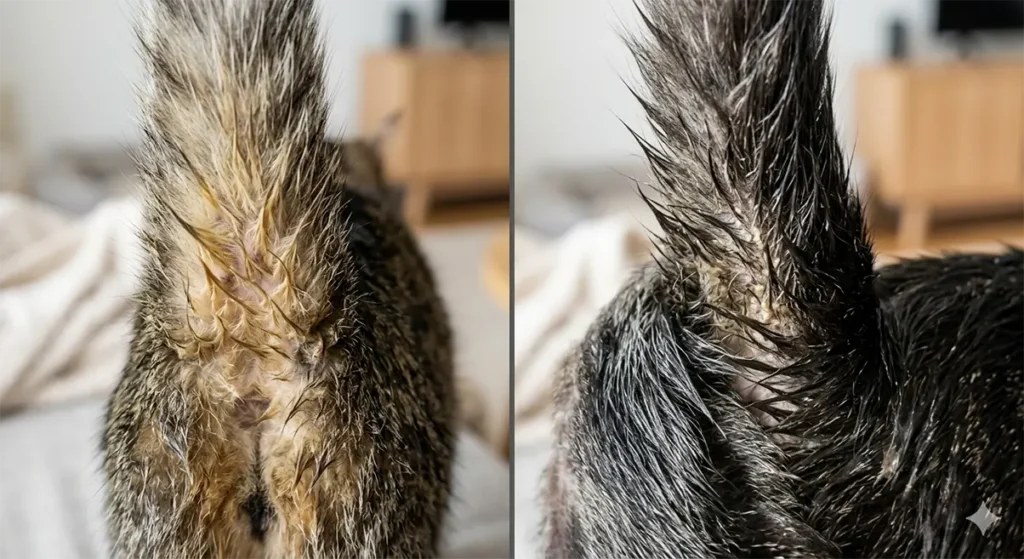
Quick 2-Minute Home Test for Cat Wet Tail But Not Diarrhea
Before you start spiraling about expensive vet bills for cat wet tail but not diarrhea, do this simple check to eliminate the most common false alarms:
- Part the damp fur all the way down to the skin and take a good sniff. I know it’s gross, but the smell tells you almost everything:
- Thin, clear/pale yellow fluid + sharp ammonia smell = urinary leakage
- Thick, waxy brown gunk + musty oily scent = gland discharge
- Thin, metallic, fishy smell only right around the anus = anal sac fluid
- Slightly damp, pink irritated skin with tiny clear oozing spots = over-grooming
- Check where your cat sleeps. If they love curling up on cold tile floors, basement concrete, or near AC vents, condensation can make their tail fur look damp for hours after they get up.
- Monitor their litter box for two full days. If every single stool is firm, formed, and normal-looking, you can completely cross diarrhea off your list.
4 Hidden Causes of Wet Tail (No Diarrhea Whatsoever)
Cause 1: Feline Lower Urinary Tract Disease (FLUTD) – The #1 Most Misdiagnosed Cause
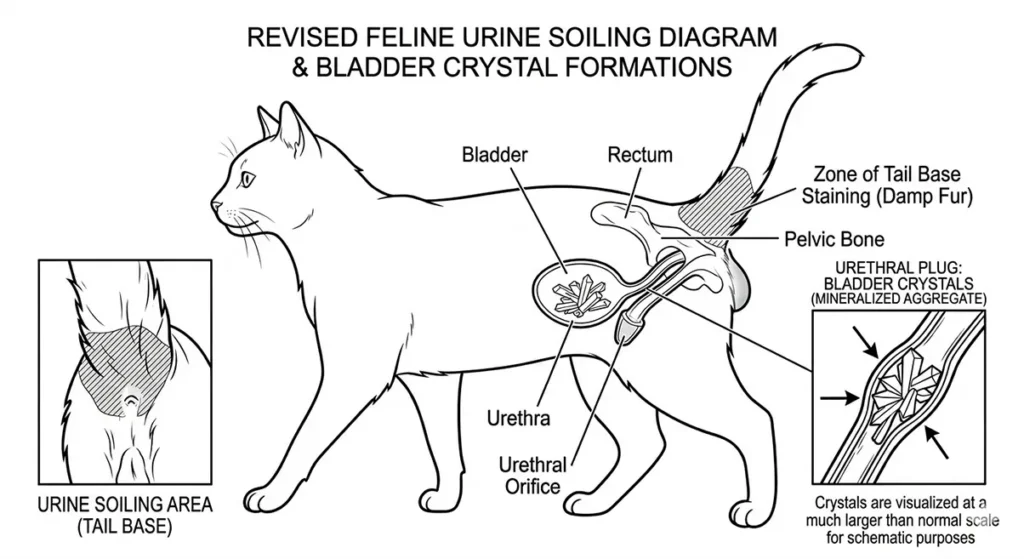
This is by far the most common reason for wet tail base with normal stool, and it’s also the most dangerous. FLUTD causes tiny amounts of urine to leak out throughout the day— so small that your cat doesn’t even make a visible puddle anywhere. The urine just soaks into the fur around their tail and inner legs, and most owners never connect it to a urinary problem.
I can’t tell you how many people I’ve talked to who thought their cat was just “getting messy” or “not cleaning themselves properly” until it turned into a full-blown urethral blockage. Indoor cats are at the highest risk, especially those who eat only dry kibble and don’t drink enough water. Indoor cats are at the highest risk for urinary and litter-box issues, and increasing activity and water sources helps prevent them — see our roundup of indoor cat enrichment ideas.
How To Tell It’s FLUTD (And Not Something Else)
- Dampness is almost always on the underside of the tail base and inner thighs, not the top
- Your cat makes frequent, quick trips to the litter box (10 seconds or less) with very little urine coming out
- They lick their rear end constantly, sometimes pulling the fur raw around their genitals
- The damp fur has that unmistakable ammonia smell that doesn’t go away even after you wipe them down
- Male cats are at life-threatening risk of urethral blockage, even with just minor damp spotting
Gentle At-Home Care Checks For Cats With Damp Tail Fur And Normal Stool
- Immediately start mixing wet canned food into their diet. Even 50% wet food doubles their daily water intake
- Place multiple water bowls around your house, not just next to their food. Cats hate drinking where they eat
- Switch from plastic litter boxes to ceramic or stainless steel. Plastic traps bacteria and urine odors that irritate sensitive urinary tracts
- Put a soft cone on them temporarily to stop over-licking, which only makes the irritation worse
Red Flags That Require Urgent Visit To A Licensed Animal Healthcare Professional
- Male cat with any tail base dampness + straining to urinate (this is a life-threatening emergency that can kill them in 24 hours)
- Blood in the damp fur or in the litter box
- Loss of appetite, hiding, or refusing to drink water
- Vocalizing in pain while squatting in the litter box
Cause 2: Impacted Or Infected Anal Sacs – That Gross Metallic Smell
Cats have two tiny scent glands right next to their anus at the 4 and 8 o’clock positions. Normally, these glands empty a small amount of fluid every time your cat poops. But even with perfectly formed stool, obesity, low-fiber diets, or just plain bad luck can cause them to get clogged. When that happens, the fluid starts leaking out continuously, soaking the fur around their tail.
The smell is impossible to mistake once you’ve smelled it— a strong, metallic, fishy odor that lingers on everything your cat sits on. I once had a friend who thought her couch had a mold problem for two weeks before she realized it was her cat’s leaking anal sacs.
Clear Signs It’s Anal Sacs (No Diarrhea Required)
- Dampness is isolated strictly around the anus, not spreading forward to the genital area
- Your cat scoots their rear across the carpet, couch, or tile after using the litter box
- They lick their butt constantly, sometimes creating small bald spots
- You might see a small, firm swelling under the skin next to their anus (this means an abscess is forming)
- Their stool remains completely normal and firm every single time
What You Can Do At Home (But This Won’t Fix It Permanently)
- Add 1 teaspoon of plain canned pumpkin puree to their meals twice a day. The extra fiber bulks up their stool, which helps the glands empty naturally
- Apply a warm compress to the area for 5 minutes twice a day. This softens the thick, trapped fluid and can provide some relief
- Trim any matted fur around the anus to stop fluid from getting trapped and causing bacterial infections
- Avoid cheap, low-fiber treat sticks that make the problem worse long-term
When You Have To Go To The Vet
- A licensed animal care specialist needs to manually empty these glands to release all trapped fluid buildup. Do NOT try to do this at home— I’ve seen too many owners accidentally rupture the gland, which leads to a painful abscess and expensive surgery
- If the fluid is thick, discolored, or smells especially bad, your cat will need antibiotics for an infection
- For chronic repeat cases, your vet may recommend a prescription high-fiber diet
Cause 3: Supracaudal Gland Hyperplasia (Stud Tail) – Greasy “Wet-Looking” Fur
Most people see the greasy, matted fur on their cat’s tail and assume it’s dirt or that their cat isn’t grooming themselves. But stud tail is actually a medical condition caused by overactive sebaceous glands at the base of the tail. These glands produce too much oil, which mats the fur together and makes it look perpetually damp, even though there’s no actual liquid leaking out.
While it’s more common in intact male cats (hence the name), spayed females and neutered males get it all the time too. Stress, hormone changes, and even temperature swings in your house can trigger flare-ups.
How To Tell It’s Stud Tail (And Not Urine Or Anal Fluid)
- The greasy “dampness” is only along the top spine of the tail base, never the underside
- You’ll see tiny black dots (blackheads) embedded in the matted fur
- The smell is a strong, rancid oil scent, not ammonia or fishy
- Wiping with a damp cloth does almost nothing— you need degreasing shampoo to get it out
- Their litter box habits are 100% normal, no straining, no scooting, no changes
Home Care Routine That Actually Works
- Wash the affected area once a week with a cat skin care shampoo approved by licensed animal care specialists. Regular cat shampoo won’t cut through the thick oil buildup
- Brush the base of their tail daily with a stainless steel comb to break up oil clogs before they turn into hard mats
- Try to keep your home temperature relatively consistent. Big swings between hot days and cold AC nights make sebaceous glands go into overdrive
- Reduce stress as much as possible. Add window perches, interactive toys, and quiet hiding spots to help your cat feel more relaxed
When You Should Reach Out To A Licensed Animal Care Specialist
- If the skin under the fur becomes red, swollen, or starts oozing (this means a secondary bacterial infection)
- Severe fur thinning or bald spots at the base of the tail
- Recurring flare-ups despite consistent home care
Cause 4: Stress-Induced Moist Dermatitis (Hot Spots) – Self-Created Wet Tail
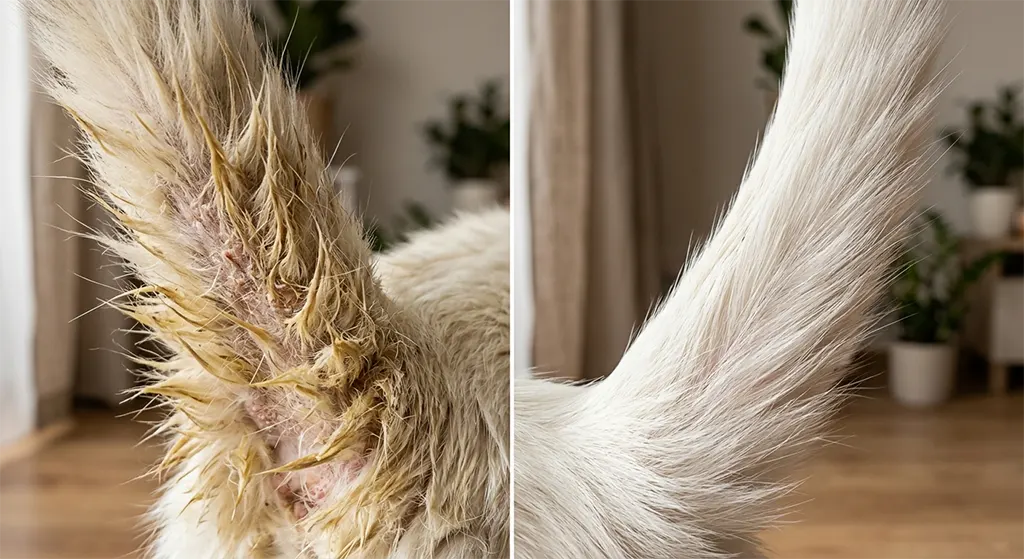
This one blows most people’s minds: Your cat can literally lick their tail wet. When cats are stressed, anxious, or bored, they often develop compulsive licking habits. They’ll lick the same spot over and over until they break the skin, which then oozes clear fluid that soaks the surrounding fur.
The result is a small, damp, red patch at the base of their tail that looks exactly like fluid leakage from an internal organ. But if you watch closely, you’ll see them licking it constantly throughout the day. And their litter box habits will be completely normal.
Key Signs A Stress Hot Spot Is Causing Your Cat Wet Tail But Not Diarrhea
- Small, localized damp patches, not widespread saturation of the entire tail base
- Raw, pink skin visible under the damp fur
- Your cat obsesses over licking that exact spot— they’ll stop mid-play to go lick it
- No straining in the litter box, no scooting, no unusual odors other than a mild yeast smell from the damp skin
How To Heal Hot Spot-Related Cat Wet Tail But Not Diarrhea
- Put a soft cone on them immediately. The more they lick, the worse it gets, and it will never heal on its own
- A licensed animal care specialist can suggest a topical anti-itch spray that dries irritated skin areas and eases swelling. Never use human hydrocortisone cream— it’s toxic to cats if they lick it
- Figure out what’s causing the stress. Common triggers include moving, new pets in the house, changes in routine, or even boredom
- Add more enrichment to their environment. Interactive toys, puzzle feeders, and window perches work wonders for bored indoor cats
When To See The Vet
- The hot spot grows larger than a quarter within 48 hours
- It starts oozing pus or becomes swollen
- Your cat seems painful or stops eating
- The hot spot doesn’t start to improve within 3 days of using the cone and vet-prescribed medication
Quick Self-Diagnosis Cheat Sheet
Use this cheat sheet to quickly pinpoint the exact cause of your cat wet tail but not diarrhea in 30 seconds.
| Root Cause | Damp Fur Location | Distinct Odor | Litter Box Habits | Biggest Risk Factor |
|---|---|---|---|---|
| FLUTD Urinary Leakage | Underside tail + inner thighs | Sharp ammonia | Frequent small trips, straining | Dry kibble-only diet |
| Impacted Anal Sacs | Directly around anus | Metallic fishy | Normal stool, constant scooting | Obesity, low fiber |
| Stud Tail Sebum Buildup | Top spine of tail base | Rancid oily wax | Completely normal | Stress, hormone changes |
| Stress Hot Spots | Small isolated patches | Mild yeast/skin odor | Perfectly normal | Boredom, routine changes |
Exact Red Flags For Cats With Damp Tail Fur And Normal Stool That Cannot Wait For A Visit To Licensed Animal Care Staff
Don’t try to tough it out at home if your cat shows any of these signs, even with perfectly normal stool:
- Any male cat with tail base dampness + difficulty urinating. This is an absolute emergency. Urethral blockages can cause kidney failure and death in as little as 24 hours.
- Swelling, pus, or open raw wounds under the damp fur. These are signs of an abscess that will only get worse without antibiotics.
- Complete loss of appetite, hiding for more than 12 hours, lethargy, acute digestive distress such as cat vomiting yellow bile, or vocalizing in pain.
- Damp tail fur that lasts more than 5 days with no improvement from home care.
- Senior cats (8+ years) with recurring damp tail. This can be a sign of underlying thyroid or kidney disease.
- Kittens under 6 months old with persistent rear dampness. This may indicate congenital urinary tract defects.
Average US Animal Care Service Costs For Cats With Damp Tail Fur And Normal Stool (2026 National Averages)
- Basic pet wellness check + gland emptying service pricing range: $55–85
- Cat urine sample testing + mineral crystal check service pricing range: $100–150
- Skin sample check for bacterial skin irritation service pricing range: $65–95
- Urinary system emergency overnight pet care pricing range: $750–1,300
Permanent Prevention Checklist
These simple steps will eliminate 90% of cat wet tail but not diarrhea cases before they ever start:
- Feed at least 50% wet canned food daily to maintain proper hydration and prevent FLUTD
- Add a small amount of plain canned pumpkin to their meals a few times a week to keep anal sacs healthy
- Brush the base of their tail weekly to prevent oil buildup and mats
- Provide multiple water sources around your house, away from food and litter boxes
- Keep your cat at a healthy weight. Obesity doubles the risk of both anal sac and urinary tract problems
- Provide plenty of mental and physical enrichment to reduce stress and prevent compulsive licking
Frequently Asked Questions
Q: How long should I wait before seeing a vet for cat wet tail but not diarrhea?
Minor dampness from condensation or a single day of stress licking may resolve within 48 hours. But anything lasting longer than three days almost always has an underlying medical cause that won’t fix itself. Delaying vet care leads to more painful and expensive problems down the line.
Q: Is stud tail contagious to my other cats?
No. Stud tail is a hormonal and sebaceous gland issue, not a bacterial or viral infection. Your other cats can’t catch it from sharing beds, food bowls, or litter boxes.
Q: Can I express my cat’s anal sacs at home to save money?
I strongly advise against it. Amateur home expression can rupture the anal sac wall, push bacteria deeper into the tissue, and cause a painful abscess that requires surgery. Vet technicians are trained to do this safely and correctly, and it’s one of the cheapest services you can get at a vet clinic.
Q: Why does my cat’s tail only get damp overnight?
Two common reasons: Either they’re sleeping on a cold surface that causes condensation, or they’re leaking small amounts of urine while they’re relaxed. If you’ve ruled out condensation, schedule a vet appointment to check for FLUTD.
Q: My cat is very clean— why won’t they just lick this dampness off?
They are licking it. Constantly. In fact, that’s often part of the problem. The more they lick the irritated area, the more inflamed it gets, and the more fluid it produces. It becomes a vicious cycle that only a cone and vet treatment for cat wet tail but not diarrhea can break.
It becomes a vicious cycle that only a cone and vet treatment for cat wet tail but not diarrhea can break.
Long-term pet health relies on consistent, data-driven daily care. We’ve curated a complete free pet care tools and calculators collection that covers every aspect of cat, dog, reptile, bird and small pet ownership— from personalized food and water intake calculators to habitat size guides, equipment checklists and species-specific care planners. All tools are vet-reviewed, free to use, and open in a new window for convenient access, helping you stay on top of your pet’s health needs and prevent common issues before they arise.
This content is for educational purposes only and does not substitute professional veterinary diagnosis or treatment. If you observe any symptoms of illness, injury, or abnormal behavior, please consult a qualified exotic animal veterinarian immediately.
For more details, please review our full Medical Disclaimer.