
If you’re dealing with a leopard gecko not eating and have found yourself staring at their empty feeding dish for days, you’re not alone. Most new owners reach for the same two fixes: adjusting the tank temperature or switching calcium powder. But what if neither works? What if the real culprit isn’t the heat or the supplement, but something hiding in plain sight—like the sand under their feet, the light above their head, or the stress they’re too quiet to show you?
With over 20 years of experience caring for reptiles, I’ve seen hundreds of geckos bounce back from “mysterious anorexia” once we dug past the basics. The truth is, most leopard gecko appetite loss cases are rooted in overlooked environmental issues, not the obvious suspects. Today, we’re breaking down the hidden triggers, giving you scenario-specific checklists, and walking you through step-by-step fixes that actually work. Let’s get your gecko eating again.
The Common Culprits for a Leopard Gecko Not Eating (That You’ve Already Checked)
Before we dive into the hidden stuff, let’s rule out the basics you’ve probably already covered:
- Temperature: The warm side should sit at 88–92°F (31–33°C) and the cool side at 75–80°F (24–27°C). If your gecko can’t reach optimal digestion temps, they won’t eat.
- Calcium/Vitamin D3: Improper supplementation can cause metabolic bone disease, which kills appetite. But if you’re dusting feeders correctly and using a high-quality supplement, this isn’t the issue.
If these are already dialed in, it’s time to look deeper.
Hidden Trigger #1: Substrate Ingestion & Impaction (The Silent Blockage)
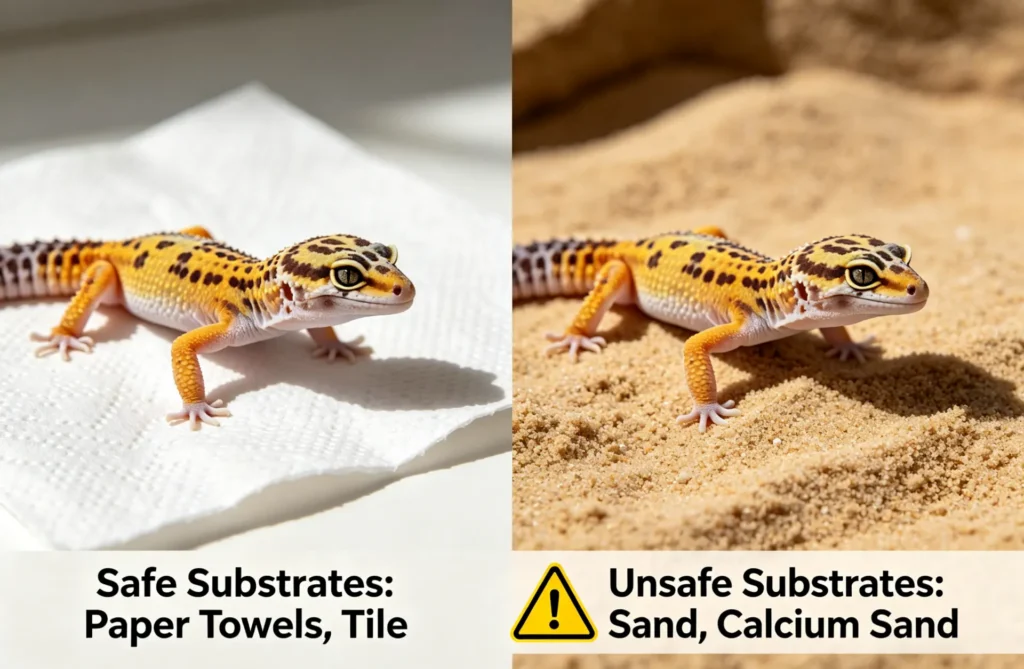
That “natural” sand or calcium substrate you thought was a good idea? It’s one of the top killers that lead to leopard gecko not eating—and for good reason. Loose substrates stick to feeder insects, and curious geckos end up swallowing them. Over time, this builds up in their gut, causing impaction: a life-threatening blockage that stops digestion cold and is a common hidden cause of leopard gecko not eating.
The Signs You’re Missing
Unlike obvious temperature issues, impaction creeps in slowly. Here’s what to watch for:
- No bowel movements for 3+ days (even if they’re still drinking)
- A bloated, firm belly that feels hard to the touch
- Straining to defecate, sometimes with mucus or small, hard pellets
- Lethargy, hiding more than usual, and avoiding their warm hide (a classic sign of abdominal pain)
How to Confirm (And Fix) It
| Step | Action |
|---|---|
| 1 | Immediately remove all loose substrate (sand, calcium sand, wood chips) and replace it with paper towels or non-adhesive shelf liner. This lets you monitor bowel movements and stops further ingestion. |
| 2 | Offer a shallow warm water soak (85–90°F / 29–32°C) for 10–15 minutes daily. This helps relax the gut and encourage natural movement. |
| 3 | Gently massage your gecko’s belly (from head to tail) in slow, circular motions during the soak. Avoid pressing hard—this is meant to stimulate, not force, digestion. |
| 4 | If no improvement in 48 hours, consult a licensed reptile professional for radiographs to confirm impaction. Severe cases require professional reptile care. Always seek guidance from a licensed veterinarian for serious health concerns. |
Hidden Trigger #2: UVB Light Overexposure & Eye Irritation
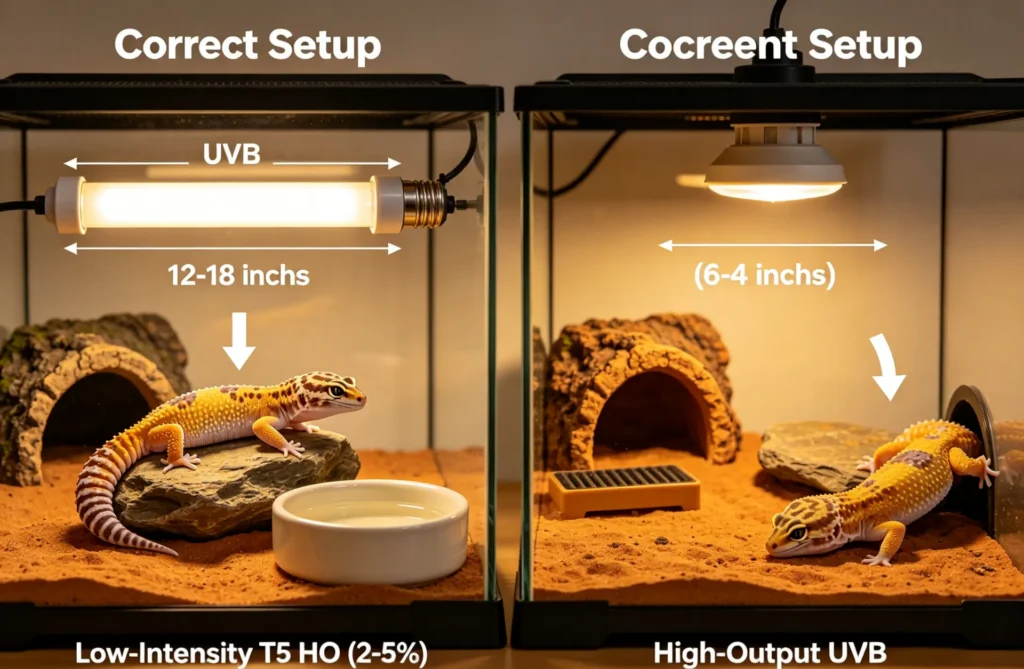
Leopard geckos are crepuscular—meaning they’re active at dawn and dusk, not under bright midday sun. While some UVB exposure is good for D3 synthesis, too much or too close can cause painful photokeratoconjunctivitis (eye burns) that makes eating unbearable. For exact safe UVI ranges, bulb picks, and testing steps, see our complete leopard gecko UVB guide.
The Red Flags (You Might Have Written Them Off)
- Squinting or keeping one/both eyes closed most of the day
- Rubbing their face against decor or the tank walls
- Watery, swollen eyes with discharge (clear or thick mucus)
- Avoiding the basking spot entirely, even if temperatures are correct
- Sudden refusal to eat—bright light hurts their eyes too much to hunt, making this a common environmental cause of leopard gecko not eating
The Fix (Before It Becomes Permanent Damage)
- Cut the UVB power: If you’re using a high-output UVB bulb, switch to a low-intensity T5 HO bulb (2–5% UVB) and mount it 12–18 inches above the tank (not directly over the gecko’s basking spot).
- Add visual barriers: Place plants, hides, or decor to create shaded areas where your gecko can escape the light.
- Soothe eye irritation: Use sterile saline solution to flush the eyes twice daily, and apply reptile eye drops trusted by pet care experts to reduce inflammation. Always consult a licensed veterinarian if eye issues persist.
- Monitor closely: If swelling or discharge worsens, consult a licensed veterinarian immediately—untreated UVB burns can lead to blindness.
Hidden Trigger #3: Stress & Environmental Disruption (The Quiet Appetite Killer)
Leopard geckos are creatures of habit. Even small changes—like a new pet in the house, a move to a different room, or excessive handling—can send their stress levels soaring. And stress = no appetite, full stop, making it one of the most underrated causes of leopard gecko not eating.
The Stress Triggers You’re Overlooking
- Recent enclosure changes: New decor, rearranged hides, or a sudden shift in tank location
- Too much handling: Even “gentle” daily handling can stress a gecko, especially juveniles or skittish adults
- Noise and activity: Loud TVs, barking dogs, or constant foot traffic near the tank
- Tank mates: Geckos are solitary in the wild—housing them together leads to competition, bullying, and chronic stress
The Step-by-Step De-Stress Plan
- Create a “safe zone”: Keep the tank in a quiet, low-traffic area of your home. Cover the back and sides with black paper to reduce visual stimulation from other pets or people.
- Limit handling: For the next 1–2 weeks, only touch your gecko to check their health or clean the tank. When you do handle them, keep sessions under 5 minutes and support their entire body.
- Restore familiarity: If you recently rearranged the tank, put hides and decor back in their original positions to reduce stress-related leopard gecko not eating.
- Separate tank mates immediately: If you have multiple geckos in one enclosure, move them to separate tanks. Bullying (even subtle, like stealing hides) is a major stressor that often goes unseen.
Scenario-Specific Troubleshooting: Why Your Gecko Won’t Eat (Based on Their Situation)
Anorexia isn’t one-size-fits-all. Let’s break down the most common scenarios and what to do in each case.
Scenario 1: Seasonal Appetite Loss (Fall/Winter)
Seasonal appetite loss is one of the most common, natural reasons for leopard gecko not eating in fall and winter. As the days get shorter and cooler, leopard geckos enter a state called brumation—a slow-down period similar to hibernation. Their metabolism drops, and their appetite can plummet by 30–50% (or stop entirely) for weeks or months.
The Check List:
- Is their tail still plump and fat? (This is the key indicator—brumating geckos live off stored fat, not food.)
- Have temperatures dropped below 75°F (24°C) on the cool side?
- Is their light cycle shorter than 12 hours?
What to Do:
- Keep temperatures consistent (no sudden drops) to prevent health issues.
- Continue offering food every 3–4 days, but don’t force-feed.
- Monitor weight weekly. If they lose more than 10% of their body weight, it’s time to consult a licensed veterinarian.
Scenario 2: Post-Enclosure Move or New Home
Transition stress after moving or a new home is a frequent cause of leopard gecko not eating. You just set up their new tank or brought them home from the pet store—and they haven’t eaten in days. This is transition stress, and it’s totally normal.
The Check List:
- Is the tank set up exactly like their old one (same hides, substrate, decor)?
- Is the tank in a quiet room with minimal foot traffic?
- Have you been handling them since the move?
What to Do:
- Give them 7–10 days of “no-touch” time. Let them explore the tank on their own.
- Offer their favorite feeder insects (like waxworms or black soldier fly larvae) to encourage eating.
- Make sure all temperature gradients are stable and consistent.
Scenario 3: Breeding Season or Egg-Laying (Females)
Hormonal shifts during breeding season often lead to temporary leopard gecko not eating in female geckos. Female geckos often stop eating during breeding season, especially when they’re developing eggs (even infertile ones). The hormonal shift makes them focus on nesting, not feeding.
The Check List:
- Is her belly swollen, with small pink/white spots visible through the skin (developing follicles)?
- Is she digging constantly or rearranging her hide?
- Is she eating less but still drinking water and moving around normally?
What to Do:
- Provide a moist lay box (10–12 inches deep, filled with damp sphagnum moss) to let her lay eggs comfortably.
- Keep calcium supplements readily available—she needs extra calcium for egg development.
- Continue offering food, but don’t panic if she refuses. Appetite usually returns within a week of laying eggs.
The 5-Step Gecko Appetite Recovery Plan (Works for All Scenarios)
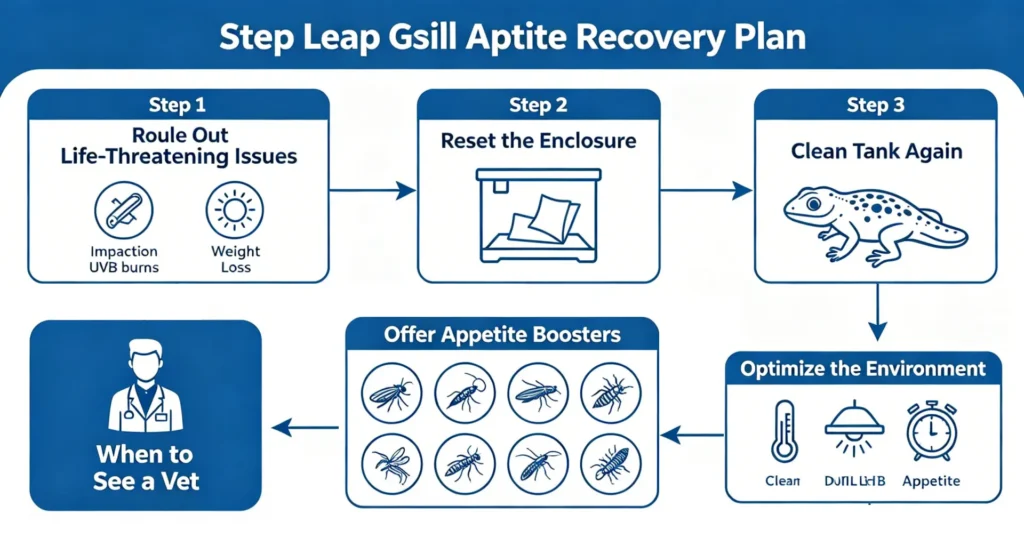
If you’ve checked all the hidden triggers and still need a clear path forward, follow this step-by-step guide:
- Rule Out Life-Threatening Issues FirstCheck for impaction, UVB burns, or severe weight loss. If any of these are present, skip to step 5 and see a vet immediately.
- Reset the Enclosure Swap loose substrate for paper towels, remove extra decor, and add a second hide to create more security. This eliminates stressors and lets you monitor bowel movements easily.
- Optimize the Environment
- Verify temperatures with a digital probe thermometer (not stick-on strips).
- Adjust UVB placement to 12–18 inches above the tank.
- Keep the light cycle at 12 hours on/12 hours off to mimic natural daylight.
- Offer “Appetite Boosters”
- Try different feeders: waxworms, black soldier fly larvae, or small silkworms (geckos often crave these when stressed).
- Warm feeders in the basking spot for 2–3 minutes before offering (geckos respond better to warm prey).
- Hand-feed with tweezers if they’re curious but not eating—this mimics natural hunting behavior.
- When to See a Vet If your gecko hasn’t eaten in 10+ days, has lost significant weight, or shows signs of lethargy/abdominal pain, don’t wait. A licensed reptile veterinarian can perform professional testing and supportive care to help your gecko recover.
Final Thoughts: Your Gecko’s Appetite Is a Window Into Their World
Leopard geckos don’t stop eating for no reason. Every skipped meal is a signal—one that’s often hidden in the small, easy-to-miss details of their environment. By moving past the “temperature and calcium” defaults and looking deeper, you’re not just solving a feeding problem—you’re building a healthier, more stress-free life for your gecko.
Remember: patience is key. Some geckos take weeks to bounce back from stress or seasonal shifts. As long as they’re hydrated, moving normally, and their tail stays plump, you’re on the right track.
If you’ve tried these steps and still have questions, drop a comment below with your gecko’s specific situation—I’ll help you troubleshoot. Here’s to happy, hungry geckos!
This content is for educational purposes only and does not substitute professional veterinary diagnosis or treatment. If you observe any symptoms of illness, injury, or abnormal behavior, please consult a qualified exotic animal veterinarian immediately.
For more details, please review our full Medical Disclaimer.
Pingback: Leopard Gecko Tail Thinning: Why It Happens & Easy Home Fixes