
Quick Triage Checklist: Before You Read Further
Complete this checklist before assuming illness:
- [ ] Temperature verified: Warm side reaches 88-92°F (31-33°C), cool side maintains 75-80°F (24-27°C)
- [ ] Shedding status: Is the gecko in blue phase or actively shedding?
- [ ] Hydration: Fresh water available, skin elasticity normal, urate present in droppings
- [ ] Substrate check: Is the gecko on sand, calcium sand, or loose substrate?
- [ ] Social situation: Is the gecko housed with another Leopard gecko or any other animal?
- [ ] Recent changes: Has the enclosure been moved, rearranged, or has handling increased?
If any of these factors fall outside optimal ranges, addressing them typically resolves appetite issues. Continue through this guide to identify and correct the specific problem.
Introduction: The Appetite Paradox
A Leopard gecko that refuses food triggers immediate panic. New keepers assume illness, disease, or imminent death. The gecko sits in its enclosure, ignores the cricket, and the keeper spirals into anxiety.
Here’s what most keepers don’t realize: appetite refusal in Leopard geckos has identifiable causes in the vast majority of cases. Temperature inadequacy. Nutritional monotony. Chronic stress. Substrate impaction. These problems have solutions. The key is systematic troubleshooting rather than panic-driven force-feeding or emergency vet visits for solvable issues. The same troubleshooting logic applies to the leopard gecko’s close relative, the African fat-tailed gecko — see our dedicated guide on African fat-tailed gecko not eating for species-specific fixes.
This guide walks through the three most common appetite suppression categories, provides actionable fixes, and clearly defines when veterinary intervention becomes necessary.
Part 1: Overfeeding Frequency → Appetite Suppression
The Paradox of Plenty
Leopard geckos in captivity face a problem their wild counterparts never encounter: constant food availability. Wild Leopard geckos may go days or weeks between successful hunts. This scarcity maintains robust appetite and efficient metabolism.
Captive Leopard geckos often receive food more frequently than their metabolic rate requires. The result: chronic slight satiation that suppresses natural hunting motivation. The gecko isn’t sick. It’s simply not hungry.
Current herpetological husbandry standards specify age-appropriate feeding frequencies:
- Hatchlings (0-6 months): Daily feeding supports rapid growth demands
- Juveniles (6-12 months): Every 1-2 days balances growth with developing metabolic capacity
- Adults (18+ months): Every 2-4 days reflects mature metabolic requirements
Adults fed more frequently than every 2 days often develop appetite suppression. The gecko knows food arrives tomorrow regardless of today’s consumption. Natural hunting urgency disappears.
The Obesity-Appetite Connection
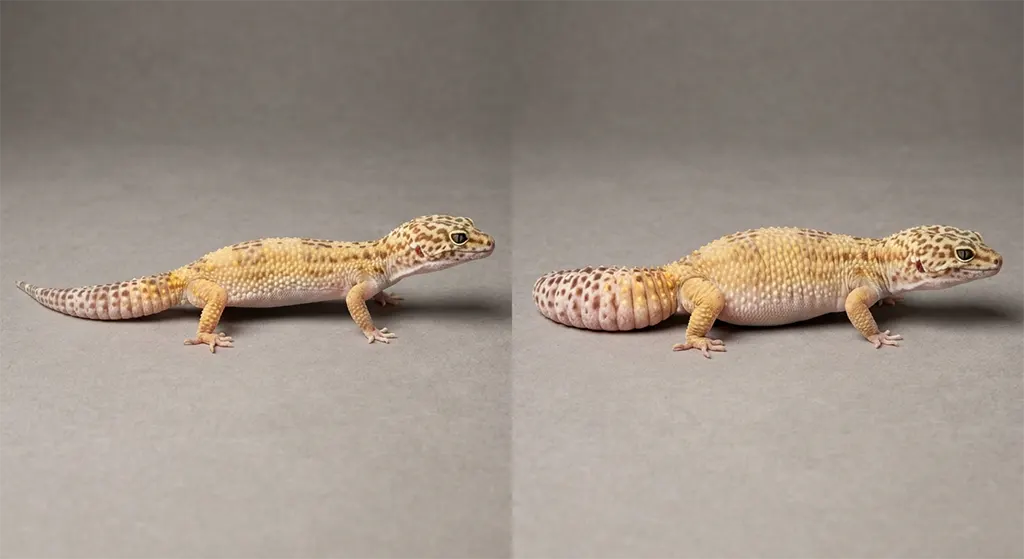
Excess body fat produces satiety signals that reduce feeding motivation. A Leopard gecko with a tail thicker than its spine doesn’t need to eat aggressively. It’s metabolizing stored energy reserves. Conversely, when the tail thins below the spine width, it signals the gecko is burning reserves — and not always from hunger. See our guide on leopard gecko tail thinning for non-hunger causes.
Obesity in Leopard geckos manifests as:
- Tail width exceeding body width
- Visible fat deposits along the abdomen
- Reduced movement and activity
- Difficulty completing normal shedding
Current herpetological husbandry standards specify reducing feeding frequency for overweight animals. Extend intervals between meals. Accept that a healthy adult Leopard gecko doesn’t need food every day—every 3-5 days maintains body condition in most adults.
Fix Protocol
- Verify feeding frequency matches age-appropriate standards
- Assess body condition using tail-to-body width comparison
- If overweight: extend feeding intervals by 1-2 days incrementally
- If normal weight but refusing: reduce frequency slightly and observe
- Accept that appetite variation is normal—single missed meals don’t indicate problems
Part 2: Nutritional Monotony → Selective Feeding
The Variety Problem
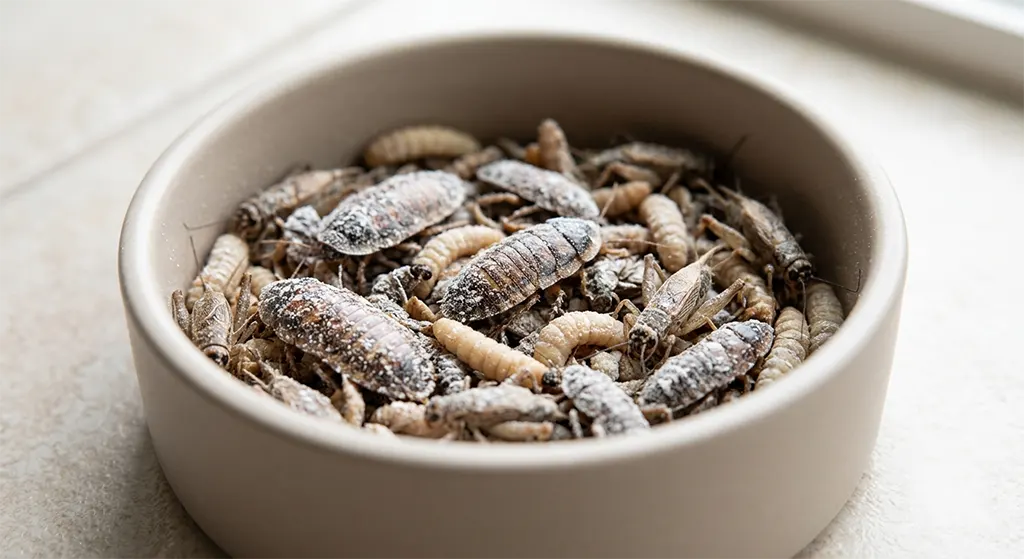
Some Leopard geckos develop strong preferences for specific prey types. They’ll eagerly accept crickets while ignoring dubia roaches, or vice versa. Keepers accommodate these preferences by offering only preferred prey.
This creates nutritional gaps. Different insects provide different nutritional profiles. Monotonous diets—regardless of how enthusiastically the gecko eats—produce deficiencies over time.
Current herpetological husbandry standards specify dietary variety as essential for comprehensive nutrition. Rotate between at least two staple prey types. Supplement appropriately based on each insect’s specific nutritional content.
Insect Nutritional Profiles
| Insect Type | Protein | Fat | Calcium | Supplementation Notes |
|---|---|---|---|---|
| Dubia Roaches | High | Moderate | Moderate | Excellent staple, minimal dusting needed |
| Crickets | High | Moderate | Low | Requires consistent calcium dusting |
| Black Soldier Fly Larvae | Moderate | Moderate | High | Can reduce supplementation frequency |
| Mealworms | Moderate | Higher | Low | Higher fat—use sparingly |
The Presentation Factor
Picky eating often reflects presentation problems rather than genuine preference. Leopard geckos respond to prey movement, temperature, and accessibility.
Common presentation errors:
- Presenting prey in an exposed dish rather than scattered for hunting
- Offering prey at room temperature rather than body temperature
- Using prey that is too large or too small
- Presenting during peak daylight rather than evening hours
Fix Protocol
- Rotate between minimum two staple prey types
- Dust insects immediately before feeding—don’t let dusting sit
- Scatter live prey in the enclosure rather than confining to dishes
- Warm prey to body temperature by holding briefly under warm running water
- Feed in evening hours (2-3 hours before lights-out) to match crepuscular activity patterns
- Try different prey presentation methods: tweezers, scattered on paper, in feeding dish
Part 3: Stress Factors Suppressing Appetite
Leopard Geckos Are Strictly Solitary
This requires explicit emphasis: Leopard geckos (Eublepharis macularius) are strictly solitary animals. Cohabitation causes chronic stress that suppresses appetite, compromises immune function, and frequently results in injury or death.
Current herpetological husbandry standards specify solitary housing as the only appropriate arrangement. One gecko. One enclosure. No exceptions.
Signs of cohabitation stress include:
- One gecko consistently hiding while the other is visible
- Aggression scars or missing tail tips
- One gecko dominating food access while the other loses weight
- Both geckos displaying flattened body posture (stress response)
If multiple Leopard geckos are currently cohabiting, separate them immediately. Weight loss and appetite suppression in one cohabitant often indicates serious welfare compromise.
Handling Stress
Excessive handling produces cortisol and adrenaline responses that suppress appetite. New keepers often handle frequently, assuming the gecko tolerates or enjoys interaction.
Leopard geckos tolerate handling. They don’t seek it. Extended handling sessions produce cumulative stress that may manifest as appetite reduction hours or days later.
Current herpetological husbandry standards specify limiting handling to 10-15 minutes several times weekly during initial acclimation, increasing gradually as the animal demonstrates comfort. Observe for appetite changes following handling sessions.
Inadequate Hiding Opportunities
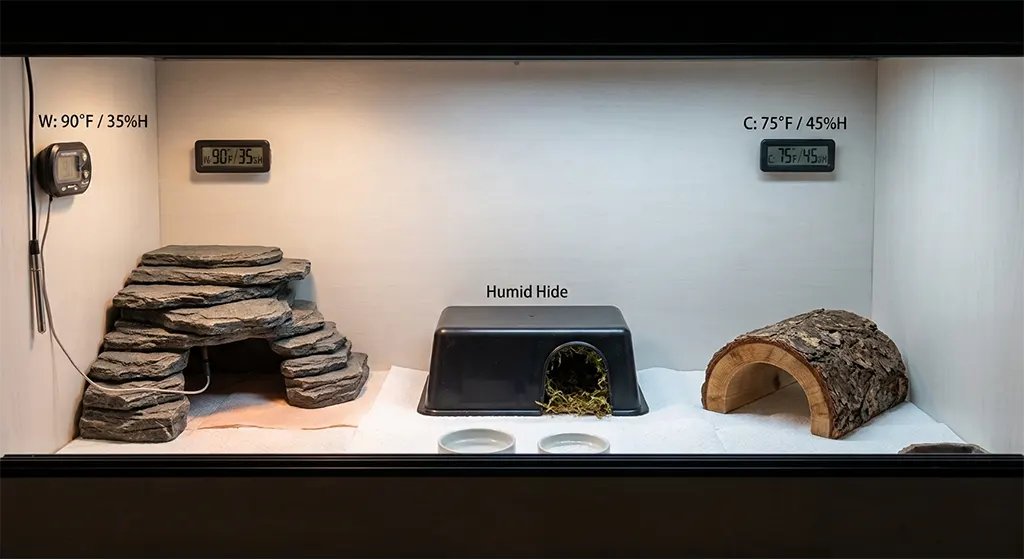
Leopard geckos require security. An enclosure without adequate hides produces constant low-level stress. The gecko cannot relax because no secure retreat exists.
Minimum hide requirements:
- One hide on the warm side
- One hide on the cool side
- One humid hide for shedding support
Hides must be enclosed with a single opening, sized to allow the gecko to fit snugly without excess space. Large, open hides don’t provide security.
Environmental Stressors
Multiple environmental factors suppress appetite through stress responses:
- Excessive noise or vibration: Avoid placement near speakers, washing machines, or high-traffic areas
- Inconsistent lighting: Maintain consistent 12-hour light/dark cycles
- Temperature instability: Verify gradient achievement—temperature inadequacy is the most common appetite suppressant
- Excessive cage traffic: Place enclosures where viewing is possible without constant disturbance
Fix Protocol
- Separate any cohabiting Leopard geckos immediately
- Assess hide availability—add hides if fewer than three
- Reduce handling frequency and duration
- Relocate enclosure to quieter area if needed
- Verify temperature gradient with probe thermometers
- Establish consistent light/dark schedule
Part 4: Enticement Techniques for Reluctant Feeders
When appetite suppression causes genuine concern despite husbandry verification, these techniques stimulate feeding motivation:
Scent Enhancement
- Dust prey with additional calcium or vitamin supplements to enhance smell
- Use gut-loaded insects that have consumed nutrient-rich foods before feeding
- Try different supplement flavors (some keepers report preferences)
- Warm prey slightly under running water to enhance scent release
Movement Optimization
- Wiggle prey using feeding tweezers to simulate hunting behavior
- Release crickets in the enclosure rather than confining to dishes
- Ensure prey is active—lethargic or dead prey triggers no hunting response
- For stubborn cases: place live prey in a small container with ventilation, allowing extended hunting opportunities
Temperature Considerations
- Feed during evening hours when Leopard geckos are naturally most active
- Ensure warm side reaches target temperatures before feeding
- Warm prey to approximately 85-90°F (29-32°C) to enhance palatability
- Avoid feeding immediately after enclosure temperature adjustments—allow stabilization
Presentation Variations
- Try feeding in different locations within the enclosure
- Offer prey on different surfaces (paper towel, tile, carpet)
- Use feeding dishes with different textures
- Hand-feed using tweezers for animals that associate tweezers with food
Prey Size Adjustment
Current herpetological husbandry standards specify prey width not exceeding the space between the gecko’s eyes. Oversized prey triggers hesitation or refusal. Undersized prey may not stimulate adequate hunting response. Match prey size to gecko size precisely.
Part 5: Impactation—When Refusal Indicates Emergency
The Substrate Danger
Some appetite refusal indicates serious medical emergency rather than simple behavioral adjustment. Impactation—the blockage of the digestive tract by ingested material—produces appetite loss that progresses to life-threatening if untreated.
Risk factors for impaction:
- Loose substrate, especially sand or calcium sand
- Inadequate hydration
- Temperature inadequate for digestion
- Ingestion of foreign objects
Current herpetological husbandry standards specify avoiding loose substrate, particularly sand, for Leopard geckos. The risk of impaction outweighs aesthetic considerations. Appropriate substrates include reptile carpet, paper-based materials, tile, or properly composed bioactive mixes.
Impaction Symptoms
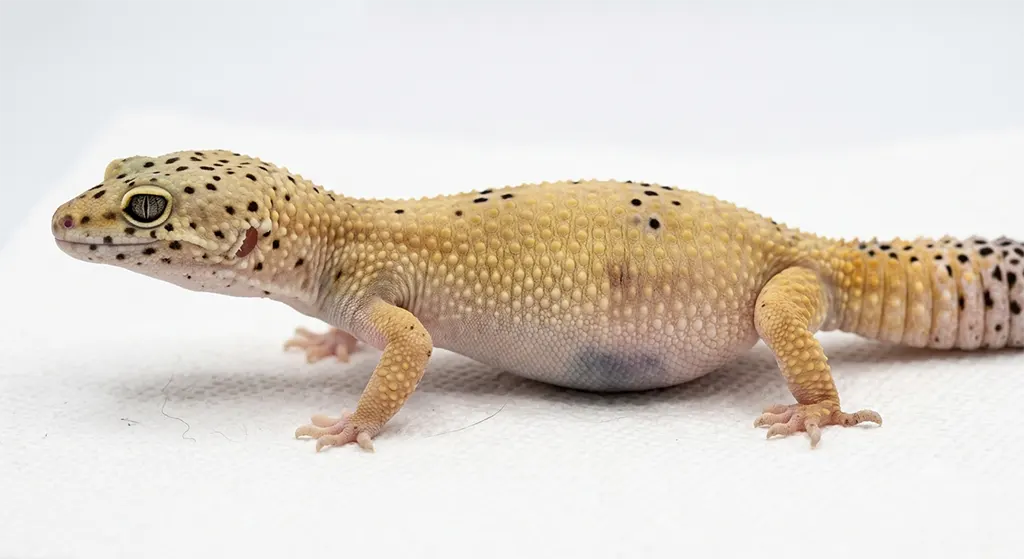
Recognize these warning signs:
- Distended or bloated abdomen persisting beyond normal post-meal appearance
- No defecation for 7+ days despite offered food
- Lethargy beyond normal seasonal variation
- Appetite loss accompanied by visible straining
- Black or tarry feces (blood in stool requires immediate veterinary care)
Prevention Protocol
- Eliminate all loose substrate from the enclosure
- Maintain hydration through fresh water availability
- Verify temperature gradient supports digestion (88-92°F / 31-33°C warm side)
- Monitor defecation frequency—establish baseline patterns
- Weigh weekly to detect subtle weight changes indicating problems
🚨 When impaction is suspected, contact an ARAV-certified reptile veterinarian immediately. Do not attempt home treatment for suspected impaction. Delays increase risk of permanent damage or death.
Part 6: When Veterinary Care Becomes Necessary
Red Flag Thresholds
Current herpetological husbandry standards require veterinary consultation when ANY of the following conditions persist beyond specified durations:
Immediate veterinary care required:
- Blood in stool or urate at any time
- Distended abdomen accompanied by no defecation for more than 7 days
- Visible signs of metabolic bone disease (wobbly gait, limbs giving way, soft jaw)
- Weight loss exceeding 10% of body weight
- Lethargy beyond normal seasonal variation lasting more than 2 weeks
- Regurgitation occurring more than once
Urgent veterinary consultation warranted:
- Appetite refusal extending beyond 2 weeks in adults (1 week in juveniles under 6 months)
- Combination of appetite loss with behavioral changes
- Persistent abnormal feces
- Visible signs of pain (hunched posture, avoiding movement)
- Respiratory symptoms (wheezing, open-mouth breathing, mucus)
Force-Feeding Warning
Force-feeding is contraindicated outside direct veterinary supervision. This procedure carries serious aspiration risk and may cause fatal pneumonia if performed incorrectly. Attempting to syringe-feed or force-feed without veterinary training risks killing the animal.
If nutritional support is medically necessary, an ARAV-certified reptile veterinarian must perform the procedure using appropriate methods and equipment.
Establishing Veterinary Relationships
Proactively establish a relationship with an ARAV-certified exotic animal veterinarian before emergencies occur. Research local reptile veterinarians. Schedule wellness examinations. Have contact information readily available.
Emergency situations are not the time to search for veterinarians.
Frequently Asked Questions
My Leopard gecko hasn’t eaten in a week. Should I force-feed?
Force-feeding is contraindicated outside direct veterinary supervision. One week of refusal in an adult Leopard gecko is not necessarily concerning—verify husbandry parameters first. Current herpetological husbandry standards specify consulting a veterinarian if refusal extends beyond 2 weeks or is accompanied by weight loss exceeding 10%.
Is my Leopard gecko brumating or sick?
Distinguish between brumation (seasonal appetite reduction with normal behavior) and illness (appetite loss with concerning symptoms). Brumation presents as reduced activity during appropriate seasonal cooling while maintaining normal alertness when active. Illness presents as lethargy, abnormal posture, or visible symptoms regardless of season. When uncertain, veterinary consultation determines the cause.
Can I house two Leopard geckos together?
No. Leopard geckos are strictly solitary. Cohabitation causes chronic stress, suppresses appetite, and frequently results in aggression and injury. Current herpetological husbandry standards specify solitary housing as the only appropriate arrangement.
My gecko refuses everything except mealworms. What do I do?
Current herpetological husbandry standards require dietary variety. Mealworms are high-fat and should not constitute primary nutrition. Systematically introduce different prey types using the enticement techniques in this guide. Dust with supplements appropriate to each insect’s nutritional profile. Consult a veterinarian if selective behavior persists despite repeated introduction attempts.
How do I know if impaction is causing appetite loss?
Impaction symptoms include distended abdomen persisting beyond normal post-meal appearance, no defecation for 7+ days, lethargy, and visible straining. If any combination of these symptoms accompanies appetite loss, contact an ARAV-certified reptile veterinarian immediately. Do not delay.
Conclusion: Systematic Troubleshooting Over Panic
Leopard gecko appetite loss triggers keeper panic far more often than it indicates genuine medical emergency. In the vast majority of cases, identifiable husbandry factors cause appetite suppression—and correcting those factors resolves the problem.
Work through this troubleshooting sequence systematically:
- Verify temperature gradient (88-92°F / 31-33°C warm side, 75-80°F / 24-27°C cool side)
- Assess feeding frequency—reduce if exceeding age-appropriate standards
- Evaluate stress factors—separation, handling, hide availability, environmental stressors
- Address substrate safety—eliminate all loose substrate
- Try enticement techniques—scent, movement, presentation, timing
- Monitor weight and defecation patterns
- Consult veterinarian when red flag thresholds are reached
Your Leopard gecko’s appetite provides valuable information about its welfare. Learn to read those signals. Respond appropriately. Panic helps neither of you.
For health concerns or medical guidance, consult an ARAV-certified reptile-specialist veterinarian.
Leopard gecko appetite and feeding guidance reflects current herpetological husbandry standards and reptile veterinary best practices. Individual animal needs vary. Veterinary consultation provides personalized recommendations.
This content is for educational purposes only and does not substitute professional veterinary diagnosis or treatment. If you observe any symptoms of illness, injury, or abnormal behavior, please consult a qualified exotic animal veterinarian immediately.
For more details, please review our full Medical Disclaimer.
Pingback: Why Is My Gargoyle Gecko Not Eating? 7 Common Reasons & Quick Fixes
Pingback: Gargoyle Gecko Humidity Requirements: 50% vs 60% vs 70% (Optimal Levels)