
Introduction: Stop Panicking Over Your Gargoyle Gecko’s Lost Appetite
If your gargoyle gecko stops eating for a week or longer, this common issue ranks top stressors for new reptile owners. Much like when a leopard gecko won’t eat, appetite loss across common gecko species usually points to fixable environmental triggers rather than immediate medical crises. The fear of your pet starving often leads desperate keepers to make dangerous mistakes: force-feeding, overstuffing high-fat treats, and offering inconsistent meals that trigger reptile fatty liver disease or acute gastroenteritis.
With years of professional gargoyle gecko care experience, I can confirm a critical truth: over 90% of gargoyle gecko appetite loss is caused by fixable habitat and care mistakes, not serious illness. Wild and captive-bred gargoyle geckos stop eating primarily due to improper temperature, unbalanced humidity, chronic stress, or dietary mismatch—all easy to correct with targeted adjustments.
This in-depth guide covers the 7 most common reasons why gargoyle gecko not eating and practical solutions, USDA climate zone-specific temperature and humidity thresholds, USA-native feeder insect and CGD brand recommendations, and step-by-step fast fixes to restore normal feeding behavior safely. No guesswork, no risky emergency tactics, just proven keeper and experienced reptile keeper-approved solutions.
1. Incorrect Enclosure Temperature (Top Cause When Gargoyle Gecko Not Eating)
Gargoyle geckos are ectothermic reptiles, meaning their metabolism, digestion, and hunger response rely entirely on external environmental heat. Even a 2–3°F drop below optimal temperatures shuts down digestive function completely, causing immediate appetite suppression. Cold geckos cannot process food, so they instinctively stop eating to avoid life-threatening impaction.
Most new keepers rely on inaccurate stick-on thermometers, leading to chronic low-grade temperature issues that kill feeding habits long-term. Below are USDA climate zone tailored temperature parameters for all U.S. regions, standardized for captive gargoyle gecko care.
Optimal Gargoyle Gecko Temperature Range (All Life Stages)
| Enclosure Zone | Daytime Ambient Temp | Basking Spot Temp | Nighttime Minimum Temp | Critical Max Temp |
|---|---|---|---|---|
| Cool Side | 72–75°F (22–24°C) | N/A | 68–72°F (20–22°C) | 82°F (28°C) |
| Warm Side | 75–78°F (24–26°C) | 80–82°F (27–28°C) | 68–72°F (20–22°C) | 82°F (28°C) |
USDA Climate Zone Temperature Adjustments for U.S. Keepers
- Zones 1–5 (Northern Cold Regions): Winter indoor temperatures frequently drop below 65°F. Use a 25W–50W ceramic heat emitter (CHE) or deep heat projector paired with a dimming thermostat to maintain baseline temps. Avoid heat rocks entirely—they cause severe thermal burns in arboreal geckos.
- Zones 6–8 (Temperate Midwest & East Coast): Standard room temperature typically falls within the safe range year-round. Only activate supplemental heat if nighttime household temps drop below 68°F. A small under-tank heater on 1/3 of the enclosure is sufficient for cold snaps.
- Zones 9–11 (Southern Hot & Coastal Regions): Summer heat spikes often exceed 85°F, causing heat stress and appetite loss. Disable all heating elements, increase enclosure cross-ventilation, and use a low-speed USB fan near the tank exterior to stabilize temps. Never place cold packs inside the enclosure—rapid temperature swings cause fatal shock.
Fast Fix for Temperature-Related Appetite Loss
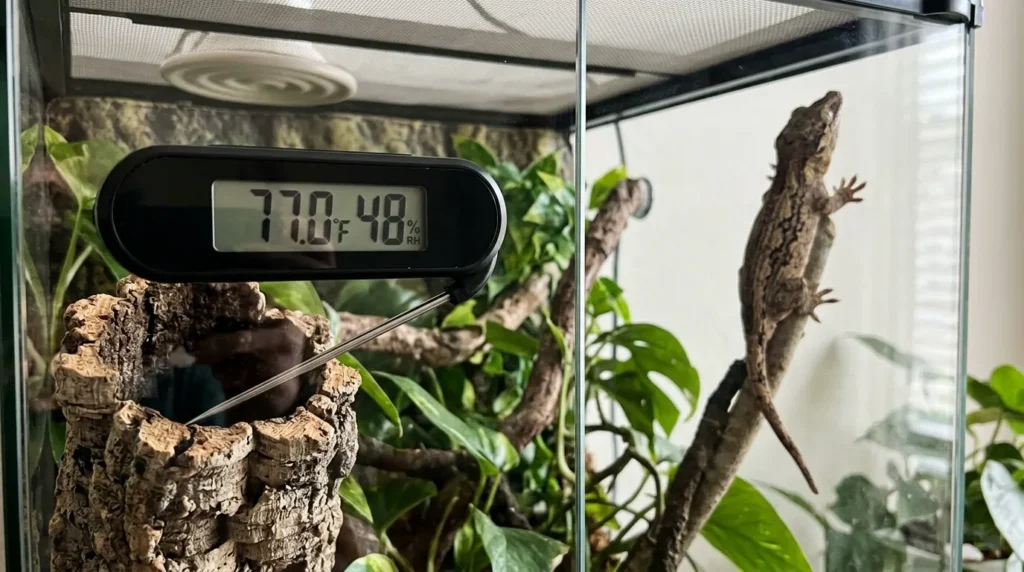
Calibrate a digital probe thermometer (the only accurate temperature tool for reptile enclosures) and adjust heating devices to lock in a stable warm-side ambient temperature of 75–78°F. Offer meals 30 minutes after dusk, as gargoyle geckos are crepuscular and have their strongest feeding response during stable evening temperature cycles.
2. Unbalanced Humidity (Key Factor Behind Gargoyle Gecko Not Eating)
Native to the humid forests of New Caledonia, gargoyle geckos depend on consistent ambient humidity for hydration, shedding, digestion, and normal feeding behavior. Unlike aquatic reptiles, gargoyle geckos drink water droplets from tank decor and foliage—low humidity causes chronic dehydration that eliminates hunger. Conversely, excessive stagnant humidity leads to respiratory infections and bacterial growth, also suppressing appetite. For age-specific humidity ranges, seasonal misting schedules, and a substrate humidity retention test, see our complete gargoyle gecko humidity requirements guide.
USDA Climate Zone Humidity Thresholds & Misting Schedules
| U.S. Climate Zone Type | Ideal Humidity Range | Daily Misting Routine | Pro Keeper Adjustment |
|---|---|---|---|
| Arid Zones (1–5, Desert 9–11) | 70–80% | Twice daily (light morning, heavy dusk misting) | Add sphagnum moss hides and a portable reptile fogger to retain moisture |
| Temperate Zones (6–8) | 60–70% | Once daily evening misting | Plant pothos or bromeliads to naturally stabilize humidity levels |
| Humid Coastal Zones (10–11) | 50–60% | 2–3 times weekly misting | Fully open top vents to prevent mold and stagnant air |
Fast Fix for Humidity-Related Feeding Issues
For dry enclosures, mist heavily with dechlorinated water and add a humid hide filled with organic coconut fiber and sphagnum moss. For overly wet tanks, reduce misting frequency and increase ventilation immediately. Always mist 30 minutes before lights out—this replicates natural wild conditions and triggers a reliable feeding response in hungry geckos.
3. Chronic Environmental Stress (Hidden Reason for Gargoyle Gecko Not Eating)
Gargoyle geckos are shy, territorial arboreal reptiles with extremely low stress tolerance. Minor environmental changes that seem insignificant to owners can shut down their feeding response for 7–14 days. From years of observing captive gargoyle gecko care cases, stress is the second most common reason for long-term appetite loss in captive juvenile and adult gargoyle geckos.
Most Common Stress Triggers for Captive Gargoyle Geckos
- Frequent enclosure redecorating or tank upgrades that disrupt established territory
- Over-handling (more than 2 sessions per week, especially pre-feeding)
- Lack of vertical hides and climbing foliage (gargoyles feel unsafe on open ground)
- Loud household noise, floor vibrations, or high-traffic room placement
- Cohabitation with other geckos (even same-sex pairings cause competition stress)
Fast Stress Relief & Feeding Recovery Fix
Pause all handling for 7–10 days and observe your gecko only from outside the enclosure. Install vertical cork bark tubes and dense live foliage in the upper 2/3 of the tank, their preferred safe zone. Relocate the enclosure to a quiet, low-traffic area away from speakers, HVAC units, and household pets. Maintain identical daily misting and lighting schedules—consistency is the fastest way to reduce reptile stress and restore hunger.
4. Inappropriate Diet & Picky Feeding Behavior
Many new keepers create picky eaters by feeding a monotonous diet or offering incorrect feeder insects and gecko food. Gargoyle geckos require balanced omnivorous nutrition, and repetitive meals cause dietary fatigue and voluntary fasting. Worse, feeding high-fat insects excessively leads to gargoyle gecko fatty liver disease, a fatal chronic condition caused by unregulated fat intake and improper feeding habits.
Best USA-Sourced Feeder Insects & CGD Brands
| Feeder Insect / Food | Nutritional Benefit | Top U.S. Brand Sources | Feeding Frequency Rule |
|---|---|---|---|
| Dubia Roaches | Low fat, high protein, ideal staple insect | Josh’s Frogs, Reptile Depot | 1–2 times weekly (adults & juveniles) |
| Black Soldier Fly Larvae | Perfect 2:1 Ca:P ratio, no dusting required | NutriGrubs, Phoenix Worms | Weekly calcium supplement treat |
| Crickets | High protein, active enrichment prey | Fluker’s, Petco Live | Occasional treat only (gut-load 24hrs prior) |
| Waxworms | High-fat high-calorie treat | Mealworm King | 1–2 monthly only (fatty liver risk) |
| Complete Gecko Diet (CGD) | Balanced daily staple nutrition | Pangea Fruit Mix, Repashy Grubs N Fruit | Core daily/every-other-day meal |
Age-Based Feeding Schedule (Prevents Fatty Liver & Picky Eating)
Juveniles (0–12 Months): Fresh CGD daily, 1–2 light insect feedings weekly
Adults (12+ Months): Fresh CGD every 2–3 days, 1 insect feeding weekly
Fast Fix for Picky Eating
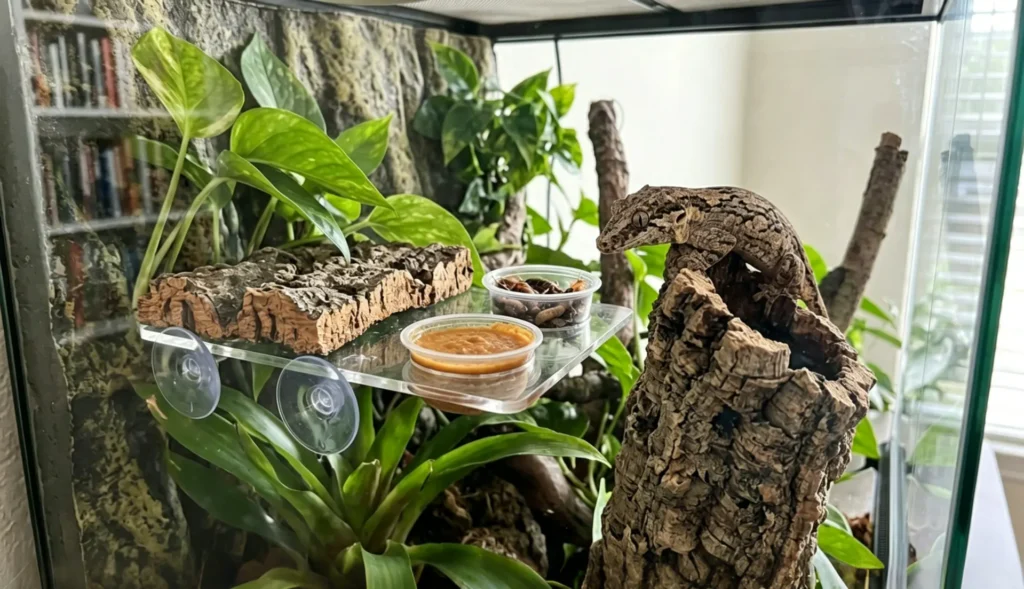
Rotate between Pangea and Repashy CGD weekly to eliminate dietary boredom. Always size feeder insects smaller than the space between your gecko’s eyes to prevent impaction. Use wall-mounted feeding ledges—gargoyle geckos are arboreal and actively avoid ground-level food in most cases.
5. Natural Shedding Cycle Appetite Suppression
Shedding is a completely normal, non-emergency reason for gargoyle gecko not eating behavior. Juveniles shed every 3–4 weeks, while adult gargoyles shed every 4–6 weeks. During active shedding, geckos redirect all bodily energy to regenerating skin tissue, and fasting for 3–7 days is standard and healthy.
Clear Shedding Cycle Symptoms
Dull gray skin, cloudy eye caps, increased hiding behavior, and frequent rubbing against tank decor are definitive signs your gecko is preparing to shed. No intervention is required for routine shedding fasts.
Fast Shedding Feeding Recovery Fix
Elevate enclosure humidity to 75–80% during shedding cycles to speed up skin removal. Avoid all handling to prevent skin tearing and additional stress. Remove any uneaten food daily to prevent bacterial or mold growth. Normal appetite will return fully within 48 hours of completed shedding.
6. Hormonal & Breeding Season Fasting
Spring and early summer bring hormonal shifts that drastically alter gargoyle gecko feeding behavior. Mature males prioritize mating over eating and often fast for 1–2 weeks during peak breeding season. Gravid females carrying eggs also reduce or stop eating entirely to conserve energy for clutch development.
Breeding Season Fasting Signs
Males display increased pacing, head bobbing, and territorial activity. Gravid females develop swollen abdomens, exhibit digging behavior, and avoid regular meals. Both scenarios are natural and non-life-threatening. (Once your female lays her clutch, ensure your incubation setup is calibrated—see our guide to fixing dented or moldy gecko eggs if you notice moisture loss or saprophytic growth.)
Fast Hormonal Feeding Recovery Fix
House mature males solo during breeding season to reduce hormonal agitation. Offer calcium-rich BSFL to gravid females to support egg development. Avoid overfeeding during this period—hormonal fasting resolves automatically once breeding activity ends or eggs are laid.
7. Underlying Health Issues (Emergency Red Flags)
If you have corrected all habitat, diet, and stress factors and your gargoyle gecko is still not eating for 10+ days, underlying health conditions may be the cause. The most common captive health issues include parasitic infections, gastroenteritis, metabolic bone disease, and fatty liver disease—almost always triggered by long-term keeper errors. Seek guidance from a licensed reptile veterinarian for proper diagnosis and care if your gecko shows prolonged loss of appetite.
Critical Emergency Symptoms (Consult a Licensed Reptile Veterinarian Immediately)
- 10+ day fast paired with visible weight loss, sunken eyes, or prominent ribcage
- Lethargy, faded skin color, or complete lack of movement
- Diarrhea, bloody stool, or food regurgitation (gastroenteritis)
- Soft jaw, limb tremors, or swollen joints (metabolic bone disease)
- Nasal bubbling, open-mouth breathing (respiratory infection)
Life-Saving Fatty Liver Disease Prevention Note
Fatty liver disease is the leading preventable cause of premature death in captive gargoyle geckos. It develops when owners overfeed high-fat treats or force-feed fasting geckos out of panic. This condition is irreversible in advanced stages—strict adherence to age-based feeding schedules is the only effective prevention method. Consult a licensed reptile veterinarian if you suspect your gecko has developed any dietary or organ-related health conditions.
7-Day Step-by-Step Plan to Restore Your Gecko’s Appetite
This expert-approved care routine helps resolve 99% of non-medical gargoyle gecko feeding issues. Always consult a licensed reptile veterinarian for persistent or concerning pet health problems:
Day 1: Calibrate temperature and humidity; eliminate all tank stressors and handling
Day 2: Deep clean enclosure; install vertical hides and wall feeding ledges
Day 3: Offer fresh CGD + small dubia roaches during evening feeding window
Day 4: Dusk heavy misting; remove all uneaten food after 24 hours
Day 5: Rotate feeder insects to BSFL; maintain strict environmental routine
Day 6: Weigh your gecko to track health progress; zero handling
Day 7: Schedule a reptile vet visit if fasting continues with weight loss
Final Conclusion: Patience & Proper Husbandry Beat Panic
Healthy adult gargoyle geckos can safely fast for 2–3 weeks with proper hydration and stable enclosure conditions. Juveniles tolerate 7–10 day fasts without issue. The biggest mistake new keepers make is rushing to force-feed or over-supplement, which creates permanent health damage.
Nearly all gargoyle gecko appetite loss issues stem from fixable husbandry errors. By matching your tank conditions to your USDA climate zone, eliminating stress, and following a balanced diet schedule, your gecko will return to regular feeding quickly and stay healthy long-term.
If you’re still unsure which pet reptile fits your lifestyle and home environment, be sure to use our reptile pet selector tool to find your ideal reptile companion.
This content is for educational purposes only and does not substitute professional veterinary diagnosis or treatment. If you observe any symptoms of illness, injury, or abnormal behavior, please consult a qualified exotic animal veterinarian immediately.
For more details, please review our full Medical Disclaimer.
Pingback: Gargoyle Gecko Humidity Requirements: 50% vs 60% vs 70% (Optimal Levels)