
Quick Checklist: Before You Continue
Verify these parameters immediately:
- [ ] Humidity range: 60-70% during day, can rise to 80% at night
- [ ] Ventilation: Does the enclosure have both side AND top airflow?
- [ ] Humid hide: Is a proper humid hide available with sphagnum moss or moist substrate?
- [ ] Misting timing: Are you misting in evening/early morning, not midday?
- [ ] Stuck shed check: Are any toes, eye caps, or vent area showing retained shed?
Address these five factors systematically. Most shedding failures stem from humidity mismanagement, ventilation problems, or inadequate humid hide provision.
Introduction: The Stuck Shed Emergency
Your day gecko sits in its enclosure. You notice the toes look strange—tight white rings constricting around each toe. The eye caps appear cloudy. Around the vent, skin hasn’t released.
You misted yesterday. You thought humidity was fine. But stuck shed is accumulating, and you’re now dealing with a problem that worsens daily.
Stuck shed is not cosmetic. Retained shed on toes cuts off circulation. Tissue dies. The toe auto-amputates. Eye cap retention damages vision permanently. Vent area constriction causes painful movement and potential infection.
This guide fixes the root causes. Day gecko shedding success requires balancing humidity against ventilation. Mist without airflow creates stagnant conditions that breed fungal infections. Vent without humidity creates the dry conditions that cause stuck shed. Understanding this balance prevents future problems.
Case Study: Environmental Correction Precedes Remediation
In my husbandry experience, I recently encountered a situation involving a mature Phelsuma grandis displaying severe stuck shed across all four limbs. The animal had been housed in a glass vivarium with sealed doors, lacking the necessary supplemental ventilation. My environmental analysis identified a clear discrepancy: despite daily misting, humidity readings hovered around 45%—significantly below the required baseline.
I applied a structured environmental optimization protocol, focusing on addressing root-cause deficiencies rather than isolated symptoms. This protocol included:
- Strategic Relocation: Adjusting the humid hide placement to a stable thermal zone within the vivarium to optimize vapor density.
- Precision Hydration: Implementing twice-daily humidity chamber sessions, extended to 30-minute intervals, to restore dermal hydration.
- Environmental Engineering: Retrofitting side-ventilation to establish the necessary humidity and air-flow gradient.
Within 72 hours, the specimen showed significant recovery, with shed release progressing across the distal limb areas. Full shed completion occurred naturally during the subsequent cycle as the micro-climate stabilized.
Technical Note: This observation underscores the necessity of prioritizing environmental correction over localized symptom management. In captive reptile husbandry, when the fundamental micro-climate—specifically ventilation and humidity stability—is flawed, even rigorous supportive care provides only transient relief. Addressing the systemic environmental infrastructure is the only effective strategy to prevent the recurrence of such issues.
(Note: If you observe signs of persistent injury or systemic illness, please consult a qualified exotic animal veterinarian.)
Part 1: Common Mistakes That Cause Shedding Failure
Mistake 1: Misting Without Ventilation
New keepers often receive simple advice: “Mist daily.” They follow instructions. Humidity spikes. Misting continues daily. And then—mold appears on substrate. A musty smell develops. The gecko’s skin shows discoloration.
Current herpetological husbandry standards specify that misting without adequate ventilation creates stagnant humid conditions ideal for fungal and bacterial proliferation. Warm, moist, still air breeds Aspergillus mold and bacterial colonies that attack reptile skin and respiratory systems.
This is not rare. This happens in virtually every enclosure where keepers increase humidity without establishing airflow. The symptoms appear gradually: unusual skin discoloration, respiratory clicking, musty smell. (If you are breeding geckos, stagnant humidity and mold will also quickly ruin egg clutches — read how to handle dented and moldy gecko eggs before it’s too late.) By the time these signs emerge, the enclosure requires thorough cleaning and veterinary assessment.
Mistake 2: Humidity Without Gradient
Single humidity readings mean nothing. The enclosure might read 70% in one location while remaining dry in another. Day geckos move throughout microclimates, selecting humidity levels that support their immediate needs.
Current herpetological husbandry standards specify providing humidity gradients within the enclosure. A single humidity measurement doesn’t verify that appropriate microclimates exist throughout the habitat.
Mistake 3: Inadequate Humid Hide
The enclosure may have optimal ambient humidity. But day geckos require localized high-humidity retreats for successful shedding. Without a humid hide, the gecko cannot access moisture-enriched environments when shedding initiates.
Humid hide specifications require:
- Fully enclosed design with single entry opening
- Interior lined with moisture-retaining substrate (sphagnum moss or layered damp paper towels)
- Sized to allow the gecko to fit completely inside with contact on multiple surfaces
- Placed in a stable temperature area—not directly under heat sources
Without this dedicated structure, there is a high probability that retained shed will recur during the subsequent cycle.
Part 2: Humidity Requirements in Detail
Target Ranges
Current herpetological husbandry standards specify these humidity parameters for Phelsuma day geckos:
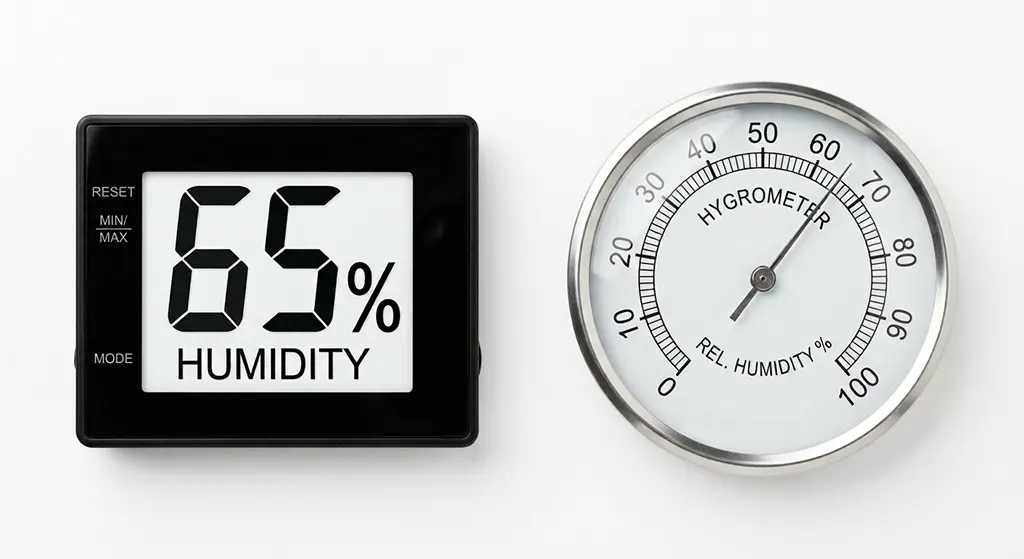
- Daytime ambient humidity: 60-70%
- Nighttime humidity: Can rise to 80% without concern
- Humid hide interior: Should feel noticeably moist when touched
These ranges reflect the natural humidity patterns in Madagascar and surrounding islands, where Phelsuma species evolved. Wild day geckos experience significant humidity fluctuation between day and night. Captive conditions must replicate this variation.
Measuring Humidity Correctly
Digital hygrometers provide accurate readings. Place one in the upper portion of the enclosure and one near the bottom. Compare readings to verify gradient existence.
Analog hygrometers frequently drift and provide unreliable readings. Budget $15-25 for digital units from reputable manufacturers. (Managing enclosure equipment and routine supplies efficiently is key for long-term care; see our practical tips on how to avoid overpriced gecko feed and unnecessary supply markups.)
Take readings at different times:
- Morning (before lights heat the enclosure)
- Midday (peak temperature)
- Evening (after misting)
This data reveals whether humidity is achieving target ranges and whether misting timing is appropriate.
Why Nighttime Humidity Matters
Nighttime humidity elevation is essential, not optional. During active periods, day geckos shed skin gradually. Nighttime provides the moisture window when stuck shed releases. Current herpetological husbandry standards specify allowing humidity to rise naturally overnight through misting and reduced ventilation during dark hours.
If nighttime humidity remains low, shedding cycles extend. Retained shed accumulates. The problem compounds over multiple shedding events.
Part 3: Ventilation Requirements in Detail
The Stagnant Air Problem
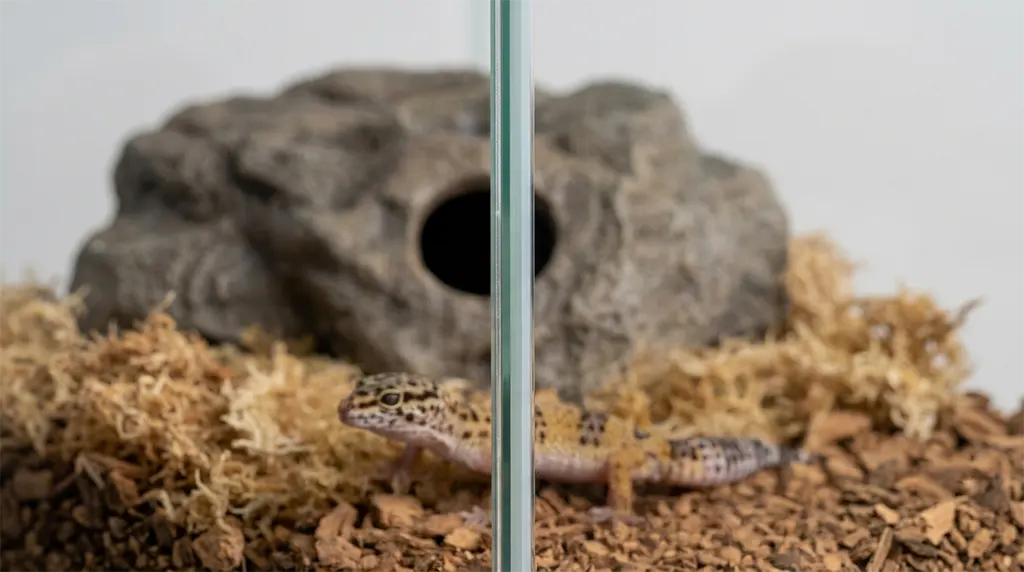
Stagnant humid air breeds disease. This statement cannot be emphasized sufficiently. Warm, moist, still air creates ideal conditions for:
- Aspergillus mold: Produces airborne spores that attack respiratory systems and skin
- Bacterial proliferation: Anaerobic bacteria flourish in stagnant conditions
- Skin infections: Moist skin without airflow develops bacterial dermatitis
Current herpetological husbandry standards specify that enclosures must have airflow that prevents air stagnation while maintaining humidity levels.
Ventilation Specifications
Proper ventilation requires cross-flow design:
- Side vents: Small openings on opposite sides of the enclosure create airflow pathways
- Top mesh: Screen or mesh at the enclosure top allows warm air to rise and escape
- Cross-flow principle: Air enters one side, travels through the enclosure, and exits the other
Mesh percentage matters. Fine mesh reduces airflow excessively. Screen-top enclosures with at least 50% open mesh area provide appropriate ventilation for most setups.
Glass doors with no additional vents create completely stagnant conditions when closed. Current herpetological husbandry standards specify adding side ventilation strips to glass vivariums.
Balancing Humidity and Airflow
The goal is humid air that moves, not humid air that stagnates.
Correct approach:
- Light misting in evening (allows moisture to increase overnight)
- Side vents providing constant low-level airflow
- Top mesh allowing warm air to escape during daytime heating
- Humid hide providing localized high humidity without affecting ambient enclosure conditions
Incorrect approach:
- Heavy misting with enclosure sealed
- Misting at midday when temperatures peak
- Mesh completely blocked by decorations
- Single ventilation source only
Part 4: The Humidity-Ventilation Balance
Why Misting Alone Fails
Misting adds moisture. Ventilation removes moisture. The interaction between these two processes determines enclosure conditions. (Note: The quality of water you mist also matters — hard tap water high in mineral deposits can coat skin and worsen shedding, as detailed in our guide on tap water mineral content causing gecko skin shed problems.)
Mist without ventilation: Humidity accumulates, stale air develops, fungal growth begins. The gecko sits in humid stagnation. Stuck shed may release more easily, but skin infections develop.
Vent without humidity: Airflow dries the enclosure. Humidity drops below target range. The gecko experiences dry conditions. Shedding becomes difficult. Retained shed develops.
The solution is not to choose one over the other. The solution is to calibrate both.
Calibrating Your Setup
- Measure baseline humidity with digital hygrometers at multiple positions
- Mist lightly in the evening (3-4 pumps from a spray bottle covering substrate and foliage)
- Check morning humidity: Target is 70-80% range
- Check midday humidity: Target is 60-70% range
- If morning humidity exceeds 85%: Reduce misting quantity or add ventilation
- If midday humidity drops below 55%: Increase misting quantity or reduce ventilation
This calibration process typically requires 1-2 weeks of adjustment before achieving stable parameters.
Need a quick baseline? Keeping track of varying humidity and temperature needs can be tedious. To make it easier, we’ve put together a simple reptile environment calculator. You can use this to get a quick reference for the target ranges your gecko needs at its current life stage. It’s a handy way to double-check your setup parameters without having to dig through reference charts every time.
Part 5: UVB Requirements for Day Geckos
Ferguson Zone 2-3 Explained
Wild Phelsuma day geckos occupy partially shaded environments—filtered sunlight through vegetation, forest edges, transitional zones. This is Ferguson Zone 2-3, representing moderate solar exposure in the wild. (Based on Ferguson Zone classification research—see: Ferguson, 2016, Herpetological Biology)
Current herpetological husbandry standards specify providing UVB matching the species’ natural Ferguson Zone. For day geckos, this means:
- UVB output: 5% or 6% tube output
- Placement: Positioned to provide gradient exposure—not the entire enclosure under UVB
- Photo period: 10-12 hours daily, consistent with tropical day length
Products providing appropriate UVB include Arcadia D3 6% and Zoo Med 5.0 linear tubes. Compact fluorescent UVB bulbs typically provide insufficient coverage and may create dangerous intensity hotspots.
UVB and Shedding Connection
UVB supports vitamin D3 synthesis, which enables calcium absorption. Calcium is essential for skin health and the cellular processes underlying successful shedding. Day geckos without UVB supplementation develop compromised skin integrity that contributes to shedding difficulty.
Part 6: Proper Humid Hide Setup
Humid Hide Specifications
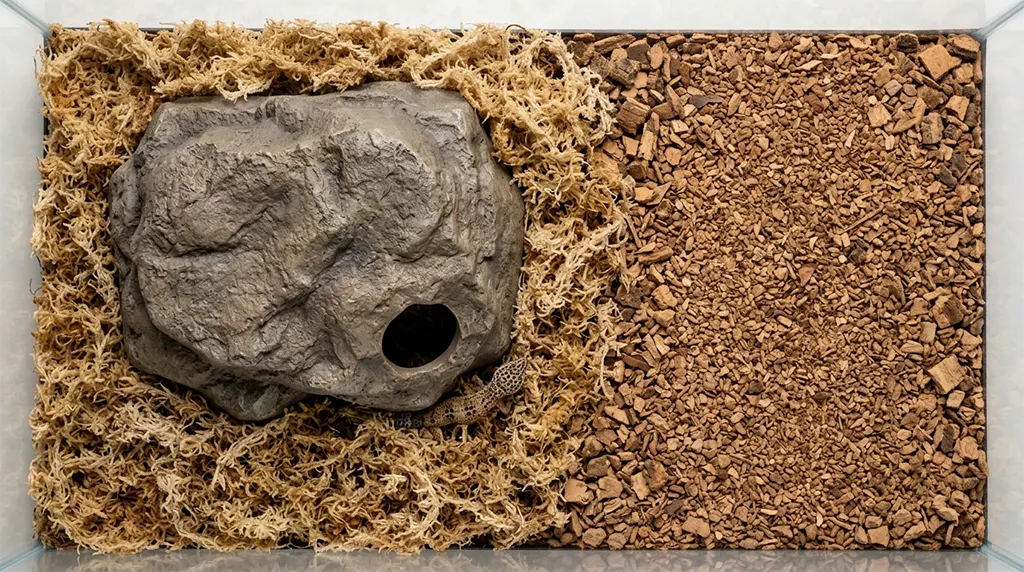
The humid hide is not optional. Current herpetological husbandry standards specify providing enclosed humid retreats for all arboreal gecko species.
Construction:
- Material: Plastic, resin, or sealed wood
- Opening: Single entry point, diameter slightly larger than the gecko’s body
- Interior: Lined with sphagnum moss or layered damp paper towels
- Size: The gecko must fit completely inside with room to turn
Location:
- Middle portion of the enclosure (not warmest or coolest area)
- Stable temperature zone (not directly above heat sources)
- Accessible without requiring the gecko to cross open exposed areas
Maintenance:
- Replace sphagnum moss when discolored or musty-smelling
- Change paper towel layers every 2-3 days
- Clean the hide structure with reptile-safe disinfectant weekly
Mistiming That Causes Problems
Misting timing matters significantly. Current herpetological husbandry standards specify evening misting for several reasons:
- Temperature: Cooler evening temperatures reduce rapid evaporation
- Duration: Overnight misting allows humidity to benefit nocturnal activity
- Gecko activity: Day geckos settle for evening/night rest, increasing time in humid microclimates
Misting at midday causes rapid evaporation and temperature drops. Water sitting on gecko skin during peak heat can create hotspots and contribute to scale rot.
Part 7: Stuck Shed Remediation
When Stuck Shed Becomes an Emergency
🚨 Red Flag Thresholds:
- Toes: Retained shed constricting circulation for more than 48 hours requires immediate intervention. Tissue death begins. Auto-amputation follows.
- Eye caps: Cloudy or raised eye caps indicate retained spectacles. This requires veterinary removal to prevent permanent vision damage.
- Vent area: Constriction around the vent causes painful defecation and can progress to serious infection.
Do not wait. If stuck shed is visible on toes, begin humid hide therapy immediately. If constriction is visible or the toe appears discolored (blackened, purple), seek veterinary care within 24 hours.
Remediation Protocol
- Increase humid hide humidity: Ensure sphagnum moss is thoroughly moist but not dripping
- Create a humidity chamber: Small plastic container with moist paper towels, entry hole cut in lid, placed on the warm side of the enclosure for 20-30 minute sessions
- Gentle removal: After 20+ minutes in humidity chamber, gently rub stuck shed with damp cotton swabs. Never pull. If shed doesn’t release easily, re-humidify and try again.
- Veterinary removal: For eye caps, retained shed on toes with constriction, or shed that won’t release after multiple humid sessions, veterinary intervention is necessary
Fungal Infection Warning
Stagnant humid air breeds Aspergillus mold and bacterial infections. Signs of fungal involvement include:
- Discolored skin patches (brown, black, or unusual coloration)
- Musty smell from the enclosure persisting after cleaning
- Skin that appears crusty, flaky, or raised
- Lethargy or decreased activity
(Severe shed distress and systemic stress frequently cause geckos to go off food; learn what troubleshooting steps to take when your leopard gecko won’t eat.)
If fungal infection is suspected, veterinary consultation determines appropriate antifungal treatment. Do not delay. Fungal infections spread and can become systemic.
Frequently Asked Questions
How often should I mist my day gecko enclosure?
Current herpetological husbandry standards specify misting lightly in the evening, 3-4 pumps covering substrate and foliage. Frequency depends on enclosure ventilation and ambient humidity—calibrate to achieve 60-70% daytime readings and 70-80% overnight. Some setups require daily misting; others function adequately with misting every 2-3 days.
Why does my gecko have stuck shed on its toes?
Stuck shed on toes indicates inadequate humidity in the gecko’s immediate environment or insufficient time in humid hide. Verify the humid hide exists, contains moist substrate, and the gecko can access it easily. Increase humid hide humidity and extend the gecko’s time inside during shedding cycles.
Can stuck shed on toes cause permanent damage?
Yes. Retained shed constricting toes cuts off circulation. Tissue death begins within 24-48 hours. Auto-amputation occurs if circulation is not restored. This is permanent and irreversible. Address stuck shed on toes immediately.
What’s the correct humidity for day geckos?
Current herpetological husbandry standards specify 60-70% daytime humidity, rising to 80% overnight. Provide humidity gradient throughout the enclosure and maintain a humid hide with interior moisture levels noticeably higher than ambient.
How do I balance humidity and ventilation?
Provide side vents plus top mesh for cross-flow ventilation. Mist lightly in evening. Measure humidity at multiple positions and times. Adjust misting quantity and ventilation opening size to achieve target ranges. The goal is moving humid air, not stagnant humid air.
What UVB does my day gecko need?
Day geckos require Ferguson Zone 2-3 UVB exposure—5% or 6% tube output. Position the UVB tube to create a gradient, not uniform exposure. Products such as Arcadia D3 6% or Zoo Med 5.0 provide appropriate output. Replace tubes every 12 months as UVB output declines.
How do I know if my enclosure has a fungal infection?
Signs include discolored skin patches (brown, black, unusual coloration), persistent musty smell, crusty or raised skin areas, and lethargy. Stagnant humid air creates conditions for Aspergillus and bacterial infections. Address ventilation immediately and consult a veterinarian.
Common Questions from Fellow Keepers
Many Phelsuma keepers ask about specific humidity requirements and proper ventilation setup when troubleshooting shedding problems. If you have a shedding case that did not respond to initial environmental correction, share your enclosure parameters below—humidity readings, ventilation configuration, and humid hide provision details help the community troubleshoot effectively. Detailed parameter sharing benefits both experienced keepers managing complex cases and newcomers encountering shedding issues for the first time.
Conclusion: Balance Prevents Shedding Failure
Day gecko shedding success depends on understanding the humidity-ventilation relationship. Stagnant humid air breeds disease. Dry air breeds stuck shed. Neither extreme works.
Establish proper ventilation first. Add side vents and ensure top mesh provides cross-flow airflow. Calibrate misting to maintain 60-70% daytime humidity with overnight rise to 80%. Provide a humid hide with sphagnum moss or moist paper towels. Monitor for signs of stuck shed and address immediately when detected.
This approach significantly mitigates the risk of shedding complications. Proper environmental conditions facilitate clean shedding, helping to ensure healthy skin, intact toes, and clear eyes. Investing time in optimizing your vivarium setup provides the foundation necessary for your gecko’s long-term health.
Prioritizing your gecko’s environmental stability is the most effective investment in its long-term health.
For health concerns or medical guidance, consult an ARAV-certified reptile-specialist veterinarian.
Day gecko humidity and ventilation guidance reflects current herpetological husbandry standards. Ferguson Zone classifications derive from established herpetological research (see: Ferguson, 2016, Herpetological Biology). Individual species within Phelsuma genus may have specific variations—verify requirements for your specific species. For ARAV-certified reptile veterinarians, visit https://arav.org.
The “specific species” variation mentioned above is exactly why species-level comparison matters — see our guide on the giant day gecko vs gold dust day gecko for a head-to-head beginner breakdown.
Quick Reference Checklist
Daily:
- [ ] Misting performed in evening (not midday)
- [ ] Humid hide substrate visibly moist
- [ ] Water dish filled with fresh water
- [ ] Vent openings unobstructed
Weekly:
- [ ] Humid hide cleaned and substrate replaced
- [ ] Enclosure checked for mold or musty smell
- [ ] Substrate inspected for fungal growth
- [ ] UVB light functioning and clean
Shedding Cycle:
- [ ] Increase humid hide moisture
- [ ] Add extra evening misting sessions
- [ ] Monitor toes, eyes, and vent daily
- [ ] Begin humidity chamber therapy if stuck shed appears
This content is for educational purposes only and does not substitute professional veterinary diagnosis or treatment. If you observe any symptoms of illness, injury, or abnormal behavior, please consult a qualified exotic animal veterinarian immediately.
For more details, please review our full Medical Disclaimer.