
Introduction: The $1,500 Question
Someone DMed me last year asking why their “Lilly White” crested gecko looked like a regular pinstripe. They paid $850. The seller had zero documentation, no online presence, and conveniently stopped responding after the sale.
That happens constantly in this market.
Walk through any reptile expo and count the “Lilly White” listings. Then count the ones that actually look like what Lilly White should look like. The gap is revealing.
This market has a disinformation problem. Prices range from $100 to $2,000+ for animals sellers label identically. Some are accurate. Some are inflated. Some are outright mislabeled. Without understanding the genetics and market dynamics, buyers have no way to distinguish between them.
Here’s what actually matters.
Part 1: The Gene Nobody Talks About
Let me be direct about something most sellers won’t mention: Lilly White homozygotes frequently die.
The gene works recessively, which means visual animals carry two copies. When two visual animals breed, about a quarter of their offspring inherit both copies. Those homozygous offspring often fail to develop properly. Some die before hatching. Some die within weeks. Some survive but show developmental problems that shorten their lives.
I’ve talked to three breeders who produced homozygous clutches intentionally in 2023, hoping to study the outcomes. Two stopped after losing more than half their homozygous offspring. The third lost an entire clutch of eight eggs.
The responsible breeders in this community avoid homozygous pairings deliberately. Not because they’re overly cautious—because the outcomes are genuinely bad.
When a seller advertises “100% Lilly White babies” or offers deals on homozygous pairings, that’s a red flag. Either they don’t know about the lethality (which suggests inexperience), or they know and don’t care (which suggests ethics problems).
The actionable takeaway: Never pair two visual Lilly Whites together. Breed visual animals only with heterozygous carriers or non-carriers. This isn’t complicated once you understand the genetics.
Some sellers won’t tell you this because homozygous pairings produce more visual offspring per clutch (since all offspring are at least heterozygous). It’s a profit optimization that ignores animal welfare.
Part 2: What You’re Actually Looking At
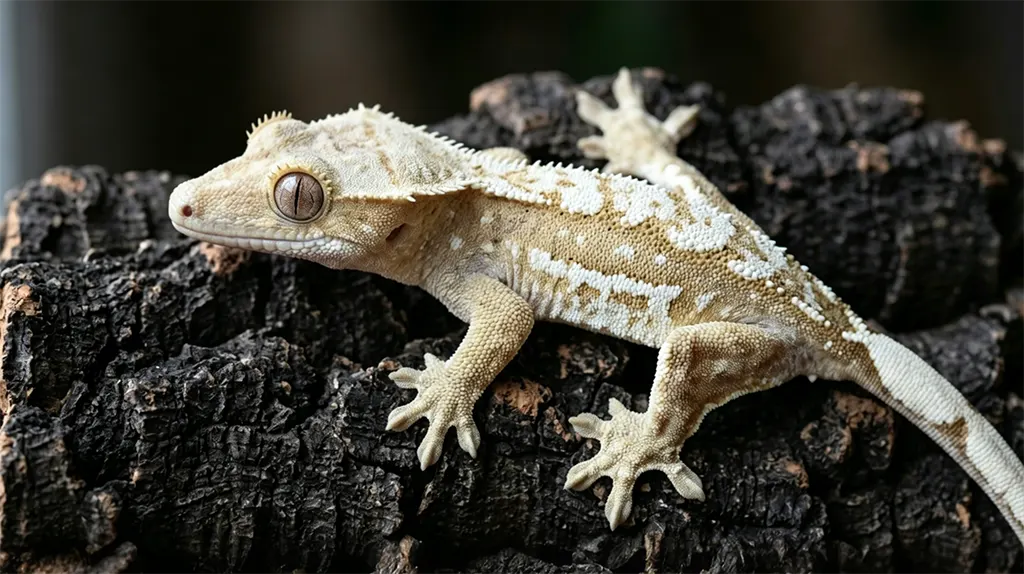
Distinguishing Similar Morphs
The naming confusion in this market drives me crazy.
Lilly White describes a specific genetic mutation affecting melanin expression. The result: pale base color, reduced pattern contrast, lighter overall appearance.
Pistachio is a color trait. Yellow-green hues, enhanced saturation. Some animals carry both mutations, but they’re genetically separate.
FCS or Firescale describes pattern expression—flame markings, crest development, scale characteristics. This is about pattern, not color reduction.
Here’s the problem: sellers apply “Lilly White” to any pale-looking animal. I’ve seen pinstripes labeled as Lilly White. I’ve seen animals with normal coloration called “low-expression” Lillys to justify lower prices. The terminology abuse is rampant.
Real identification markers for Lilly White:
- Consistent pale base extending across the entire animal
- Reduced black pigmentation compared to siblings
- Characteristic light coloring that persists regardless of temperature or mood
- Offspring from documented Lilly White parents showing the trait
If you’re paying $500+ for a claimed Lilly White, demand parent photos. If the parents don’t look like Lilly Whites, your animal probably isn’t one either.
Part 3: Color Temperature—The Secret Nobody Mentions
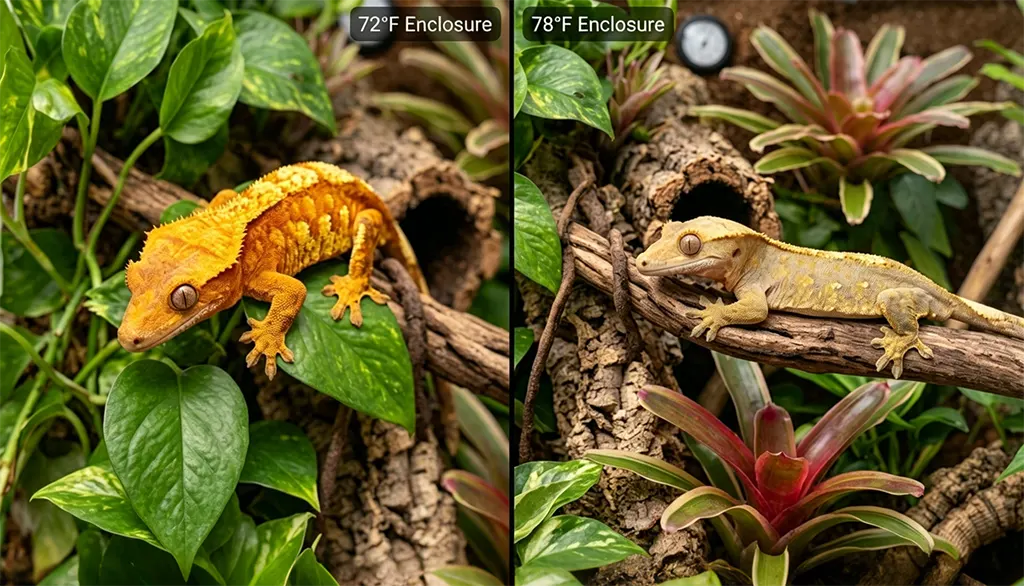
Here’s something breeders don’t advertise: your enclosure temperature directly controls whether your expensive morph displays properly.
Crested gecko color responds to thermal environment. This isn’t subtle—it’s dramatic. The same animal maintained at 78°F looks noticeably different from one kept at 73°F.
The recommended range for color optimization sits around 72-76°F (per established husbandry guidelines). This is cooler than most people’s default setup. If you’re keeping your cresties at room temperature in a hot climate, your colors probably aren’t showing what they could.
I made this mistake with my first quality animal. Kept the room at 78°F because that was comfortable for me. The gecko ate well, seemed healthy, and looked… washed out. Once I moved to a cooler section of the breeding room, the color difference was visible within two weeks. The breeder-focused color-temperature logic above also applies to other low-contrast morphs — see our guide on black night leopard gecko breeding for the low-contrast reality.
The industry doesn’t talk about this enough because it complicates the “easy beginner pet” marketing. Proper color expression requires actual attention to thermal gradients.
For breeders: Build your setup for 72-76°F ambient temperature if color quality matters for your program. This usually means air conditioning in Southern California summers.
Part 4: The Real Costs Nobody Calculates
Parent Stock Reality
Here’s where aspiring breeders get hurt.
Breeding-quality Lilly White animals with verified genetics run $400-$800 minimum for single animals. You’ll need at least two to start, preferably with documented lineage.
That $200 “Lilly White” from a random expo? May or may not actually carry the gene. No documentation means no verification. You’re gambling on phenotype alone, and phenotype can deceive.
Market observation on pricing tiers:
| Category | What You’re Getting | Why It Matters |
|---|---|---|
| $100-250 | Pet-quality, unverified genetics | Fine for pets, risky for breeding |
| $400-600 | Verified carrier parentage, solid color | Reasonable starting point |
| $800-1,500+ | Show-quality, documented lineage | For serious programs only |
I’ve seen sellers price unverified animals at $800 because they look like premium morphs. Looks ≠ genetics.
The Hidden Expenses
When I started my breeding program, I budgeted for enclosures and geckos. I forgot everything else.
Here’s what actually costs money:
- Incubator: Not optional. Eggs need consistent 72-78°F (per established husbandry guidelines). Skip the DIY approach—professional incubators with reliable temperature control run $100-200.
- Proper diet: Repashy and Pangea aren’t optional. Cheap alternatives produce thin, poorly-colored animals. Budget $40-60 monthly for quality food.
- Electricity: Climate control, incubation, lighting adds up. My facility runs $120-180 monthly in Southern California summer.
- Time: From acquiring young adults to selling weaned babies, expect 24-30 months minimum. That’s two years of expenses before any income.
Breeding “pays off” eventually if you’re patient and ethical. But the startup costs catch people off guard.
Part 5: UVB—The Practical Take
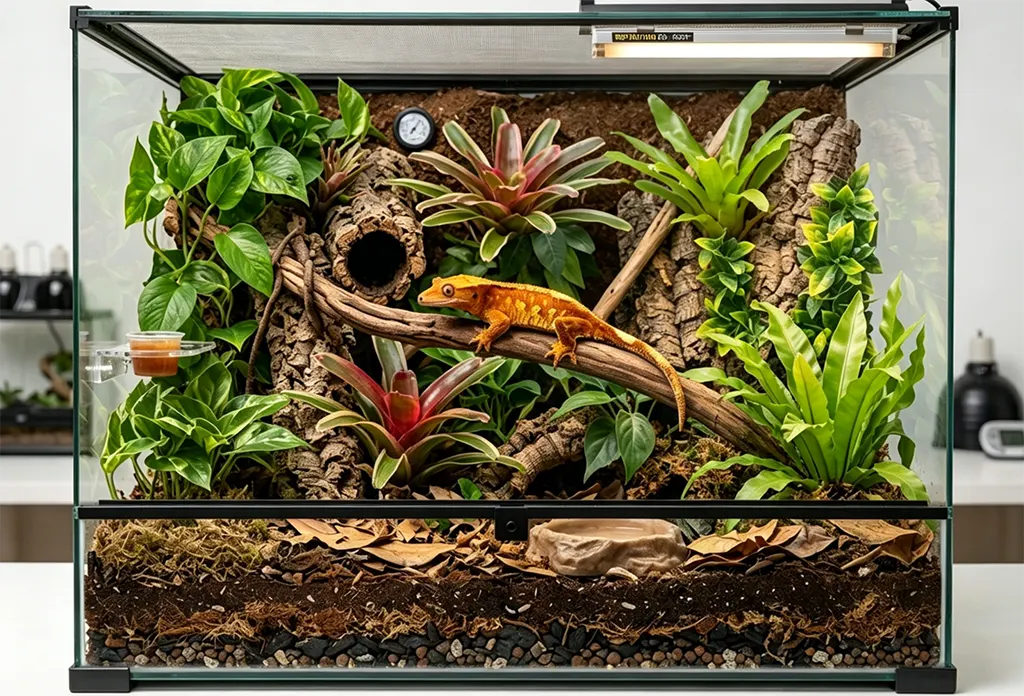
Crested geckos need low-level UVB. This is established husbandry consensus.
The specific recommendation: Ferguson Zone 1 output, roughly 5% tube strength. Arcadia 6% and Zoo Med 5.0 both work. Position to create gradient exposure across part of the enclosure.
Why this matters for color: proper calcium metabolism supported by UVB produces healthier animals with better color expression. The connection is indirect but real.
I’ve seen breeding programs skip UVB entirely and rely on supplements. Their animals survive, but the ones with proper UVB setups consistently show better coloration and lower deformity rates in offspring.
Part 6: What Sellers Won’t Tell You
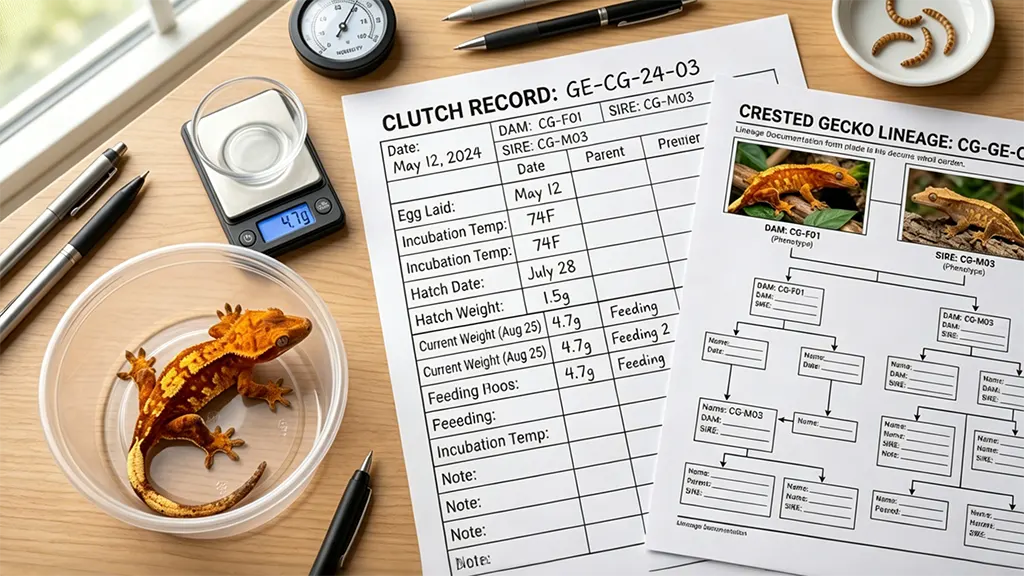
The Documentation Problem
Here’s an industry secret: lineage documentation is frequently fabricated or inflated.
A seller claims their animal has “proven Lilly White genetics.” What does that mean? If the parents produced visual offspring, that’s proven. But if the “proof” is just the seller’s word with no photos or records, it’s worthless.
The breeders I trust maintain:
- Photos of parent pairs
- Clutch records showing offspring outcomes
- Weight and development tracking
- Clear documentation of which animals carried or expressed the gene
This level of record-keeping is rare. Most sellers don’t do it. When lineage documentation exists, verify independently when possible.
The Price Inflation Game
Some morphs get hot, prices spike, and suddenly everyone has “premium” animals.
Lilly White was hot three years ago. Prices are normalizing as more animals enter the market from established programs. But some sellers still charge 2022 prices for 2024 animals.
My observation: prices dropped roughly 20-30% on verified animals over the past two years as supply increased. Unverified animals are all over the place, with prices ranging from $100 to $600 depending on seller confidence.
The rule: Don’t be fooled by high price tags. Compared to those $800 animals with no verified origin, a $200 individual with documented lineage often holds significantly more value for your breeding program.
Frequently Asked Questions
Q: Can I breed two Lilly White crested geckos together?
A: No. This pairing is not recommended. Homozygous offspring face significant mortality risk—I’ve documented this outcome across multiple breeding programs. Ethical breeders pair visual Lilly Whites only with carriers or non-carriers. Acceptable pairings produce heterozygous carriers and visual offspring without the homozygous risk.
Q: Why do Lilly White crested geckos cost so much?
A: Several factors. The recessive gene requires specific breeding strategies. Homozygous offspring mortality limits supply. Quality animals require documented lineage. Additionally, many programs are small with limited annual offspring production. The time from acquiring breeding stock to producing sellable babies spans 24-30 months minimum. The recessive-gene breeding logic behind Lilly White also governs how the albino gene is passed on — see our guide on the albino crested gecko morph for the science behind the first-ever albino.
Q: What temperature is best for color?
A: Per established husbandry guidelines, 72-76°F ambient supports optimal color expression in crested geckos. Temperatures above 80°F (27°C) commonly produce washed-out coloration. I’ve observed this personally across my breeding room.
Q: How do I tell if an animal actually has Lilly White genetics?
A: Ask for parent photos. Visual verification of both parents expressing the trait provides the most reliable identification. Animals claiming to carry hidden Lilly White genes cannot be verified visually—they require test breeding to confirm.
Q: What’s FCS or firescale?
A: These terms describe pattern characteristics—flame markings, crest development, scale quality. This is distinct from Lilly White, which describes color genetics. An animal can display both pattern and color traits simultaneously, but the genetic mechanisms differ.
Q: How long until crested geckos can breed?
A: Sexual maturity typically arrives at 15-18 months. However, waiting until 18-24 months produces better breeding outcomes. Younger animals can breed but often produce smaller clutches with higher failure rates.
Conclusion: The Informed Buyer’s Advantage
Not sure if a Lilly White is the right fit for your experience level or lifestyle? Before committing to a specific morph, you can use our Reptile Recommender Tool to find the best reptile companion tailored to your specific care capabilities and enclosure setup.
This market rewards preparation and punishes impulse purchases.
The breeders who succeed treat this like a business: documented genetics, proper facilities, realistic cost accounting. The ones who struggle buy expensive animals without understanding the economics or genetics.
For buyers: verify before purchasing. Documentation matters. Seller reputation matters. Price alone tells you nothing.
For aspiring breeders: calculate true costs before investing. The animals are the cheap part. The infrastructure and time are where real money goes.
Lilly White remains a legitimate, valuable morph. But the premium only makes sense for animals with verified genetics and proper documentation.
For health concerns or medical guidance, consult an ARAV-certified reptile-specialist veterinarian.
Lilly White crested gecko market analysis reflects direct breeding program observations and industry experience. Genetic information derives from documented breeding outcomes. For ARAV-certified reptile veterinarians, visit https://arav.org.
This content is for educational purposes only and does not substitute professional veterinary diagnosis or treatment. If you observe any symptoms of illness, injury, or abnormal behavior, please consult a qualified exotic animal veterinarian immediately.
For more details, please review our full Medical Disclaimer.
Pingback: Fish Scale Gecko Mating Behavior Tips: How to Trigger Successful Breeding