
I came home one afternoon to find my cat had rearranged my living room — shredded couch cushions, a toppled bookshelf, and a “gift” of half-eaten houseplant leaves scattered across the rug. That was the day I stopped treating enrichment as optional and started treating it like rent.
If your indoor cat is turning your home into a demolition zone, or just sleeping 18 hours a day with occasional 3 AM zoomies, this indoor cat enrichment guide is for you. Here are 15 ideas that actually work — organized by what they fix: boredom, destructive scratching, anxiety, or plain old “my cat looks bored.”
Quick Answer: The three most impactful indoor cat enrichment changes are: (1) daily 10–15 minute interactive play sessions, (2) vertical space like cat trees or wall shelves, and (3) puzzle feeders that replace boring bowl feeding. Most behavior problems stem from under-stimulation, not a “bad” cat.
If you’re a busy professional trying to balance a demanding career with pet parenthood, it can feel like a challenge to keep your feline companion happy. If you’re still in the process of choosing the right companion or need tips for a busy lifestyle, check out our Ultimate Cat Guide for Busy Professionals: 2026 Best Breeds & Budget Tips for everything you need to know.
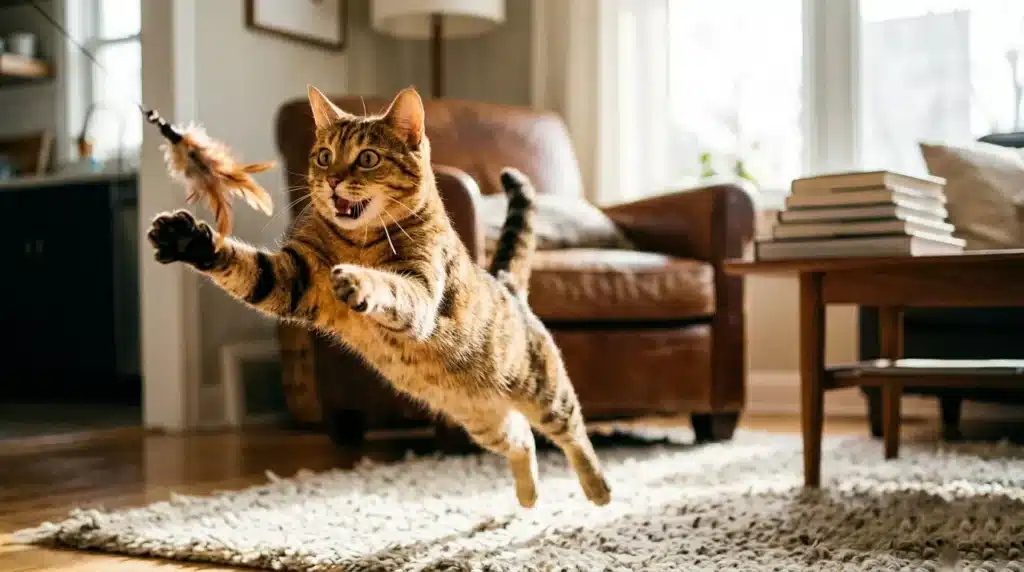
Why Indoor Cats Need Enrichment (The Science Behind It)
Indoor cats live longer, safer lives — but they miss out on the mental and physical stimulation that outdoor cats get naturally. According to the Association for Pet Obesity Prevention, 61% of U.S. indoor cats are overweight or obese, largely due to inactivity.
When a cat’s natural hunting, climbing, and exploring instincts go unfulfilled, you’ll typically see:
- Destructive scratching — furniture, walls, carpets become the outlet
- Litter box avoidance — stress-related “accidents” outside the box
- Overgrooming — bald patches from anxiety
- Excessive vocalization — yowling, especially at night
- Lethargy or aggression — mood swings with no obvious trigger
The ASPCA notes that environmental enrichment is one of the most effective ways to address these behavior problems. It’s about giving your cat a life worth living indoors.
15 Indoor Cat Enrichment Ideas That Actually Work
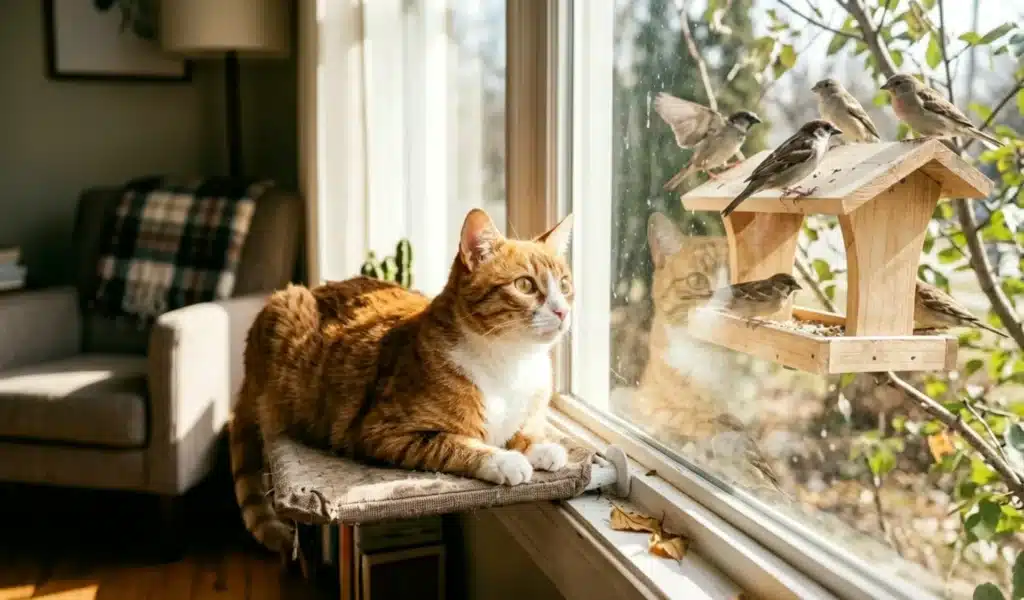
1. Build a Window Perch “Cat TV” Station
Cats are wired to watch. A window perch satisfies their instinct to survey territory from above — and gives them free entertainment from birds, squirrels, and neighborhood drama.
What you need: A wall-mounted shelf, a cat tree by the window, or a cushioned windowsill. Add a blanket if it’s cold.
Pro move: Hang a bird feeder or birdbath outside the window. Your cat just got a 24/7 nature documentary.
2. Add Vertical Space (Cat Trees & Wall Shelves)
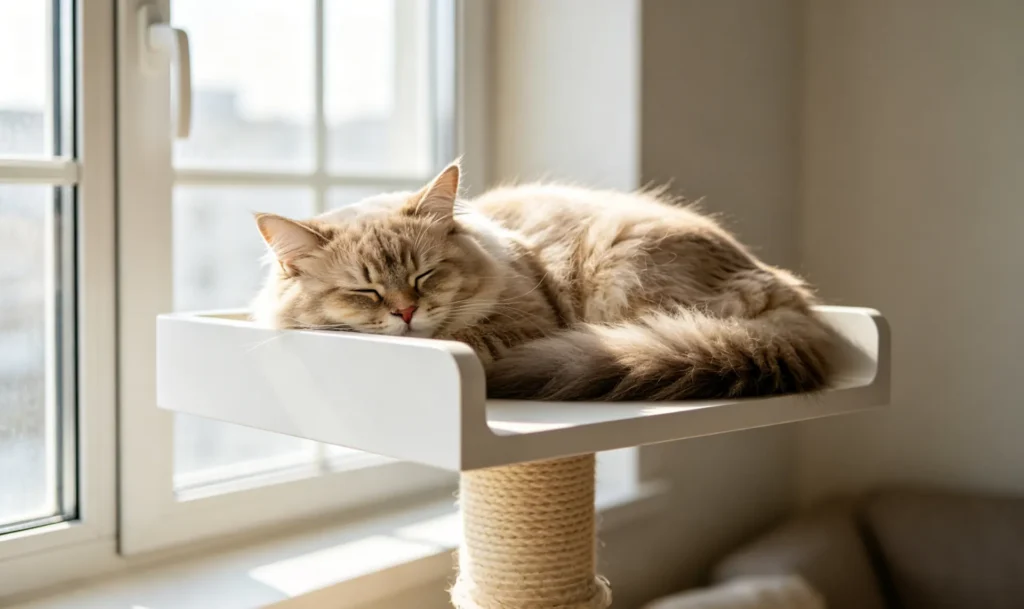
Cats think in three dimensions. The floor is just the ground floor — give them options to climb, perch, and survey.
The American Association of Feline Practitioners (AAFP) recommends vertical territory as a core environmental need. A good cat tree for small apartments doesn’t have to be massive — even a couple of floating shelves can transform a room.
Budget version: Stack sturdy books, install floating shelves, or add a tall bookshelf with clear access.
Why it works: Climbing stretches muscles, builds confidence, and gives them a safe retreat when life gets overwhelming.
3. Daily Interactive Play Sessions (10–15 Minutes, Twice a Day)
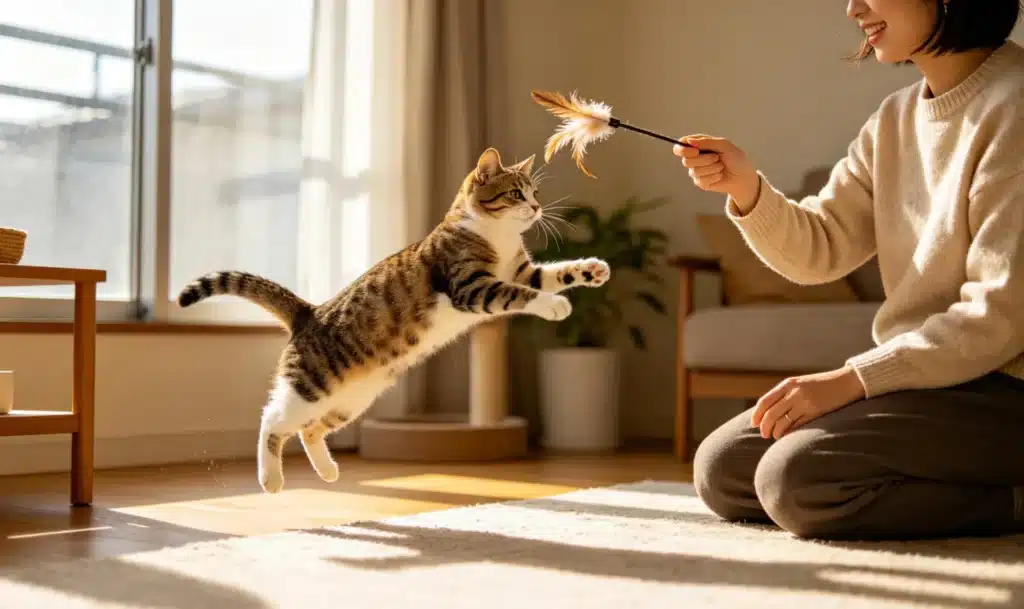
This is the non-negotiable one. Interactive play mimics the full hunting sequence — stalk, chase, pounce, catch — and burns off the energy that would otherwise go into destroying your curtains.
Best toys: Feather wands, ribbon teasers, and motorized laser toys (always end laser play with a physical toy they can “catch” to avoid frustration).
How to do it right: Move the toy like real prey — short bursts, hide it behind furniture, pause occasionally. Don’t just wave it randomly.
The finish matters: End every session with a treat or small meal. This mimics a successful hunt and leaves your cat satisfied.
4. Puzzle Feeders & Foraging Toys
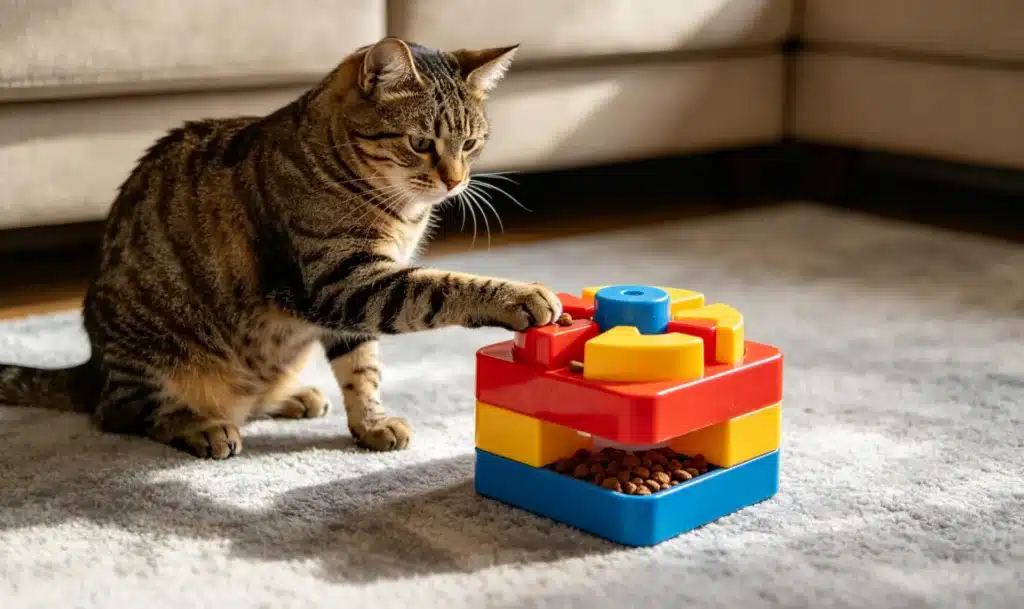
In the wild, cats spend hours hunting for food. A bowl on the floor robs them of that instinct entirely. Puzzle feeders bring it back — they slow down eating, prevent bloat, and stop the vicious cycle of cat vomiting and yellow bile buildup caused by rapid feeding, while providing real mental stimulation.
Easy options: Treat-dispensing balls, snuffle mats (sprinkle kibble in fabric strips), or the classic DIY toilet paper roll puzzle.
Lazy hack: Scatter kibble across the floor or on a scratching post. Your cat “forages” for every bite.
Start simple: If your cat stares at the puzzle like it’s a math test, start with an easy one they can solve in seconds. Build up the difficulty over a week or two.
5. Rotate Toys Weekly (Prevent the Boredom Cycle)
Cats get bored fast. That $15 feather wand is thrilling on Monday and ignored by Friday.
The fix: Keep 80% of toys hidden in a closet. Bring out 2–3 “new” toys each week, then swap them back. To your cat, it’s fresh entertainment — no extra cost.
Mix it up: Alternate textures (feather, crinkle, fleece), sounds (squeaky, jingly), and scents (catnip, silvervine). Variety is the whole point.
6. Multiple Scratching Surfaces (Save Your Furniture)
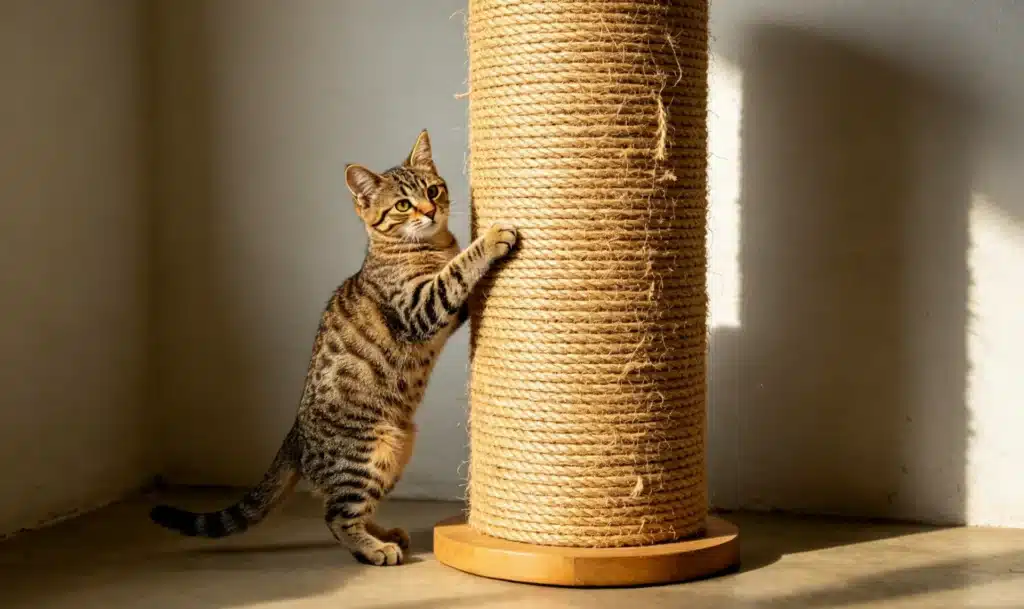
Scratching gets a bad rap, but it’s one of the most important indoor cat activities there is. It sharpens claws, stretches muscles, marks territory, and relieves stress.
I used to think one scratching post was enough. My cat had other ideas — she chose the arm of my vintage leather chair every single time. Once I added a horizontal cardboard scratcher right next to it, the chair was finally safe. Location matters as much as the object itself.
Offer options at different angles:
- Vertical scratching posts (tall enough for full-body stretches — at least 30 inches)
- Horizontal cardboard scratchers
- Sisal rope mats
- Angled scratchers (some cats prefer this)
Placement trick: Put scratchers near their favorite spots — by the window, next to their bed, near the couch. Rub a little catnip on them to encourage use.
7. Scent Enrichment (Catnip, Silvervine & More)
Cats experience the world through their nose. Scent enrichment is one of the easiest ways to stimulate their senses and break up a boring day.
Safe options:
- Catnip — the classic, works on about 50-70% of cats (genetics determine it)
- Silvervine — stronger than catnip, works on cats who don’t respond to catnip
- Valerian root — another alternative, though it smells funky to humans
- Tatarian honeysuckle — wood or wood shavings, long-lasting
How to use: Offer 1–2 times per week. Overuse reduces the effect. Sprinkle on beds, toys, or scratching posts.
Note: Kittens under 6 months typically don’t respond. Some breeds (like Siamese) may be indifferent regardless of age.
8. Hiding Spots & Cozy Nooks
Cats need places to disappear when they’re overwhelmed. A cozy hiding spot gives them a sense of security and reduces anxiety.
Easy ideas:
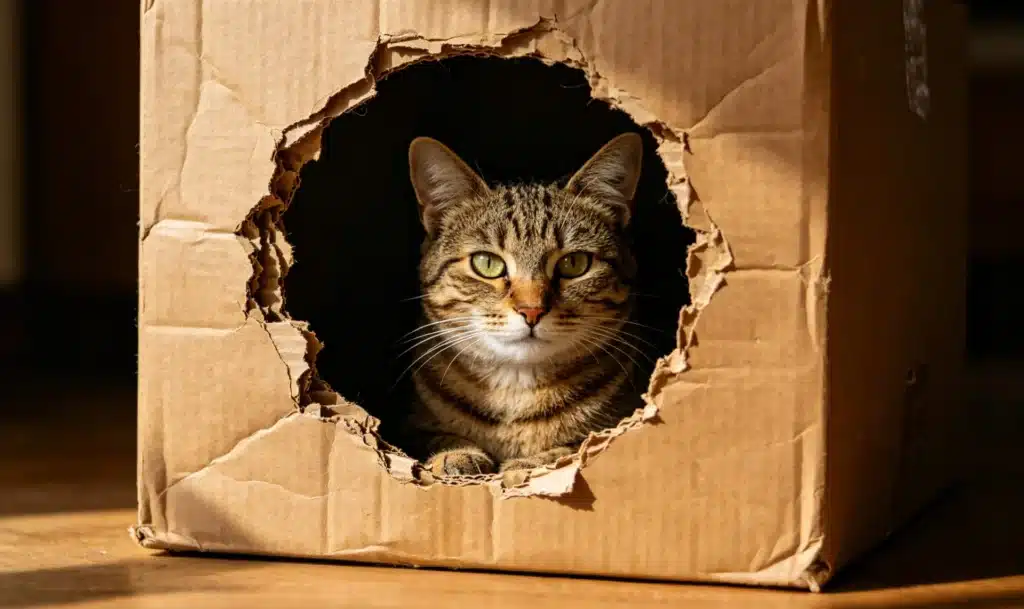
- Cardboard boxes (cut holes for entrances — instant cat castle)
- Paper bags (handles removed for safety)
- Cat caves or covered beds
- A chair draped with a blanket
Placement: Quiet areas, away from loud TVs or heavy foot traffic. Add a familiar blanket inside for extra comfort.
DIY hack: Stack boxes to make a “cat castle” with tunnels and multiple levels. My neighbor’s cat spent three straight days in a box fortress — wouldn’t come out for anything except dinner.
9. Cat Grass (Safe Greens for Nibbling)
Cats love to chew grass — it aids digestion, helps with hairballs, and satisfies an instinctive urge. Store-bought “cat grass” is often overpriced and sometimes treated with chemicals.
Grow your own: Plant wheat, rye, or barley seeds in a small pot. Place in a sunny window, water daily, and let your cat nibble freely. Seeds cost a few dollars and the grass grows in about a week.
Bonus: Cat grass satisfies their urge to chew houseplants — most of which are toxic. It’s a safe alternative that keeps both your cat and your fern collection alive.
10. Water Fountains (Running Water = Fascination)
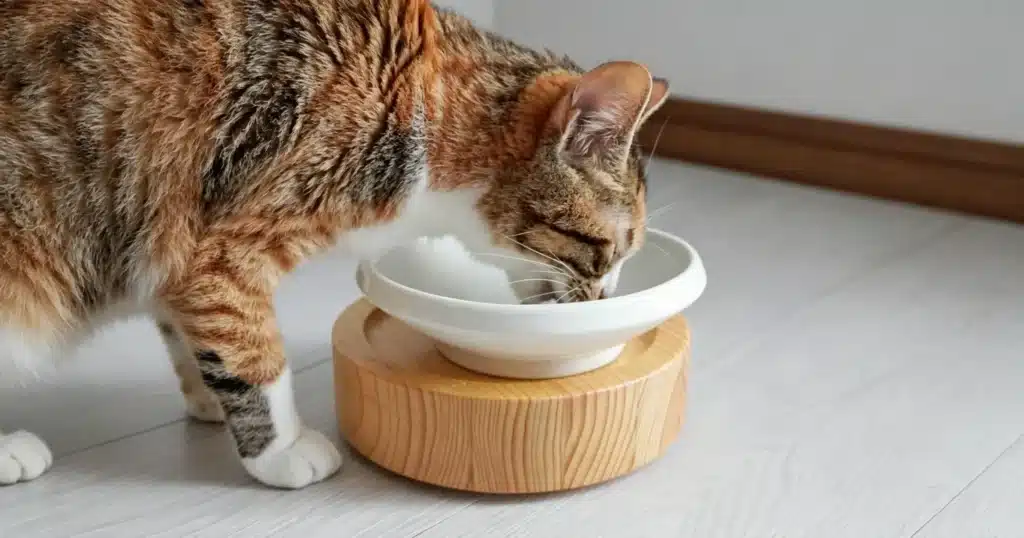
Most cats prefer running water over still water — it’s an instinct from their wild ancestors who learned that moving water is safer and fresher. A water fountain encourages hydration — which matters a lot for kidney and urinary health, per Cornell Feline Health Center (preventing subtle issues like FLUTD-induced cat wet tail but not diarrhea) — and doubles as entertainment.
What to look for: A quiet motor, easy-to-clean design, and a replaceable filter. Place it away from food bowls — cats instinctively avoid drinking near where they eat.
Watch this: Most cats will play with the stream at first. It’s enrichment and hydration in one.
11. “Cat TV” Screens (Birds, Fish & Mice Videos)
When you’re not home, your cat doesn’t have to stare at a blank wall. YouTube has tons of free “cat TV” playlists — birds, fish, squirrels, mice scurrying around. It’s one of those indoor cat activities that costs nothing and takes zero setup beyond pressing play.
Setup: Place a tablet or TV at cat-eye level, near a perch or window shelf. Play for 15–30 minutes at a time.
Pair it: Combine with a real window perch for double the visual stimulation. Some cats will sit transfixed for the entire video.
12. Leash Training & Supervised Outdoor Walks
Yes, cats can walk on leashes. Harness training lets them experience the outdoors safely — new smells, fresh air, watching bugs — without the risks of free-roaming.
Start slow: Get a proper cat harness (never use a collar — choking risk). Let them wear it indoors for short periods first, then try a quiet backyard or calm street.
Best candidates: Curious, confident cats who seem interested in windows and doors. Shy cats may never enjoy it — and that’s fine.
13. Adopt a Companion (If You Can Handle It)
Many cats thrive with a feline friend. A playmate provides constant entertainment, reduces loneliness, and encourages exercise you can’t provide alone.
Be honest with yourself: Only adopt a second cat if you have the space, time, and budget for two. How to introduce cats properly matters — do it slowly over 1–2 weeks minimum to avoid conflict.
Best pairings: Two kittens together, or a calm adult cat with a similar temperament. Don’t assume your cat “wants a friend” — some cats are perfectly happy solo.
14. DIY Enrichment Toys (Cheap & Creative)
You don’t need to spend money. Some of the best enrichment comes from stuff already in your house:
- Crumpled paper balls — free, crinkly, perfect for chasing
- Toilet paper tubes — stuff with treats or catnip for a puzzle toy
- Paper bag surprise — hide a toy inside, crinkle it up, and watch them go
- Sock toys — fill an old sock with crinkled paper or catnip, tie the end, toss it
The point: It’s not about the toy’s price tag. It’s about novelty and interaction.
15. Daily One-on-One Time
At the end of the day, the best enrichment is you. Cats crave your attention — on their terms. Spend 5–10 minutes daily petting, talking to, or gently grooming them.
Read their signals: If they lean in and purr, keep going. If they flick their tail or walk away, respect it. Forced attention isn’t enrichment — it’s stress.
Why it matters: This strengthens your bond, reduces their stress, and makes your cat feel secure. When your cat feels secure, the behavior problems just… melt away.
7 Common Enrichment Mistakes (And What to Do Instead)
| Mistake | Why It Backfires | Do This Instead |
|---|---|---|
| Overstimulating with too many toys at once | Creates chaos, not enrichment | Rotate 2–3 toys weekly |
| Punishing bad behavior (yelling, spray bottles) | Increases fear and anxiety | Redirect to appropriate toys, reward good behavior |
| Ignoring your cat’s age and health level | Kittens need intense play; seniors need gentle enrichment | Match activities to life stage |
| Only providing floor-level activities | Misses their 3D nature | Add vertical space (see #2) |
| Leaving the same toys out forever | Guaranteed boredom within days | Weekly rotation (see #5) |
| Skipping interactive play entirely | Bowl feeding + no play = obesity + destruction | 10–15 min twice daily, minimum |
| Forcing your cat to “enjoy” enrichment | Stress is the opposite of enrichment | Observe their preferences, adjust accordingly |
Frequently Asked Questions
How hard is it to take care of a pet turtle?
Moderate. Setup is the hard part — once it’s dialed in, daily care takes about 5 minutes. The biggest investment is space: a proper adult turtle tank is 75+ gallons.
Do indoor cats get depressed?
Yes. Chronic boredom and under-stimulation can lead to depression-like symptoms: excessive sleeping, loss of appetite, overgrooming, and withdrawal. For cat enrichment for bored cats, the key is variety — rotate toys, add new scratching surfaces, and change up play routines regularly.
What’s the cheapest way to enrich an indoor cat’s environment?
Cardboard boxes, paper bags, DIY puzzle feeders from toilet paper tubes, and crumpled paper balls all cost nothing. A bag of catnip or silvervine sticks runs $5–$10. The most impactful enrichment — interactive play — is free.
How do I entertain a cat indoors without spending a lot?
Start with what you have. Hide treats around the house for a scavenger hunt. Create obstacle courses from pillows and boxes. Teach your cat to fetch a crumpled paper ball. How to entertain a cat indoors doesn’t require fancy equipment — it requires your time and creativity.
How much daily enrichment does an indoor cat need?
Aim for at least 20–30 minutes of active enrichment per day — two 10–15 minute play sessions plus access to passive enrichment (window perches, puzzle feeders, scratching posts) throughout the day.
Final Thoughts: Your Cat Doesn’t Need a Backyard — Just a Plan
You don’t need a huge apartment or expensive gadgets to give your cat a good life. Start with the basics: a window perch, a cat tree, daily play sessions, and a puzzle feeder. Add variety through toy rotation and scent enrichment. These indoor cat enrichment strategies don’t require much — just consistency.
Honestly, it usually comes down to the simplest thing — someone bothered to give them something to do.
This content is for educational purposes only and does not substitute professional veterinary diagnosis or treatment. If you observe any symptoms of illness, injury, or abnormal behavior, please consult a qualified exotic animal veterinarian immediately.
For more details, please review our full Medical Disclaimer.
I love cat!
Pingback: Cat Vomiting Yellow Bile: Common Causes & When to See a Vet
Pingback: Cat Vitamin Toxicity: Safe Supplementation Guide