
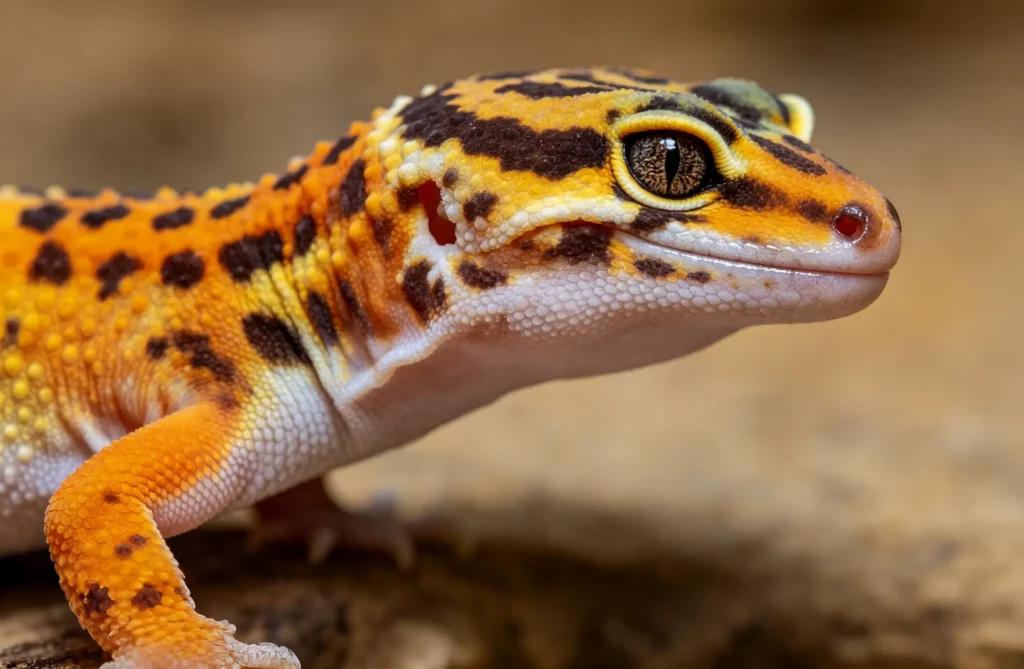
Dealing with leopard gecko diarrhea is one of the most common and stressful problems new reptile owners face. If you’re a new leopard gecko owner, few things trigger panic faster than opening the enclosure and seeing watery, messy poop. Your first thought? Parasites! Or maybe, I fed too much! You grab deworming meds, stop feeding cold turkey, and wait—only to find the diarrhea persists, or your gecko becomes listless from unnecessary fasting. Summer heat dehydrates leopard geckos and triggers diarrhea, and sustained high heat is itself a hidden stressor — if you suspect your tank is running too hot, see our guide on leopard gecko tank overheating for diagnosis and cooling steps.
Chronic diarrhea silently drains body weight, and a thinning tail is the most visible warning sign. See our guide on leopard gecko tail thinning for non-hunger causes.
Many new owners rush to give deworming medication as soon as they notice leopard gecko diarrhea, which often makes the situation worse. Here’s the hard truth: 90% of mild leopard gecko diarrhea cases in new owners have nothing to do with parasites or overfeeding. I’ve seen thousands of these cases—all caused by substrate dust irritation, dirty drinking water, or calcium/vitamin overdose. These are easy fixes, but misdiagnosis (like random deworming) can harm your gecko’s delicate gut flora.
This guide will help you identify common stool changes in leopard geckos and adjust their living environment to improve mild digestive issues. Always consult a licensed reptile veterinarian for proper diagnosis and treatment of any health concerns.
Leopard Gecko Diarrhea: Common Owner Mistakes
New gecko owners fall into a dangerous cycle: See diarrhea → Assume parasites → Deworm → Fast → Stress gecko → Worse diarrhea. This is the most common mistake I see—and it’s entirely avoidable.
The Big Myth: All Diarrhea = Parasites
Parasites (like giardia or coccidia) do cause diarrhea, but they come with key red flags you won’t see in mild, non-parasitic cases:
- Chronic diarrhea (lasts >5 days)
- Weight loss despite normal appetite
- Bloody or green stool
- Lethargy, loss of appetite. If your gecko has stopped eating along with loose stool, our guide to hidden causes of appetite loss in leopard geckos covers environmental triggers beyond parasites.
- Worms visible in poop
Misdiagnosing ordinary habitat issues as parasites is the top reason leopard gecko diarrhea keeps recurring. If your gecko has none of these, parasites are almost certainly not the issue. Deworming a healthy gecko destroys beneficial gut bacteria, disrupts digestion, and can make diarrhea worse. Don’t deworm without a positive fecal test.
The Second Myth: Overfeeding Is Always to Blame
Overfeeding can cause loose stool, but it’s easy to identify: undigested insects in poop and a history of feeding more than 3-4 times/week for adults. Most new owners feed appropriately (1-2 times/week for adults), so overfeeding is rarely the culprit.For reliable leopard gecko care advice, you can trust the experts at The Spruce Pets.
The 3 Real Causes of Non-Parasitic, Non-Overfeeding Diarrhea
After common preliminary checks for parasites and overfeeding habits, these three environmental issues are the most common triggers of mild stool abnormalities in leopard geckos. All care adjustments shared below are for mild cases only; reach out to a reptile specialist if digestive troubles stick around.
1. Substrate Dust Irritation (Most Common!)
Loose substrates like sand, coconut fiber, or walnut shell are the #1 cause of diarrhea in new geckos. Here’s why:
- When geckos hunt, they ingest small dust particles from the substrate.
- These particles irritate the gut lining, causing inflammation and watery diarrhea.
- Even “dust-free” loose substrates release micro-particles that irritate sensitive guts.
Signs of Substrate Dust Diarrhea:
- Watery, clear or slightly yellow stool (no mucus, no undigested food)
- Diarrhea starts within 1-2 weeks of switching to loose substrate
- Gecko acts normal (eats, active, no weight loss)
Quick Fix: Ditch Loose Substrates
Replace sand/coconut fiber with paper towels, non-adhesive shelf liner, or tile. These are dust-free, easy to clean, and eliminate gut irritation immediately. I recommend paper towels for new owners—you can spot-clean poop daily and replace the whole towel weekly.
2. Unclean Drinking Water (Hidden Danger)
Dirty stagnant water is a hidden trigger for leopard gecko diarrhea that most beginners ignore. Leopard geckos need fresh, clean water daily—but most new owners overlook water bowl hygiene. Stagnant, dirty water harbors harmful bacteria (like E. coli or salmonella) that cause gut upset and diarrhea.
Signs of Dirty Water Diarrhea:
- Watery stool with a foul, sour odor
- Diarrhea comes and goes (worse if water isn’t changed daily)
- Water bowl has debris, algae, or slime
Quick Fix: Water Bowl Hygiene 101
- Use a shallow, ceramic water bowl (easy to clean, no bacteria buildup)
- Change water daily—even if it looks clean
- Scrub the bowl weekly with a reptile-safe disinfectant (no harsh chemicals!)
- Place the bowl in a cool corner of the enclosure (avoid direct heat—warm water breeds bacteria faster)
3. Calcium/Vitamin Overdose (Easy to Overdo)
Improper supplement overuse has become a top modern cause of leopard gecko diarrhea. Supplements are critical for leopard gecko health—but more is not better. New owners often “dust” every feeder insect with calcium + multivitamin, leading to mineral overload and gut disruption.
- Calcium overdose: Causes watery stool, constipation, or loss of appetite (excess calcium irritates the gut and binds nutrients)
- Vitamin overdose: Especially vitamin A—causes diarrhea, lethargy, and even organ damage in severe cases
Signs of Supplement Overdose Diarrhea:
- Watery or mucus-covered stool (yellow or clear mucus)
- Diarrhea starts 3-7 days after increasing supplement frequency
- Gecko may have reduced appetite or act slightly sluggish
Quick Fix: Follow the Supplement Schedule
Stick to this safe, expert-recommended supplement schedule for adult leopard geckos (1+ year old):
- Calcium powder (no D3): Dust feeders 3x/week
- Multivitamin powder: Dust feeders 1x/week
- Calcium + D3 powder: Dust feeders 1x/week (only if UVB lighting is limited)
Juveniles (0-1 year) need daily calcium powder, but multivitamins should still be used sparingly. Moderation is key for all reptile supplements, and detailed feeding standards can be found through trusted reptile care publications.
How to Identify Stool Changes in Leopard Geckos (At-Home Observations)
The key to addressing unusual stool conditions is observing stool texture and adjusting your gecko’s care routine. Below is a simple guide for at-home observation and gentle care tweaks, suitable only for mild, non-emergency stool changes.
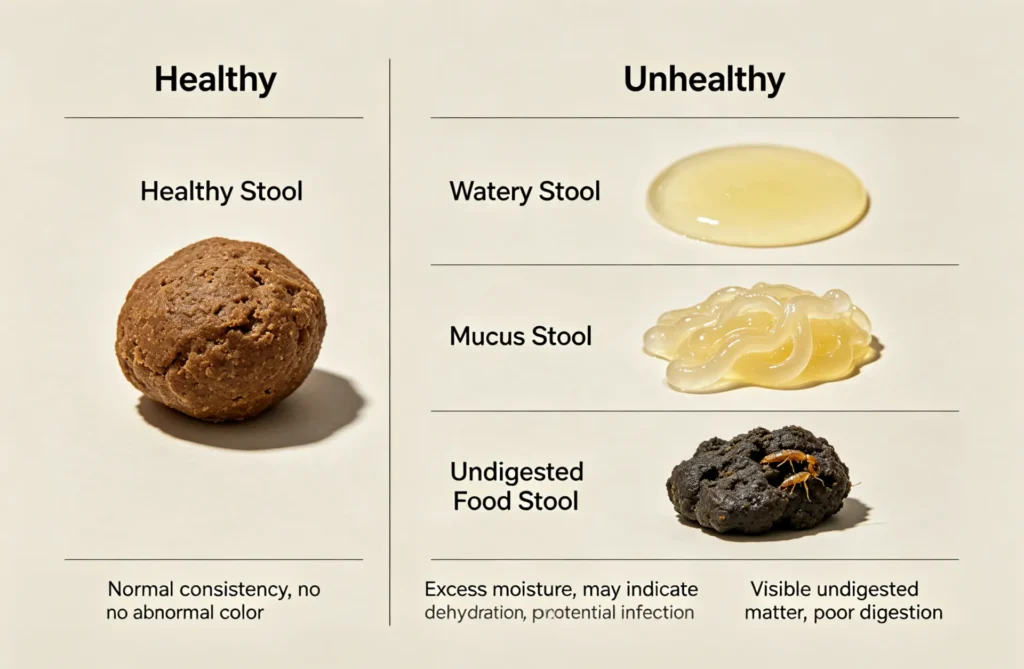
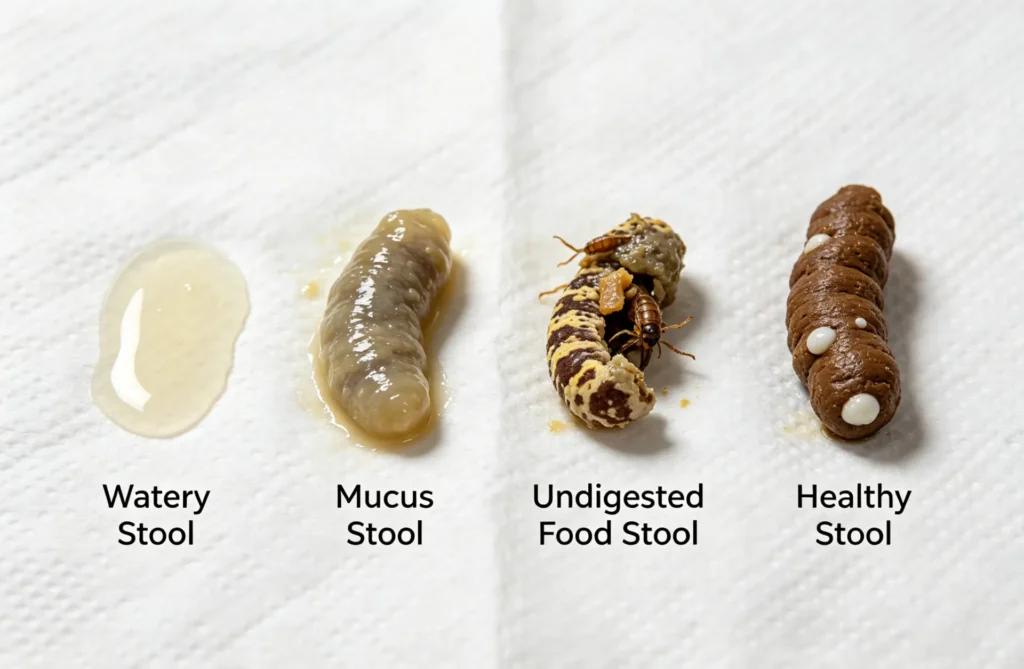
Table: Leopard Gecko Poop Consistency vs. Cause & Fix
| Poop Type | Appearance | Most Likely Cause | Immediate Fix |
|---|---|---|---|
| Watery Stool | Clear/yellow liquid, no shape, no mucus | Substrate dust irritation / Dirty water | Switch to paper towels; clean water bowl daily |
| Mucus Stool | Slimy, clear/yellow mucus coating stool | Calcium/vitamin overdose / Mild bacterial irritation | Cut supplements by 50%; add probiotics |
| Undigested Food Stool | Visible chunks of insects in stool | Overfeeding / Low enclosure temperature | Reduce feeding frequency; check basking spot temp (90-95°F) |
| Healthy Stool | Firm, log-shaped brown feces + white solid urates | N/A | Maintain current husbandry |
1. Watery Stool (Liquid, No Shape)
Cause: 90% substrate dust, 10% dirty water. No parasites, no overfeeding.
Action:
- Remove all loose substrate immediately (switch to paper towels)
- Clean water bowl and refresh water daily
- Monitor stool conditions for 2-3 days. If no improvement is seen, consult a licensed reptile veterinarian promptly.
2. Mucus Stool (Slimy Coating)
Cause: Calcium/vitamin overdose or mild gut inflammation from dust/water.
Action:
- Pause all supplements for 3 days (let gut reset)
- Resume supplements at half frequency (calcium 2x/week, multivitamin 1x/2 weeks)
- You may add reptile-safe probiotics to drinking water to gently support balanced gut flora for mild temporary upset
3. Undigested Food Stool (Visible Insect Chunks)
Cause: Overfeeding or low basking temperature (reptiles need heat to digest food!).
Action:
- Stop feeding for 2 days (gut rest)
- Check basking spot temperature—must be 90-95°F (32-35°C) (use a digital thermometer!)
- Resume feeding 2-3x/week (adults) with smaller insects
Step-by-Step Care Adjustment Plan for New Owners (Improve Mild Stool Issues in 3 Days)
Follow this simple care plan to improve mild, non-parasitic stool abnormalities. If your gecko’s stool fails to return to normal after following these steps, connect with a reptile veterinarian for professional support.
Day 1: Rule Out Red Flags & Adjust Habitat
- Check for parasite red flags (weight loss, green/bloody stool, lethargy). If none, proceed.
- Remove loose substrate (replace with paper towels).
- Clean water bowl with reptile disinfectant, add fresh water.
- Pause all supplements for 3 days.
Day 2: Monitor Stool & Check Temperatures
- Observe poop consistency—should start to firm up (less watery).
- Verify basking spot temp: 90-95°F (32-35°C); cool side: 75-80°F (24-27°C).
- If stool remains watery, discontinue self-adjustments and schedule an appointment with a licensed reptile veterinarian for professional guidance.
Day 3: Resume Care & Prevent Future Issues
- Stool should be firm (healthy consistency) by now.
- Resume supplements at half frequency (calcium 2x/week, multivitamin 1x/2 weeks).
- Keep paper towels as substrate for 1 month (no loose substrate yet).
- Maintain daily water changes and weekly enclosure cleaning.
How to Prevent Diarrhea Long-Term (Avoid Repeat Issues)
Once your gecko’s stool is healthy, follow these rules to prevent future diarrhea—they’re simple, but they work.
- Stick to solid substrates only: Paper towels, tile, or shelf liner. No sand, coconut fiber, or loose bedding ever.
- Water bowl discipline: Change water daily, clean weekly. No exceptions.
- Supplements in moderation: Follow the safe schedule—no over-dusting.
- Maintain correct temperatures: Basking spot 90-95°F (32-35°C) is non-negotiable for digestion.
- Quarantine new feeders: Avoid feeding wild-caught insects or dirty feeder insects (they carry bacteria/parasites).
- Minimize stress: Avoid frequent handling, loud noises, or enclosure changes (stress disrupts gut flora).
When To Reach Out To A Reptile Care Specialist (Don’t Ignore These Warning Signs)
Mild stool abnormalities may improve within 3 days with proper habitat adjustments. But if you see any of these red flags, visit a reptile-savvy vet immediately:
- Diarrhea lasts >5 days despite fixes
- Green, bloody, or black stool
- Weight loss, lethargy, or loss of appetite
- Visible worms in poop
- Dehydration (sunken eyes, wrinkled skin, sticky mouth)
A licensed reptile specialist will complete a fecal exam to check for parasites and suggest suitable gut support treatments if required. Don’t delay—dehydration can kill a leopard gecko in days.
Conclusion
Unusual stool conditions in leopard geckos are often caused by improper living environments or incorrect care routines rather than serious parasitic issues. Learning to observe stool texture helps you make basic care adjustments. Always consult a licensed reptile veterinarian for professional diagnosis and treatment of all health issues.
Remember: No deworming without a fecal test, no loose substrate, no over-supplementing. These three rules will keep your gecko’s gut healthy and diarrhea-free for years.
Your leopard gecko relies on you for proper care—and now you have the knowledge to keep their digestion on track. Here’s to many years of healthy, firm poops and a happy gecko!
For more personalized reptile care, temperature setup, and full habitat planning, you can use all our free tools in one place: our complete pet care tools & calculators page, including reptile checklists, environment calculators, feeding guides, and habitat setup helpers.
This content is for educational purposes only and does not substitute professional veterinary diagnosis or treatment. If you observe any symptoms of illness, injury, or abnormal behavior, please consult a qualified exotic animal veterinarian immediately.
For more details, please review our full Medical Disclaimer.