
Many leopard gecko owners struggle repeatedly with unstable physical conditions, mainly including loose stool issues and obvious leopard gecko calcium deficiency symptoms—a common hurdle also seen when navigating African Fat-Tailed Gecko vs Leopard Gecko differences for beginners. Common signs cover weak limbs, soft jaw structure, thin tail base and abnormal soft eggshells in female individuals. Many hobbyists only dust feeder bugs with store-bought calcium powder, yet their geckos still show weak bones and messy stools over time.
With decades of hands-on experience caring for pet reptiles and sharing simple daily feeding tips, I have contacted a large number of feeding failure cases. In fact, over eighty percent of leopard gecko calcium deficiency problems are not caused by insufficient calcium supplement frequency. The real core reasons lie in unbalanced calcium phosphorus ratio in daily feeder insects, blocked vitamin D3 absorption efficiency, and unscientific breeding mode of common feeding bugs. Blind calcium powder sprinkling can only solve superficial problems, and Tweaking your gecko’s daily insect mix is the most reliable long-term fix to ease signs of low calcium and cut down on loose waste. If your pet shows persistent health issues, consult a licensed reptile veterinarian for professional guidance.
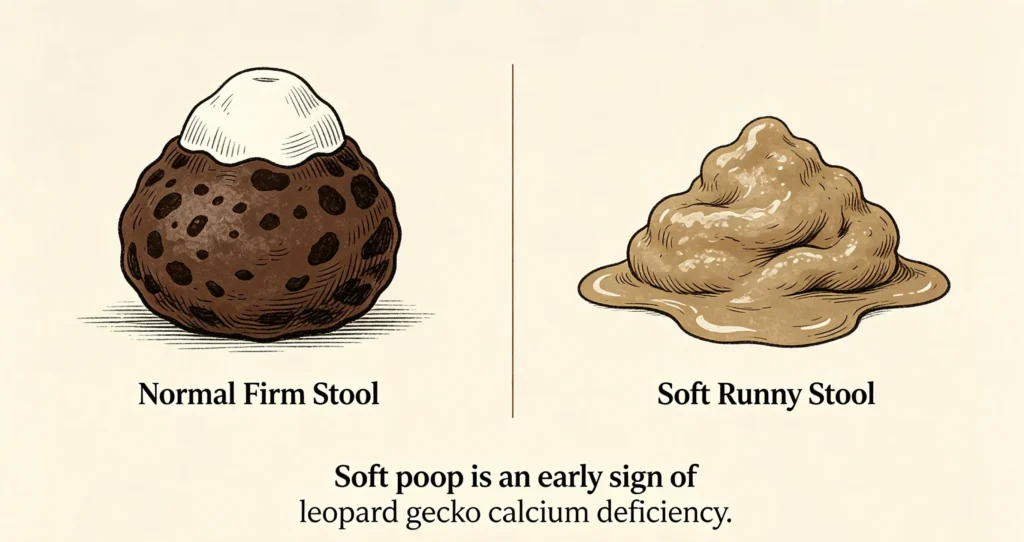
Core Principle: Calcium Phosphorus Ratio Determines Nutrient Absorption Effect
For leopard geckos, the most scientific dietary calcium phosphorus ratio is controlled at 2:1. Excess phosphorus ingredients in food will directly hinder the body’s absorption and utilization of calcium elements. Even if sufficient calcium substances are ingested externally, they will be excreted out of the body along with metabolism, which will further aggravate leopard gecko calcium deficiency and induce continuous gastrointestinal discomfort and soft stool.
Most ordinary pet shop feeder insects have extremely unreasonable internal nutrition proportion. Sticking to just one type of feeder bug for months throws off your gecko’s nutrition, slowing bone growth and upsetting their digestion. The following table sorts out the actual nutritional data of three most commonly used feeder insects for daily feeding reference.
| Feeder Insect | Calcium Content | Phosphorus Content | Ca:P Ratio | Soft Stool Risk | Daily Feeding Suggestion |
|---|---|---|---|---|---|
| Common Cricket | Low | High | 1:9 | High | Feed only after sufficient gut loading |
| Mealworm | Low | High | 1:7 | Very High | Regarded as occasional snack only |
| Dubia Roach | Moderate | Moderate | 1:1.1 | Low | Daily staple food for all age stages |
It can be clearly seen from the data that crickets and mealworms are high-risk foods that easily cause leopard gecko calcium deficiency and gastrointestinal diseases. Their hard outer skin is difficult to digest, matched with seriously imbalanced internal nutrition, which is the main inducement of repeated soft stool and slow bone development. Choosing feeder insects with balanced nutrition is the first step to improve leopard gecko calcium deficiency.
Why Single Calcium Powder Supplement Cannot Solve Leopard Gecko Calcium Deficiency
Almost every novice breeder will insist on sprinkling calcium powder before feeding, but the actual improvement effect is very limited. There are three practical reasons behind this phenomenon.
First of all, calcium powder only adheres to the surface of insects. Most of the powder will fall off during the crawling process of insects before being eaten by leopard geckos. The actual effective intake is far lower than expected, which cannot make up for the nutritional gap inside the food itself.
Secondly, most commercially raised crickets are fed with cheap single grain feed for a long time. Their own internal nutrients are extremely single, lacking trace elements and auxiliary absorption ingredients needed by reptiles. Such empty-nutrition insects cannot provide effective nutritional support even with external calcium supplementation.
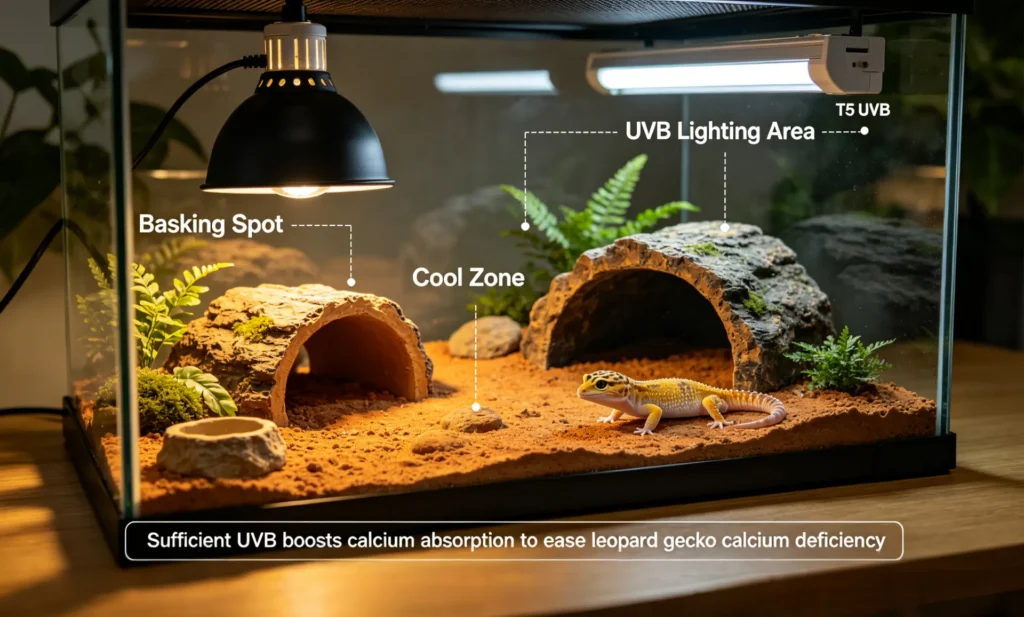
Thirdly, the absorption of calcium in leopard gecko’s body must rely on sufficient vitamin D3. Once D3 intake is insufficient, calcium cannot enter the blood circulation to act on bone growth, and all external calcium supplementation will become invalid. You can learn more about supporting calcium absorption through lighting in our guide to leopard gecko UVB bulb setup.
Continuous soft stool will accelerate the loss of nutrients in the body, forming a vicious cycle: poor digestion leads to nutrient loss, nutrient loss aggravates leopard gecko calcium deficiency, and calcium deficiency further weakens gastrointestinal activity. Breaking this cycle must start with optimizing food collocation.
Our step-by-step feeding guide covers balanced calcium and vitamin D3 dusting routines for daily use.
Scientific Matching of Daily Feeders to Relieve Leopard Gecko Calcium Deficiency
According to the physical characteristics and digestive ability of leopard geckos in different growth stages, reasonably classify and match feeder insects, and completely replace high-risk insects with nutrient-balanced varieties.
Main Staple Food (75% of Total Diet)
Dubia roach is the most suitable daily staple food. It has soft body wall, high water content, easy digestion and moderate internal calcium phosphorus proportion. Long-term stable feeding can effectively stabilize gastrointestinal state, reduce soft stool frequency, and slowly supplement basic calcium needed by the body to ease leopard gecko calcium deficiency. Black soldier fly larva is an excellent calcium-enhancing auxiliary food, with high natural calcium content, which can quickly supplement calcium elements for individuals with obvious deficiency.
Auxiliary Supplementary Food (20% of Total Diet)
Silkworm is gentle in nature, rich in water and easy to digest. It is very suitable for leopard geckos with weak intestines and stomach and poor appetite. It can adjust gastrointestinal function while supplementing nutrition. Superworm can be fed moderately to adult individuals to enrich dietary structure, but the feeding quantity must be strictly controlled.
Food Need Strictly Restricted
Common crickets and mealworms are prohibited from being used as long-term staple food. They can only be fed occasionally as taste adjustment food after full nutrition gut loading, so as to avoid aggravating leopard gecko calcium deficiency and gastrointestinal burden.
Homemade High Calcium Gut Loading Formula to Optimize Food Nutrition

Gut loading means feeding nutrient-rich composite feed to feeder insects within 24 to 48 hours before formal feeding, so that nutrients can accumulate inside the insect body, turning ordinary feeder insects into high-nutrition nutritional meals, which is the core method to thoroughly improve leopard gecko calcium deficiency.
Commercial gut loading feed has single ingredients and high selling price. This homemade formula is more targeted, which can effectively adjust the calcium phosphorus ratio inside insects and supplement vitamin D3 source substances.
Dry Mixed Base Materials
Reptile grade calcium carbonate powder, fine ground oatmeal, spirulina powder, nutritional yeast and wheat germ are mixed evenly in proportion. This formula can stably improve the internal calcium content of insects and add multiple trace elements.
Fresh Auxiliary Ingredients
Chopped high-calcium green vegetables, grated sweet potato and dandelion leaves are matched together. While increasing water content, it can supplement natural vitamins to promote subsequent calcium absorption and metabolism.
Standard Use Steps
Put the mixed dry materials and fresh vegetables into the insect breeding box together, match with water gel to avoid insects drowning, and place them in a constant temperature environment for feeding. After the insects fully ingest nutrients, take them out to feed leopard geckos within 48 hours. After scientific gut loading, the calcium phosphorus ratio of originally unbalanced insects can be adjusted to the ideal range, greatly easing visible low calcium symptoms in your leopard gecko. If your gecko’s health struggles continue, reach out to a licensed reptile veterinarian for expert advice.
Match Diet Structure With Vitamin D3 Intake
Diet adjustment can effectively alleviate leopard gecko calcium deficiency, but it needs to be matched with sufficient vitamin D3 to exert maximum effect. In addition to adding D3 auxiliary ingredients in gut loading feed, daily light environment management cannot be ignored.
Leopard geckos can synthesize vitamin D3 through qualified UVB light, so as to complete calcium absorption and bone deposition. Long-term lack of effective light will make all dietary calcium supplementation lose effect. It is suggested to arrange scientific light time and lamp distance according to growth environment, and replace aging light bulbs regularly. For detailed standardized operation, refer to leopard gecko metabolic bone disease prevention related content to avoid physical lesions caused by long-term calcium shortage.
For leopard geckos with serious loose stool symptoms, emergency dietary adjustment can be carried out within one week: stop all snacks and high-chitin insects, single feed high-quality gut-loaded dubia roaches, appropriately supplement electrolyte water to balance physical functions, and many minor digestive upset signs may grow less noticeable in a week’s time. For ongoing soft stool or poor energy, schedule a visit with a licensed reptile veterinarian right away.
Feeding Plan By Age to Avoid Leopard Gecko Calcium Deficiency
Juvenile Leopard Geckos
In the rapid growth stage, calcium demand is large, feed high-nutrition staple food every day, match low-frequency scientific calcium powder sprinkling, prioritize promoting bone development, and strictly stop feeding difficult-to-digest mealworms.
Adult Leopard Geckos
Feed at intervals of two to three days, control total feeding amount to avoid obesity affecting nutrient metabolism, maintain stable dietary nutrition collocation, and regularly adjust food types to ensure balanced intake of various elements.
Breeding Female Individuals
Increase the frequency of high-calcium feeder insects appropriately, properly increase reasonable calcium supplementation times, fully supplement calcium consumed during egg production, and avoid leopard gecko calcium deficiency leading to abnormal eggshell and physical weakness.
Practical Summary
In daily feeding process, too many breeders focus all energy on external calcium supplementation, ignoring the most fundamental food nutrition balance problem. The emergence of leopard gecko calcium deficiency is a warning signal released by the body, which represents that the long-term dietary structure has deviated from the scientific standard.
Adjusting feeder insect types, using high-efficiency homemade gut loading formula, matching reasonable light management and age-stage classified feeding plans can fundamentally balance internal nutrition, accelerate calcium absorption and utilization, not only effectively improve leopard gecko calcium deficiency, but also solve repeated soft stool and poor appetite problems.
Stable and scientific daily diet is far more effective than frequent blind calcium supplementation. Establishing a long-term standardized feeding mode can let leopard geckos maintain healthy physical state for a long time. If you need to raise feeding insects by yourself to control nutrition more accurately, you can learn detailed operations through healthy feeder insect raising method.
This content is for educational purposes only and does not substitute professional veterinary diagnosis or treatment. If you observe any symptoms of illness, injury, or abnormal behavior, please consult a qualified exotic animal veterinarian immediately.
For more details, please review our full Medical Disclaimer.