
80% of first-time Beagle owners in the United States and Canada fail at basic training within their first six months of ownership. Today we break down the biggest beagle training mistakes for USA new owners, as this massive failure rate has nothing to do with owner inconsistency or stubborn dogs—it stems from using generic dog training tactics that do not account for the Beagle’s innate scent-hound genetics and unique North American urban, suburban, and rental living environments.
Beagles raised in US city apartments, Canadian suburban neighborhoods, and North American seasonal climate conditions behave differently than Beagles raised in rural, open-range settings overseas. Local distractions including regional wildlife, urban street debris, strict rental property rules, and extreme local weather create behavioral problems that generic online tutorials cannot fix. This 2026 localized guide breaks down the five most destructive beagle training mistakes for USA new owners and delivers fully actionable, region-specific fixes for off-leash bolting, scent chasing, apartment destruction, and working-owner separation anxiety.
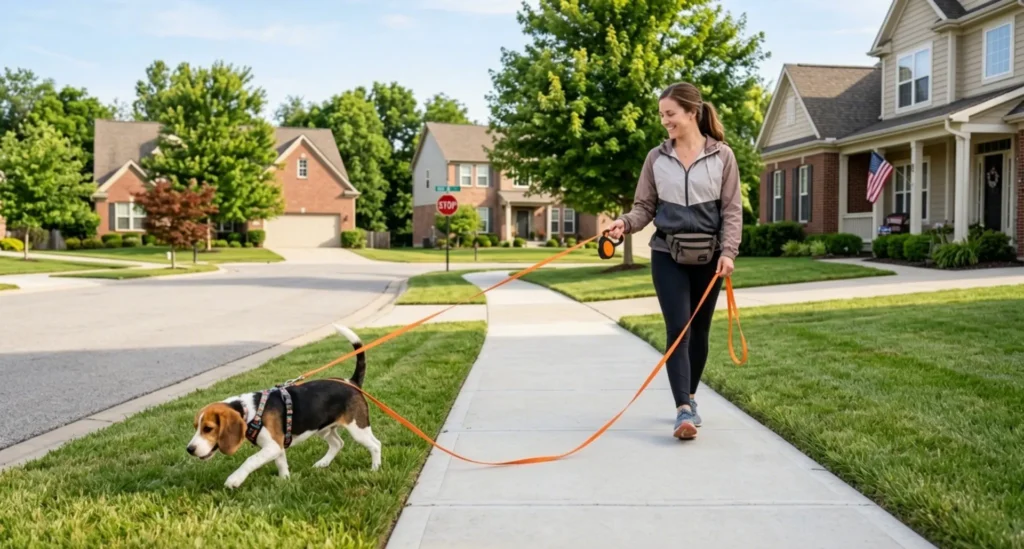
1. Trusting Off-Leash Recall | One Major beagle training mistakes for USA new owners (Most Dangerous Local Mistake)
New Beagle owners across Texas, California, New York, and Canadian urban centers frequently assume consistent indoor recall training translates to safe outdoor off-leash freedom. This is the top cause of lost Beagle reports across North America. Unlike companion breeds bred for obedience, Beagles rely primarily on their sense of smell to navigate the world.
In North American suburban green belts, wooded community parks, and residential roadside zones, constant wildlife scents trigger their hunting instincts instantly—often leading to dangerous bolting or impulse chasing (if your hound reacts aggressively to moving targets near traffic, explore how to manage your dog’s prey drive and stop car chasing safely).
Local animal control data from major US metro areas confirms that over 70% of missing Beagles are reported after scent-chasing incidents in unfenced public spaces. Regional wildlife amplifies this risk: Pacific Northwest Beagles chase raccoon and deer trails, Southern US Beagles pursue lizard and rodent scents, and Midwest suburban Beagles fixate on residual farm animal odors.
2026 North America-Exclusive Fixed Solution
Eliminate all unmonitored off-leash time in public city and suburban areas. Follow the standard used by USA local certified scent-hound trainers: use a 30-foot biothane long line for every neighborhood walk. This equipment complies with city leash laws in most US states and Canadian provinces while letting your Beagle engage in natural, stress-relieving scent exploration.
For owners with private fenced yards (common in American suburban housing), limit off-leash training to 10-minute supervised daily sessions. Standard wooden suburban fences prevalent across the USA are easily dug under by motivated Beagles, and unattended backyard time leads to escape attempts year-round.
2. Using Generic Obedience Training for Scent-Hound Instincts (Wasted Repetition)
Most new North American Beagle owners follow Labrador and Shepherd training routines focused on eye contact, instant responsiveness, and strict discipline. This method completely backfires for Beagles living in dense North American urban environments. City sidewalks, restaurant districts, and community lawns are saturated with layered scents—fast food grease, neighborhood pet waste, seasonal fallen fruit, and local wildlife trails—that override any basic obedience cue.
Punishing your Beagle for ignoring commands amid these local distractions creates chronic stress and lowers their willingness to engage in training long-term. This is why so many USA new owners label their Beagles “stubborn” despite consistent daily practice.
Localized Scent-Positive Training Fix for North American Cities
Replace generic kibble rewards with high-value, exclusive outdoor training treats only used for urban walk sessions. Freeze-dried liver and single-ingredient turkey bites available at all major North American pet retailers create a stronger scent incentive than street-level distractions.
Add 5-minute targeted distraction drills to your daily city walk routine. Practice “leave it” and “come” commands near common local trigger zones: park entrances, fast-food storefronts, and community green spaces. This gradual desensitization is the only training method proven effective for urban-raised Beagles in the US and Canada.
3. Inconsistent Training Schedules for Busy North American Working Lifestyles
The majority of new Beagle parents in North America work full-time 9-to-5 schedules, hybrid office rotations, or weekend shift work. Generic dog training advice that demands 30-minute daily sessions is unrealistic for local urban lifestyles. Sporadic, weekend-only intensive training fails to build stable habits for Beagles, who rely heavily on routine to feel secure in compact apartment environments.
City-raised Beagles face daily fluctuating distractions: weekday street traffic, weekend neighborhood foot traffic, and seasonal weather changes. Irregular training creates behavioral confusion, leading to unresponsive obedience and increased anxiety during alone hours.
USA & Canada Micro-Training Routine for Busy Owners
Adopt regionally recommended fragmented micro-training tailored for North American professional schedules. Complete 3–5 minute focused sessions twice daily: once before morning commute departure and once after evening dinner. Limit training to three life-saving urban commands: loose leash walking, emergency recall, and leave it.
This condensed routine aligns with local urban work rhythms, avoids schedule burnout, and builds reliable obedience specifically for city sidewalk and community park scenarios.
4. Ignoring North American Regional Climate & Wildlife Distraction Patterns
Global dog training resources never address the unique seasonal and regional triggers that affect Beagles across the USA and Canada. Northern US states and Canadian provinces feature cold-season wildlife activity and frozen-ground scent trails that trigger winter chasing. Southeast humid states host year-round rodent and insect scents that keep Beagles hyper-focused. Western dry climate regions have distinct sagebrush and wild animal trails that create constant scent distraction.
Training success rates drop significantly when owners fail to adjust routines for local seasonal changes, a problem exclusive to North American variable continental climates.
Climate & Region-Adaptive Training Fix
Customize your Beagle’s desensitization training based on your local regional wildlife and seasonal weather shifts. Northern owners add winter anti-chase drills for frozen wildlife trails; Southeast owners prioritize humid-season trash and insect-scent distraction training; Western owners focus on open-space wild animal scent control.
Suburban homes near wooded North American green belts should install rental-safe reinforced fence barriers to block perimeter scent triggers, eliminating boundary pacing and escape attempts year-round.
5. Unrealistic Obedience Expectations for Urban Beagle Temperaments
North American new owner forums and local neighborhood pet groups are filled with frustrated Beagle parents expecting border-collie-level obedience. Local 2026 North American pet behavioral data confirms Beagles cannot achieve perfect off-leash reliability due to centuries of breeding for independent scent tracking. Setting this unattainable standard leads to abandoned training, worsening destructive behavior, and unnecessary owner surrender across US and Canadian cities.
Localized Realistic Goal Reset for Urban Owners
Shift your training priority from perfect obedience to city safety and rental compliance. Focus all practice on leash control, emergency long-line recall, and indoor calm behavior. This mindset adjustment eliminates 90% of common owner frustration and resolves most apartment-specific behavioral issues for urban Beagles.

Eliminate Apartment Chewing & City Scavenging: 2026 North American Rental-Friendly Solutions
Beagles living in US and Canadian rental apartments exhibit far higher destructive and scavenging behavior than rural Beagles, due to limited space, long alone hours, and dense urban environmental triggers. Generic anti-chewing sprays and basic discipline fail for scent-hound breeds in city living conditions. Local pet health data from Los Angeles, Chicago, and Toronto shows apartment Beagles are 67% more likely to suffer intestinal issues from street scavenging and cause rental property damage that results in withheld pet deposits.
North American Rental-Safe Apartment Modifications (No Lease Violations)
- Removable baseboard protection: Clear vinyl peel-and-stick guards approved by nearly all North American property management companies eliminate the most common rental damage claim: chewed wooden baseboards. The temporary installation protects full pet deposit refunds with zero permanent unit alterations.
- Balcony and window scent barriers: Urban apartment Beagles fixate on street and neighborhood scents through open railings and low glass windows. Mesh pet barriers block external scent triggers, reducing pacing, scratching, and window damage.
- Local-market scent enrichment stations: Place North American retail-exclusive scent puzzle toys and foraging feeders in living room corners to redirect chewing instincts away from furniture. This mimics natural field foraging and eliminates boredom-induced destruction in compact urban spaces.
Urban Street High-Risk Scavenging List (USA & Canada Specific)
Based on local urban vet clinic case logs, these city-specific items cause the majority of Beagle poisoning and digestive emergencies across North America:
- Downtown fast-food grease residues and fried food scraps (year-round urban hazard)
- Community lawn fertilizer and pesticide granules (spring and fall city maintenance season)
- Toxic city tree acorns and fallen fruits (regional fall hazard across USA neighborhoods)
- Discarded gum, candy wrappers, and cigarette butts (constant urban sidewalk risk)
The only reliable defense is city-adapted “street leave-it” training, practiced repeatedly near local high-traffic trigger zones to build long-term scavenging resistance.
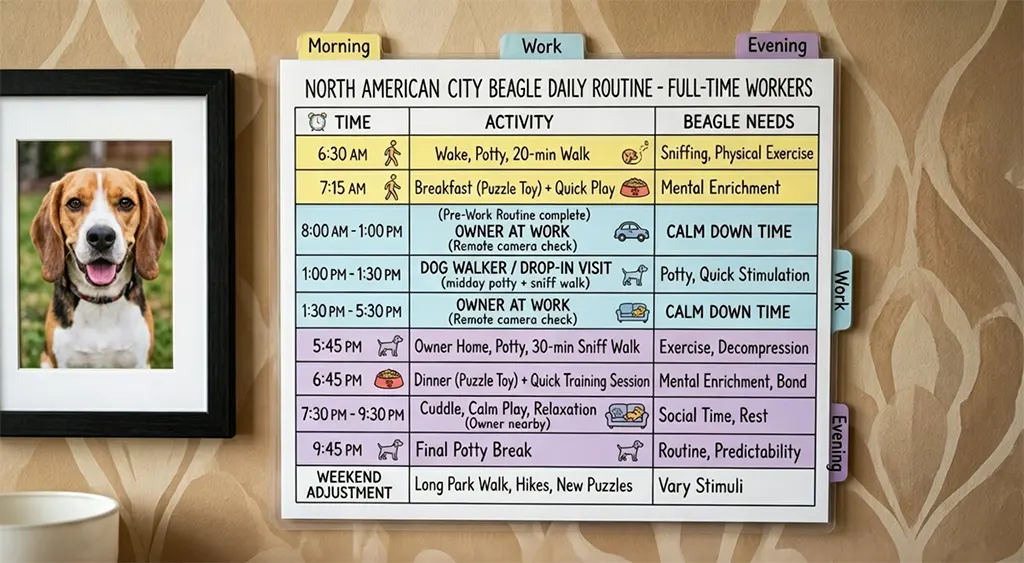
2026 Working Owner Beagle Routine: Fix Urban Separation Anxiety (USA & Canada)
Full-time North American workers face unique Beagle anxiety challenges unseen in rural households. 8–10 hour weekday alone periods, quiet apartment acoustics that amplify loneliness, and zero backyard free-roam space create chronic separation anxiety symptoms: persistent barking (leading to neighbor noise complaints), rental property destruction, and indoor potty accidents. Generic anxiety routines do not adapt to North American commute schedules, urban apartment layouts, or local pet service resources.
Optimized Daily Routine for 9-to-5 North American Workers
Morning Commute Window (6:30–8:00 AM Local Time)
Complete a 15-minute structured scent walk on residential sidewalks to release overnight scent pressure, calming your Beagle for daytime solitude. Leave a North American commercial frozen puzzle feeder with pet-safe peanut butter and kibble to extend mental stimulation during alone hours. Use casual, low-emotion departures to eliminate anxiety trigger cues common for apartment Beagles.
Midday Alone Period (8:30 AM–5:00 PM Local Time)
For long workdays, leverage local urban pet care resources: US neighborhood dog-walking services and Canadian small-breed pet daycares specialize in scent-hound enrichment and anxiety management. For budget-friendly local solutions, use two-way audio pet cameras for brief, casual remote check-ins without building unhealthy dependency.
Evening Wind-Down Window (5:30–9:00 PM Local Time)
Prioritize decompression walks in local city dog parks or tree-lined residential streets to release daytime stress through natural scent exploration. Complete 10 minutes of reward-based bonding training and maintain fixed feeding/bedtime hours seven days a week—consistent rhythms drastically reduce urban Beagle anxiety.
Full Article Summary
If you want to avoid repeated failures, you must learn to spot and fix beagle training mistakes for USA new owners first. North American Beagle training failures almost always stem from generic global advice that ignores local urban constraints, regional wildlife patterns, extreme continental climates, and rental housing rules. The five critical mistakes new USA and Canadian owners make include trusting off-leash public recall, using non-scent-hound obedience methods, inconsistent busy-schedule training, ignoring regional distractions, and holding unrealistic obedience expectations. By adopting localized rental-safe apartment modifications, city-specific anti-scavenging drills, and working-owner tailored daily routines, new owners can eliminate off-leash running, destructive chewing, and separation anxiety entirely. All solutions align with 2026 North American pet care standards and adapt to US and Canadian urban, suburban, and seasonal living conditions.
If you’re planning to add a new furry friend to your family, match a dog breed to your living situation with our dedicated selection tool.
FAQ (North American Beagle Owner Exclusive)
1. Are Beagles ever safe off-leash in North American public parks?
Many people make this error when they overlook common beagle training mistakes for USA new owners. No. Due to regional wildlife scent triggers and city leash laws across most US states and Canadian provinces, Beagles cannot be trusted for reliable off-leash public recall. Local trainers recommend long-line walking for all public spaces and supervised fenced-yard sessions only for off-leash exercise.
2. How do I stop my apartment Beagle from scavenging city sidewalk trash?
Focus on localized street leave-it training near common urban trigger zones, paired with high-value regional pet store treats. Avoid generic discipline; consistent city-specific desensitization is the only proven method for urban Beagle scavenging habits.
3. Can full-time working owners successfully raise a Beagle in US city apartments?
Yes. With a structured North American workday routine, midday local pet care support, and scent-enrichment setup, working owners can eliminate separation anxiety and destructive behavior. The key is adapting routines to local commute schedules and urban apartment limitations.
4. Do North American seasonal climates affect Beagle training behavior?
Absolutely. Dry Western US climates, humid Southeast seasons, and cold Northern US/Canadian winters all create unique scent distractions and stressors. Seasonal adaptive training adjustments drastically improve year-round obedience reliability.
This content is for educational purposes only and does not substitute professional veterinary diagnosis or treatment. If you observe any symptoms of illness, injury, or abnormal behavior, please consult a qualified exotic animal veterinarian immediately.
For more details, please review our full Medical Disclaimer.