
budgett’s frog care fails north america are the leading cause of sudden pet loss for new keepers. Countless new Budgett’s frog owners across the United States and Canada follow generic online care guides perfectly, only to lose their healthy pet to sudden, unexplained death. There are no obvious warning signs—no prolonged lethargy, no visible skin rot, no refusal to eat. One day the frog is active and feeding normally, and the next it passes away overnight. Both Budgett frogs and Pacman frogs are famous for biting, and poor handling often leads to serious wounds — see our guide on Pacman frog teeth bite for handling and prevention.
After years of troubleshooting household amphibian cases across North America, these tragic losses almost never link to poor genetics or rare diseases. They tie exclusively to the common budgett’s frog care fails north america that stem from region-specific living conditions unique to US and Canadian indoor environments. Generic global frog care content does not account for North American municipal water treatment, extreme regional seasonal weather, forced-air HVAC systems, small urban rental enclosures, and local pet store product pitfalls.
This guide breaks down the 5 deadliest, most overlooked budgett’s frog care fails north america for North American keepers in 2026. Every solution is tailored specifically for US west coast dry climates, southern humid states, northern cold regions, and urban rental homes—no generic global amphibian advice, only actionable local fixes that eliminate silent fatal risks.
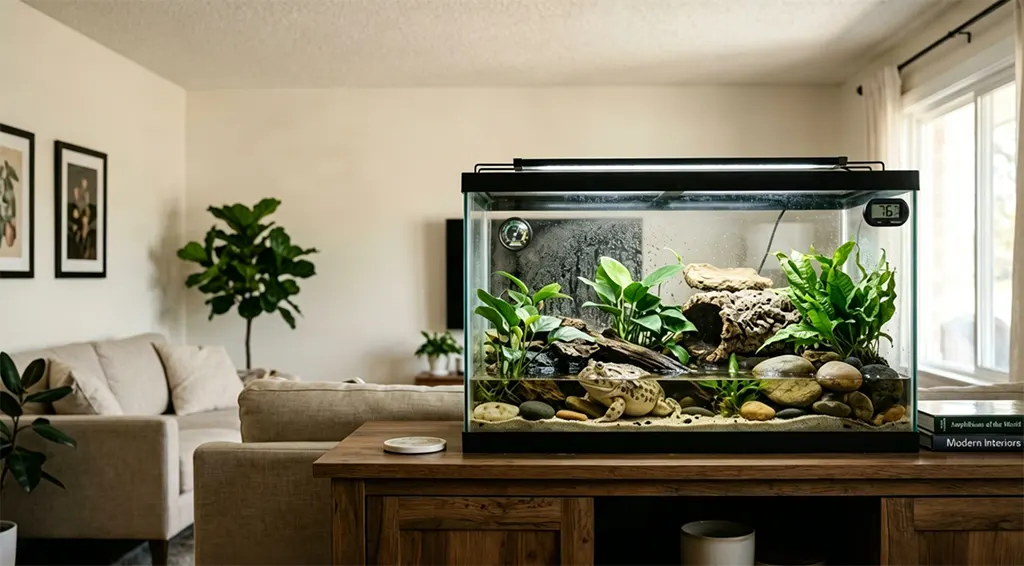
1. Untreated North American Municipal Tap Water | Key budgett’s frog care fails north america (Top Silent Killer for US & Canadian Frogs)
The number one cause of sudden Budgett’s frog death in North American households is consistent exposure to untreated local tap water, and this ranks high among budgett’s frog care fails north america. Unlike water sources in other countries, nearly every US state and Canadian province uses chloramine alongside chlorine for public water disinfection, a chemical combination that generic frog guides completely fail to address.
A widespread local keeper myth across North America is that letting tap water sit for 24 hours makes it safe for amphibians. This only dissipates chlorine. Chloramine remains intact indefinitely in all North American municipal water systems. Budgett’s frogs absorb toxins directly through their porous skin, and low-dose daily chloramine exposure causes gradual liver and kidney damage with zero visible symptoms. Most owners never notice issues until total organ failure triggers sudden death. If you notice unusual changes in your frog’s health at any point, reach out to a licensed amphibian vet for professional guidance.
Regional water hazards amplify this risk across different parts of North America. Southwest US states including Arizona, Nevada, and Southern California have extremely hard tap water with excess mineral deposits that irritate frog skin and disrupt electrolyte balance. Northern US states and Canadian provinces add extra water treatments during cold winter months, increasing chemical toxicity. Rural well water across the Midwest often contains untested iron and bacteria that weaken frog immune systems over time.
Fixing water quality issues is the first step to resolve these budgett’s frog care fails north america.
North America-Exclusive Fixes
- Always use chloramine-specific conditioner: Only rely on amphibian-safe conditioners sold at US national pet chains, formulated for North American municipal water formulas. Standard fish water conditioners do not neutralize chloramine fully.
- Seasonal water testing: Test tank water monthly, especially in spring and fall when US cities update public water treatment protocols for seasonal bacteria control.
- Rural well water backup solution: Skip raw well water entirely. Use US-sourced spring water for partial water changes; never use distilled water, which strips essential minerals critical for captive frog health in indoor settings.
- Regional water change schedule: 25% weekly water changes for dry west coast homes (faster mineral buildup); 20% weekly changes for humid southern states (slower chemical concentration).
2. HVAC Temperature Cycling | Common budgett’s frog care fails north america (US Seasonal Heating & AC Fatal Fluctuations)
North American homes rely entirely on forced-air central heating and air conditioning systems that create extreme, rapid temperature swings unseen in most global households. This regional housing feature is one of the most dangerous budgett’s frog care fails north america and the second leading cause of sudden Budgett’s frog death for US and Canadian keepers.
Budgett’s frogs require stable, consistent temperatures between 75–80°F to maintain healthy metabolism and cardiac function. North American seasonal HVAC cycles destroy this stability. In northern US and Canadian winters, furnace systems blast hot, dry air in 4–6 hour cycles, spiking tank temperatures by 7–10°F before dropping sharply when the furnace shuts off. In southern states like Florida, Texas, and Louisiana, nonstop summer AC cycling drops tank temperatures below 70°F overnight, creating cold shock.
West coast dry climate heating compounds the issue further. Winter indoor heating strips ambient humidity down to 20–30%, drying out frog respiratory tracts while temperature swings damage internal organs. These stressors are cumulative and asymptomatic for months. Frogs continue eating and moving normally until a single extreme temperature cycle triggers sudden cardiac failure.
Use these climate tips to correct temperature-related budgett’s frog care fails north america.
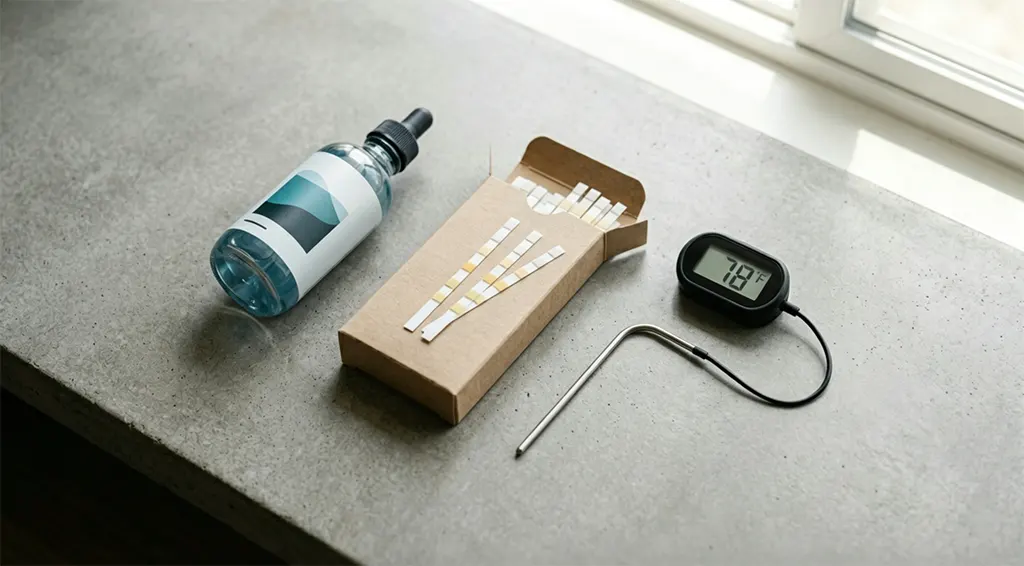
Climate-Specific Seasonal Fixes for North America
- Universal tank placement rule: Keep all frog tanks a minimum of 3 feet away from HVAC vents, exterior windows, and entry doors— the biggest sources of seasonal temperature drafts in US homes.
- Northern US & Canada winter setup: Pair heating mats with a digital thermostat to lock steady temperatures; add tank insulation foam on exterior-facing tank sides to block cold winter wall drafts.
- Southern US summer setup: Elevate tanks off cold tile floors common in southern rentals; avoid overnight AC thermostat drops below 72°F to prevent cold shock.
- West coast dry climate adjustment: Add quiet ultrasonic humidifiers near enclosures during heating season to maintain 60–70% humidity, preventing skin and respiratory dehydration.
3. Rental-Friendly Improper Water/Land Ratio (Urban US Apartment Tank Mistake)
90% of Budgett’s frog keepers in US urban cities and rental apartments make a lethal enclosure layout mistake unseen in outdoor global setups: overfilling tank water with insufficient dry land space. New keepers mistakenly classify Budgett’s frogs as fully aquatic, so they prioritize water volume over dry basking areas to fit small rental-friendly tank sizes.
North American indoor room temperatures stay consistently warm year-round, which accelerates bacterial and fungal growth in stagnant tank water. When Budgett’s frogs cannot fully exit water to dry their skin daily, they develop subclinical bacterial infections and skin compromise. these hidden infections spread to internal organs, causing sudden death with no prior visible symptoms. If your frog acts abnormally, schedule a visit with a licensed amphibian vet right away.
This mistake is epidemic in high-density US cities including New York, Chicago, Los Angeles, and Toronto, where renters use compact desktop tanks to comply with apartment space limits and landlord pet rules. Generic care guides recommend flexible water/land ratios, but they do not account for warm, stagnant North American indoor air that supercharges pathogen growth. (If tight apartment space makes managing delicate aquatic setups too demanding, check our blue-tongued skink selection and breed decision blueprint for hardier terrestrial exotic pet alternatives.)
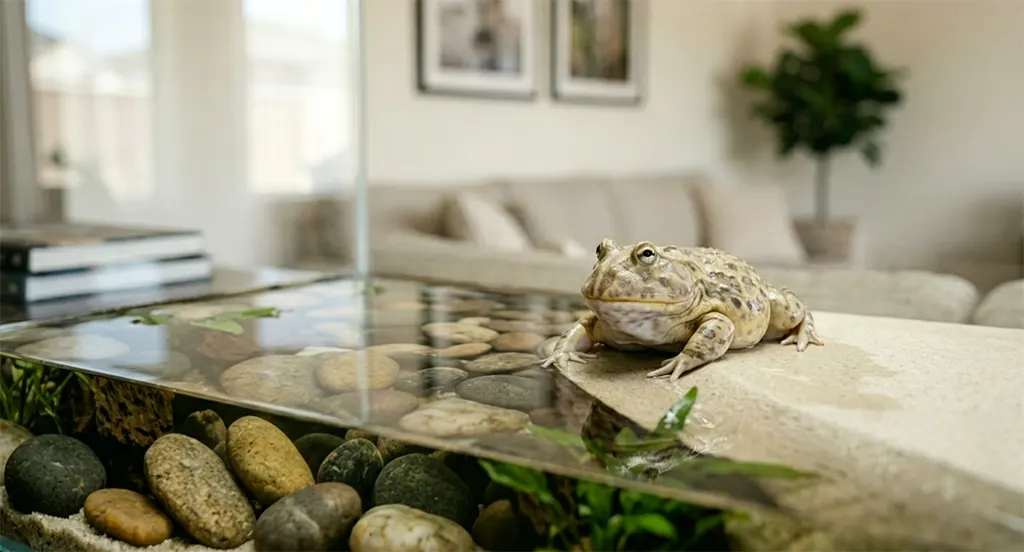
US Rental & Urban Home Exclusive Fixes
- Strict 60/40 tank ratio for US indoor homes: 60% shallow water (max depth twice the frog’s body height) and 40% non-porous dry land—eliminates constant skin saturation and bacterial buildup.
- Renter-safe decor choices: Skip porous natural wood and soil decor that traps bacteria in warm indoor air. Use smooth ceramic and plastic decor available at all US major pet stores for easy weekly sanitization.
- Urban maintenance schedule: Daily spot cleaning of uneaten prey and waste (critical for warm city indoor temperatures); full 3-week deep cleans with conditioned water only (no household cleaners allowed).
4. North American Pet Store Feeding Pitfalls (Overfeeding & Parasitic Prey Risks)
US and Canadian Budgett’s frog keepers follow unique feeding routines rooted in local pet store marketing and household habits that create silent fatal health issues. Two regional feeding mistakes account for massive rates of fatty liver disease and parasitic death in captive North American Budgett’s frogs.
First, most North American pet owners default to daily feeding habits for cats and dogs, incorrectly applying this routine to frogs. Budgett’s frogs have extremely slow metabolisms, and warm year-round US indoor temperatures speed up nutrient absorption. Daily feeding causes rapid, silent obesity and fatty liver degeneration. Affected frogs remain active and hungry, so owners never detect illness until organ failure occurs.
Second, bulk feeder insects and fish sold at mainstream North American pet chains carry region-specific parasite loads. Mass-produced feeder stock for the US market has high internal parasite rates that build up in captive frog bodies over months. Additionally, suburban and rural North American keepers often feed wild-caught backyard insects contaminated with lawn pesticides and herbicides widely used in US residential neighborhoods.
Localized Feeding Rules for US & Canadian Keepers
- US household feeding schedule: Adult Budgett’s frogs only 2–3 meals weekly; juveniles 4 meals weekly. All portions must be smaller than the frog’s head to prevent overconsumption in warm indoor temperatures.
- Pet store prey quarantine rule: Quarantine all bulk crickets, mealworms, and feeder fish from US pet stores for 3–4 days before feeding to eliminate parasite exposure risks.
- No wild backyard prey: Strictly avoid all outdoor-caught insects in US residential areas—lawn treatment chemicals are toxic to amphibian organ systems.
- Monthly body condition check: Track belly fat accumulation; flat post-digestive bellies are healthy, while rounded persistent bellies require immediate portion reduction.
5. Chronic Stress From Typical North American Household Living Conditions
Modern North American home layouts—busy open-concept living rooms, high-traffic apartments, late-night artificial lighting, and loud HVAC systems—create chronic unrelenting stress for Budgett’s frogs that generic care guides completely ignore.
Budgett’s frogs are solitary, nocturnal ambush species that require dim, quiet, stable environments to maintain immune function. Most US families place frog tanks in living rooms near TVs, gaming consoles, and high-foot-traffic hallways. Constant movement, artificial light pollution, and low-frequency HVAC noise elevate frog cortisol levels long-term.
This chronic stress suppresses immune function and slowly damages internal organs. Frogs hide more often but continue feeding normally, leaving owners unaware of declining health. After months of cumulative stress, minor environmental changes trigger sudden fatal organ shutdown. This issue is exponentially worse for small urban apartments and college dorms across North America with limited quiet space.
North American Home & Dorm Stress Reduction Fixes
- Optimal tank placement: Relocate enclosures to spare bedrooms or home offices, away from open-concept living areas and entertainment systems standard in US home design.
- Local light cycle alignment: Match tank lighting to your US state or Canadian province’s natural sunrise and sunset to avoid seasonal light disruption.
- Multi-hide setup for small spaces: Install 2–3 enclosed water and land hides for apartment/dorm setups to give frogs constant safe retreat options.
- Minimize handling: Eliminate unnecessary handling—a common affectionate habit among North American pet owners that amplifies chronic stress.
Full 2026 North American Budgett’s Frog Safety Checklist
Use this region-specific checklist to eliminate all silent fatal care failures and fix every budgett’s frog care fails north america in your US or Canadian home, and confirm all your reptile enclosure setup equipment meets North American indoor keeping standards:
- All tank water treated for North American chloramine and seasonal water treatment chemicals
- Tank positioned away from HVAC vents, exterior walls, and direct seasonal sunlight
- Thermostat-locked temperatures between 75–80°F with no seasonal cycling fluctuations
- Enclosure follows 60/40 water/land ratio optimized for North American indoor warmth
- Feeding schedule aligned with US indoor ambient temperature metabolic rates
- Low-stress tank placement matching North American household activity patterns
Frequently Asked Questions (North American Keeper Specific)
Why do Budgett’s frogs die suddenly in US homes but not in outdoor global setups?
US and Canadian indoor environments create unique stressors: chloramine-treated municipal tap water, extreme HVAC temperature cycling, year-round warm indoor bacterial growth, and constant household light/noise pollution. These regional factors do not exist in outdoor tropical enclosures, leading to far higher sudden death rates for North American captive frogs.
Is tap water ever safe for Budgett’s frogs in North America?
No untreated tap water across any US state or Canadian province is safe. Only fully conditioned water that neutralizes both chlorine and chloramine works for long-term frog care. Letting water sit out does not make North American tap water amphibian-safe.
How do I adjust frog care for my regional North American climate?
Dry west coast states require extra humidification and frequent mineral monitoring; humid southern US states need enhanced ventilation and mold prevention; northern US/Canadian regions require strict temperature locking and winter insulation to block furnace cycling damage.
Can apartment dwellers safely keep Budgett’s frogs long-term in the US?
Yes. By following the 60/40 enclosure rule, low-traffic tank placement, renter-safe easy-clean decor, and seasonal climate adjustments, urban US renters can maintain fully healthy, low-stress Budgett’s frog habitats compliant with standard apartment living conditions.
This content is for educational purposes only and does not substitute professional veterinary diagnosis or treatment. If you observe any symptoms of illness, injury, or abnormal behavior, please consult a qualified exotic animal veterinarian immediately.
For more details, please review our full Medical Disclaimer.
Pingback: Dangerous Pacman Frog Teeth Bite Mistakes: 6 Critical Errors For California New Owners (2026 Updated)