
Most eastern US blue-tongue skink owners run into the same seasonal crisis every year. Their pets lose appetite during spring temperature swings, develop mild bloating in humid summer days, or gain unexpected weight in dry winter heating months. The biggest recurring question on Reddit reptile groups and local exotic pet keeper forums remains unchanged: can blue tongued skinks eat dog food safely as a regular protein source?
Many new keepers flip between two extreme routines. Some feed pure insects daily, causing calcium deficiency and nutrient imbalance. Others rely solely on random dog food, leading to fatty liver and kidney strain. After reviewing 2026 updated reptile nutritional standards and eastern US seasonal breeding cases, we confirm that high-quality dog food is a safe, convenient protein staple for blue-tongued skinks—only when paired with the exact 50/40/10 golden diet ratio and regional seasonal adjustments.
This guide breaks down every actionable rule to answer can blue tongued skinks eat dog food for eastern US keepers. No generic reptile diet theories, only seasonal problem fixes, dog food selection criteria, and localized feeding schedules adapted to dramatic four-season temperature and humidity changes. Before tweaking diet, confirm which subspecies you keep — Australian and Indonesian blue-tongued skinks differ sharply on temperature and humidity needs. See our guide on the Australian vs Indonesian blue-tongued skink for identification. (If you are still evaluating different Australian lizard species for your home, check our breakdown on Rankins Dragon vs Central Bearded Dragon to compare care needs and size differences before buying.)
Can Blue Tongued Skinks Eat Dog Food: The 50/40/10 Golden Diet Ratio
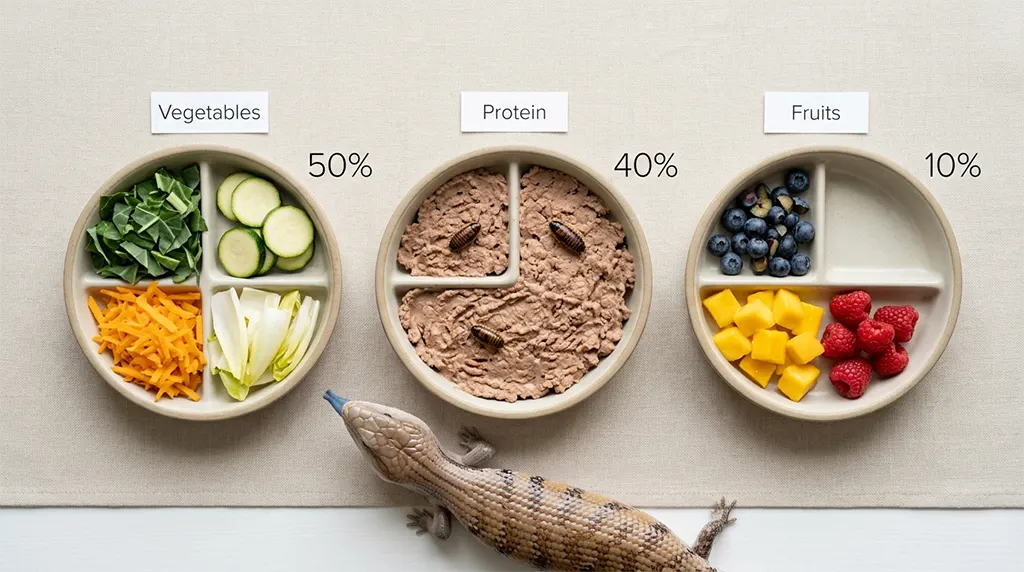
Blue-tongued skinks are opportunistic omnivores. Their wild diet consists of leafy greens, seasonal fruits, small insects, and occasional carrion. Captive feeding must replicate this balanced nutrient structure to avoid common eastern US seasonal illnesses. Local exotic clinics report that 70% of diet-related skink health issues, including mistakes when owners test can blue tongued skinks eat dog food, stem from unbalanced food proportions rather than improper single food choices.
Follow this non-negotiable structured ratio for all adult and sub-adult blue-tongued skinks (3 months+):
- 50% Vegetables & Leafy Greens (Core Fiber & Vitamins): Supports digestion, prevents constipation from high-protein dog food meals, and supplements essential minerals. Eastern US keepers need to adjust vegetable types seasonally to adapt to local humidity changes.
- 40% Protein (Dog Food + Insect Rotation): Premium low-fat dog food serves as the stable base protein, while dubia roaches, crickets, and mealworms add dietary diversity. This combination avoids the single-protein fatigue that causes spring appetite loss.
- 10% Fruits (Strict Treat Portion): High-sugar fruits are limited to 10% maximum. Eastern summer high humidity amplifies sugar fermentation risks, making over-feeding fruits the top cause of summer diarrhea in local skinks.
Juvenile skinks (0–3 months) require a temporary adjusted ratio: 40% vegetables, 50% protein (higher-protein puppy food or occasional cat food), 10% fruits to support rapid bone and muscle growth.
Can Blue Tongued Skinks Eat Dog Food Long-Term? Safety & Nutrition Breakdown
The short answer to can blue tongued skinks eat dog food is yes — but only specific formulas, never generic supermarket brands. Low-quality dog food is the hidden culprit behind most eastern US keeper feeding failures.
According to 2026 PetMD and international reptile nutritional guidelines, premium grain-free, low-fat canned or dry dog food contains balanced animal protein, fat, and trace minerals that perfectly match captive skinks’ metabolic needs. Unlike insect-only diets that lack calcium and fiber, qualified dog food provides stable daily nutrition.
However, clinic data from eastern US exotic pet hospitals shows clear risk boundaries. Skinks fed high-fat, grain-heavy, artificial-preservative dog food may develop fatty liver disease and chronic indigestion within 3–6 months. Always consult a licensed veterinarian for any pet health concerns. Dry-only dog food diets also cause severe dehydration during winter indoor heating seasons, a regional exclusive issue for eastern US keepers.
Safe Dog Food Selection Rules if Can Blue Tongued Skinks Eat Dog Food (Eastern US Keepers)
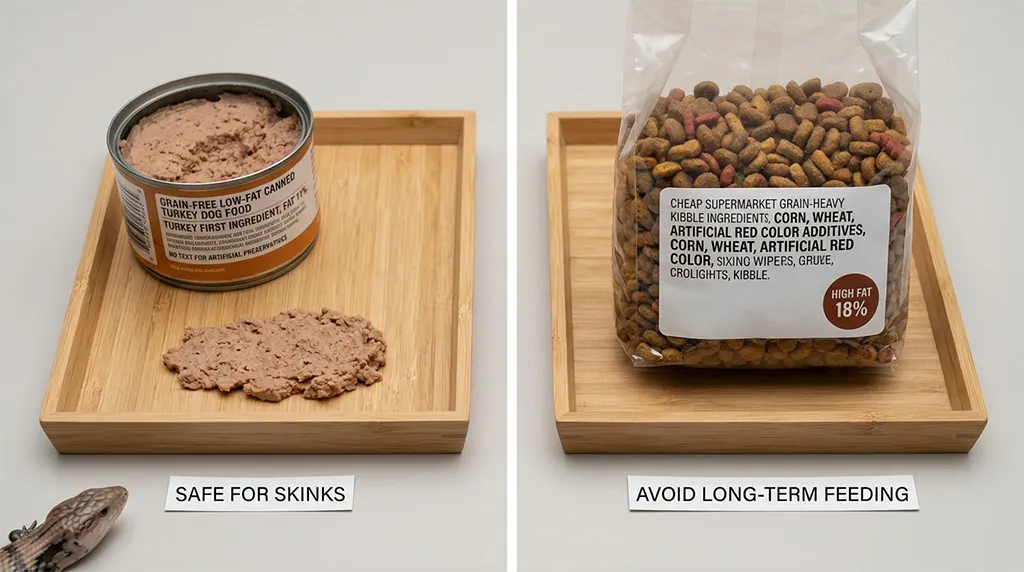
- First ingredient must be real animal protein: Chicken, turkey, or lamb as the primary ingredient. Avoid brands with corn, wheat, or soy listed first.
- Strict low-fat standard: Fat content below 12%. Eastern indoor heating reduces pet activity, making high-fat formulas extremely prone to causing obesity.
- No artificial additives: Skip dog food with artificial colors, flavor enhancers, and chemical preservatives, which trigger long-term immune decline in skinks.
- Canned + dry seasonal rotation: Use high-moisture canned dog food in dry winter heating months, and switch to portion-controlled dry dog food in humid summer months to prevent mold and digestive damp-heat issues.
Eastern US Four-Season Feeding Failures & Fixes When Can Blue Tongued Skinks Eat Dog Food
Most online generic diet guides ignore regional climate differences. Eastern US features extreme seasonal contrast: sudden spring temperature swings, hot humid summers, dry heated winters, and cool autumn transitions. These changes directly affect skink digestion, appetite, and nutrient absorption—making universal feeding schedules ineffective. (Managing seasonal parameters is critical for all American keepers; explore our guide on jeweled lacerta home and climate risks to see how local indoor environments impact other popular lizard species.)
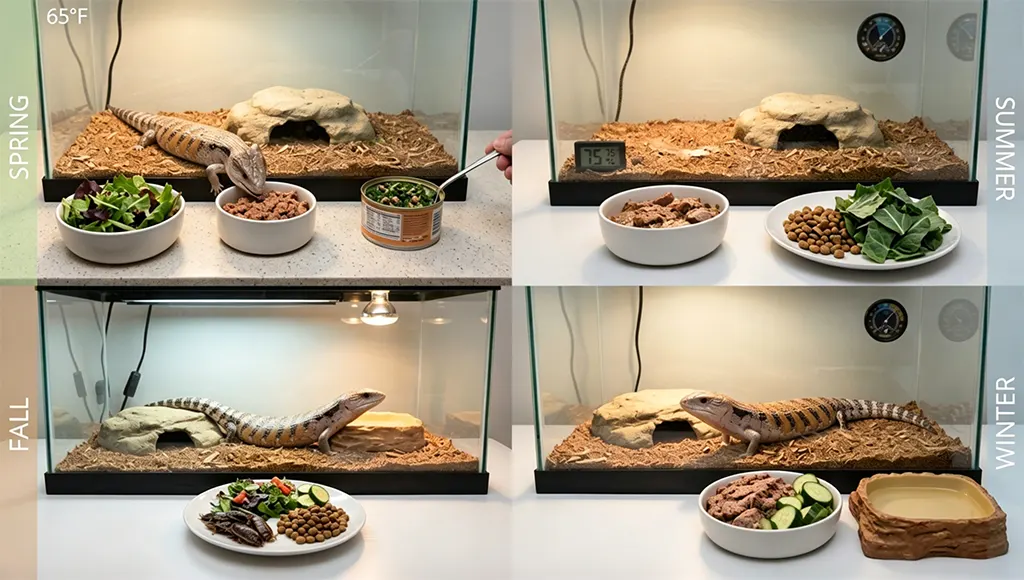
Spring (March–May): Temperature Swing Appetite Loss
Eastern US spring weather brings frequent 20°F+ day-night temperature differences. Skinks’ digestive enzymes become unstable, leading to partial appetite loss and selective eating (only eating dog food, refusing vegetables).
Seasonal Fix: Slightly increase canned dog food proportion (max 45% protein), chop vegetables into fine strips mixed with food to force balanced intake. Add 1 small mealworm serving per week to stimulate appetite. Avoid cold feeder insects that irritate weak spring gut function.
Summer (June–August): High Humidity Bloating & Diarrhea
Eastern coastal and inland summer humidity often exceeds 70%. High-moisture dog food plus excess fruit causes intestinal fermentation, bloating, and loose stools— the top seasonal illness for local skinks.
Seasonal Fix: Switch 70% of dog food servings to low-moisture dry formulas. Strictly cap fruit portions to below 8%. Increase high-fiber vegetables like collard greens and squash to accelerate intestinal peristalsis. Remove uneaten wet dog food within 2 hours to prevent mold growth in humid air.
Fall (September–November): Best Nutrient Accumulation Window
Eastern fall features mild temperature and stable humidity, the only season with zero climate-induced digestive stress. This is the optimal period for nutritional reserve buildup.
Seasonal Fix: Fully implement the standard 50/40/10 ratio. Rotate dog food with dubia roaches twice weekly to enrich nutrient diversity. Maintain regular calcium and multivitamin supplementation to prepare for winter low-activity metabolism.
Winter (December–February): Indoor Heating Dehydration & Constipation
Eastern US indoor heating drops ambient humidity below 30%. Dry dog food-only diets cause severe gut dryness, leading to hard stool and feeding refusal. Low winter temperatures also slow metabolism, making skinks prone to fat accumulation.
Seasonal Fix: Replace 60% of dry dog food with canned high-moisture formulas. Reduce overall feeding frequency by 20%. Add water-rich vegetables like cucumber and zucchini to the vegetable portion to replenish body moisture.
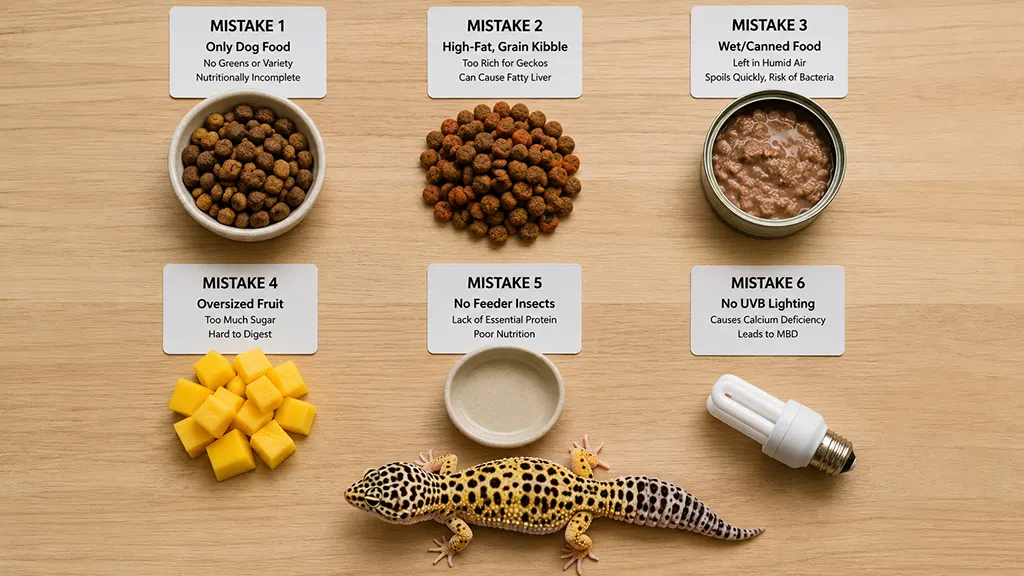
6 Most Common Mistakes When Answering Can Blue Tongued Skinks Eat Dog Food (Eastern US Keeper Exclusive)
Based on local clinic case summaries and Reddit 2024–2025 blue-tongue skink discussion data focused on can blue tongued skinks eat dog food, these repeated errors cause 80% of diet-related health problems, you can check our reptile feeding and illness reference tool for customized feeding and disease guidance matched to your skink’s age stage:
- Mistake 1: Using dog food as 100% staple food: Pure dog food lacks sufficient plant fiber and trace vitamins. Long-term single feeding leads to chronic constipation and nutritional partial deficiency.
- Mistake 42: High-fat winter dog food formulas: Winter low activity plus high-fat food quickly triggers fatty liver, a common irreversible lesion in eastern captive skinks.
- Mistake 3: Ignoring seasonal moisture adjustment: Feeding wet dog food in humid summer causes mold ingestion; dry dog food in dry winter causes dehydration.
- Mistake 4: Excessive fruit pairing: Eastern humid environment accelerates sugar fermentation. Even standard 10% fruit ratio can cause diarrhea in rainy summer weeks.
- Mistake 5: No insect rotation: Long-term single dog food protein leads to weakened gastrointestinal peristalsis and picky eating habits.
- Mistake 6: Forgetting seasonal supplementation adjustment: Low winter UVB exposure requires increased calcium frequency; humid summer needs enhanced multivitamin supplementation to resist mold-related bacterial stress.
Age-Based Dog Food Feeding Schedule (2026 Updated)
Dog food dosage and selection must match skink age if you want safe results when confirming can blue tongued skinks eat dog food. Generic feeding frequency is the main cause of juvenile stunting and adult obesity.
Juveniles (0–3 Months)
High growth metabolism requires higher protein. Use low-fat puppy canned dog food as the main protein source, paired with small dubia roaches. Feed daily, follow 40/50/10 ratio. Prioritize easy-to-digest ingredients to avoid juvenile gut burden.
Sub-Adults (3–12 Months)
Gradually switch to adult low-fat dog food. Rotate canned and dry formulas seasonally. Feed 5 times weekly, strictly implement the 50/40/10 standard ratio to shape healthy metabolic habits.
Adults (12 Months+)
Focus on health maintenance and obesity prevention. Feed 3–4 times weekly. Dog food serves as stable base protein, with weekly insect rotation to enrich diversity. Reduce fruit portions in summer and winter seasons.
Apartment Feeding Tips for Eastern US Urban Keepers
Most eastern US apartment keepers testing can blue tongued skinks eat dog food face unique feeding challenges due to limited ventilation and artificial temperature control. These living environments amplify seasonal feeding risks compared to outdoor breeding.
- Air-conditioned summer apartments have alternating dry and humid microclimates. Remove uneaten wet dog food within 1 hour to avoid bacterial breeding.
- Heated winter apartments have extremely dry air. Place a shallow water dish near the feeding area and prioritize canned dog food to assist gut moisture balance.
- Small-space feeding easily causes residual food accumulation. Clean feeding spots daily to prevent mold and mite infestation, a unique apartment breeding hazard.
Frequently Asked Seasonal Questions (Eastern US Keeper High-Frequency)
1. Is dry or canned dog food better for blue-tongued skinks?
No single universal answer. Choose based on eastern local seasons. Canned food for dry winter heating seasons to replenish moisture; dry food for humid summer seasons to prevent digestive dampness and mold risks. Both must follow low-fat, grain-free core standards.
2. Can dog food replace insect protein completely?
Long-term complete replacement is not recommended. Dog food provides stable macro nutrition, while insects offer unique chitin and trace elements beneficial for intestinal peristalsis. A 7:3 dog food-to-insect protein ratio is the most balanced routine for eastern captive skinks.
3. Why does my skink refuse dog food in spring?
Eastern spring temperature swings disrupt reptile metabolic rhythms. This is typically linked to unstable environmental temperatures rather than food quality issues. You can slightly increase ambient basking temperature, mix fine vegetable fragments into dog food, and add small amounts of insect attractants to encourage normal eating habits. Always consult a licensed veterinarian if appetite issues persist.
4. Is grain-free dog food mandatory for skinks?
Yes. Grain-based dog food contains excessive carbohydrates that skinks cannot fully metabolize. Eastern summer high humidity makes unmetabolized carbs prone to intestinal fermentation, directly triggering bloating and diarrhea.
Final 2026 Seasonal Feeding Takeaways
For eastern US beginners wondering can blue tongued skinks eat dog food, dog food is not a risky substitute but a safe, efficient core protein staple for blue-tongued skinks when fed correctly. The key to scientific feeding is not abandoning commercial food, but adhering to the 50/40/10 golden ratio and matching eastern US four-season climate adjustments.
Avoid extreme feeding routines, follow seasonal problem fixes, select qualified low-fat grain-free dog food, and match age-based feeding frequencies. Your blue-tongued skink will maintain stable digestion, bright body color, and strong immune adaptation throughout the year.
This content is for educational purposes only and does not substitute professional veterinary diagnosis or treatment. If you observe any symptoms of illness, injury, or abnormal behavior, please consult a qualified exotic animal veterinarian immediately.
For more details, please review our full Medical Disclaimer.