
Introduction: Why US Beginner Lacerta Keepers Fail From “Invisible” Local Dangers
Hidden risks raising jeweled lacerta first time us reptile keepers often go unmentioned in generic reptile care content. Most first-time reptile keepers in the United States follow generic jeweled lacerta care sheets that only cover basic temperature ranges and feeding schedules. These generic guides miss one critical reality: hidden risks raising jeweled lacerta first time us reptile keepers face are uniquely tied to North American residential environments, regional weather patterns, local pest species, and standard US household products that create exclusive hidden dangers for captive jeweled lacertas.
New keepers rarely realize that dry Western US indoor heating, humid Southern summer heatwaves, Midwest voltage fluctuations, regional mosquito-borne parasites, and standard American cleaning routines are exactly the hidden risks raising jeweled lacerta first time us reptile keepers must learn to avoid. These localized threats are the leading causes of premature jeweled lacerta illness and death across the country. These are not global reptile care issues—they are localized US keeper pitfalls that result in urgent reptile medical care visits, chronic health conditions, and avoidable fatalities every year.
This 2026 updated guide breaks down the 9 most common hidden risks exclusively impacting first-time US jeweled lacerta owners, with region-specific fixes tailored for American apartments, suburban homes, and extreme North American seasonal weather. Every solution below is field-tested for US residential setups and requires no specialized overseas equipment.
1. Regional Seasonal Humidity Imbalance (US Climate Zone Specific Shedding & Respiratory Risk)
One of the biggest hidden risks raising jeweled lacerta first time us reptile keepers overlook is regional humidity imbalance. Generic lacerta care resources list a universal 40–50% humidity range but fail to teach US keepers how to adjust for America’s drastically different regional climates—the top hidden cause of retained shed and mild respiratory infections in domestic jeweled lacertas.
Western US (California, Arizona, Nevada, Utah) Local Risk: Year-round low ambient humidity (15–30% outdoor, 20% or lower indoors during forced air heating season) rapidly dehydrates captive lacertas. Juveniles commonly develop stuck toe shed and tail tip necrosis, a condition rarely seen in European captive populations but extremely prevalent among Western US keepers.
Southern US (Florida, Texas, Louisiana) Local Risk: Summer ambient humidity spikes above 75%, and closed-screen enclosures trap stagnant moist air. This triggers bacterial scale rot and chronic low-grade respiratory inflammation unique to humid Gulf Coast residential setups.
Northern & Midwest US Local Risk: Winter furnace heating strips indoor moisture to dangerous levels, while spring thunderstorms create rapid humidity swings that suppress lacerta immune function.
US-Exclusive Fixed Solution
- Western US keepers: Install a small ultrasonic micro mister on a scheduled timer (2 short bursts daily) and maintain a moist sphagnum moss humid hide year-round to prevent shed retention in dry indoor air.
- Southern US keepers: Remove partial tank tops entirely during summer months, use cross-room box fan airflow, and avoid live planted substrates that trap excess moisture in high-humidity states.
- Northern/Midwest keepers: Run a whole-house humidifier during winter heating months to stabilize room humidity above 35% and eliminate dangerous overnight dry spikes.
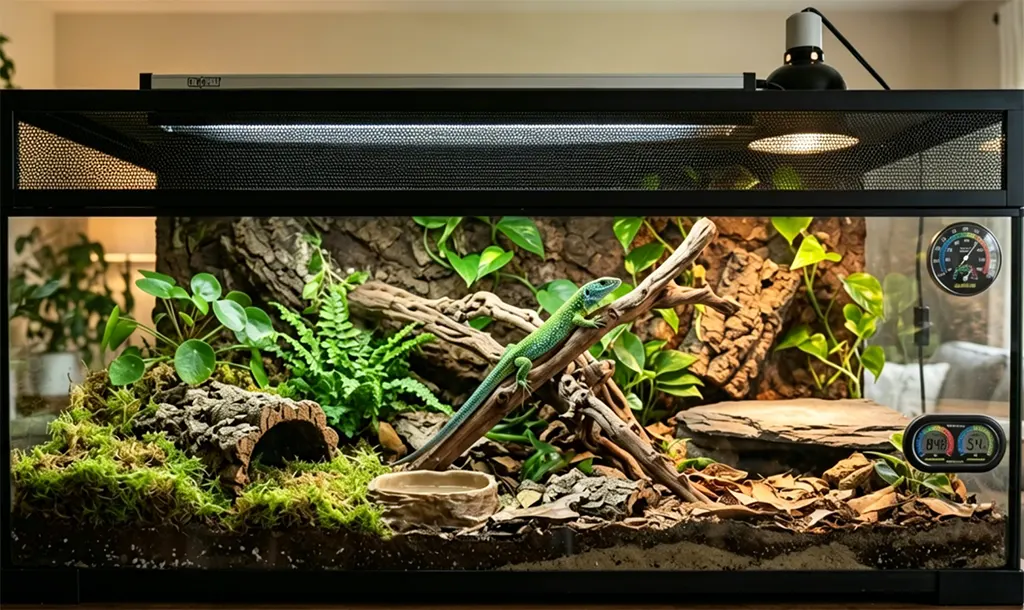
2. US Household VOC & Pesticide Fume Toxicity (Top Silent Indoor Killer)
Toxic household fumes represent the deadliest hidden risks raising jeweled lacerta first time us reptile keepers encounter in everyday American homes. American households rely on cleaning and pest control products rarely used in other countries, creating a unique toxic fume risk for jeweled lacertas, which have far more sensitive pulmonary tissue than common pet reptiles like bearded dragons.
First-time US keepers regularly place enclosures in living rooms, kitchens, or main floor hallways—high-traffic zones where residential cleaning, seasonal pest spraying, and everyday air freshener use occurs. Even indirect, low-level exposure to US-standard household chemicals causes chronic lung irritation, appetite suppression, and sudden acute respiratory failure in lacertas.
Most Common US Toxic Household Triggers
- Plug-in air fresheners, scented candles, and whole-home scent diffusers (ubiquitous in US suburban homes)
- Raid, Ortho, and over-the-counter perimeter pest sprays used for US yard and home insect control
- Bleach-based bathroom/kitchen cleaners and ammonia-based glass cleaners, commonly mixed for deep cleaning in American households
- Overheated non-stick Teflon cookware, standard in nearly all US residential kitchens
US Keeper Exclusive Fix: Permanent enclosure placement must be in a low-traffic bedroom or office, a minimum of 10 feet away from kitchen cooking zones and never in rooms treated with monthly pest control sprays. Replace all chemical disinfectants with US-available reptile-safe chlorhexidine solutions for full tank deep cleans.
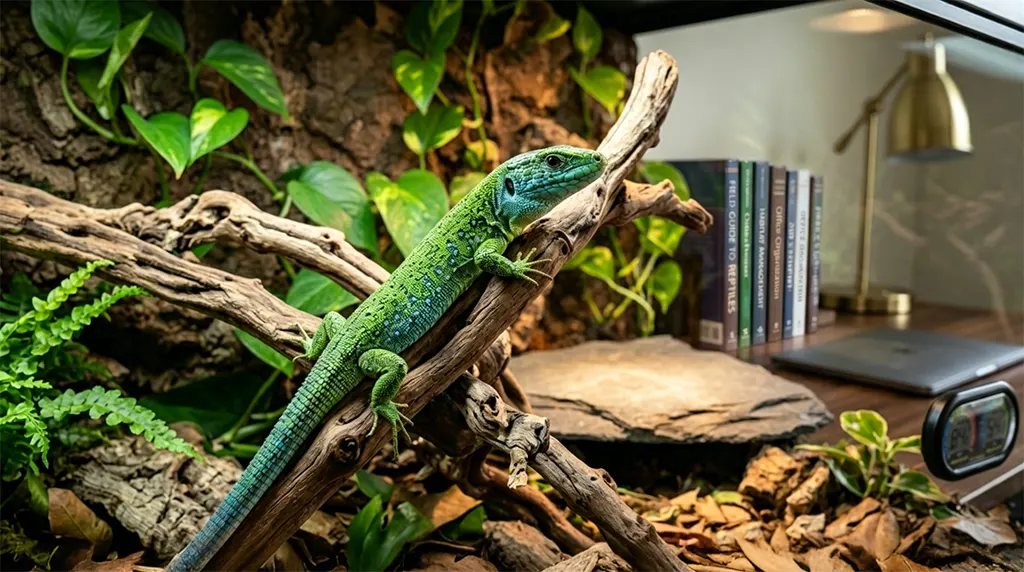
3. State-Specific Mosquito-Borne Parasite Exposure (US Regional Pest Threat)
Undetected vector parasite exposure ranks high among the hidden risks raising jeweled lacerta first time us reptile keepers cannot afford to ignore. Wild mosquito and sandfly parasite transmission is one of the most underdiagnosed hidden health risks for indoor jeweled lacertas in the United States. Generic international care guides ignore North American vector insect species that carry fatal reptile pathogens specific to US regional seasons.
Even fully indoor lacertas are at risk, as US residential window screens, patio doors, and central air vent gaps allow small vector insects to enter living spaces year-round.
Regional US Parasite Risks By State Zone
- Southeastern US (FL, TX, AL, GA): Summer Aedes mosquito populations carry reptilian malaria and West Nile Virus, leading to chronic anemia in lacertas.
- Mid-Atlantic & Northeast US: Spring and early summer Culex mosquito swarms transmit EEE virus, which has a 70%+ fatality rate in untreated lizards.
- Pacific Northwest (WA, OR): Rainy spring sandfly outbreaks spread Leishmania parasites that cause persistent skin lesions and weight loss.
Local US Prevention Protocol: Replace standard screen tops with 1mm fine-mesh reptile-safe screens, avoid opening windows near enclosures during peak mosquito season (April–October nationwide), and complete annual blood testing with a licensed reptile medical professional to screen for region-specific vector parasites.
4. US Grid Voltage Fluctuation & Cheap Retail Heating Failure
First-time American keepers commonly purchase budget reptile heating gear from Amazon, Walmart, and Home Depot, paired with unregulated US residential voltage spikes—creating a hidden thermal burn and overheating risk nonexistent in regulated international power grids.
Older US homes (pre-1990 construction) experience frequent voltage surges that fry analog thermostats, causing basking spots to skyrocket above 120°F and inflict fatal thermal burns on jeweled lacertas. Midwest winter grid load spikes further amplify this risk during cold months when heating equipment runs 24/7.
US-Only Safety Setup Rule: All jeweled lacerta enclosures require a UL-listed digital thermostat with surge protection, compatible with standard 120V US household power. Never use no-name imported heat bulbs, and always install metal heat guards to prevent contact burns—a top beginner mistake in US suburban setups.
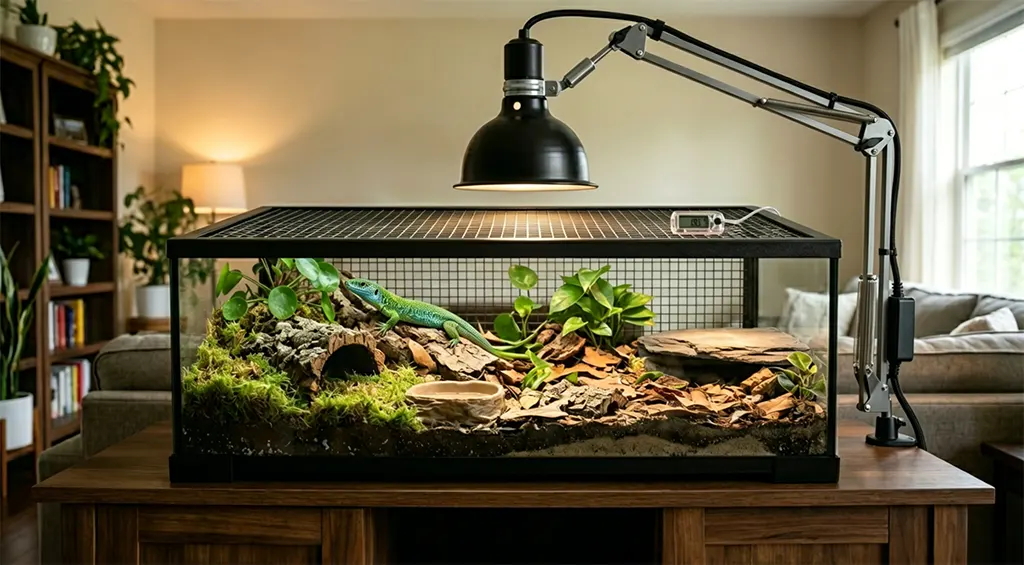
5. American Rental Housing Escape & Landlord Compliance Risks
Over 60% of first-time young reptile keepers in the US live in rental apartments or townhomes, which present unique hidden risks not covered in generic care guides: tight floor space for large tanks, loose window screens, hollow interior walls, baseboard gaps, and strict landlord pet clauses. (If you are calculating apartment space for mid-to-large lizards, review our uromastyx enclosure size guide to accurately measure terrarium footprints before buying.)
Jeweled lacertas are agile climbers and escape through tiny residential gaps standard in US rental housing. Escaped lizards commonly hide in wall cavities, where they dehydrate or freeze overnight, with almost no chance of recovery.
Additionally, many US apartment complexes have non-exotic pet addenda that ban unregistered reptiles, leading to forced rehoming or lease violations for uninformed new keepers.
US Renter Exclusive Fixes
- Secure all enclosure tops with heavy-duty screen clips designed for US standard tank sizes
- Seal baseboard and window gaps with renter-friendly removable weatherstripping
- Review your lease’s exotic pet clause before permanent setup to avoid compliance violations
6. Big-Box Store Substrate Impaction (US Retail Beginner Trap)
Big-box substrate mistakes are preventable yet widespread hidden risks raising jeweled lacerta first time us reptile keepers consistently fall for. The most common hidden physical injury for US juvenile jeweled lacertas is substrate impaction caused exclusively by misleading big-box retail reptile substrates sold widely across American pet stores.
First-time keepers purchase calcium sand, Home Depot play sand, and loose coconut coir based on in-store marketing, unaware these products are the leading cause of gut blockage surgery for US captive lacertas. (Misleading retail advice isn’t limited to substrates—if you also keep or are considering herbivorous desert species, learn how to avoid common uromastyx diet mistakes that stunt growth.) European and Australian keepers rarely encounter these exact low-quality substrate blends, making this a US-localized beginner crisis.
US Safe Substrate Rule (2026 Standard): Juvenile jeweled lacertas under 12 months must use only paper towel or non-stick shelf liner, both cheap and easily purchased at US grocery and retail chains. Adult lacertas require a stabilized soil-sand mix sourced from US reptile specialty retailers only.
7. US Residential Salmonella Cross-Contamination (Family Home Risk)
CDC reptile salmonellosis data consistently shows US household outbreaks stem from beginner keepers housing reptiles in high-traffic kitchen and dining areas—a uniquely American living arrangement risk.
First-time keepers with kids under 5 or immunocompromised household members face hidden health hazards from casual handling habits common in US family homes. Generic care guides do not address American family living layouts and cross-contamination pathways specific to open-concept US housing.
Local US Household Safety Protocol: Keep all jeweled lacerta enclosures out of kitchen and dining zones. Enforce strict hand-washing protocols after tank maintenance, and prohibit unsupervised child handling per US public health reptile safety guidelines.
8. Seasonal US Heatwave & Winter Blackout Emergency Risk
North America’s extreme seasonal weather creates life-threatening hidden risks for indoor jeweled lacertas: summer statewide heatwaves and winter grid blackouts that disable electric heating and cooling systems.
Southern US summer heatwaves push indoor unconditioned room temperatures above 95°F, causing rapid heat exhaustion in lacertas. Northern US winter blackouts drop indoor temperatures dangerously low within hours, leading to hypothermia.
US Seasonal Emergency Prep (Beginner Must-Have)
- Summer: Keep portable USB-powered mini fans on hand for heatwave ventilation, no grid power required
- Winter: Store disposable hand warmers and insulated tank covers for Midwest/Northeast blackout emergencies
9. Over-Handling Stress in Busy US Household Environments
American residential homes typically have high foot traffic, loud television audio, frequent guest visits, and active household pets—all creating chronic stress for shy jeweled lacertas. Generic care guides do not account for the busy, high-stimulation environment standard in US suburban homes.
First-time keepers frequently handle their lacertas daily for entertainment, a habit that suppresses immune function and causes long-term appetite loss specific to US household rearing conditions.
US Home Stress Reduction Rule: House enclosures in quiet, low-traffic bedrooms or home offices, limit handling to once or twice weekly, and avoid frequent tank decor rearrangement to stabilize your lacerta’s captive environment.
Full 2026 US Keeper Summary
First-time jeweled lacerta keeping in the United States carries nine unique, location-specific hidden risks that generic global care content ignores: regional humidity imbalance, US household toxic fumes, state-specific mosquito parasites, domestic grid heating failures, rental housing escape risks, big-box substrate impaction, family salmonella cross-contamination, North American extreme weather emergencies, and busy household chronic stress. Every risk is entirely preventable with US-localized setup adjustments and seasonal maintenance habits tailored to American homes and climates. Use our reptile environment parameter tool to get stage-specific temperature and humidity guidelines easily.
Frequently Asked Questions (US Beginner Keeper FAQ)
1. Are jeweled lacertas more high-risk in US dry or humid states?
Both climate zones carry unique local risks. Dry Western US states cause dehydration and retained shed, while humid Southern US states trigger scale rot and bacterial growth. Regional targeted humidity adjustment is mandatory year-round for US keepers.
2. Do I need parasite prevention for indoor jeweled lacertas in the US?
Yes. US residential pest insects penetrate indoor spaces in all states, annual parasite screenings completed with a licensed reptile medical professional remain a necessary local safety step for indoor-only lacertas.
3. Can US apartment dwellers safely keep jeweled lacertas?
Absolutely, with renter-specific safeguards: secured enclosure tops, gap sealing, lease clause verification, and low-traffic room placement to eliminate escape and compliance risks.
4. What is the most fatal hidden risk for new US jeweled lacerta owners?
Toxic household VOC fumes and unregulated heating equipment failures are the two leading preventable fatal risks for beginner keepers across all US climate zones.
This content is for educational purposes only and does not substitute professional veterinary diagnosis or treatment. If you observe any symptoms of illness, injury, or abnormal behavior, please consult a qualified exotic animal veterinarian immediately.
For more details, please review our full Medical Disclaimer.
Pingback: Pet Lizards: Complete Beginner’s Guide (History, Breeds & Care)
Pingback: Can Blue Tongued Skinks Eat Dog Food? 2026 Eastern US Seasonal Diet Guide