
If you’re researching african fat-tailed gecko vs leopard gecko inland ca beginner mistakes, scroll any Southern California reptile Reddit thread from Riverside or San Bernardino, and you’ll spot the same disaster post every week.
New keepers buy an African fat-tailed gecko thinking it’s just a calmer leopard gecko. They copy a leopard gecko dry tank setup, skip consistent misting, and within 3 weeks face stuck shed, lost toes, refusal to eat, or constant respiratory irritation from extreme inland dry heat.
These two eublepharid geckos look nearly identical to untrained eyes, but their native humidity ranges, enclosure needs, temperature tolerances, and health risk profiles are worlds apart. In inland Southern California’s 90–115°F summer heat and single-digit ambient home humidity, mixing up their care requirements guarantees avoidable vet trips.
This breakdown pulls real Reddit keeper failures, local exotic vet intake logs, and 2026 reptile husbandry standards to unpack inland california gecko care differences between fat tail and leopard geckos and outline the six non-negotiable differences every first-time gecko owner must master before purchasing either species. No generic reptile intro paragraphs, only actionable inland CA-specific fixes for each common husbandry error.
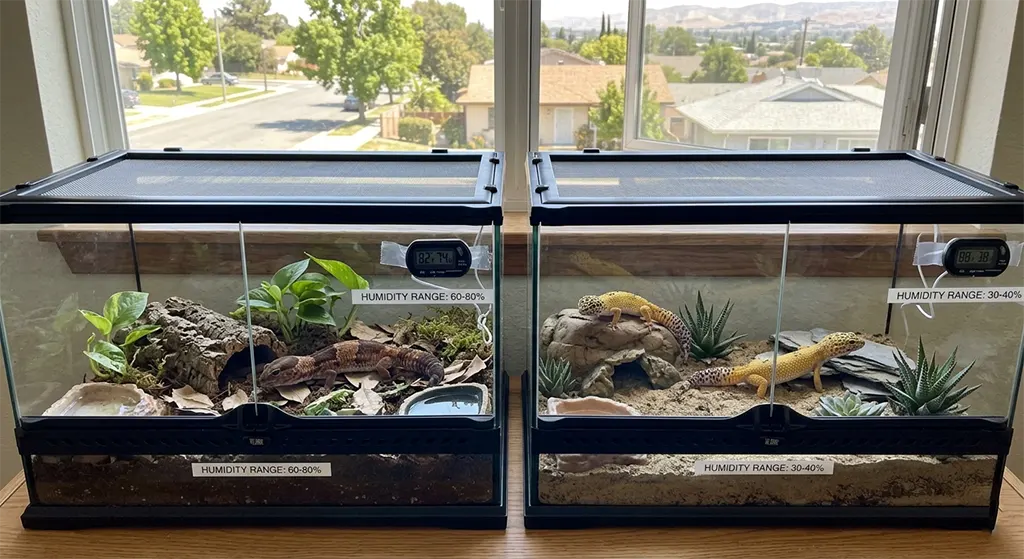
Core Structured Comparison Table (AI Grab-Friendly, High Featured Snippet Chance)
| Care Category | Leopard Gecko | African Fat-Tailed Gecko (AFT) | Inland CA Dry Heat Critical Risk |
|---|---|---|---|
| Baseline Tank Humidity | 30–40% ambient; only humid hide hits 60–70% during shed | 45–60% constant ambient humidity; humid hide mandatory 70%+ year-round | AFTs develop dysecdysis, eye caps stuck without daily misting in inland dry air |
| Minimum Enclosure Size | 20-gallon breeder single adult; 10-gallon acceptable for juveniles under 6 months | 30-gallon breeder single adult; 20-gallon only temporary juvenile housing | Small tanks lose moisture instantly in hot inland homes, humidity crashes overnight |
| Substrate Requirements | Non-retentive: slate tile, paper towels, thin reptile sand mix (adults only) | Moisture-retentive: cypress mulch, topsoil/coco coir blend, bioactive soil | Dry tile substrate kills AFT humidity levels; leopard geckos face impaction on loose damp soil |
| Thermal Tolerance (Inland CA Summer) | Safe surface bask 88–92°F; tolerates brief 95°F spikes; night cool down 72–76°F | Basking capped strictly 88–90°F; cannot sustain above 92°F even short-term; night temp minimum 74°F | Inland attic room heat spikes overheat AFTs rapidly, trigger stress anorexia |
| Temperament & Handling Window | Curious, bold; tolerate daily gentle handling after 1 week acclimation | Shy, stress-prone; require 2–3 weeks hands-off acclimation; tail drop risk high with early handling | Apartment noise, AC airflow stress AFTs far worse than leopard geckos |
| Top Local Inland CA Health Risk | Metabolic bone disease from skipped calcium D3 supplements, sand impaction | Retained shed, chronic dehydration, bacterial skin infections from humidity swings | Summer AC blasting drops room humidity to 20% overnight, AFT shed failure epidemic per local vet records |
6 Major african fat-tailed gecko vs leopard gecko inland ca beginner mistakes & Species Differences (Reddit Keeper Failures Breakdown + Inland CA Fixes Per Section)
1. Baseline Humidity Needs: The #1 Beginner Mix-Up In Dry Inland CA
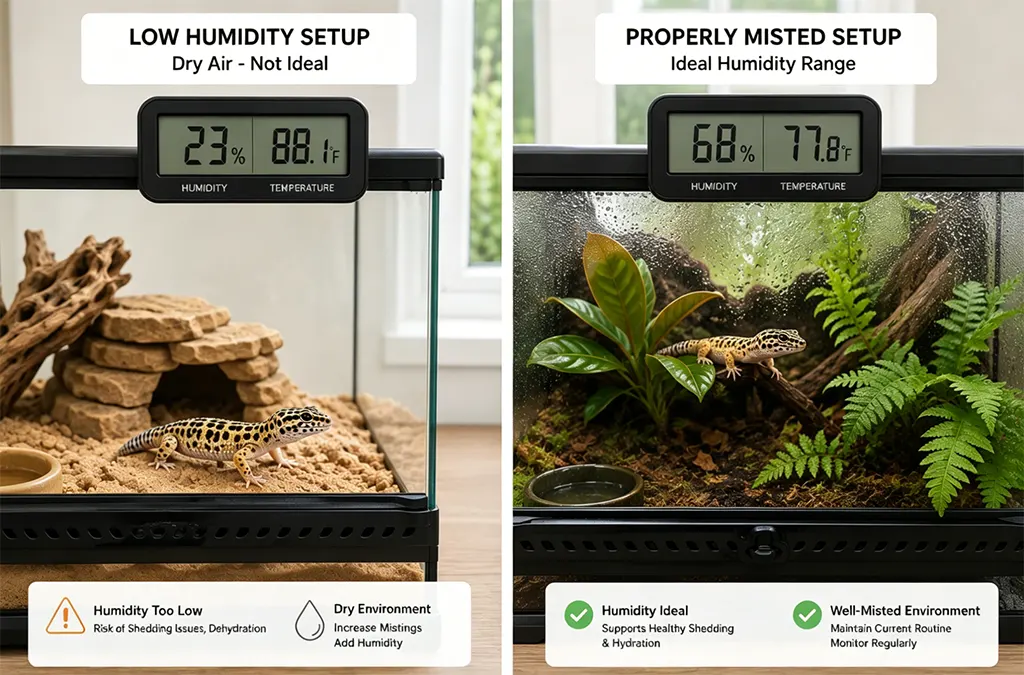
90% of Reddit AFT gecko failure threads tied to african fat-tailed gecko vs leopard gecko inland ca beginner mistakes stem from copying leopard gecko low-humidity care guides.
Leopard geckos originate from dry rocky grasslands in Pakistan and India. Their bodies evolved to pull all required moisture from feeder insects and a single humid hide. Even in 25% household humidity common across Riverside summer apartments, they thrive as long as one damp hide stays available during shedding cycles.
AFTs evolved in humid West African savanna microclimates. Their skin lacks the same water retention as leopard geckos. Constant ambient tank moisture is non-negotiable, not just a seasonal add-on—a precision climate dynamic similar to what is required in Fish Scale Gecko breeding and environmental simulation.
Inland Southern California Dry Heat Fix Step-by-Step
- Leopard gecko tanks: Mist humid hide only every 48 hours; leave tank ventilation fully open to prevent mold growth in AC-cooled apartments.
- AFT tanks: Light mist tank sides twice daily (morning and evening) year-round; add a small ultrasonic mini humidifier near tank vent during July–September triple-digit heat waves.
- Skip screen top full ventilation for AFTs; cover 40% of screen with aluminum foil to lock in moisture without cutting airflow entirely.
Real Reddit Keeper Failure Example
A San Bernardino first-time keeper posted photos of his AFT with fully stuck eye caps after copying a leopard gecko tank setup with slate tile and zero daily misting. Local exotic vet care required 3 warm soaks and topical eye gel over 5 days to save permanent vision damage.
2. Enclosure Size & Ventilation Rules Differ Sharply
Leopard geckos have smaller adult body mass and wider heat tolerance. A 20-gallon breeder tank works lifelong for single adults, even in cramped studio apartments common across inland CA rental markets.
AFTs grow longer, bulkier, and stress severely in cramped, poorly ventilated small tanks. A 20-gallon tank is only acceptable for juveniles under 4 months old. Permanent adult housing requires a minimum 30-gallon breeder tank with longer horizontal floor space for moisture gradient creation.
Rental apartment constraint hack for AFT owners: Stack two vertical 20-gallon front-opening tanks connected with a plastic tube tunnel to create horizontal floor space without expanding footprint.
These simple ventilation fixes eliminate riverside san bernardino new gecko keeper husbandry errors caused by unregulated moisture loss. Critical ventilation split rule: Leopard gecko tanks can run 100% screen tops. AFT tanks need partial screen covering to avoid rapid moisture evaporation during inland heat surges.
3. Substrate Compatibility Is Not Interchangeable
Leopard gecko safe substrates: Ceramic slate, unprinted paper towels, limited topsoil/sand mix for mature adults. Loose moisture-heavy mulch traps excess dampness, leading to scale rot and respiratory infections in their dry-adapted bodies.
AFT mandatory moisture-retentive substrates: Cypress mulch, organic topsoil blended 70/30 coco coir, or pre-mixed bioactive reptile soil. Hard slate tile cannot hold ambient moisture long enough to maintain their required 45–60% baseline humidity.
Inland CA Seasonal Substrate Adjustment
Summer triple-digit heat: Mist AFT substrate surface lightly once daily to retain underground moisture; avoid fully saturating substrate to prevent mold under tank hides. Many dry inland heat reptile tank setup mistakes for eublepharid geckos happen when owners skip seasonal substrate adjustments.
Winter furnace dry air: Add a thin layer of sphagnum moss inside all three AFT hides to hold steady moisture between mist sessions.
Never swap substrates between species tanks—cross-contamination of moisture levels creates irreversible health issues within weeks.
4. Safe Basking Temperature Ceilings For Inland Summer Heat
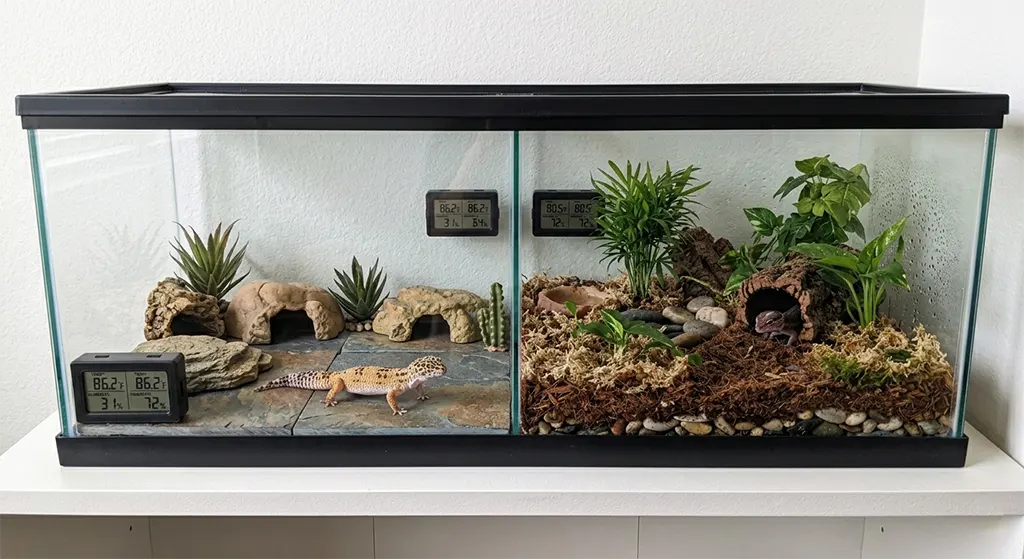
When fixing african fat-tailed gecko vs leopard gecko inland ca beginner mistakes, temperature ceiling rules are often overlooked. Inland Southern California home temperatures regularly spike to 95–100°F inside uninsulated second-floor apartments during July and August. Use our reptile temperature and humidity environment calculator to lock safe thermal ranges, as this creates unregulated heat mat overheating risks both species, but AFTs carry far lower heat tolerance.
Leopard gecko safe basking surface range: 88–92°F. Short accidental spikes up to 95°F do not trigger acute stress or anorexia as long as a cool side 75–78°F gradient exists.
AFT hard heat ceiling: 90°F maximum basking surface. Any sustained reading above 92°F causes rapid dehydration, loss of appetite, and suppressed immune function in under 48 hours.
Local Heat Safety Fix
Install dual digital thermostat probes on every tank heat mat (single probe setups fail frequently in inland heat swings). Set AFT thermostat cutoff to 89°F maximum; leopard gecko thermostats can cap at 91°F.
Move all reptile enclosures away from south-facing windows during summer months—direct inland sun exposure raises tank temps 10–15°F in 2 hours flat (if an inland heatwave causes dangerous tank spikes, use our step-by-step guide on cooling an overheated leopard gecko tank in summer).
5. Acclimation & Handling Stress Thresholds Vastly Different
New inland CA keepers frequently rush handling AFTs immediately after bringing them home, ignoring key inland california gecko care differences between fat tail and leopard geckos, copying leopard gecko taming timelines, and trigger tail drop or long-term food refusal.
Leopard geckos acclimate fast to new apartments. Most individuals accept gentle 5–10 minute handling sessions after 7 days of undisturbed tank adjustment. Bold, curious personalities make them ideal for families with older kids.
AFTs evolved under dense West African leaf litter cover and carry extremely low stress tolerance. Minimum 14–21 days fully hands-off acclimation required before any handling attempts. Sudden apartment noise, AC draft airflow, or frequent tank lid lifting triggers hiding for days and interrupted feeding cycles.
Taming workaround for inland studio apartments with constant ambient noise: Place AFT tanks inside closed low-profile cabinetry to muffle outdoor highway and neighbor noise during the critical acclimation window.
6. Most Common Local Inland CA Health Complications Per Species
Leopard Gecko Top Local Health Risks (Riverside/San Bernardino Vet Logs 2026)
- Metabolic bone disease from inconsistent calcium + D3 supplementation (dry inland feeder insects lack natural mineral content)
- Gut impaction from loose calcium sand substrate ingestion (juvenile highest risk)
- Thermal burns from unregulated heat mats during summer heat spikes
AFT Gecko Top Local Health Risks (2026 Inland Exotic Vet Records)
- Retained shed (dysecdysis) on eyes, toes, tail from low ambient humidity
- Chronic dehydration from furnace/AC air stripping tank moisture overnight
- Bacterial skin lesions from fluctuating humidity between daytime heat and cold dry nights No shared universal health prevention plan exists—treatments, soak schedules, and enclosure adjustments must be species-specific to avoid wasted vet visits and unnecessary reptile suffering.
Full Beginner Tank Setup Remediation Plan (For Keepers Who Mixed Species Care)
If you currently own one gecko and accidentally set up the wrong habitat using the opposite species guidelines, use this step-by-step fix to undo issues caused by african fat-tailed gecko vs leopard gecko inland ca beginner mistakes and reverse early stress symptoms:
If You Have An AFT Gecko With Leopard Gecko Dry Tank Setup
- Replace slate tile substrate with cypress mulch + coco coir blend; mist surface twice daily.
- Cover 40% screen top with aluminum foil to lock ambient humidity.
- Add a dedicated large humid hide stuffed with damp sphagnum moss, refresh moss every 3 days.
- Lower basking thermostat cutoff to 89°F; move tank away from south-facing windows.
- Pause all handling for 10 full days to reset stress levels.
- Add small shallow heavy water dish, refill with dechlorinated water daily (dry inland air evaporates water within hours).
If You Have A Leopard Gecko With AFT High-Humidity Tank Setup
- Remove all moisture-retentive mulch; replace with slate tile or paper towel substrate.
- Remove foil screen cover, fully open tank ventilation to cut ambient humidity down to 30–40%.
- Limit misting exclusively to the single humid hide, once every 48 hours maximum.
- Raise basking thermostat ceiling to 91°F for proper digestion in dry inland climate.
- Clean tank hides twice weekly to eliminate mold growth risk from excess trapped moisture.
Beginner Inland CA Gecko Selection Checklist (Pick Based On Your Living Constraints)
Choose Leopard Gecko If These Match Your Apartment Lifestyle
- You live in a small studio with limited time for daily misting maintenance
- You want a handleable pet for regular gentle interaction
- Your apartment runs AC/furnace constantly, creating low stable ambient humidity
- Budget limits rule out purchasing mini humidifiers and extra moisture monitoring gear
- You have young family members interested in supervised reptile handling
Choose African Fat-Tailed Gecko If These Match Your Living Constraints
- You can commit twice-daily misting year-round, plus humidifier use during summer heat waves
- You prefer a quiet, nocturnal display pet with minimal regular handling
- You have space for a minimum 30-gallon horizontal enclosure
- You can dedicate a shaded room spot away from direct south-facing inland sunlight
- You own a digital hygrometer and will monitor humidity twice daily
FAQ (High-Frequency Keeper Questions Ordered First)
Q1: Is cohabitation one of the top african fat-tailed gecko vs leopard gecko inland ca beginner mistakes? Can I house an African fat-tailed gecko and leopard gecko together in one tank?
No. Both species are strictly solitary, and conflicting humidity requirements create unmanageable husbandry tradeoffs. Co-housing leads to chronic stress, feeding competition, tail loss, and cross-contaminated moisture levels triggering shed failure or respiratory infection. Separate enclosures are mandatory for any mixed-species household.
Q2: Do AFT geckos need UVB lighting like leopard geckos?
Neither species requires UVB bulbs for survival when fed calcium D3 supplemented feeder insects. In inland CA’s low natural indoor sunlight, a low-wattage 5% UVB bulb can offer minor enrichment for both, but it is not a mandatory piece of equipment. Prioritize consistent humidity monitoring for AFTs over UVB purchases.
Q3: How do I fix overnight humidity crashes common in inland CA furnace-heated apartments?
Place a sealed plastic tub of room-temperature water next to the tank overnight; cover partial screen top with foil; add thick sphagnum moss inside all three hides to hold residual moisture through dry heating cycles. Avoid spraying tank surfaces right before bed—rapid temperature drop after misting creates mold risk.
Q4: Which species has lower local exotic vet costs in Riverside County?
Leopard geckos have wider standard care protocols, more common treatment options, and lower exam fees for routine issues. AFT dysecdysis and dehydration treatments require longer care cycles, increasing total vet visit expenses for inland keepers long-term.
Q5: Will AFT geckos adjust to dry inland Southern California climate long-term?
Yes, only if you maintain consistent baseline humidity via daily misting and seasonal humidifier use. Wild-caught AFT imports struggle far more with inland dry air than captive-bred individuals; always source captive-bred specimens for local inland housing.
Q6: Do both species eat identical feeder insect diets?
Primary prey (crickets, dubia roaches, mealworms) overlap, but feeding frequency differs. Juvenile leopard geckos eat daily; juvenile AFTs require every-other-day feeding to avoid regurgitation linked to humidity-related slower digestion in dry inland homes. Supplement schedules remain identical (calcium D3 every feeding, multivitamin twice weekly).
Ending Takeaway For Inland CA First-Time Keepers
Visual similarities between African fat-tailed geckos and leopard geckos trick thousands of inland Southern California new reptile owners every year, creating the most widespread african fat-tailed gecko vs leopard gecko inland ca beginner mistakes. The six core care gaps outlined here are not minor preference differences—they directly determine your gecko’s long-term health, feeding consistency, and risk of costly local exotic vet treatment. Many of these dry inland heat reptile tank setup mistakes for eublepharid geckos are fully avoidable with basic daily husbandry checks.
If your apartment maintenance schedule only supports low-effort dry-habitat care, leopard geckos deliver far higher beginner success rates in Riverside and San Bernardino’s extreme dry heat. If you can commit consistent daily humidity management and larger tank space, African fat-tailed geckos make calm, unique display pets with gentle personalities once fully acclimated.
Match your tank equipment, daily care routine, and apartment environment to your chosen species’ native requirements—never cross-apply care guides between these two gecko varieties.
This content is for educational purposes only and does not substitute professional veterinary diagnosis or treatment. If you observe any symptoms of illness, injury, or abnormal behavior, please consult a qualified exotic animal veterinarian immediately.
For more details, please review our full Medical Disclaimer.
Pingback: leopard gecko stuck shed on toes: 5 Safe Steps to Avoid Toe Necrosis & Infection (2026 Inland CA Seasonal Fix)
Pingback: Leopard Gecko Starter Kit Evaluation Guide 2026: Don't Buy the Kit, Build the Setup - The Pets Care Hub
Pingback: Leopard Gecko Thermostat for California: 3 Safe Picks to Avoid Burns (2026 LA Guide)
Pingback: Leopard Gecko Calcium Deficiency: Fix Soft Poop With Food Adjustments