
The first turtle I brought home fit in my palm. The pet store guy said, “Super easy, just feed it and change the water.” Six months later, I was drowning in a 75-gallon tank, a $400 filtration setup, and a trip to the exotic vet because nobody mentioned UVB lighting was non-negotiable.
If you’re researching pet turtle care before getting one — good. You’re already ahead of most first-time owners. Here’s the honest breakdown: what turtles actually need, how much they really cost, which species won’t outlive your mortgage, and the mistakes that send turtles to shelters (or worse).
Quick Answer: Pet turtles aren’t “low-maintenance” — they’re consistent-maintenance. You need a large tank (75+ gallons for adults), UVB lighting, a canister filter, and 20–50 years of commitment. The easiest beginner species is the common musk turtle (3–5 inches, 20-gallon tank). The most popular is the red-eared slider — but they grow fast, get messy, and need serious space.
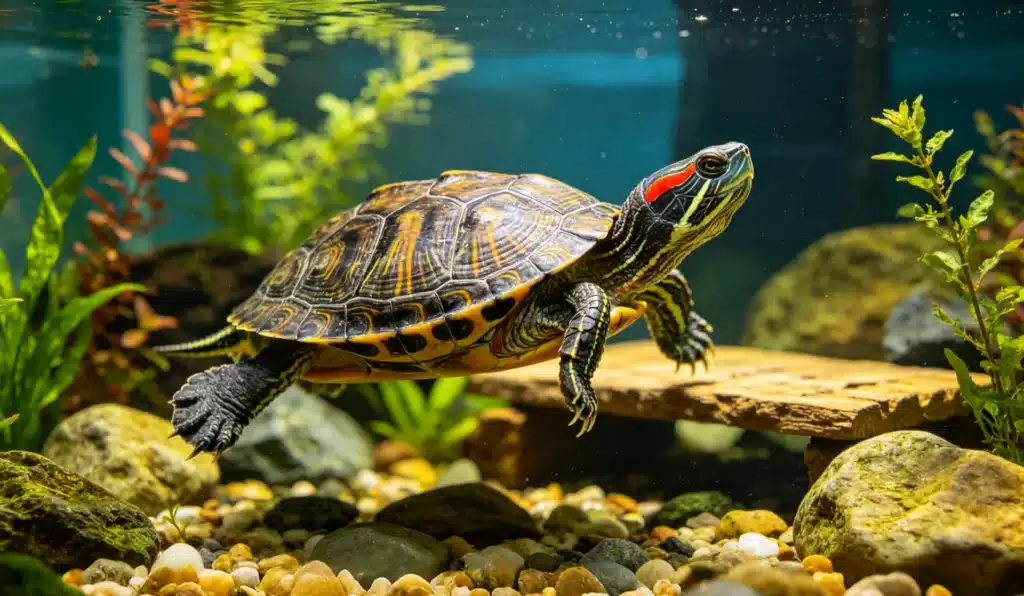
Why Turtles Are Harder Than They Look
Pet stores sell baby turtles as cute, easy starter pets. Here’s what they don’t tell you:
- They grow fast. A 2-inch red-eared slider becomes a 10-inch adult in 2–3 years. That “small tank” you bought? Useless.
- They’re messy. Turtles eat, poop, and swim in the same water. Without a heavy-duty filter, you’ll have a smelly algae bomb within weeks.
- They live a long time. Red-eared sliders live 20–30 years. Box turtles can hit 100. This isn’t a “try it for a year” pet.
- They carry salmonella. All turtles do. Per the CDC’s guidance on reptile safety, kids under 5, pregnant women, and immunocompromised people should avoid contact. Always wash your hands after handling.
None of this means turtles make bad pets. They’re fascinating, quiet, and rewarding — if you go in with eyes open.
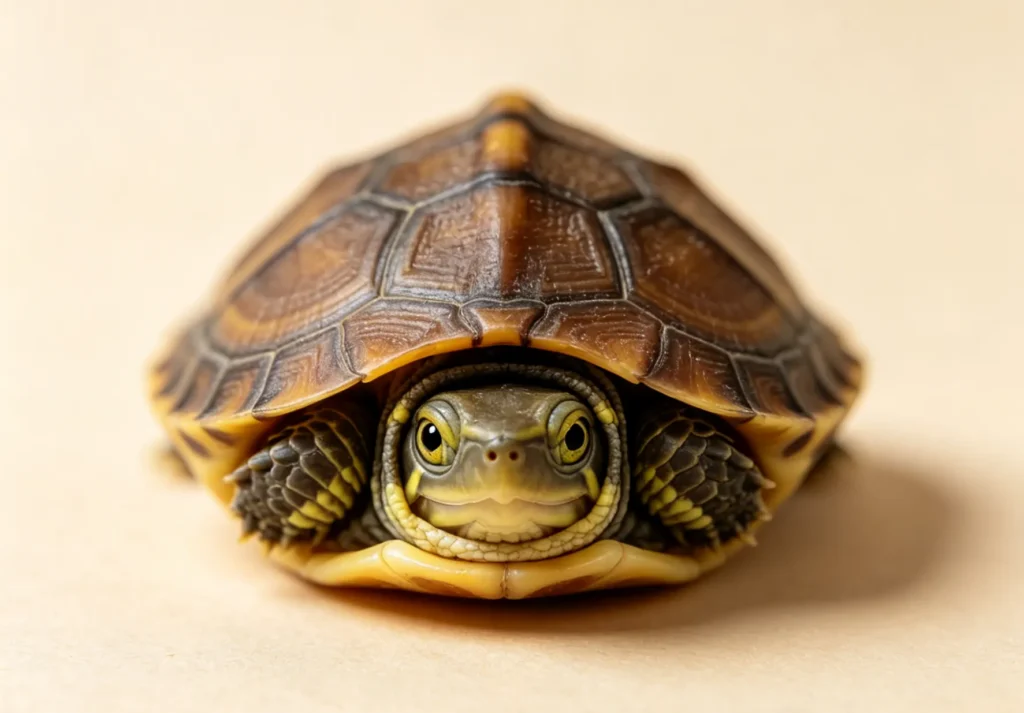
Pet Turtle Care Basics: What You Actually Need
Learning how to care for a pet turtle starts with getting the setup right — this is where most beginners stumble.
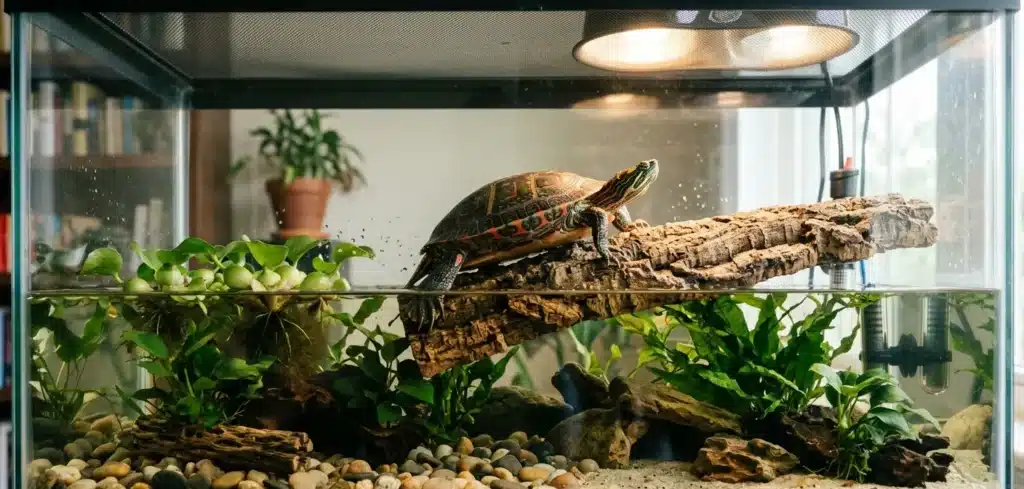
Tank Setup (Where Most Beginners Fail)
| Item | Requirement | Common Mistake |
|---|---|---|
| Tank size | 10 gallons per inch of turtle | Buying a 10-gallon for a baby that’ll need 75+ gallons |
| Water depth | Deep enough to swim and flip over | Too shallow — turtle can’t right itself |
| Basking area | Dry platform, easy to climb onto | No basking spot → can lead to shell and respiratory problems |
| Basking temp | 90–95°F (32–35°C) | Using a weak bulb that doesn’t reach target temp |
| UVB light | Full-spectrum UVB bulb, replaced every 6–12 months | Skipping UVB → serious health issues like shell deformities |
| Water temp | 75–80°F (24–27°C) | Relying on room temperature |
| Filter | Canister filter rated 2–3× tank size | Small hang-on-back filter for a messy turtle |
The #1 rule: Start bigger than you think you need. A juvenile red-eared slider in a 40-gallon tank will be fine for a few months. An adult in the same tank? A death sentence.
Feeding: Simpler Than You’d Think
Most aquatic pet turtles are omnivores, and their diet shifts with age:
| Age | Protein | Plants | Feeding Frequency |
|---|---|---|---|
| Juvenile (0–2 years) | 70% (pellets, frozen shrimp, mealworms) | 30% (aquatic plants, leafy greens) | Daily |
| Adult (2+ years) | 30% | 70% (carrots, squash, occasional fruit) | Every other day |
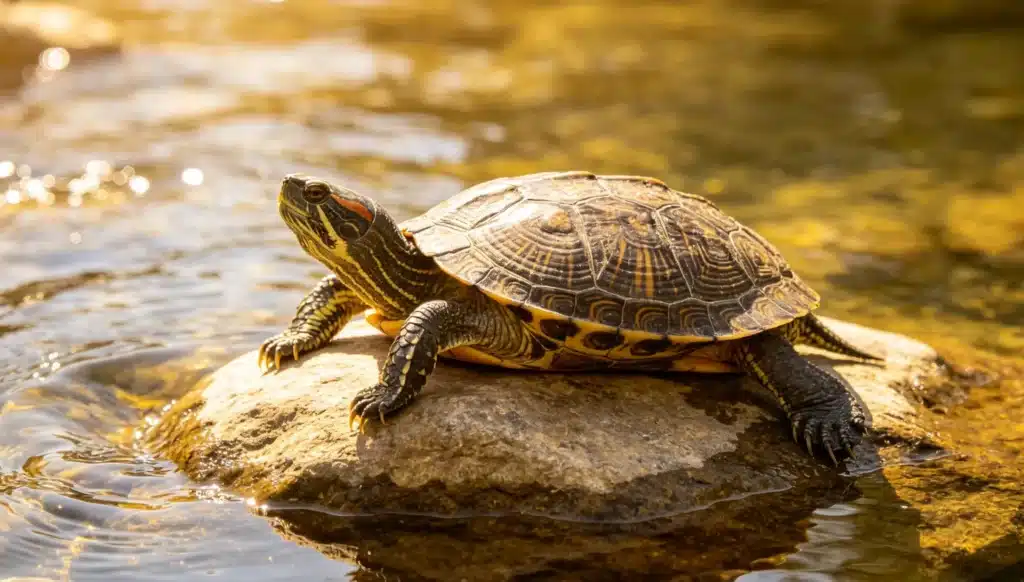
Many keepers supplement with calcium powder a few times a week and a reptile multivitamin weekly — but check with your exotic vet for the right schedule for your specific turtle, as needs vary by species and age.
The golden rule: Only feed what they can eat in 15 minutes. Overfeeding causes obesity and fouls the water fast.
Daily/Weekly Routine
- Daily (5 minutes): Check water and basking temperatures. Remove uneaten food.
- Weekly (30 minutes): Change 25–50% of the water. Siphon waste from the bottom. Clean the basking area.
- Monthly (15 minutes): Observe your turtle’s general appearance — shell color, eye clarity, skin condition, breathing pattern. If you notice anything off (discolored shell patches, swollen eyes, wheezing), consult a qualified exotic vet promptly.Keep in mind that wheezing often stems from humidity or draft mistakes — see how improper microclimates trigger respiratory illness in tortoises and turtles.
5 Best Pet Turtle Species for Beginners
These pet turtle species are all well-suited for first-time keepers, but they differ in size, temperament, and space requirements:
| Species | Adult Size | Lifespan | Tank Size | Best For |
|---|---|---|---|---|
| Common Musk Turtle | 3–5 inches | 30–50 years | 20–30 gallons | Small spaces, easiest care |
| Painted Turtle | 6–10 inches | 20–40 years | 40–75 gallons | Colorful display, calm |
| Red-Eared Slider | 8–12 inches | 20–30 years | 75–100 gallons | Active, hardy, affordable |
| Mud Turtle | 3–5 inches | 30–50 years | 20–30 gallons | Small spaces, hardy |
| Eastern Box Turtle | 4–6 inches | 50–100 years | Terrarium (no deep water) | Land-dwelling, personable |
My Honest Recommendation
For a first-time owner with limited space: Common mud turtle or musk turtle. They stay small (3–5 inches), need only a 20-gallon tank, and are hardy enough to survive beginner mistakes.
For a family that wants an active, visible pet: Painted turtle. Stunning colors, calm demeanor, smaller than red-eared sliders.
For someone who wants the “classic” turtle experience: Red-eared slider — but only if you have room for a 75+ gallon tank and commit to the maintenance.
5 Pet Turtle Care Mistakes That Actually Kill Turtles
1. Skipping the UVB light
Without UVB, turtles can’t properly absorb calcium, which can lead to serious health issues like shell deformities and limb weakness. A quality UVB bulb costs $20–$40 — it’s one of the cheapest forms of prevention. Replace it every 6–12 months even if it still glows; the UVB output drops over time. If you suspect your turtle has a calcium deficiency, see an exotic vet immediately.
2. Starting with a tank that’s too small
A baby red-eared slider outgrows a 10-gallon tank in months. If you can’t afford to upgrade later, don’t start with a species that needs 75+ gallons as an adult.
3. Overfeeding
More food ≠ happier turtle. Overfeeding causes obesity, liver disease, and filthy water. Feed only what they eat in 15 minutes.
4. Releasing a pet turtle into the wild
Red-eared sliders are one of the world’s worst invasive species. It’s illegal to release them in most states, and they devastate native turtle populations. If you can’t care for it anymore, contact a reptile rescue. If you can’t care for it anymore, contact a reptile rescue. To prevent setup surprises that lead to surrender, review our full red-eared slider care manual before bringing one home.
5. Not washing hands after handling
All turtles carry salmonella. Won’t hurt them, but can make you sick. Per CDC guidelines, always wash hands after handling turtles or cleaning their tank — especially critical around kids under 5 and immunocompromised people.
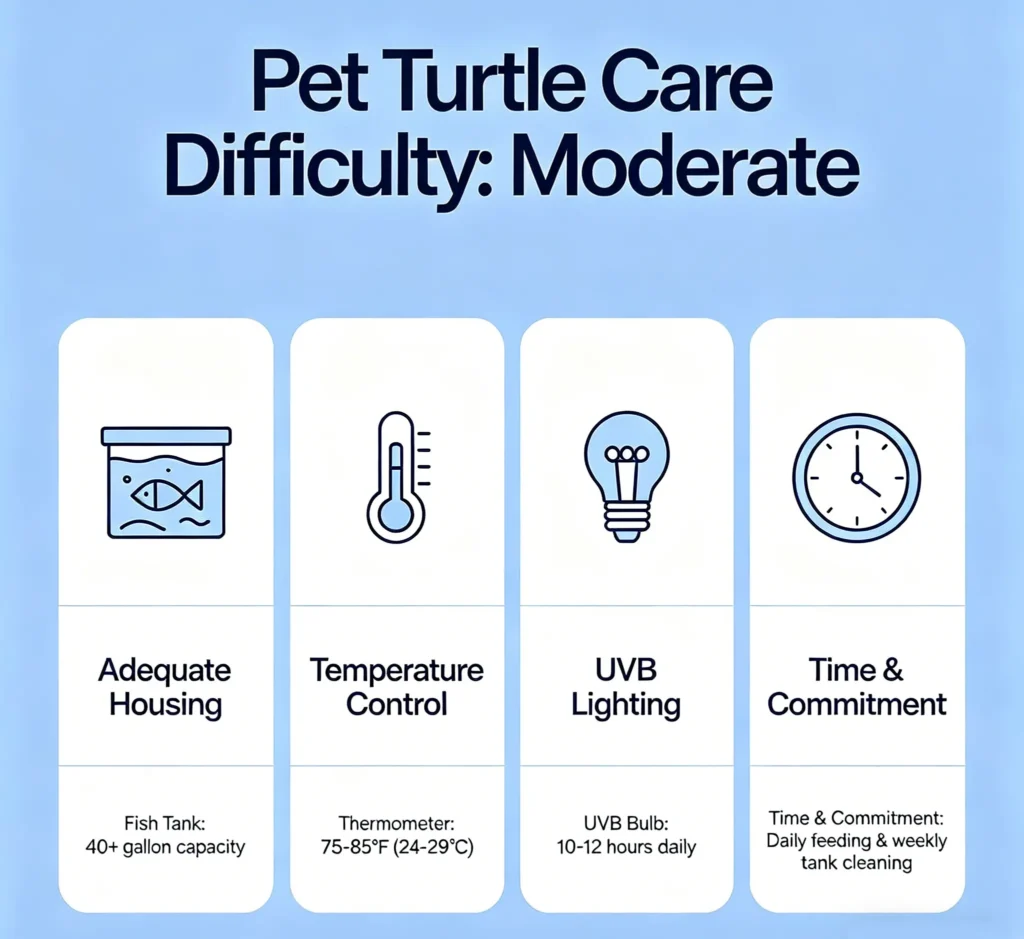
Should You Get a Pet Turtle?
Yes, if:
- You’re ready for a 20–50 year commitment
- You have space for a large tank (or outdoor pond)
- You can commit to weekly water changes and temperature checks
- You want a quiet, low-interaction pet that’s fascinating to watch
- You don’t have young kids at home (salmonella risk)
No, if:
- You want a cuddly, hands-on pet
- You can’t commit to long-term maintenance
- You live in a small apartment with no room for a 75-gallon tank
- You’re not comfortable with salmonella precautions
Wrapping Up Your Pet Turtle Care Plan
Whether you’re just starting your pet turtle care journey or upgrading your setup, the key is preparation. Get your tank, lighting, and filtration dialed in before bringing your turtle home. Budget for the full-grown tank size from day one, and find a qualified exotic vet near you before you need one. Done right, a pet turtle can be a fascinating, peaceful companion for decades.
Frequently Asked Questions
How hard is it to take care of a pet turtle?
Moderate. Setup is the hard part — once it’s dialed in, daily care takes about 5 minutes. The biggest investment is space: a proper adult turtle tank is 75+ gallons.
Do pet turtles get lonely?
No. Turtles are solitary creatures and perfectly happy living alone. They don’t need companionship from other turtles or humans.
How much does a pet turtle cost?
Turtle: $10–$50. Initial setup (tank, filter, lighting, heater, décor): $200–$500. Ongoing costs are low: $15–$30/month for food, supplements, and electricity.
What’s the easiest turtle for beginners?
The common musk turtle. Stays small (3–5 inches), needs only a 20–30 gallon tank, hardy enough to tolerate beginner mistakes. Mud turtles are equally beginner-friendly.
How long do pet turtles live?
Most common species live 20–50 years. Eastern box turtles can live 50–100 years. This is a lifelong commitment.
Find your ideal aquatic or terrestrial exotic pet with our free reptile species recommender quiz.
This content is for educational purposes only and does not substitute professional veterinary diagnosis or treatment. If you observe any symptoms of illness, injury, or abnormal behavior, please consult a qualified exotic animal veterinarian immediately.
For more details, please review our full Medical Disclaimer.
Pingback: Red Eared Slider Care: 2026 Ultimate Beginner’s Manual
Pingback: Leopard Tortoise Respiratory Illness California: 6 Local-Only Humidity Failures in Coastal Southern California (2026 Updated for New Keepers)