
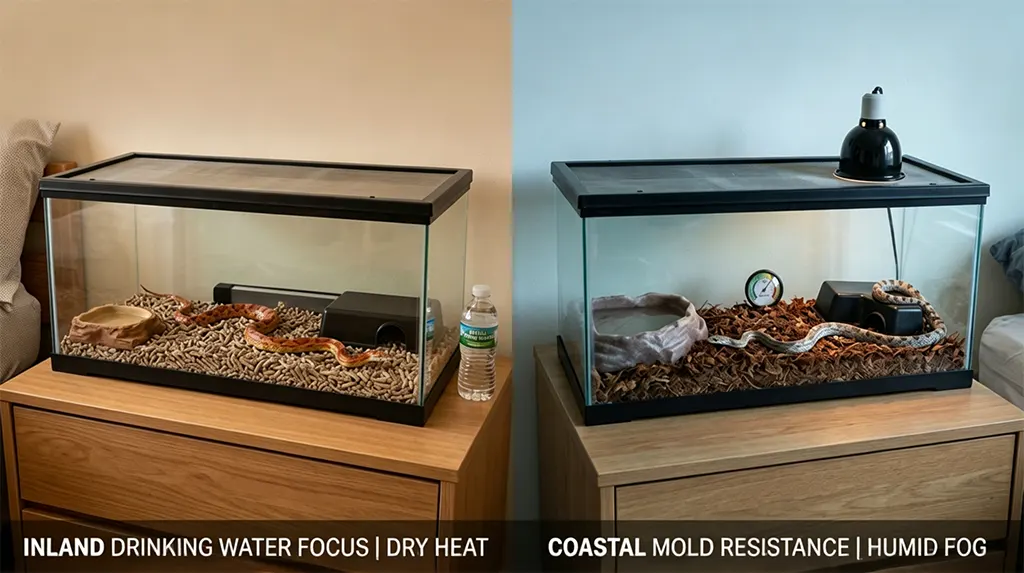
Pantherophis guttatus is a cornerstone species in the reptile hobby. Native to southeastern North America, these colubrids are highly valued for their manageable size (typically 4–6 feet as adults), docile temperaments, and long lifespans (15–20 years). While their needs are straightforward, successful indoor husbandry requires a disciplined approach to environment, health management, and maintenance.
This guide provides evidence-based parameters for corn snake care, drawing from established husbandry literature and professional keeper consensus — and if you haven’t committed to the species yet, our pet snake tier list ranks the corn snake against 14 other captive-bred options on difficulty, hardiness, and handleability.
1. The Apartment Husbandry Challenge
Indoor environments eliminate the extreme fluctuations of the wild, but they introduce unique constraints regarding ventilation, humidity, and space. Replicating a natural environment within an enclosure requires managing a thermal gradient rather than a static temperature. Corn snakes thrive in environments characterized by moderate humidity, discrete shelter opportunities, and reliable thermoregulation sites.
Environmental Parameters
- Warm side (Basking zone): 85–88°F. This provides the energy necessary for digestion and metabolic function.
- Cool side: 70–75°F. This allows the snake to retreat if it becomes overheated.
- Relative Humidity: 40%–60%. Consistency is key. Humidity that remains too low causes respiratory issues and shedding failures; humidity that remains too high can promote bacterial growth.
2. Enclosure & Equipment Setup
The enclosure is the foundation of your snake’s health. Never purchase an animal before the enclosure is fully functional and tested.
Essential Equipment Checklist
- Enclosure: Secure with a locking lid. For adults, a 40-gallon tank (36″x18″x18″) is the industry-standard minimum.
- Thermal Control: Use an under-tank heating mat paired with a reliable digital thermostat. Never place a heat mat directly under the glass without a thermostat, as this poses a severe burn risk.
- Monitoring: Use two digital probe thermometers (one for each side of the tank) and a reliable hygrometer.
- Furnishings: Provide at least two secure hides—one on the warm side and one on the cool side—to facilitate behavioral thermoregulation.

3. Maintenance & Husbandry Protocols
Feeding Schedule
- Hatchlings: Every 5–7 days (Pinky mice).
- Juveniles: Every 7–10 days (Fuzzy mice).
- Sub-adults: Every 10–14 days (Weaned mice).
- Adults: Every 14–21 days (Adult mice/rat pups).
- Safety Note: Prey size should not exceed the widest part of the snake’s body.
Shedding Management
Normal shed cycles occur every 4–8 weeks. If your snake enters the “blue phase” (cloudy eyes), increase ambient humidity to 65–70%.
- The Humid Hide: Place a container with damp sphagnum moss inside the tank during the shed cycle.
- Assistance: If a shed is incomplete, soak the snake in shallow 78–82°F water for 15 minutes, then gently assist the shed with a damp cotton swab. Never force a shed, as this can damage delicate skin.
4. Health Monitoring & Veterinary Care
A healthy corn snake is alert, active during its normal hours, and sheds cleanly.
Signs of Concern
- Lethargy or loss of appetite.
- Respiratory distress (wheezing or clicking sounds).
- Persistent skin issues (blisters or discolored scales).
- Repeated regurgitation of food.
Professional Support: Establish a relationship with an exotic animal veterinarian before you need one. The Association of Reptilian and Amphibian Veterinarians (ARAV) maintains a searchable directory to help you find a qualified specialist. Annual wellness examinations are recommended for early detection of husbandry-related issues.
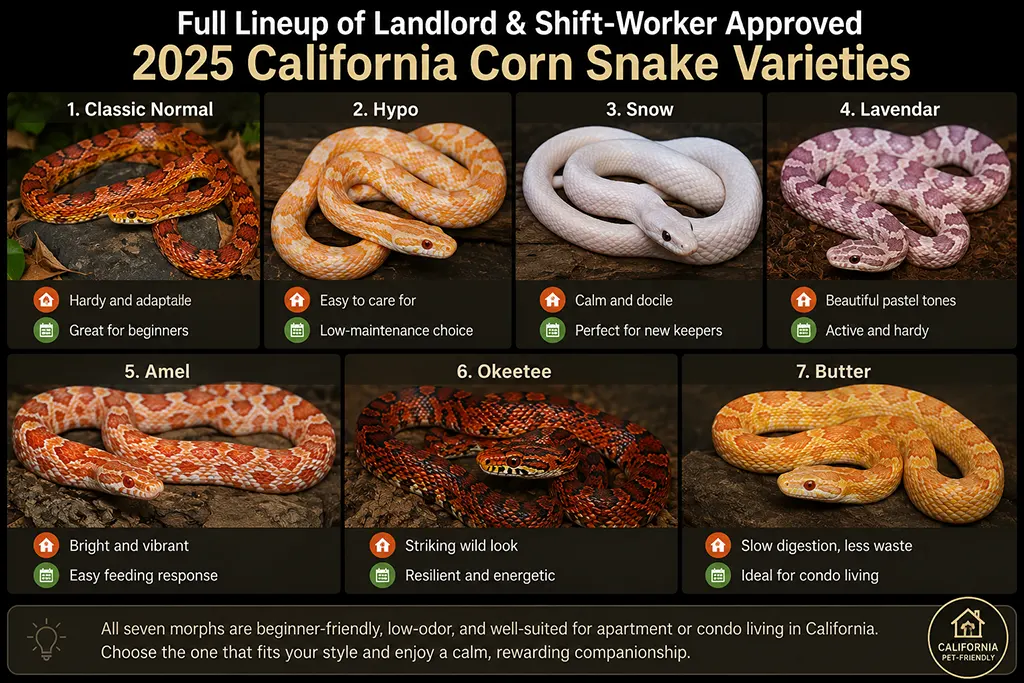
5. Frequently Asked Questions (FAQ)
What substrate is recommended? Aspen shavings and coconut fiber are excellent for burrowing and moisture control. Avoid cedar or pine products, as the aromatic oils in these woods are toxic to reptiles.
Do corn snakes need UVB lighting? While not strictly mandatory for survival (D3 is provided through a balanced diet), research indicates that low-level UVB (5–7%) supports natural circadian rhythms and overall health.
Why is my corn snake not eating? This is often a husbandry issue. Before you worry, use our Reptile Feeding & Health Checker to review your current feeding schedule, verify food pairing, and cross-reference symptoms with our common illness guide. If the issue persists after these checks, please consult an exotic animal veterinarian.
Can I handle my snake daily? Frequent handling can cause stress. Limit interactions to brief periods and avoid handling for 48 hours after feeding to prevent regurgitation.
The Keeper’s Commitment
Long-term success in reptile keeping is built on the consistency of the environment you provide. By focusing on evidence-based standards—correct thermal gradients, hygiene, and appropriate feeding—you provide your corn snake with a life that mirrors its biological needs, leading to a long, healthy, and stress-free lifespan.
Corn snake husbandry standards reflect established keeper consensus and published guidelines from reptile professional organizations.
This content is for educational purposes only and does not substitute professional veterinary diagnosis or treatment. If you observe any symptoms of illness, injury, or abnormal behavior, please consult a qualified exotic animal veterinarian immediately.
For more details, please review our full Medical Disclaimer.