
Choosing a pet snake is not just about finding the prettiest morph or the calmest-looking animal. The right snake should fit your experience level, available space, feeding preferences, handling expectations, and ability to maintain a stable environment.
Some snakes are famously easy to handle but have surprisingly specific husbandry requirements. Others are exceptionally hardy yet remain fast, defensive, or difficult to manage outside their enclosure.
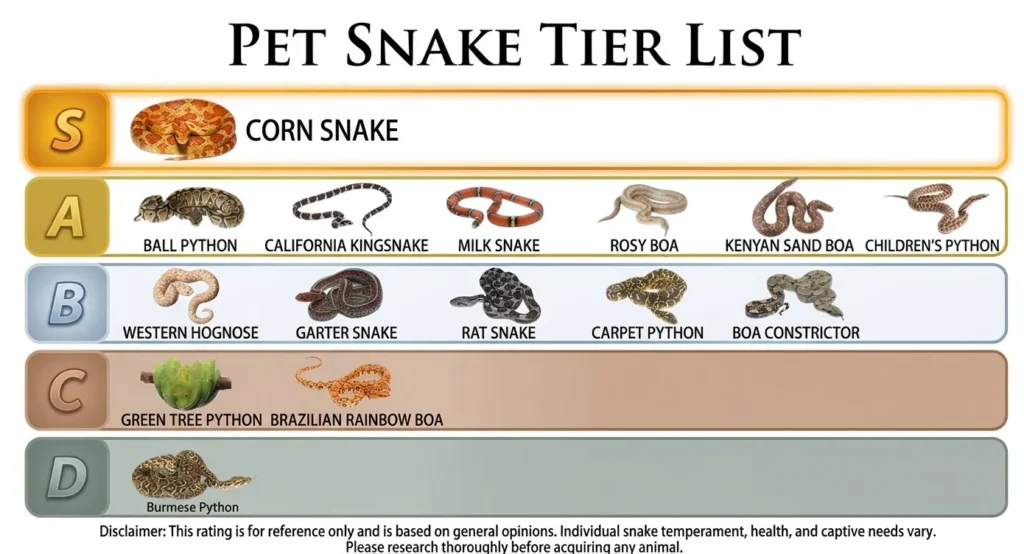
This pet snake tier list ranks 15 popular captive-bred pet snake species and species groups across four separate categories: husbandry difficulty, hardiness, handleability, and temperament.
The goal isn’t to declare one snake universally superior. It’s to help you understand which species is most likely to fit your lifestyle—and where its biggest tradeoffs lie.
Quick verdict: Corn snakes are among the strongest all-around choices for beginners. Ball pythons are excellent candidates for keepers who prioritize calm handling and can manage their environmental and feeding requirements. Kingsnakes and milk snakes offer exciting alternatives for owners who want a more active snake and understand their feeding behavior.
How We Ranked These Pet Snakes
Before looking at the rankings, one distinction matters: this is a practical husbandry-based comparison, not a controlled scientific temperament study.
There is no universally accepted, peer-reviewed scoring system that establishes a definitive temperament ranking for every captive-bred pet snake species. The ratings below are qualitative editorial assessments informed by established captive-care principles and widely recognized keeper experience.
They are not measured population statistics, guaranteed individual outcomes, or veterinary predictions.
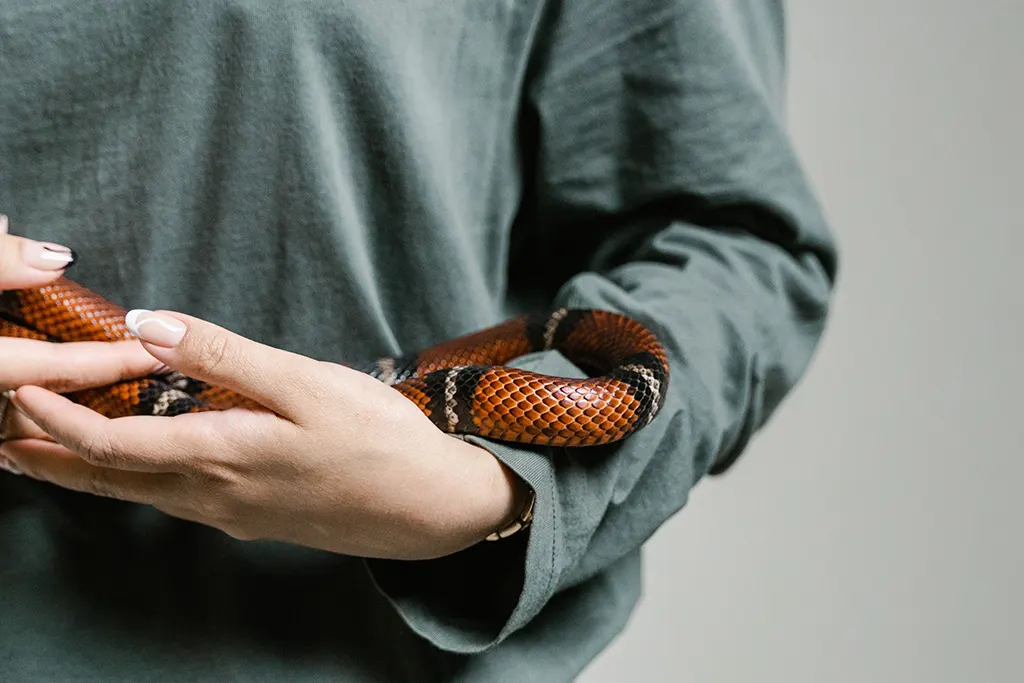
Our captive-bred-only standard
This comparison focuses on responsibly captive-bred (CB) animals, not wild-caught (WC) specimens.
That distinction helps make the comparison more useful because wild-caught snakes may face additional challenges, including:
- Parasites or infectious disease acquired before collection.
- Stress associated with capture, transport, and environmental change.
- Limited adaptation to captive feeding routines.
- Defensive responses associated with unfamiliar handling.
However, captive-bred does not automatically mean healthy, tame, parasite-free, or reliably feeding.
A captive-bred snake can still be defensive, have underlying health problems, or require specialized care. Individual history, breeding practices, early socialization, and current husbandry all matter.
Whenever possible, choose a documented captive-bred animal from a reputable breeder who can explain its feeding history, health background, age, and husbandry requirements.
The four ranking factors
We assess each snake using four independent dimensions.
| Category | What it measures |
|---|---|
| Husbandry difficulty | How demanding its enclosure, environmental management, feeding, and routine care are for a prepared keeper |
| Hardiness | Its practical tolerance of ordinary husbandry variation and recovery margin—not immunity to illness |
| Handleability | How manageable routine, necessary handling tends to be, considering movement, body size, and defensive responses |
| Temperament | Typical defensive behavior, such as fleeing, musking, hissing, striking defensively, or remaining settled |
Important: Hardiness does not mean a snake should be exposed to poor temperatures, dehydration, dirty conditions, or inadequate space. No species should be selected on the assumption that it can tolerate neglect.
Understanding the tier labels
- S Tier: An especially strong fit for the category.
- A Tier: Very good performance, with manageable tradeoffs.
- B Tier: Moderate difficulty or a meaningful limitation.
- C Tier: More demanding, specialized, or less predictable for the average keeper.
- D Tier: Generally unsuitable for inexperienced keepers under ordinary pet-keeping circumstances.
These are comparative categories, not numerical probabilities or scientific measurements.
A snake can rank S in handleability while receiving B in husbandry difficulty. That is intentional.
Pet Snake Tier List: Overall Rankings at a Glance
The following are practical recommendations for typical, responsibly captive-bred animals maintained under appropriate conditions.
The overall tiers emphasize beginner suitability, consistency of routine care, and manageability. They are not calculated from a validated weighted scientific formula.
| Species | Care | Hardiness | Handleability | Temperament | Overall |
|---|---|---|---|---|---|
| Corn Snake | S | S | A | A | S |
| Ball Python | B | B | S | S | A |
| California Kingsnake | A | A | B | B | A |
| Milk Snake | A | A | B | B | A |
| Rosy Boa | A | A | A | A | A |
| Kenyan Sand Boa | A | A | A | A | A |
| Children’s Python | A | A | A | B | A |
| Western Hognose | B | B | B | B | B |
| Garter Snake | B | B | B | B | B |
| Rat Snake (including common pet lines) | A | A | B | B | B |
| Carpet Python | B | B | B | B | B |
| Boa Constrictor (common boa types) | B | A | B | B | B |
| Green Tree Python | C | C | C | B | C |
| Brazilian Rainbow Boa | C | C | B | B | C |
| Burmese Python | C | B | D | B | D |
Read this chart correctly: These ratings describe broad expectations, not a promise about any particular animal. The labels also simplify substantial differences among species, localities, lineages, sizes, and individual snakes.
The Burmese python’s D is primarily a pet-suitability warning for the average household, not a claim that the species is inherently unhealthy or impossible to keep successfully.
The Four Rankings Explained
1. Easiest Pet Snakes to Care For
For most beginners, routine care matters more than impressive appearance.
S Tier: Corn snake
A Tier: California kingsnake, milk snake, rosy boa, Kenyan sand boa, Children’s python, common rat snake types
B Tier: Ball python, Western hognose, garter snake, carpet python, boa constrictor
C Tier: Green tree python, Brazilian rainbow boa, Burmese python
Why does the ball python rank lower than the corn snake?
Ball pythons often do very well in captivity, but they need careful attention to thermal gradients, humidity, secure hides, and feeding consistency. Some experience prolonged periods of reduced appetite or fasting.
Corn snakes generally offer a more forgiving starting point for a keeper who wants a straightforward feeding routine and a snake that tolerates regular observation and appropriate handling.
2. Hardiest Captive-Bred Pet Snakes
Hardiness here refers to practical husbandry resilience—not the ability to survive bad care.
Top practical candidates:
- Corn snakes.
- Rosy boas.
- Kenyan sand boas.
- California kingsnakes.
- Many commonly kept rat snake types.
These species are often considered relatively forgiving when their basic needs are met.
However, hardiness depends on the conditions involved. A snake adapted to a relatively dry environment may not handle prolonged excessive humidity well, while a tropical species may be poorly suited to chronically dry air.
There is no reliable universal dataset proving which pet snake gets sick the least across all captive collections.
Health outcomes depend heavily on husbandry, genetics, biosecurity, parasite exposure, breeder quality, and veterinary care.
3. Easiest Pet Snakes to Handle
Top choices:
- Ball python.
- Rosy boa.
- Kenyan sand boa.
- Corn snake.
- Children’s python.
Ball pythons are frequently favored for their relatively slow movements, compact defensive posture, and tendency to settle during appropriate handling.
That does not make every ball python calm.
Corn snakes are often excellent handling animals, but younger individuals may move quickly and attempt to escape.
Rosy boas are typically manageable because of their moderate size and movement patterns, although individual responses vary.
Handleability should also include practical safety. A large, powerful snake may remain calm yet still require experienced handlers because of its strength.
4. Best Temperament for Pet Keeping
Temperament is not the same as feeding response.
A snake can be calm during handling but strike rapidly when it smells food. Another snake can refuse food yet remain defensive when approached.
Strong general candidates for calmer handling:
- Ball python.
- Rosy boa.
- Kenyan sand boa.
- Many captive-bred corn snakes.
But species reputation should never replace individual observation.
A snake that consistently retreats into its hide is not necessarily aggressive. Avoidance is often a normal defensive response.
The best temperament for a pet is not necessarily a snake that never moves or reacts. It is one whose normal behavior can be safely accommodated without repeatedly forcing it into stressful situations.
The 15 Best Pet Snakes Ranked: Species-by-Species Guide
1. Corn Snake (Pantherophis guttatus)
Overall: S Tier | Best all-around beginner snake
The corn snake is one of the strongest choices for a first-time snake owner.
Why it ranks highly
- Generally straightforward captive husbandry.
- Commonly available captive-bred animals.
- Usually accepts appropriately sized frozen-thawed prey when properly established.
- Moderate adult size compared with many popular constrictors.
- Active enough to make observation interesting.
- A broad variety of colors and patterns.
Corn snakes are particularly appealing to beginners who want to learn routine husbandry without starting with a highly specialized species.
Core weakness: Corn snakes can be fast, curious, and excellent escape artists. A snake that is easy to care for may still be challenging to hold securely.
Young corn snakes may be more flighty than established adults.
Technical note: Provide secure, escape-resistant housing, a measured thermal gradient, suitable hides, and fresh water. Do not choose enclosure size based on the snake’s current juvenile size alone.
Best for: First-time keepers, families with responsible adult supervision, and hobbyists who want an active, manageable snake.
2. Ball Python (Python regius)
Overall: A Tier | Best for calm handling enthusiasts
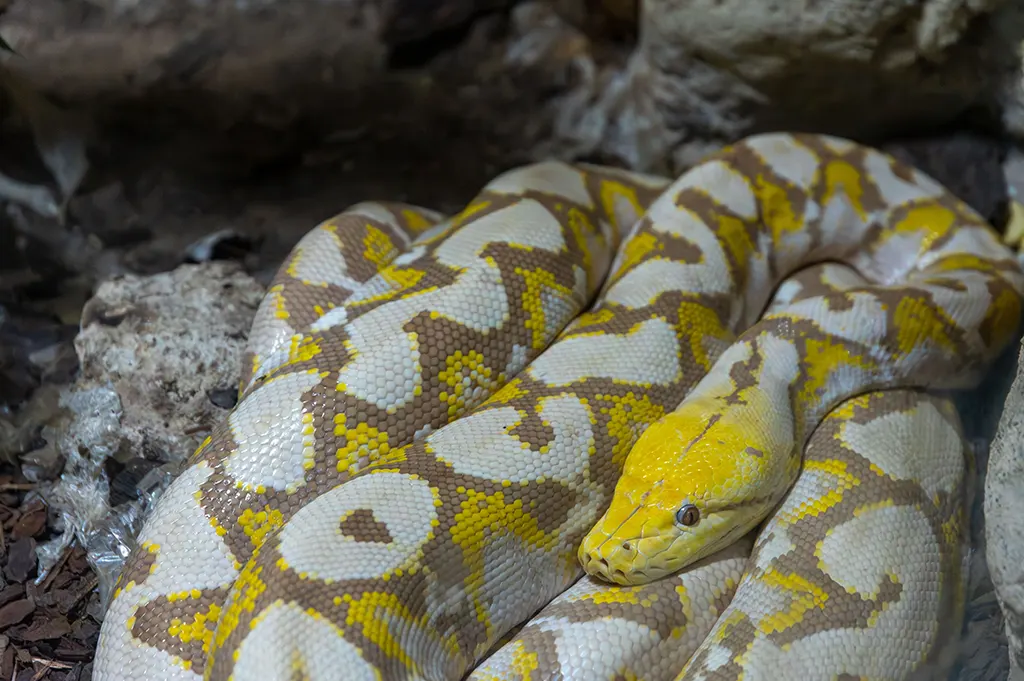
If your priority is a snake that often settles comfortably during handling, the ball python deserves serious consideration.
Ball pythons are widely appreciated for their manageable size, relatively calm handling behavior, and distinctive defensive strategy of curling into a ball.
Why keepers love them
- Often calm during properly conducted handling.
- Available in an enormous range of captive-bred morphs.
- Usually less fast-moving than corn snakes.
- Can thrive in well-designed captive environments.
Core weakness: Feeding inconsistency and environmental management.
Some ball pythons experience extended fasting periods. Seasonal changes, reproductive condition, stress, husbandry problems, and illness may all affect appetite.
A fasting cycle is not automatically normal or harmless. Do not dismiss persistent food refusal simply because ball pythons have a reputation for fasting.
If you’re already in that situation, our ball python not eating troubleshooting guide walks through the husbandry checks in order before you assume it’s seasonal.
Technical note: Monitor weight trends, body condition, temperatures, humidity, and feeding records. Use appropriate digital temperature measurement and reliable heating controls.
Do not respond to food refusal by repeatedly offering increasingly large meals.
Best for: Keepers who prioritize calm handling and are comfortable monitoring environmental conditions and feeding patterns.
3. California Kingsnake (Lampropeltis californiae)
Overall: A Tier | Best for active snake enthusiasts
California kingsnakes offer a different experience from ball pythons.
They are alert, active, visually striking, and often highly food-motivated.
Strengths
- Engaging behavior.
- Generally manageable captive husbandry.
- Often readily established on appropriate prey.
- Many attractive captive-bred color and pattern varieties.
Core weakness: Strong feeding responses and defensive behavior in some individuals.
Kingsnakes may musk, flee, or strike defensively when stressed. Their feeding response can also be intense.
A feeding strike does not automatically indicate aggression.
Technical note: Kingsnakes are known for ophiophagy, meaning some consume other snakes. House them individually. Never cohouse kingsnakes with other snakes as a routine pet-care practice.
Best for: Owners who want an alert, active snake and are comfortable distinguishing feeding behavior from defensive behavior.
4. Milk Snake (Lampropeltis spp.)
Overall: A Tier | Best for colorful, active pets
Milk snakes offer many of the same advantages as kingsnakes, with substantial variation across species and subspecies.
Their vivid banding patterns make them especially appealing to hobbyists.
Strengths
- Broad selection of captive-bred animals.
- Generally practical feeding and husbandry.
- Interesting activity patterns.
- Manageable size in many commonly kept forms.
Core weakness: Young milk snakes may be nervous, quick, or prone to defensive reactions.
Milk snakes are not automatically easier than corn snakes simply because they are small.
Technical note: Husbandry requirements vary among milk snake species. Verify the identity of the animal and follow species-specific temperature, humidity, enclosure, and adult-size guidance.
Best for: Keepers seeking a colorful snake that is rewarding to observe.
5. Rosy Boa (Lichanura spp.)
Overall: A Tier | Best for a manageable, slower-moving snake
Rosy boas are often underrated.
They combine a manageable adult size with relatively simple captive care when their environmental needs are understood.
Strengths
- Often steady during handling.
- Moderate size.
- Generally practical feeding routines.
- Attractive natural coloration and locality variation.
Core weakness: Their environmental requirements are not interchangeable with those of tropical snakes.
Rosy boas need an appropriate thermal gradient, secure hides, and a suitable moisture balance. Excessively wet conditions can be problematic.
Technical note: Avoid treating all rosy boa localities as identical. Establish the animal’s origin or breeder’s care recommendations and monitor enclosure temperatures.
Our rosy boa beginner guide covers the locality differences, thermal gradients, and humidity balance in more detail.
Best for: Keepers seeking a relatively compact snake with a calmer handling profile.
6. Kenyan Sand Boa (Eryx colubrinus)
Overall: A Tier | Best compact ambush predator
Kenyan sand boas are small, fascinating snakes with a distinctive burrowing lifestyle.
They often spend considerable time beneath substrate, waiting for prey.
Strengths
- Compact adult size.
- Manageable enclosure footprint when appropriately designed.
- Often practical feeding routines.
- Frequently manageable during brief, necessary handling.
Core weakness: Limited visibility and a potentially strong feeding response.
A sand boa emerging from substrate can strike quickly when it mistakes movement for prey.
This is not necessarily a temperament problem.
Technical note: Use safe, burrow-friendly substrate and maintain accessible monitoring of temperature, hydration, and body condition. Avoid loose substrate practices that compromise feeding safety.
Our full Kenyan sand boa care guide covers substrate depth, feeding safety, and the apartment setup that makes this species work.
Best for: Owners who enjoy observing natural ambush behavior and do not need a constantly visible pet.
7. Children’s Python (Antaresia childreni)
Overall: A Tier | Best small python alternative
Children’s pythons and other commonly kept Antaresia species offer a compact alternative to larger pythons.
Their small size can be attractive to keepers who want a python without committing to a ball python’s particular feeding tendencies.
Strengths
- Relatively compact.
- Interesting nocturnal behavior.
- Often manageable with appropriate handling.
- Captive-bred animals are available in the hobby.
Core weakness: Individuals can be defensive, food-responsive, or more active than expected.
Small size does not eliminate the risk of a bite.
Technical note: Confirm the exact Antaresia species. Requirements, adult size, and availability vary.
Best for: Keepers with some confidence handling small, active snakes who want an alternative to a ball python.
8. Western Hognose (Heterodon nasicus)
Overall: B Tier | Best for keepers who appreciate unusual behavior
Western hognoses are famous for their upturned snouts, dramatic displays, and distinctive defensive repertoire.
They may hiss, flatten their necks, bluff-strike, or occasionally play dead.
These behaviors can be fascinating, but they are not always beginner-friendly.
Strengths
- Relatively compact.
- Highly distinctive appearance.
- Engaging defensive displays.
- Many captive-bred morphs and localities.
Core weakness: Feeding reliability can vary, and defensive behavior may be misinterpreted.
Hognoses may be food-selective or require additional attention to feeding management.
Technical note: Rear-fanged and mildly venomous.
Western hognoses possess enlarged rear teeth and venom-delivery adaptations. Their venom is generally of low medical significance to humans, but bites can occasionally cause localized pain, swelling, or more significant reactions.
A bite is not guaranteed to be harmless.
People with allergies or unusual symptoms should seek prompt medical advice. Anyone considering ownership should also verify local wildlife, venomous-reptile, import, and possession regulations.
Do not deliberately provoke defensive displays or use live prey as a routine feeding solution.
If you’ve decided a hognose is worth the caveats, our guide to captive-bred western hognose sources explains how to avoid wild-caught animals and what paperwork a legitimate breeder provides.
Best for: Experienced beginners who research feeding, legal requirements, and bite risks before purchasing.
9. Garter Snake (Thamnophis spp.)
Overall: B Tier | Best for active, visually interesting observation
Garter snakes can be rewarding pets, particularly for keepers who enjoy activity and naturalistic behavior.
However, they are sometimes oversimplified as easy snakes.
Strengths
- Interesting daytime behavior in many species.
- Attractive patterns.
- Relatively manageable size in many commonly kept species.
- Engaging natural history.
Core weakness: Feeding and species-specific environmental requirements.
Some garter snakes require more thoughtful dietary planning than commonly kept rodent-eating snakes.
A diet based on feeder fish or earthworms needs careful nutritional consideration. Certain fish can contain thiaminase, which can contribute to vitamin B1 deficiency if used inappropriately.
Not every fish or worm is nutritionally equivalent.
Technical note: Verify species-specific dietary requirements, supplement needs where applicable, prey safety, and local legal status.
Best for: Keepers interested in active observation who are prepared to research a more specialized feeding plan.
10. Rat Snake (Pantherophis spp. and other commonly kept rat snakes)
Overall: B Tier | Best for keepers who enjoy climbing and exploration
Rat snakes are a diverse group, and a single ranking cannot fully represent their differences.
Popular captive-bred options include corn snakes, which are covered separately, along with other rat snake species and forms.
Many non-corn rat snakes are active, intelligent, and impressive climbers.
Strengths
- Interesting exploratory behavior.
- Many captive-bred varieties.
- Potentially excellent display animals.
- Some species have practical husbandry requirements.
Core weakness: Temperament and care requirements vary substantially.
Some rat snakes can be fast, defensive, or large enough to require more demanding enclosures.
Technical note: Do not apply corn snake husbandry recommendations automatically to every rat snake.
Confirm adult size, climbing needs, humidity requirements, and thermal preferences.
Best for: Keepers who enjoy active snakes and have researched the exact species.
11. Carpet Python (Morelia spilota complex)
Overall: B Tier | Best for experienced keepers seeking a display python
Carpet pythons can be stunning, intelligent, and behaviorally rewarding.
They are also highly variable in size, temperament, and husbandry needs.
Strengths
- Strong display appeal.
- Interesting climbing behavior.
- Many attractive locality forms.
- Can become manageable with appropriate husbandry and handling.
Core weakness: Size, strength, defensive behavior, and variation among forms.
A young carpet python may appear manageable, but its adult size and strength should guide the purchase decision.
Technical note: Select enclosure design and environmental parameters for the exact species or locality. Establish a handling plan before the snake reaches substantial size.
Best for: Intermediate or experienced keepers prepared for a larger, more powerful snake.
12. Boa Constrictor (common boa types)
Overall: B Tier | Best for keepers planning for a substantial adult snake
Boa constrictors can be excellent long-term companions for experienced reptile owners.
However, the term “boa constrictor” is frequently used loosely in the pet trade.
Adult size varies significantly among species, localities, sexes, and lineages.
Strengths
- Often robust when properly maintained.
- Many individuals become manageable.
- Strong feeding response can make feeding routines straightforward.
- Long-term keeper appeal.
Core weakness: Adult size, strength, space requirements, and longevity.
A large boa can create safety concerns even when it is not defensive.
Technical note: Research the exact taxon, adult size expectations, and local ownership requirements. Large constrictors require appropriate handling policies, secure housing, and contingency planning.
Our boa constrictor care guide covers the seven mistakes that most often turn a manageable juvenile into an unmanageable adult.
Never rely on a snake’s calm demeanor as proof that it is safe to handle alone.
Best for: Experienced owners with appropriate space, equipment, and long-term resources.
13. Green Tree Python (Morelia viridis)
Overall: C Tier | Best for specialized display keeping
Green tree pythons are among the most visually impressive snakes in the hobby.
Their striking coloration and arboreal behavior make them popular display animals.
But their care requirements are more specialized than those of many beginner species.
Strengths
- Exceptional visual appeal.
- Fascinating arboreal behavior.
- Strong display potential.
Core weakness: Environmental precision and handling expectations.
They are not usually ideal choices for people who want a frequently handled pet.
Stress, inappropriate temperatures, poor airflow, and unsuitable hydration conditions can contribute to health problems.
Technical note: Temperature and humidity targets must be species-appropriate and supported by good ventilation and monitoring. High humidity does not mean a constantly wet enclosure.
Best for: Experienced keepers who prioritize observation over handling.
14. Brazilian Rainbow Boa (Epicrates cenchria)
Overall: C Tier | Best for experienced keepers seeking a humidity-dependent species
Brazilian rainbow boas are famous for their iridescent sheen.
Their beauty is undeniable, but their environmental needs require careful planning.
Strengths
- Spectacular coloration.
- Interesting nocturnal behavior.
- Potentially manageable handling when properly established.
Core weakness: Humidity management and sensitivity to inappropriate environmental conditions.
A keeper must maintain suitable moisture without creating persistently wet, poorly ventilated conditions.
Technical note: Provide a measured thermal gradient, secure hides, suitable humidity, ventilation, and monitoring. Juveniles and adults may require adjustments to their setup.
Best for: Keepers experienced with environmental monitoring and humidity-dependent species.
15. Burmese Python (Python bivittatus)
Overall: D Tier for ordinary pet ownership | Not a suitable choice for most households
Burmese pythons are impressive animals, but their adult size fundamentally changes the ownership equation.
They can become exceptionally large and powerful, requiring substantial housing, equipment, food resources, and experienced handling support.
Strengths
- Impressive display animal.
- Can be established successfully in specialized collections.
- Interesting behavior and natural history.
Core weakness: Adult size, strength, safety risks, housing costs, and legal restrictions.
The problem is not simply whether a Burmese python is tame.
A calm, powerful snake can still cause catastrophic injury.
Technical note: Before considering ownership, verify local laws and long-term requirements. Appropriate housing and experienced, species-specific handling protocols are essential.
Never handle a large constrictor alone. Even experienced keepers need risk-based procedures, and a second person is not a substitute for proper training and safeguards.
Best for: Specialized, experienced facilities and highly prepared keepers where legal and ethical ownership is feasible.
For the overwhelming majority of first-time snake owners, there are better alternatives.
A Critical Distinction: Feeding Response vs. Defensive Temperament
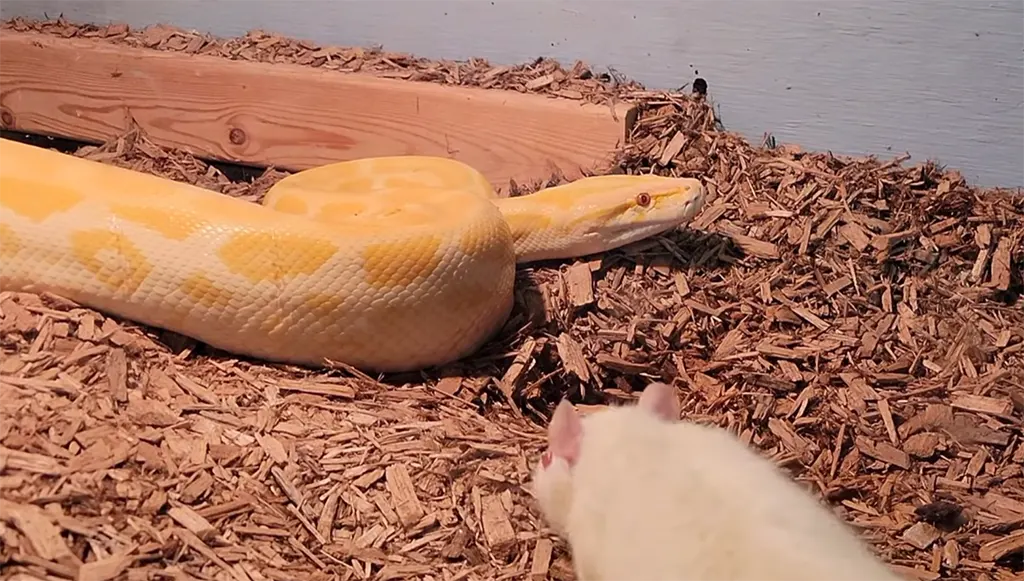
One of the biggest mistakes in pet snake comparisons is calling every snake that strikes “aggressive.”
That label often hides two very different behaviors.
Defensive bite vs. feeding strike
| Behavior | Defensive bite | Feeding strike |
|---|---|---|
| Primary trigger | Perceived threat or disturbance | Food cues or prey detection |
| Typical context | Handling, restraint, sudden movement | Feeding preparation or prey presentation |
| Common signals | Retreating, defensive posture, hissing, musking, bluff-striking | Increased food interest, tracking, prey-directed orientation |
| What it means | The snake may feel threatened | The snake may be responding normally to food |
| Best response | Reduce stress and reassess handling | Improve feeding safety and feeding routines |
These are useful distinctions, not perfect diagnostic categories.
A snake can show mixed behaviors, and a feeding strike can occur outside an obvious feeding context.
Likewise, a defensive strike may happen without prolonged warning.
How to reduce accidental bites
- Use dedicated feeding tools where appropriate.
- Avoid handling immediately before or after feeding.
- Keep feeding and handling routines predictable.
- Avoid repeatedly touching or restraining a stressed snake.
- Wash hands after handling prey.
- Never assume a snake cannot bite because it has never bitten before.
Do not use a snake hook, tapping technique, or handling tool as a universal cure for defensive behavior. Any technique must suit the species, individual, and keeper’s competence.
The takeaway: A highly food-motivated kingsnake can be a perfectly worthwhile pet. A ball python that is calm during handling may still strike at food with remarkable speed.
Those are separate traits and deserve separate rankings.
The Biggest Pet Snake Myth: There Is No Perfect Snake
Many first-time keepers search for a snake that checks every box:
- Never refuses food.
- Never bites.
- Remains calm during handling.
- Rarely gets sick.
- Needs little maintenance.
- Stays small.
- Lives a long time.
Unfortunately, these expectations conflict.
A snake that is highly food-motivated may also be more likely to deliver a fast feeding strike. A snake that remains hidden most of the day may be easier to accommodate but less rewarding for someone who wants frequent activity. A calm, manageable python can still have feeding challenges.
The better question is not “Which snake has no disadvantages?”
It is:
Which disadvantages am I actually prepared to manage?
A practical tradeoff comparison
| Your priority | Strong candidate | What you sacrifice |
|---|---|---|
| Easiest all-around start | Corn snake | May be faster and more escape-prone than expected |
| Calm handling | Ball python | Potential feeding inconsistency and environmental demands |
| Active behavior | California kingsnake | Strong feeding response and possible defensiveness |
| Compact size | Kenyan sand boa | Often spends much of its time buried |
| Distinctive appearance | Western hognose | Specialized considerations, feeding variability, bite precautions |
| Humidity-dependent display animal | Brazilian rainbow boa | More demanding environmental management |
| Advanced python keeping | Carpet python | Adult size, strength, and individual variability |
This comparison is more useful than a single popularity ranking because it begins with the owner’s actual expectations.
The Ball Python Lesson: Easy to Handle Doesn’t Mean Easy to Care For
Consider a hypothetical first-time keeper who chooses a ball python after watching videos of calm snakes resting comfortably in their owners’ hands.
The snake settles in well, tolerates necessary handling, and appears to be the perfect pet.
Then winter arrives.
The room becomes cooler, the keeper notices a small change in enclosure readings, and the snake begins refusing meals. A few missed feedings turn into weeks of anxiety. The owner starts offering food more frequently, rearranging the enclosure, and checking the snake repeatedly.
The original appeal of the ball python—its calm handling behavior—has not disappeared. But the owner has discovered a different challenge: feeding management.
This is an illustrative scenario, not a documented real keeper case. It represents a common ownership concern without attributing invented experiences or outcomes to a real person.
The lesson is simple: a high handleability rating cannot predict feeding reliability.
Understanding ball python fasting
Ball pythons can experience periods of reduced appetite or fasting, sometimes associated with seasonal or reproductive behavior, stress, shedding, or changes in their surroundings.
Some healthy individuals may temporarily refuse food without developing a medical problem. Others stop eating because something is wrong.
There is no single fasting duration that can safely distinguish normal behavior from disease in every ball python.
Veterinary guidance recognizes that some pythons may refuse food for extended periods, but prolonged appetite loss should not automatically be dismissed as seasonal. VCA Animal Hospitals’ snake care guidance
and Kensington Bird and Animal Hospital’s ball python care sheet discuss feeding refusal and health concerns.
What should an owner do?
- Verify warm-side and cool-side temperatures using reliable instruments.
- Check humidity, hide availability, security, and recent environmental changes.
- Record feeding attempts, shedding, weight, and body condition.
- Avoid repeatedly disturbing the snake or offering food every day.
- Consult a reptile-experienced veterinarian if appetite loss is prolonged, recurrent, unexplained, or accompanied by other symptoms.
Seek prompt veterinary assessment for respiratory symptoms, regurgitation, marked lethargy, visible injuries, abnormal swelling, or ongoing weight loss.
The practical rule is to monitor the animal, not just the calendar.
Which Pet Snake Should You Actually Buy?
A tier list is only useful if it helps you make a decision.
Here are five common ownership profiles and the species that best match them.
Profile 1: “I have never owned a snake.”
Best match: Corn snake
Corn snakes offer a particularly balanced introduction to captive snake care.
They are a good choice if you want to learn:
- Temperature and humidity monitoring.
- Feeding and cleaning routines.
- Safe handling.
- Shedding and body-condition observation.
- Enclosure security.
A healthy, established captive-bred corn snake is often a sensible first purchase.
Profile 2: “I mainly want a calm snake to handle.”
Best match: Ball python
A ball python may be the better fit if your main goal is calm, occasional handling.
However, avoid choosing an individual solely because a seller demonstrates that it remains still.
A frozen response, stress-related immobility, or unfamiliarity with handling is not proof of a relaxed temperament.
Look for an animal with a known feeding history, healthy body condition, and normal responses.
Profile 3: “I want a snake that moves around and is interesting to watch.”
Best match: Corn snake or California kingsnake
Both can provide rewarding observation opportunities.
Corn snakes are generally the more beginner-friendly all-around recommendation.
Kingsnakes may appeal to keepers who enjoy a more intense feeding response and are comfortable with careful feeding protocols.
Profile 4: “I want something small.”
Best match: Kenyan sand boa or rosy boa
Both can be attractive choices for keepers who prefer a smaller snake.
But small does not mean maintenance-free.
You still need enough enclosure space for appropriate movement, thermal gradients, hides, and natural behavior.
Do not select a juvenile based on its present size alone.
Profile 5: “I want an impressive display snake.”
Best match: Depends on experience
For beginners, a well-established corn snake can make a beautiful display animal.
For experienced keepers, carpet pythons or green tree pythons may be appropriate, depending on the exact animal and setup.
A display-focused snake should not be purchased simply because it looks impressive in photographs.
Which Pet Snakes Get Sick the Least?
This is one of the most common questions in beginner snake research, but it does not have a simple evidence-based answer.
There is no sufficiently standardized, broadly representative dataset establishing a reliable illness-rate league table across these 15 captive-bred snake groups.
Popular species are not necessarily healthier species.
Some species appear easier to maintain because their husbandry requirements are relatively forgiving. That does not prove they have a lower disease incidence.
What actually reduces health risks?
Regardless of species:
1. Buy from a responsible breeder
Ask for:
- Hatch date or approximate age.
- Feeding records.
- Prey type and size.
- Recent shedding history.
- Known health concerns.
- Captive-bred documentation.
- Relevant veterinary or parasite-testing history.
A single successful feeding does not establish long-term feeding reliability.
2. Quarantine new arrivals
Keep new snakes separate from existing reptiles.
Use dedicated equipment, practice hand hygiene, and avoid shared water bowls or cleaning tools.
A quarantine period should follow veterinary advice and the disease risks involved. A period of several months is often used in reptile collections, but no fixed duration guarantees that disease has been excluded.
3. Establish the enclosure before bringing the snake home
Measure temperatures and confirm the heating system is safe.
Do not rely on the room thermostat to represent the temperature inside a snake enclosure.
Use thermostatically controlled heating, suitable hides, and secure ventilation.
4. Monitor weight and body condition
A snake’s appearance can change gradually.
Regular weight records help identify trends that may not be obvious from casual observation.
5. Build a relationship with a reptile-experienced veterinarian
Preventive examinations and fecal testing may be appropriate, especially for newly acquired snakes.
Do not self-medicate with leftover antibiotics or antiparasitic drugs.
Common Mistakes That Make an Easy Snake Difficult
Even an excellent beginner species can become challenging under poor husbandry.
Mistake 1: Buying a snake before researching its adult size
A juvenile snake may fit comfortably in a small enclosure today.
That does not mean the enclosure is suitable for adulthood.
Plan for the adult animal, not just the animal you are buying.
Mistake 2: Confusing stillness with friendliness
A snake that does not move during handling may be calm, frightened, cold, or simply resting.
Behavior must be interpreted in context.
Mistake 3: Treating food refusal as a personality flaw
Snakes do not refuse meals to punish owners.
Appetite can be influenced by temperature, stress, prey presentation, reproductive behavior, illness, and other factors.
Avoid repeatedly changing several husbandry variables at once. Doing so makes it harder to identify the underlying issue.
Mistake 4: Assuming captive-bred means bite-proof
Captive breeding does not remove natural defensive instincts.
Even long-established pets may bite.
Learn to recognize feeding cues and defensive behavior instead of expecting a guaranteed temperament.
Mistake 5: Choosing a rare morph before choosing a suitable species
A rare morph may be visually appealing, but it does not necessarily make a better pet.
Prioritize health, genetics, feeding history, husbandry needs, and ethical breeding practices.
Some morph combinations are associated with inherited health or neurological concerns. Research the specific morph rather than assuming all color varieties are equivalent.
Frequently Asked Questions About Pet Snake Rankings
What is the easiest pet snake to handle?
For many beginners, ball pythons are among the easiest commonly kept snakes to handle because many individuals move relatively slowly and settle during appropriate handling.
However, corn snakes and rosy boas can also be excellent handling animals.
The easiest snake for one person may not be the easiest for another. Individual temperament, body size, experience, and handling technique all matter.
Are corn snakes better than ball pythons for beginners?
For many first-time owners, corn snakes are the stronger all-around recommendation.
They generally offer practical feeding routines, manageable care requirements, and engaging behavior.
Ball pythons may be a better choice for keepers who place greater value on calm handling and are prepared to monitor feeding and environmental conditions carefully.
Neither species is universally better.
Which pet snakes are the most beginner-friendly?
Common beginner recommendations include:
- Corn snake.
- Ball python.
- Rosy boa.
- Kenyan sand boa.
- California kingsnake, for keepers comfortable with a more active, food-responsive animal.
The best option depends on your priorities and the individual snake’s health and history.
Which pet snakes get sick the least?
There is no reliable universal ranking establishing which commonly kept pet snake species has the lowest disease rate.
A responsibly bred, properly quarantined, well-maintained snake is a better purchase prospect than an animal selected purely because its species has a reputation for hardiness.
Are ball pythons aggressive?
Ball pythons are not generally considered highly aggressive pets, but they can bite defensively or during feeding.
Curling into a ball, retreating, or remaining hidden may be normal defensive behavior.
Repeatedly provoking a snake to test its temperament is not appropriate.
Why does my snake strike at me when I feed it?
Your snake may be responding to food cues such as prey scent, movement, or a familiar feeding routine.
This is particularly noticeable in food-motivated species such as kingsnakes.
A feeding strike is not automatically evidence of aggression.
Use safe feeding practices and avoid reaching into the enclosure with prey-scented hands.
Can a Western hognose snake hurt its owner?
Yes, a Western hognose bite can cause medically relevant effects.
Western hognoses are rear-fanged snakes with venom-delivery adaptations. Although their venom is generally considered of low medical significance to humans, bites have occasionally caused substantial local reactions, and rare systemic effects have been documented.
A published case report describes thrombocytopenia following a Western hognose envenomation. This does not establish that severe reactions are common, but it shows why “harmless” is an inaccurate guarantee.
See the published PubMed case report.
Seek medical evaluation after a bite if there is significant pain, swelling, blistering, unusual bleeding, or other concerning symptoms.
Is a snake that eats every meal healthier than one that refuses food?
Not necessarily.
Consistent feeding can be reassuring, but appetite alone does not establish health.
A snake may continue eating while experiencing an underlying medical issue.
Likewise, a temporary missed meal does not automatically mean disease.
Body condition, weight trends, behavior, shedding, hydration, and veterinary assessment provide a more useful picture.
Can two pet snakes live together?
For the species covered in this guide, individual housing is generally the safer default.
Cohabitation can introduce competition, stress, injury, disease transmission, and predation risks.
Kingsnakes are particularly unsuitable for routine cohabitation because of their tendency toward ophiophagy.
Do not assume that two snakes will become companions.
How often should I handle my pet snake?
Handling frequency should depend on species, individual behavior, health, and the purpose of handling.
Short, calm sessions may be appropriate for an established snake that tolerates handling.
Newly acquired snakes should have time to acclimate. Avoid handling during feeding, digestion, illness, or periods of significant stress.
Never force handling simply to make a snake more accustomed to people.
What is the best pet snake for a child?
For a family, a healthy captive-bred corn snake is often a reasonable starting point.
However, a responsible adult must remain accountable for feeding, enclosure security, hygiene, veterinary care, and safe handling.
Children should not be responsible for a snake’s welfare independently.
All snakes can carry Salmonella, even when they look healthy. Supervise interactions, wash hands after contact, and follow public-health precautions, especially around young children and people at increased risk of severe illness.
Final Verdict: Which Snake Deserves Your Money?
The ultimate pet snake tier list is not about finding a champion that wins every category.
It is about matching an animal’s natural behavior and husbandry needs to your expectations.
If you want the most balanced beginner recommendation, start with a corn snake.
If calm handling matters most, consider a ball python, but understand its feeding and environmental tradeoffs.
If you want a compact, slower-moving alternative, investigate rosy boas or Kenyan sand boas.
If you want an active snake and can manage stronger feeding responses, a California kingsnake may be a rewarding choice.
And if you are attracted to specialized species such as green tree pythons, Brazilian rainbow boas, or large constrictors, research the full adult-care commitment before purchasing.
The best pet snake is not necessarily the calmest, rarest, or most expensive.
It is the healthy, appropriately sourced animal whose needs you can consistently meet for its entire life.
Explore More Snake Care Guides
Use this pet snake comparison as your starting point. Each guide below goes deeper on one decision you still have to make — pick the one that matches where you are right now.
- Ball Python Care Guide: Read this one first if the ball python’s calm handling won the ranking for you — it covers enclosure setup, temperature, humidity, and the husbandry details that decide whether a ball python actually thrives rather than merely survives.
- Ball Python Setup Cost Guide: A ranking can’t tell you what a species costs you. This breaks down real 2026 setup budgets by tier, so you can compare species on money instead of temperament alone.
- Ball Python Regional Climate Guide: If your indoor humidity swings with the season, this is the practical companion to the ball python ranking — region-by-region setup rather than generic targets.
- Corn Snake Care Guide: The top-ranked species, walked through end to end — first-year feeding, handling, escape-proofing, and the routine that keeps a $40 snake healthy for 20 years.
- Rosy Boa Care Guide: For keepers who want a compact, slower-moving snake without tropical humidity demands — thermal gradients, substrate, and body condition, with the locality differences explained.
- Kenyan Sand Boa Care Guide: The apartment-friendly pick, explained in full — burrowing substrate depth, feeding safety, and how to keep a snake you rarely see genuinely healthy.
- Western Hognose Care Guide: Read this before you buy, not after — captive-bred sourcing, feeding reliability, and the rear-fanged bite risk the ranking flags as a real caveat.
Editorial note: Species rankings in this article are practical comparative recommendations, not controlled scientific rankings. Husbandry requirements should be verified against current, species-specific veterinary and reputable husbandry guidance. Laws governing snake ownership vary by jurisdiction.
This content is for educational purposes only and does not substitute professional veterinary diagnosis or treatment. If you observe any symptoms of illness, injury, or abnormal behavior, please consult a qualified exotic animal veterinarian immediately.
For more details, please review our full Medical Disclaimer.