
Many new dog parents struggle with gsp training fails us suburbs beginner issues, as living with a German Shorthaired Pointer in American suburban neighborhoods comes with entirely unique training challenges that generic dog guides never cover. Unlike rural properties with unlimited open space or compact city apartments with strict leash-only rules, US suburbs feature tight lot lines, active pedestrian traffic, enforceable HOA covenants, state-level noise ordinances, and extreme regional weather shifts.
GSPs are high-prey-drive hunting breeds with intense energy and vocal tendencies, which is why gsp training fails us suburbs beginner problems are so prevalent across American residential neighborhoods. When beginner owners apply one-size-fits-all training methods, they quickly face consistent neighbor complaints, municipal fines, leash reactivity, backyard escape attempts, and separation anxiety. After years of supporting suburban GSP families across the West dry climate zones, humid Southeast states, and cold Northern Midwest suburbs, the same nine critical training errors repeat year after year for new beginner owners.
This guide walks through the most frequent suburban training mistakes new GSP owners make and shares location-specific fixes matching 2026 US neighborhood regulations, regional weather conditions, and typical suburban family schedules. Every tip is field-tested to eliminate neighbor conflicts, prevent code violations, and build reliable obedience for GSPs living on standard suburban residential
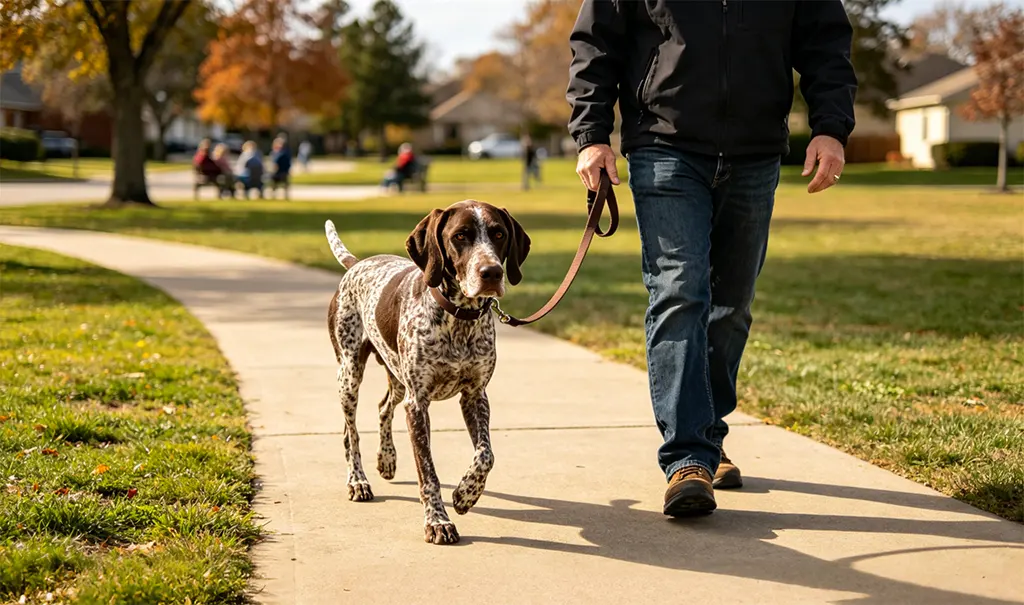
1. Training Off-Leash in Unsecured Suburban Yards (Top US Suburb GSP Escape Risk)
Most first-time GSP owners assume average suburban backyards are safe for unsupervised off-leash training. This is the #1 training fail that leads to missing GSPs and animal control citations across American suburban communities.
GSPs have an innate hunting prey drive that overrides basic obedience the second they spot squirrels, rabbits, neighborhood cats, or moving wildlife—a high-risk impulse that often translates into dangerous street chasing (learn how to manage your dog’s prey drive and stop car chasing safely in our step-by-step guide).
Standard suburban lot fencing fails GSP containment constantly. Wooden fence gaps, low hedge lines, modular fence bottom openings, and sloped yard terrain let athletic GSPs bolt into street traffic or adjacent neighbor properties within seconds. Most beginner owners skip formal recall training entirely because they believe their fenced yard eliminates risk, creating lifelong unreliable recall habits.
US Localized Fix (2026 Suburb Code Compliant)
Every suburban county in the United States enforces large-breed containment statutes specifically for hunting breeds like GSPs. Most residential HOAs require a minimum 4–6 foot solid fence for medium-to-large active breeds, with no ground gaps exceeding two inches. Before conducting any backyard off-leash training, verify your county animal containment code and HOA pet addendums to avoid fines starting at $150–$500 for non-compliant containment.
For beginner training phases, use a 15-foot biothane long line for all backyard recall drills instead of full off-leash freedom. Install temporary gap blockers along fence bases for suburban yards with uneven ground. Only introduce supervised off-leash sessions after your GSP achieves 100% recall response to verbal and hand signals for 14 consecutive days.
2. Ignoring Suburban Quiet Hour Rules During Barking Training
Generic dog training content downplays barking consequences, but excessive GSP vocalization is the leading cause of formal neighbor complaints and HOA disciplinary action in US suburbs. American suburban municipalities enforce rigid quiet hour regulations, universally 10 PM to 7 AM on weekdays and 11 PM to 8 AM on weekends and holidays.
Beginner GSP owners often correct barking with loud verbal discipline, which GSPs interpret as pack vocalization encouragement. This worsens nighttime and evening barking, triggering municipal noise violations that escalate from written warnings to repeat fines and mandatory behavioral intervention orders in many suburban jurisdictions.
US Localized Fix (Region-Specific Noise Compliance)
Download and save your city’s suburban noise ordinance documentation to align training boundaries with local legal standards. Block sidewalk and street visibility from your backyard using lattice screening or dense evergreen shrubs—an essential suburban modification that eliminates 70% of trigger-based GSP barking at delivery drivers, pedestrian traffic, and neighborhood dogs.
For Southeast humid suburbs and West Coast dry climate suburbs, conduct all high-energy stimulation training during daytime legal hours only. Avoid evening fetch or scent work sessions that hype your GSP up during quiet hour windows. Never use electric anti-bark collars; over 60% of US suburban cities have banned punitive electronic training devices for residential pets, resulting in code violations if detected by animal control.
3. Early Leash Training on Busy Suburban Sidewalks (Reactivity Development)
New suburban GSP owners rush neighborhood sidewalk walks to socialize their dogs early, but busy peak-hour suburban streets create overwhelming stimulation for untrained GSPs. After-school foot traffic, strollers, bicycles, lawn service equipment, and neighboring dogs trigger explosive pulling, lunging, and leash reactivity that becomes permanent if reinforced in early training phases.
Unlike wide rural roads or controlled city dog walk zones, suburban residential sidewalks offer no escape space for overstimulated hunting breeds. Beginner owners inadvertently train their GSPs to associate outdoor walks with chaotic excitement, creating unmanageable street behavior year-round.
US Localized Suburb Training Fix
All US suburban municipalities mandate permanent leash laws on public sidewalks, street fronts, and community green spaces, making reliable leash manners non-negotiable. For the first 3–4 weeks of leash training, exclusively use quiet cul-de-sacs, private driveways, and low-traffic residential side streets for beginner drills.
Swap standard flat collars for front-clip harnesses, the official recommended tool for high-drive hunting breeds by suburban US certified dog trainers. Practice 10-minute low-distraction heel drills twice daily, only advancing to busy neighborhood sidewalks once your GSP maintains loose leash behavior through moderate stimulation. This gradual suburb-specific progression eliminates lifelong leash reactivity in GSPs.
4. Overlong Training Sessions in Compact Suburban Yard Spaces
Most modern US suburban single-family homes feature compact quarter-acre or smaller lots with limited usable grass space. Beginner owners mistake GSPs’ endless energy for willingness to train, running 45–60 minute continuous obedience sessions that cause mental burnout and hyperactive defiance.
GSPs confined to small suburban yards cannot release pent-up hunting drive during repetitive drills, leading to training resistance, pacing, excessive digging, and refusal to follow basic commands. This issue is far more severe in new construction suburban subdivisions with minimal backyard square footage compared to older established neighborhoods.
Climate & Space Adapted Suburban Fix
Follow suburban GSP breed-specific training timing: 5–8 minute focused obedience drills, 4–6 sessions daily, tailored to compact yard limitations. Split training between indoor living spaces and local suburban public training zones to avoid yard burnout.
Adjust sessions for your regional US climate: Northern Midwest and Northeast suburban owners shorten outdoor winter sessions to avoid ice salt paw irritation and freezing temperatures. Southern and Southwest suburban owners train exclusively during early morning and post-sunset hours to prevent pavement overheating and heat exhaustion during summer months. East Coast humid suburb owners follow every outdoor session with ear drying routines to reduce the chance of regionally common GSP ear infections. Always reach out to a licensed animal care professional if your dog shows signs of ear discomfort.
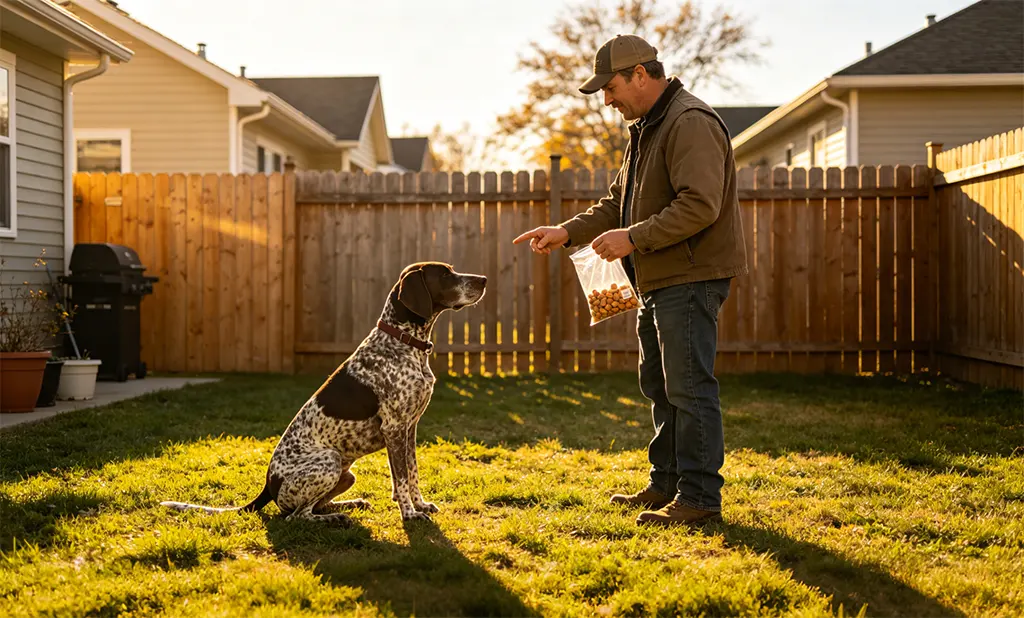
5. Early Socialization at Public Suburban Dog Parks (High Conflict Liability Risk)
Suburban public dog parks feel like convenient exercise solutions, but they are the riskiest training environment for beginner GSP owners in 2026. Untrained young GSPs exhibit rough hunting play styles, high chase drive, and dominant energy that frequently sparks altercations with calmer companions among America’s most popular dog breeds.
Virtually all US suburban park systems enforce strict dog conduct policies, holding owners fully liable for any pet injuries or property damage caused by their dog’s aggressive or disruptive behavior. Beginner GSP socialization failures at local dog parks are the top cause of neighborhood pet disputes and formal park ban requests for suburban GSP owners.
Local Suburb Socialization Solution
Delay public dog park visits entirely until your GSP masters impulse control and basic off-leash obedience. Utilize structured one-on-one playdates with fully vaccinated, well-mannered neighborhood dogs for early socialization, a standard practice among experienced suburban GSP breed owners across the US.
Locate your city’s split-zone suburban dog parks via local Parks & Recreation department portals. These facilities separate small/shy dog zones and high-energy dog zones, offering a safe, rule-regulated training space exclusively suited for GSP socialization once foundational training is complete. Always review posted 2026 park rules for noise limits and play conduct before training onsite.
6. Inconsistent Household Commands in Multi-Person Suburban Families
US suburban households typically feature multiple caregivers—parents, teenagers, young kids, and frequent household guests—creating inconsistent training cues that confuse intelligent GSPs. One family member uses “come” while another uses “here”; one allows couch access while another enforces off-limits rules.
GSPs thrive on routine and structure, and suburban household inconsistency erodes all training progress rapidly. This issue is unique to suburban family living, as rural working GSPs typically follow a single handler’s commands with zero variable rules.
Suburb Household Standardization Fix
Create a printed suburban GSP command cheat sheet with standardized verbal cues and hand signals, posted in high-traffic household areas including mudrooms and kitchen pantries. Standardize all boundary rules: no patio begging, no fence-line barking, no guest jumping, and consistent indoor/outdoor access.
Take advantage of free suburban community resources: most US suburban library systems and city recreation departments host monthly free family dog obedience workshops designed to align multi-person household training routines for high-energy breeds like GSPs.
7. Failing to Adapt Training for Regional US Suburb Weather Extremes
Generic GSP training guides ignore drastic American regional climate differences that directly impact suburban training success. Dry West Coast suburbs can lead to cracked GSP noses and respiratory irritation during outdoor training sessions. Humid Southeast areas raise risks of bacterial skin hot spots and ear infections with extended outdoor activity. Winter ice melt products in northern suburbs may create painful paw burns that make dogs refuse training. If your dog deals with persistent skin, nose, ear or paw discomfort, connect with a licensed animal care professional for support.
Beginner owners follow identical training schedules year-round, unaware that regional weather conditions create physical discomfort that mimics behavioral disobedience in GSPs.
Full Regional Climate Adapted Training Rules
- West Coast Dry Suburbs (CA, OR, WA): Apply paw balm and nose moisturizer recommended by trusted pet care experts before all outdoor training sessions.Limit midday drills during dry, windy pollen seasons to reduce allergic reactivity and training distraction.
- Southeast Humid Suburbs (FL, GA, TX): Complete post-training ear cleaning and coat drying to lower the risk of regionally endemic GSP ear infections and hot spots. Avoid training on damp grass during morning dew hours. Consult a licensed animal care expert if your dog develops irritated skin or sore ears.
- Northern Cold Suburbs (IL, MI, NY, PA): Use pet-safe ice melt alternatives for yard training areas, and protect paws with booties during sidewalk drills in freezing conditions. Shift core obedience training indoors during blizzard and ice events.
8. Punishing Suburb-Specific Excitement Triggers (Neighbor Conflict Catalyst)
Suburban neighborhoods present constant unique GSP stimulation triggers: weekly lawn care services, Amazon/UPS daily deliveries, neighborhood kid activity, and adjacent yard pet movement. Beginner owners punish excited lunging and barking with verbal scolding or physical correction, which creates chronic leash reactivity and anxiety in GSPs.
Over time, punished excitement evolves into defensive aggression toward strangers on suburban sidewalks, resulting in formal neighbor complaints and local animal control nuisance dog designations in severe cases.
Local Suburb Redirection Training Fix
Replace all punishment-based correction with trigger redirection, the gold-standard method used by suburban US canine behavior specialists for hunting breeds. Identify your top 3 neighborhood-specific triggers (most commonly delivery trucks and walking neighbors) and practice boundary redirection drills at your property line daily.
Reward calm seated behavior during trigger exposure with high-value American-sourced single-ingredient treats. For moderate to severe reactivity, book a local suburban in-home behavior consultation rather than generic online training courses—local trainers understand your exact neighborhood trigger environment and HOA behavioral expectations.
9. Skipping Alone-Time Training for Full-Time Suburban Work Schedules
Nearly 80% of US suburban GSP owners work full-time outside the home, leaving their dogs alone for 8–10 hours daily. Beginner owners skip gradual alone-time training, assuming their young GSP will adapt naturally to suburban household solitude.
GSPs are highly bonded pack breeds, and untrained solitude results in severe suburban separation anxiety: persistent fence-line barking (noise violations), backyard digging (HOA property damage fines), and indoor destructive chewing while owners are away.
Suburban Workday Routine Fix
Implement gradual alone desensitization training starting the day your GSP arrives home. Begin with 30-second front-door separations, incrementally extending duration to match your full workday schedule over 4–6 weeks.
Leverage exclusive suburban community resources: local vetted midday dog walkers and neighborhood pet sitters offer affordable 15–20 minute weekday check-ins that eliminate anxiety entirely. Suburban Facebook neighborhood groups are the most reliable source for background-checked local pet care providers trusted by regional GSP owners.
If you need extra help managing your GSP’s daily routine, training schedules and health tracking, check out our collection of free pet care tools and calculators designed for dog owners across the US.
Final Takeaway: Fix Common Suburban GSP Training Mistakes for New Owners (2026 Local Guidelines)
Successful GSP training in American suburbs does not rely on generic obedience tricks. It requires full alignment with local municipal noise laws, HOA property rules, regional climate limitations, and dense neighborhood living dynamics. By avoiding these nine suburb-specific training failures and implementing the localized, year-round solutions above, new GSP owners can eliminate neighbor conflicts, prevent costly fines, and raise obedient, well-adjusted hunting breed dogs perfectly suited for suburban residential life.
Frequently Asked Questions (US Suburban GSP Training)
1. What are the most frequent training mistakes new suburban GSP owners make?
The most problematic gsp training fails us suburbs beginner owners encounter include unsecure backyard off-leash training, unmanaged neighborhood barking violating local noise laws, early leash training in busy suburban areas, and anxiety-related destructive behavior during workday alone time.
2. Are GSPs suitable for standard quarter-acre US suburban lots?
Yes, GSPs thrive in suburban homes when owners implement suburb-adapted exercise and training routines. Compact suburban yards work perfectly for short obedience drills, while local community parks and quiet residential streets fulfill their higher exercise needs without rural acreage requirements.
3. How do I stop my GSP from barking at suburban neighborhood traffic legally?
Install visual barriers to block street and sidewalk views, train solid “quiet” commands with positive redirection, and avoid stimulating evening activities during local quiet hours. This method complies with all US suburban municipal noise ordinances and HOA pet policies.
4. Does regional US climate change how I train my suburban GSP?
Absolutely. Dry West Coast air requires skin and nose protection during outdoor training, humid Southeast conditions demand post-session moisture prevention care, and Northern winter suburbs require paw protection and indoor training adjustments to avoid weather-related discomfort and injury.
This content is for educational purposes only and does not substitute professional veterinary diagnosis or treatment. If you observe any symptoms of illness, injury, or abnormal behavior, please consult a qualified exotic animal veterinarian immediately.
For more details, please review our full Medical Disclaimer.