
Most new and intermediate knob-tail gecko keepers follow popular arid setup rules to the letter. They use pure dry sand, keep tank humidity low, and stick to recommended basking temperatures — yet their Nephrurus levis still develop unexplained appetite loss, stubborn incomplete sheds, damp surface substrate, and subtle early signs of knob tail gecko substrate impaction.
If this scenario feels familiar, you’re not making basic keeper mistakes. You’re running into a widely overlooked issue plaguing knob-tail gecko enclosures in humid homes: the substrate drainage and micro-humidity paradox. Traditional arid setups are engineered for the dry Australian outback, and they simply cannot keep up with coastal, subtropical, or rainy-season indoor environments that hold lingering moisture in the air and substrate. This common oversight is why so many standard Nephrurus levis care setups underperform in humid micro-climates.
With years of hands-on knob-tail gecko breeding and enclosure troubleshooting under my belt, I’ll break down exactly why pure sand setups consistently fail in humid micro-climates, how hidden humidity imbalance creates quiet health risks for burrowing reptiles, and how to rebuild your knob tail gecko substrate system to eliminate impaction, support stable natural burrows, and lock in species-appropriate humidity levels.
The Hidden Failure of Standard Knob-Tail Gecko Arid Setups (Real Keeper Pain Points)
Nearly every mainstream Nephrurus levis care guide states the same rule: knob-tail geckos are arid reptiles that thrive on dry sand and low ambient humidity. While this is true for their wild outback habitat, it creates a critical blind spot for keepers in humid residential environments, where generic arid setups fail to address real-world indoor moisture buildup.
This is the frustrating cycle most hobbyists unknowingly deal with every day:
- You set up your enclosure with pure reptile sand per standard care guidelines
- You maintain proper ventilation and keep room humidity steady at 40–50%
- Persistent coastal or summer humidity seeps deep into your substrate layers over time
- Heat lamps quickly dry out the top sand layer, tricking you into thinking the tank is fully arid
- Trapped subsurface moisture has nowhere to escape, forming soggy, compacted lower substrate layers
- Your knob-tail gecko is forced to burrow into damp substrate at night or avoid digging entirely
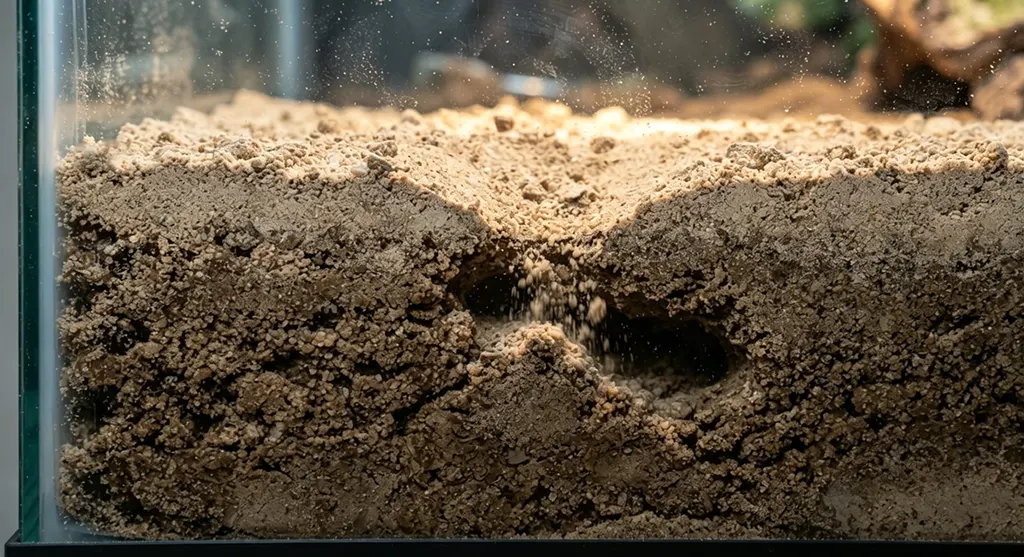
This is the core drainage paradox every humid-climate keeper faces: a dry tank surface never equals dry, stable substrate below. Single-layer pure sand setups have zero functional drainage. In humid air, they trap moisture underground while drying on top, creating a conflicting environment that burrowing arid geckos are not adapted to handle. This is the leading hidden cause of substrate instability that defeats basic arid gecko impaction prevention efforts.
Most keepers incorrectly attribute gecko lethargy, poor shedding, and finicky eating to temperature fluctuations or diet issues. In reality, unstable substrate micro-climates and collapsing burrows are the root cause. If your gecko displays persistent loss of appetite, incomplete shedding, or unusual lethargy, consult a licensed reptile veterinarian for professional guidance.
Core Mechanism: Humidity Lag & Substrate Imbalance Risks for Nephrurus Levis
Knob-tail geckos are specialized nocturnal burrowers. In the wild, they spend all daylight hours in deep, stable underground tunnels that retain gentle, consistent moisture, while the surface ground stays hot and dry. Humid captive environments flip this natural cycle completely, creating unhealthy, unstable living conditions that disrupt natural burrowing reptile humidity control.
1. Humidity Lag: Surface vs. Substrate Micro-Climate Split
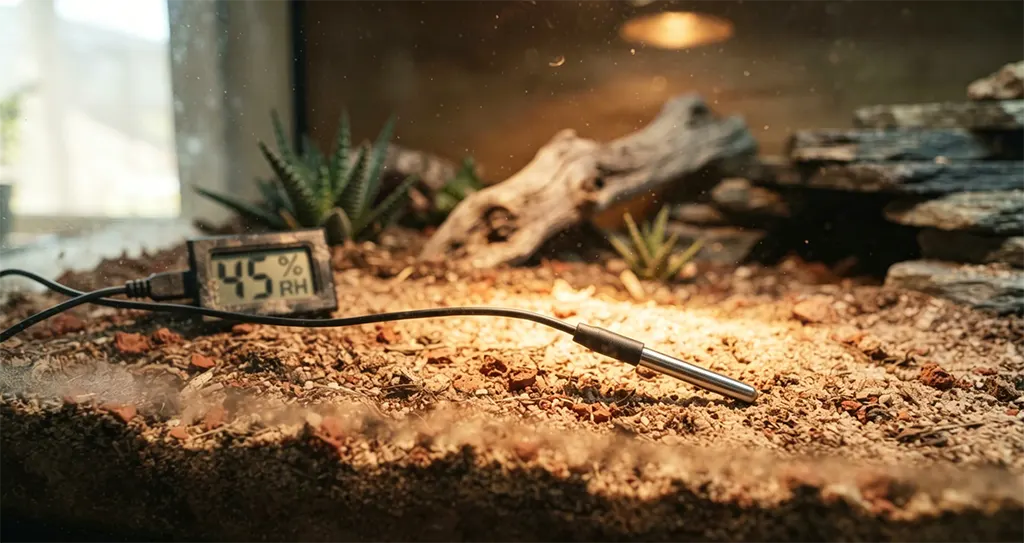
Indoor humidity creates a problematic “lag effect” in reptile enclosures. Your hygrometer may read a perfect 40–50% ambient humidity, but trapped moisture beneath the surface pushes deep-layer humidity far higher. Since dry top sand blocks evaporation, this subsurface dampness lingers indefinitely, forming a stagnant micro-environment that no standard arid setup accounts for.
Over time, damp compacted sand fosters bacteria and mold growth, irritates gecko skin, and disrupts healthy respiratory function. The issue flies under the radar for most keepers, who only monitor ambient tank readings and never check subsurface conditions. If your gecko shows signs of skin irritation or labored breathing, seek help from a licensed reptile veterinarian right away.
2. The Real Cause of Substrate Impaction in Humid Setups
Most hobbyists believe substrate impaction only occurs from geckos ingesting dry loose sand. In humid homes, impaction risk is far more subtle and far more common, making proper knob tail gecko substrate selection non-negotiable for long-term health.
Trapped subsurface moisture turns fine sand grains sticky and clumpy. When your gecko hunts, burrows, or grooms itself, damp substrate sticks to its mouth and tongue. These moist clumps bind together in the digestive tract much easier than dry sand, causing mild chronic impaction that gradually suppresses appetite and slows digestion. If you notice reduced feeding activity or abnormal bowel movements in your gecko, consult a licensed reptile veterinarian promptly.
On the flip side, unfiltered overly coarse substrate creates small mouth and intestinal abrasions that add unnecessary stress. This is why precise particle size control is essential for preventing arid gecko impaction long-term.
3. Collapsed Burrows = Chronic Stress & Abnormal Behavior
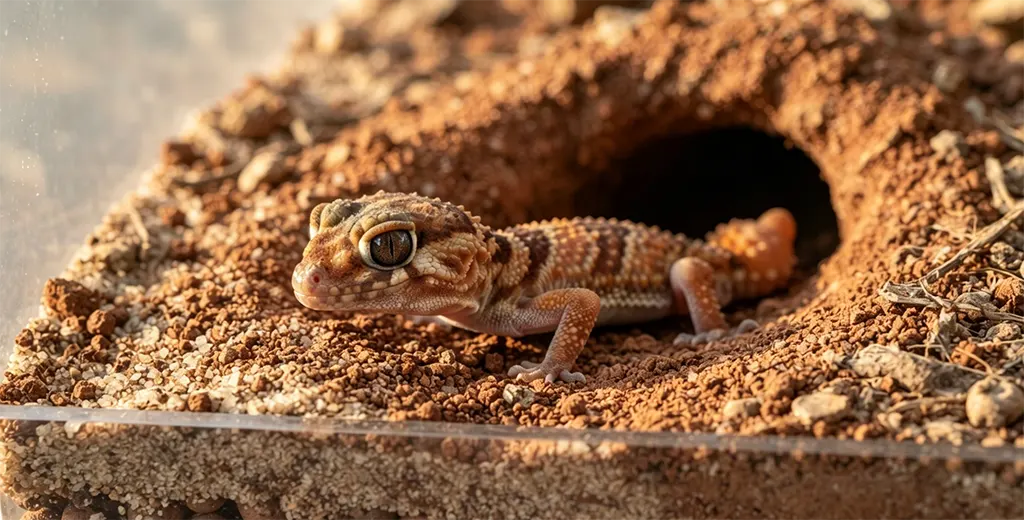
Pure sand has no structural plasticity whatsoever. In humid air, it either turns powdery and collapses instantly or compacts into a hard, un-diggable layer. Knob-tail geckos rely entirely on self-dug tunnels for safety, thermoregulation, and daytime rest. Constant burrow collapse forces nonstop re-digging, drains their energy, and makes them abandon natural burrowing habits — resulting in chronically stressed, inactive geckos that fail to thrive. Chronic stress can harm your gecko’s overall health, so contact a licensed reptile vet if your pet remains inactive or skips burrowing long-term.
2026 Gold-Standard Knob-Tail Gecko Substrate Setup (Humid Micro-Climate Optimized)
After testing countless substrate blends and enclosure layouts for Nephrurus levis in high-humidity indoor settings, I’ve refined a layered, adjustable setup that completely resolves the drainage paradox. This system eliminates impaction risks, supports stable burrows, and maintains the precise micro-humidity levels these geckos need. Every parameter below is backed by years of real captive breeding and enclosure testing in humid residential spaces, and it outperforms generic sand setups and even basic bioactive substrate for knob tail geckos.
Exact Substrate Particle Size Specification (Impaction-Proof)
Particle size is the foundation of safe, healthy knob-tail gecko substrate. I strictly use and recommend a 0.5mm–1.5mm particle range for all adult and juvenile setups to maximize arid gecko impaction prevention:
- Below 0.5mm: Ultra-fine particles create excessive dust that irritates respiratory tracts. They also raise impaction risk during routine feeding and grooming due to easy accidental ingestion.
- Above 1.5mm: Large, sharp grains cause minor oral and intestinal abrasions, trap feeder insects, and prevent clean, stable burrow formation.
- 0.5mm–1.5mm sweet spot: This balanced size is nearly dust-free, resists unwanted clumping when dry, holds gentle shape when slightly moist, and minimizes impaction risk during normal gecko activity.
Proven Substrate Mix Ratio for Burrowing & Drainage Balance
This custom blend replaces risky pure sand setups and works exceptionally well for bioactive and non-bioactive knob-tail gecko enclosures in humid homes:
60% Sterilized Fine Reptile Sand + 40% Akadama/Reptile Red Clay Soil
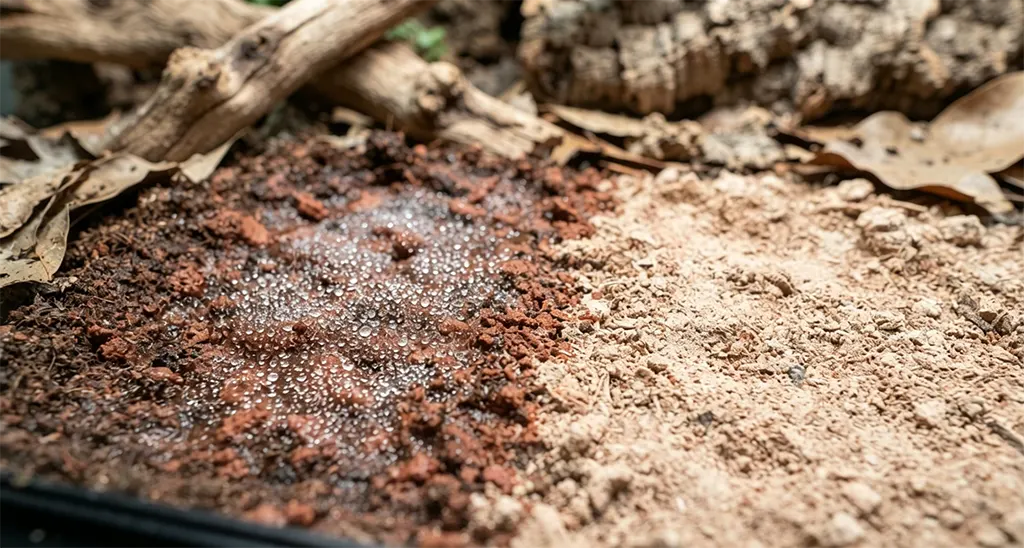
This simple ratio fixes the biggest flaws of plain sand setups. The fine sterilized sand maintains the dry, arid surface texture knob-tail geckos prefer, while the red clay soil adds just enough structural plasticity to hold tunnel shapes without collapsing or hardening. The mix retains mild, beneficial moisture in deep layers to mimic natural cave humidity while draining excess water completely, eliminating stagnant, soggy substrate zones entirely. This balanced blend is the most reliable knob tail gecko substrate choice for humid coastal and seasonal rainy environments.
Layered Enclosure Structure (10–15cm Burrow Depth Requirement)
Wild knob-tail geckos rely on deep underground tunnels, so captive setups require a minimum 10cm–15cm of moldable substrate to support natural burrowing and healthy micro-climate regulation. This layered structure is easy to build and infinitely more stable than single-layer sand, delivering consistent burrowing reptile humidity control year-round:
- Bottom Drainage Layer (2–3cm): Porous lightweight drainage media pulls excess moisture away from active substrate layers, preventing trapped humidity and stagnation.
- Main Substrate Layer (10–15cm): The 60/40 sand-clay blend, lightly compacted to hold secure tunnel structures without becoming hard or airless.
- Top Surface Layer (1cm): Loose sanitized fine sand to create a natural dry arid surface for daytime exploration and movement.
Precise Temperature & Humidity Thresholds (2026 Practical Standard)
Fixing the humidity paradox boils down to one key principle: separate your ambient tank humidity from your deep substrate micro-humidity. These are the field-tested, keeper-friendly thresholds for humid climates, tailored specifically for Nephrurus levis care:
- Basking Surface Temperature: 28°C–32°C for stable daytime thermoregulation
- Night Temperature Drop: Consistent 24°C to replicate natural nocturnal cooling cycles
- Ambient Enclosure Humidity: 40%–50% to prevent mold, surface dampness, and respiratory irritation
- Deep Substrate Micro-Humidity: 60% via limited, targeted misting only on burrow zones
This setup mirrors the gecko’s wild habitat perfectly: dry, breathable surface air for daytime activity, and stable, slightly moist underground tunnels for resting, shedding, and overnight hydration. Always spot-mist only the deep burrow zones — never mist the full enclosure — to avoid unwanted ambient humidity spikes.
Frequently Asked Questions (Humid Climate Knob-Tail Gecko Care)
Is pure calcium sand safe for knob-tail geckos in humid climates?
No, pure calcium sand is a poor choice for humid indoor environments. It clumps heavily with even small amounts of residual moisture, drastically raising impaction risk. It also compacts tightly over time, destroying burrow stability and airflow. The 60/40 sand-clay graded blend is far safer and more reliable for year-round humid climate use and remains the top choice for impaction-focused knob tail gecko substrate setups.
How often should I mist the substrate for proper micro-humidity?
For most humid indoor setups, light targeted misting two to three times per week is enough to maintain a steady 60% deep-layer humidity. Always let the top sand layer dry completely between misting sessions to avoid surface mold growth and bacterial buildup, preserving your arid setup’s surface appearance while supporting healthy underground micro-climates.
Can juvenile knob-tail geckos use this layered substrate setup?
Yes, this graded particle mix is completely safe for both juvenile and adult knob-tail geckos. The controlled 0.5–1.5mm particle size eliminates extreme dust and oversized grains that harm young geckos. Avoid ultra-fine nursery sand entirely for juveniles, as they are far more prone to accidental substrate ingestion, making controlled-grade substrate critical for juvenile arid gecko impaction prevention.
Why does my gecko refuse to burrow even with deep substrate?
Burrow avoidance almost always stems from unstable substrate conditions. Pure sand either collapses instantly under weight or compacts rock-hard in humid air, making digging impossible. Imbalanced humidity — either bone-dry underground or constantly damp — also discourages natural burrowing behavior. The sand-clay blend fixes all these issues by delivering consistent texture, stable structure, and balanced micro-moisture for natural burrowing activity.
Do I need a fully bioactive setup for impaction prevention?
Full bioactivity is optional for impaction prevention. The most critical upgrade for humid climates is layered, structured substrate. Even non-bioactive layered setups eliminate the drainage paradox and lower impaction risk far better than standard single-layer pure sand setups, though a properly built bioactive substrate for knob tail geckos offers long-term humidity stability and self-maintenance benefits.
Final Breeder Takeaway
Standard arid knob-tail gecko setups fail in humid homes not because mainstream care advice is wrong, but because it ignores real-world indoor micro-climate conflicts. Dry surface sand cannot offset trapped subsurface moisture, and flat single-layer substrate creates a hidden health paradox for burrowingNephrurus levis.
Switching to graded 0.5–1.5mm knob tail gecko substrate, a reliable 60/40 sand-clay mix, 10–15cm burrow depth, and separated ambient/substrate humidity control eliminates impaction risks, restores natural burrowing behavior, and fixes the hidden humidity issues that leave most captive knob-tail geckos under stress. This humidity-balanced approach redefines modern Nephrurus levis care for keepers living in humid coastal and seasonal climate zones.
Read More Knob-Tail Gecko Care: Advanced Bioactive Soil Cycling for Arid Geckos | Seasonal Humidity Adjustments for Coastal Reptile Keepers
This content is for educational purposes only and does not substitute professional veterinary diagnosis or treatment. If you observe any symptoms of illness, injury, or abnormal behavior, please consult a qualified exotic animal veterinarian immediately.
For more details, please review our full Medical Disclaimer.
Pingback: Leopard Gecko Habitat: 7 Costly Sand Impaction Mistakes Killing Your Pet (2026 Southern California Guide)