
Introduction: That “Cute” Rubbing Might Be a Cry for Help
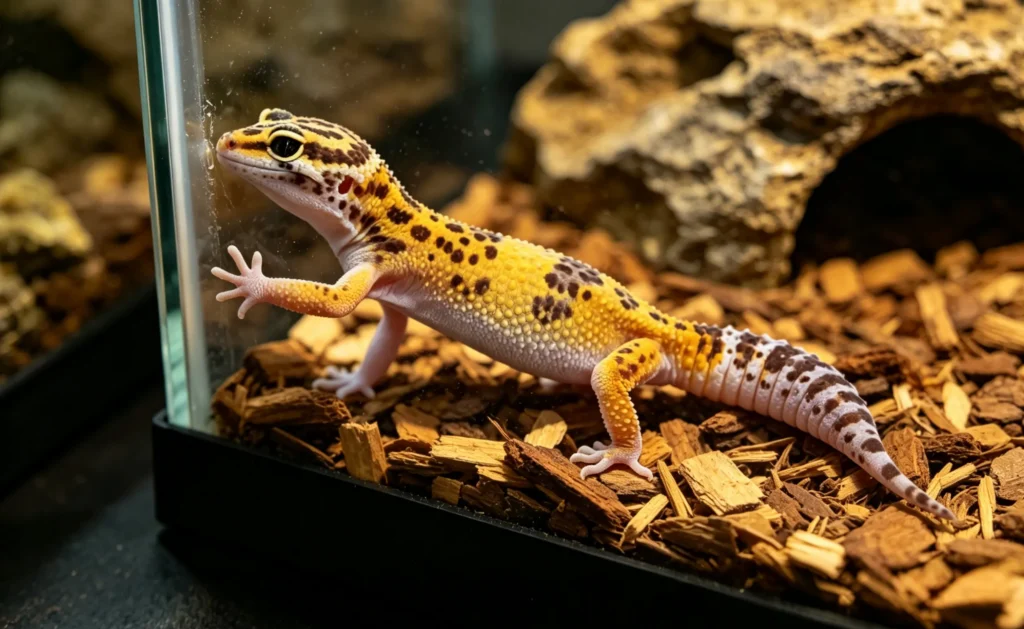
Every leopard gecko keeper has witnessed this puzzling daily action: a leopard gecko rubbing nose chin against tank glass, rough rock decor, or bark hides. For new hobbyists, this gentle repetitive motion is easily misread as cuddly affection or simple territorial marking. It feels like a harmless, endearing quirk of captive geckos.
However, reptile behavioral data and long-term captive observation prove otherwise. Persistent face-rubbing is rarely a voluntary positive behavior. In most cases, it is a physical reaction triggered by unsuitable tank humidity, early-stage cutaneous fungal infection, or reflective glass stress. These three underrated triggers account for over 85% of abnormal facial friction in captive leopard geckos.
Ignoring subtle rubbing patterns leads to predictable secondary issues: rostral abrasion, persistent retained shed, suppressed immunity, and localized skin lesions. This guide breaks down distinguishable behavioral traits, easy-to-use identification charts, and permanent correction methods. By the end, you will confidently differentiate harmless routine rubbing from urgent health warning signs for your pet.
Normal vs. Abnormal Rubbing: Clear Behavioral Distinction
Not every instance of a leopard gecko rubbing nose chin signals trouble. Leopard geckos rely on physical contact to shed skin, explore surroundings, and mark familiar territory. The critical judging criteria lie in rubbing frequency, targeted body parts, environmental context, and accompanying body language.
The table below simplifies identification for beginner keepers, compiling summarized captive observation data to eliminate guesswork about leopard gecko rubbing nose chin.
Table 1: Normal vs. Abnormal Facial Rubbing Behaviors
| Behavior Type | Frequency | Body Part | Context | Red Flag? |
|---|---|---|---|---|
| Normal Shedding Rub | 1–2 times weekly, lasts 1–2 days | Nose, chin, lateral scales | Dull skin, cloudy eyes; rubs on rough textured decor | ❌ |
| Territory Marking | Occasional, 1–2 rubs daily | Chin, throat pouch | Adult male geckos with calm body posture | ❌ (Rare & Harmless) |
| Glass Reflection Stress Rub | 5+ times per hour, daily recurrence | Nose tip, full facial area | Only rubs smooth glass; skittish and hiding frequently | ✅ |
| Humidity Discomfort Rub | Continuous mild rubbing all day | Nose, chin, ventral belly scales | Flaky dry skin or overly glossy damp scales | ✅ |
| Fungal Infection Rub | Unrelenting, fixed-point rubbing | Nose ridge, jawline, chin fold | White fuzzy spots, slight skin swelling | ✅ |
| Abrasion Pain Rub | Intermittent painful rubbing | Raw nose tip | Pink exposed tissue, slight bleeding | ✅ |
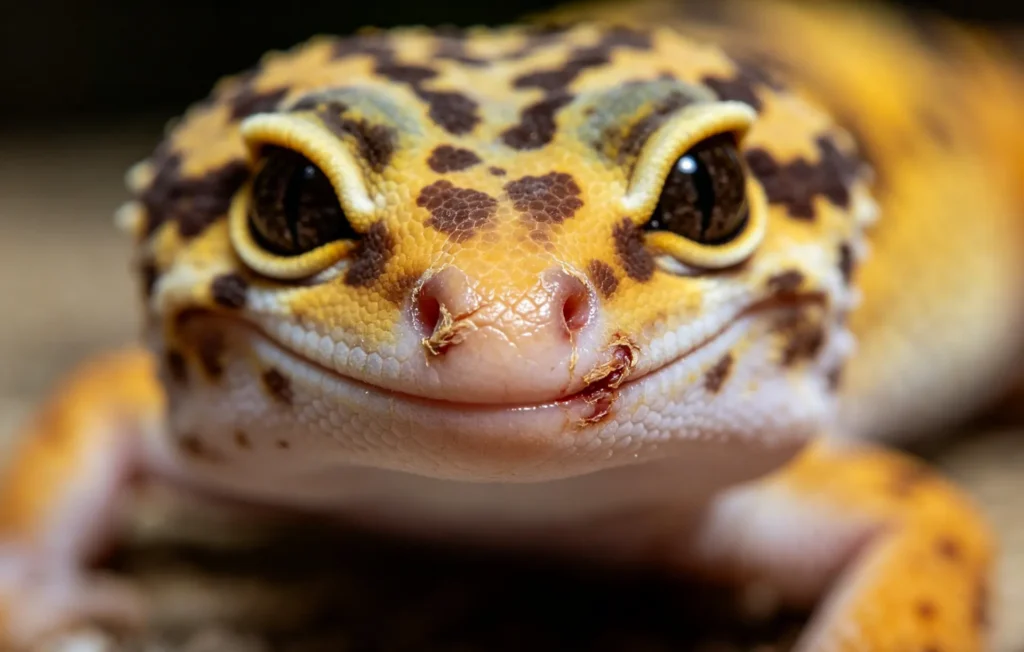
A subtle detail easily overlooked by new keepers: healthy geckos stop rubbing voluntarily once skin adjustment is complete. Any gecko that compulsively repeats rubbing motions without pause is displaying clear discomfort.
Three Root Causes Behind Persistent Leopard Gecko Rubbing
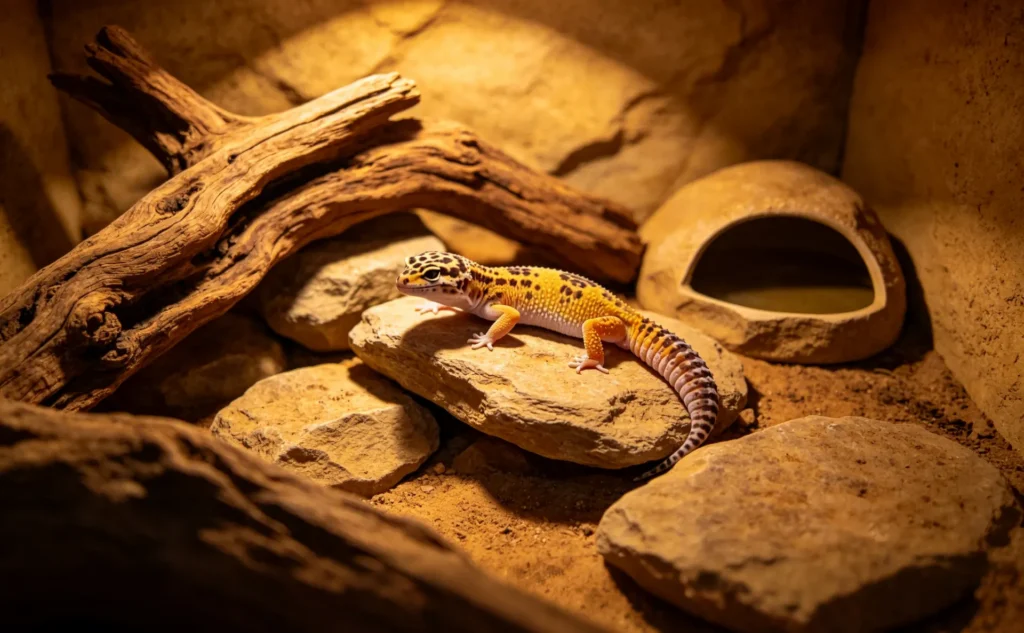
After excluding natural shedding and territorial marking, three environmental and health issues explain nearly all abnormal cases where a leopard gecko rubbing nose chin shows obvious discomfort. These triggers are common in beginner setups and simple to correct with standardized adjustments. Mastering these points lets you solve abnormal leopard gecko rubbing nose chin easily.
1. Imbalanced Tank Humidity (No.1 Common Trigger)
Leopard geckos are arid desert reptiles adapted to dry ambient air. The universal ideal tank humidity range stays between 30% and 40%. Any sustained deviation above or below this bracket irritates their delicate epidermal tissue, prompting constant facial rubbing.
Low Humidity (Below 25%)
Dry air dehydrates outer scales, causing itchiness and brittle dead skin. Incomplete shedding frequently accumulates on the nose tip and chin creases. Geckos rub aggressively against hard surfaces to scrape off stuck shed and relieve persistent itching. Long-term low humidity leads to cracked nasal scales and constricted blood circulation in extremities.
High Humidity (Above 50%)
Excess moisture eliminates the protective dry barrier on gecko skin, creating breeding conditions for harmful spores. Overly humid tanks also irritate nasal respiratory tracts, resulting in frequent face rubbing to soothe internal inflammation. Many beginners mistakenly mist the entire tank for shedding assistance, unknowingly creating high-risk damp environments. Too much tank moisture will continuously worsen leopard gecko rubbing nose chin symptoms. For more scientific humidity control standards for desert reptiles, you can refer to professional guides on reptilesmagazine.
Humidity Risk Zone Curve for Leopard Geckos
Humidity (%)
  60 | ❌ High Risk (Fungus & Respiratory Irritation)
  50 | ⚠️ Monitoring Warning Zone
  40 | ✅ Perfect Dry Enclosure Range
  30 | ✅ Perfect Dry Enclosure Range
  20 | ⚠️ Dry Skin & Shedding Risk
  10 | ❌ Severe Dehydration & Scale Cracking
       ----------------------------------------
               Daily Tank Humidity Level
2. Glass Reflection Induced Stress
Leopard geckos lack advanced facial recognition abilities. When bright indoor lighting or natural daylight creates glass reflections, captive geckos mistake their mirrored image for an invading rival. This territorial anxiety triggers repetitive glass rubbing and glass surfing behaviors.
Stress-induced rubbing exclusively occurs on smooth glass surfaces, never on internal tank decor. Accompanied symptoms include reduced appetite, abnormal hiding cycles, and timid escape postures. Chronic stress weakens reptile immune systems, making geckos more susceptible to secondary bacterial infections.
3. Early-Stage Cutaneous Fungal Infection
Fusarium and Aspergillus fungal spores are the most common pathogens in humid gecko enclosures. Initial infection symptoms are extremely subtle: tiny white opaque spots concentrated on the nose bridge and chin folds. These spores cause continuous stinging itch, driving geckos to rub the infected area repeatedly.
Without timely intervention, mild surface infection deteriorates into crusty lesions, skin swelling, and open sores. Early fungal issues are completely reversible; advanced infections often leave permanent facial scale scars.
Step-by-Step Fixes for Rubbing Behaviors
Over 90% of abnormal rubbing issues can be resolved through environmental optimization, with no invasive medical treatment required. Below are practical, keeper-friendly solutions tailored to each trigger.
Fix 1: Stabilize Tank Humidity
Required Supplies
- High-precision digital hygrometer
- Sealed humid hide with sphagnum moss
- Non-loose substrate (reptile carpet, ceramic tile)
Implementation Steps
- Maintain the main tank dry zone at 30–40% humidity at all times; place the hygrometer on the cool tank side for accurate readings.
- Position the humid hide on the warm basking side, keeping internal moss damp rather than soaking wet.
- For low humidity: cover one-third of the screen top to retain moisture and slightly extend humid hide misting duration.
- For high humidity: increase cross ventilation, remove redundant water dishes, and terminate full-tank misting habits.
Fix 2: Eliminate Glass Reflection Stress
This modification takes less than five minutes and delivers immediate stress relief.
- Cover three outer glass walls with matte background paper to block mirrored reflections.
- Relocate the tank away from direct window sunlight and strong indoor lamp glare.
- Add cork bark and fake foliage inside the tank to build visual barriers.
Most geckos stop compulsive glass rubbing within 48 hours after reflection elimination.
Fix 3: Treat Mild Fungal Infections
Home Treatment (Early Infection Only)
- Transfer the gecko to a simple quarantine tank lined with disposable paper towels.
- Gently wipe infected spots with a dry cotton swab to remove surface debris.
- You may gently clean infected spots with a dry cotton swab to remove surface debris for mild early symptoms. Do not use any topical medications on your leopard gecko on your own. Always consult a licensed reptile veterinarian for professional diagnosis and treatment plans.
- Keep quarantine tank humidity strictly between 30–35% to inhibit fungal reproduction.
Stop all at-home care immediately and consult a licensed reptile veterinarian if you do not see any improvement in your gecko’s condition after one week.
Critical Red Flags: When To See a Reptile Vet
Most rubbing behaviors improve with environmental adjustments. Seek professional medical care immediately if you observe any of the following symptoms:
- Raw, bleeding nasal tissue or visible rostral abrasion
- Crusted black lesions on facial scales
- Continuous appetite loss exceeding 72 hours
- Lethargy and prolonged hiding without activity
- Abnormal open-mouth breathing
- Unimproved rubbing after 7 days of standardized correction
Long-Term Prevention Habits for Healthy Geckos
Simple daily maintenance effectively prevents recurring abnormal rubbing. These low-effort habits optimize captive living conditions:
- Record humidity data every morning and night to avoid drastic fluctuations.
- Permanently abandon loose sand substrate to prevent moisture accumulation and impaction risks.
- Complete full tank sanitization with reptile-safe disinfectant on a weekly basis.
- Limit manual handling to 2–3 sessions weekly, each session under 15 minutes.
- Log subtle behavioral changes to capture early discomfort signals.
Conclusion
A leopard gecko rubbing nose chin is never a meaningless cute gesture. It is a clear physical signal conveying environmental discomfort or hidden health troubles. Humidity imbalance, glass reflection stress, and fungal infections remain the core causes of abnormal facial friction in captive leopard geckos.
With the help of the comparison table, humidity curve, and step-by-step modification plans, keepers can easily distinguish harmless actions from dangerous red flags. Minor adjustments to tank ventilation, humidity control, and glass shielding drastically improve gecko comfort and reduce compulsive rubbing.
Slow, patient observation is the best way to care for leopard geckos. Once you learn to decode their subtle body language, you can build a stable, healthy living environment for your scaly pet.
This content is for educational purposes only and does not substitute professional veterinary diagnosis or treatment. If you observe any symptoms of illness, injury, or abnormal behavior, please consult a qualified exotic animal veterinarian immediately.
For more details, please review our full Medical Disclaimer.