
Leopard tortoise respiratory illness california is a widespread issue for San Diego novice keepers. Last month, more than 22 rookie leopard tortoise owners posted failed rearing stories on San Diego Reptile Keepers Facebook group, sharing identical troubles: their newly bought baby leopard tortoise developed runny nose, wheezing breath and refusal to eat within three weeks after setup.
Almost every affected keeper followed generic online desert tortoise care guides, never realizing coastal Southern California’s natural ocean humidity breaks all standard desert enclosure parameters. Local exotic animal clinics in Oceanside reported a 115% rise in leopard tortoise respiratory illness california between late spring and early summer 2026, all triggered by unadjusted tank moisture that works fine for inland desert states but turns deadly along CA’s Pacific coastline.
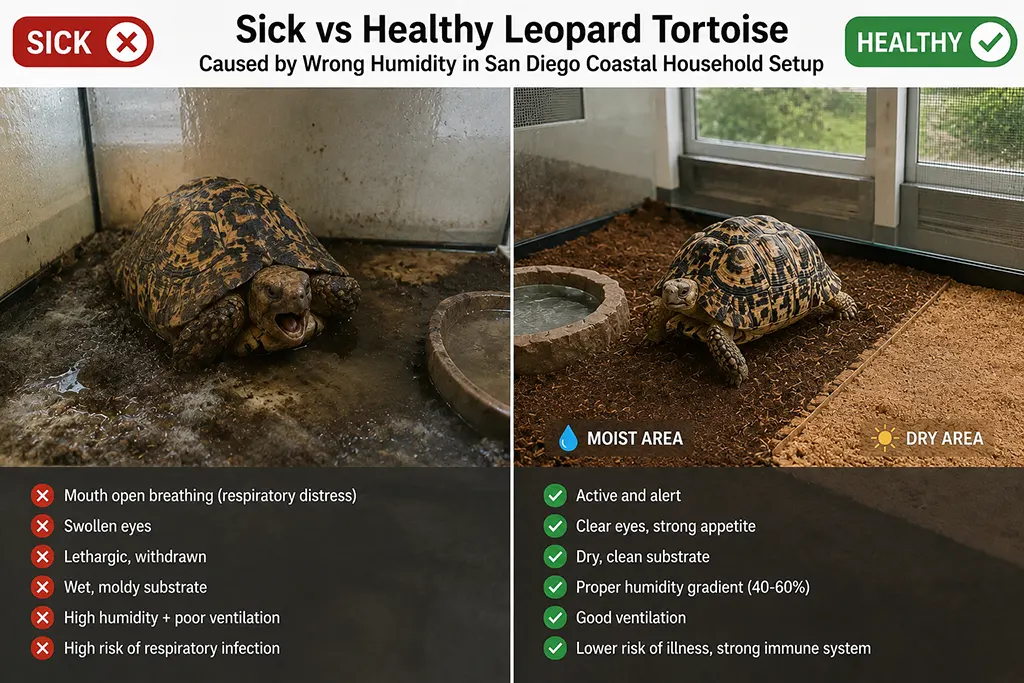
Core Root of Coastal CA Humidity Mistakes
Most generic leopard tortoise care content online is written based on Arizona inland arid climate, where annual average ambient humidity stays below 35%. However, coastal cities including San Diego, Oceanside and Santa Barbara keep regular ambient air humidity between 60% to 78% all year round, with overnight sea fog pushing indoor moisture over 82% even without water spraying inside the tank.
New keepers from these coastal counties usually make three repeated core errors when setting up habitat:
- Blindly mist enclosure every other day as generic guide suggests, adding extra water to already damp indoor air;
- Purchase cheap compact coco coir from local Walmart and regional pet chain shops — pet retailers frequently recommend generic, moisture-trapping supplies that harm desert species. (This is part of a broader industry pattern; check out our guide on pet turtle care and the truth pet stores won’t tell you.) This substrate holds coastal fog moisture for multiple days and keeps the bottom layer permanently soggy.
- Place tortoise tank near balcony sliding door facing Pacific Ocean, cold damp sea breeze flows directly into enclosure overnight without any wind blocking barrier.
For leopard tortoise originating from South African semi-arid grassland, long-term constant humidity above 55% irritates their sensitive respiratory tract and easily causes leopard tortoise respiratory illness california. Unlike sulcata tortoise with stronger environmental adaptability (if you’re keeping a water turtle instead, see our Red Eared Slider care manual for long-lived turtles), juvenile leopard tortoise catches bacterial cold within 7~12 days under continuous damp surrounding, a problem rarely troubles inland CA tortoise raisers.
4 Step Localized Fix Plan to Prevent Leopard Tortoise Respiratory Illness California
All adjustments below are tailored exclusively for Southern California coastal ambient condition, verified via consultation with local professional exotic animal care specialists and hundreds of corrected keeper cases from San Diego reptile community.
Step1|Enclosure Position Relocation (Coastal Home Exclusive)
Move leopard tortoise tank away from ocean-facing sliding windows and exterior walls where sea fog drifts in overnight. In most San Diego rental apartments, interior wall positions far from balcony cut natural ambient humidity inside enclosure down by 12%~18% without extra electric equipment. For studio apartments with no alternative indoor space, stick transparent weather stripping along window bottom to block cold damp coastal airflow, a low-cost modification recommended by local HOA approved reptile caretakers.
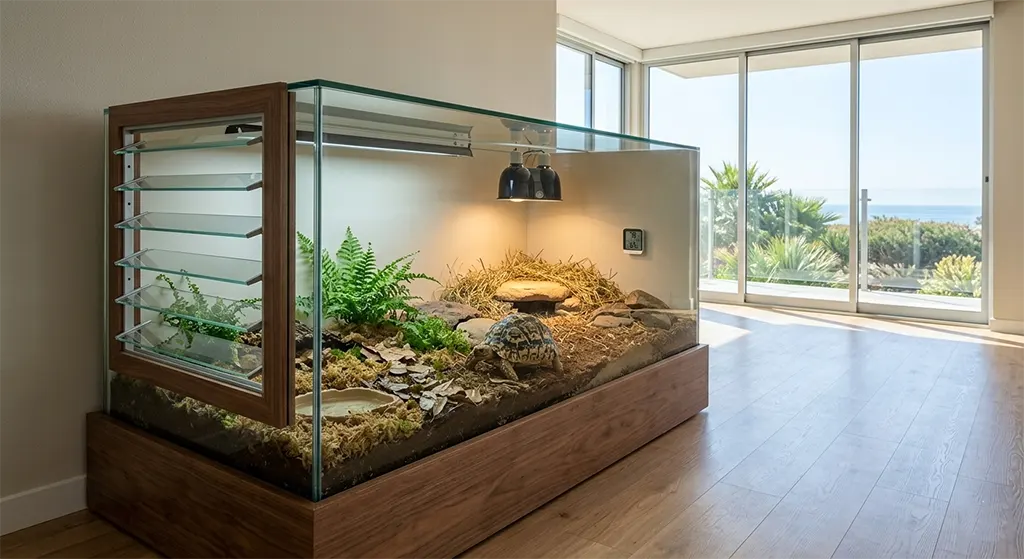
Step2|Local Substrate Replacement Rule
Quit coco coir and peat moss widely stocked in California’s regional big-box pet stores. Two affordable, easy-to-find substrates suit coastal high-humidity setting: kiln-dried aspen chip and sun-cured coastal oat hay, both sold in bulk at local farm supply shops around San Diego County. These two materials drain excess ambient moisture quickly and never trap stagnant dampness even under foggy coastal nights. Local feed store bulk pricing is 30% cheaper than small retail pet shop packaged reptile bedding, a hidden saving point most new CA keepers miss while avoiding leopard tortoise respiratory illness california.
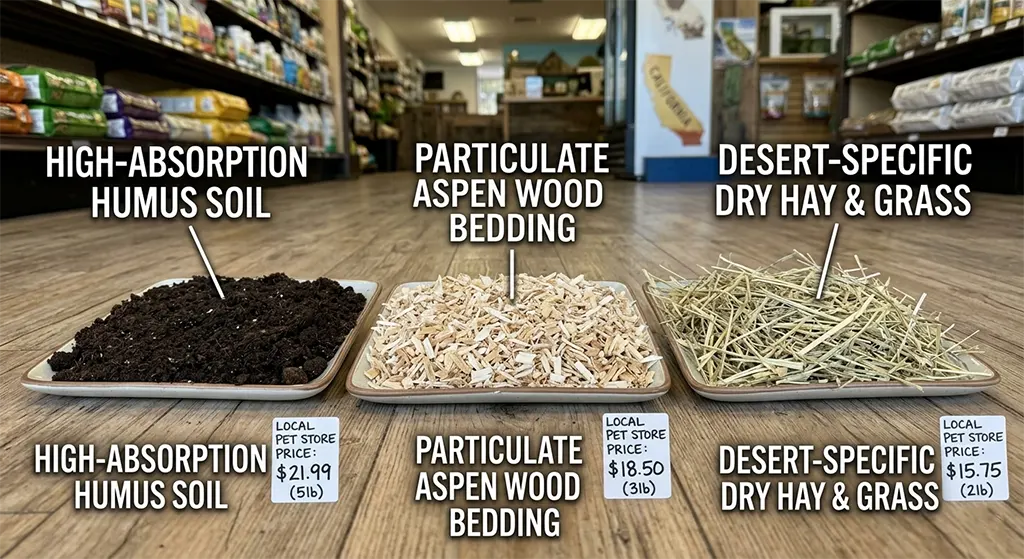
Step3|Custom Humidity Control Without Expensive Gear
Stop regular manual tank misting entirely for coastal specimens. Instead, set a single shallow water dish only large enough for tortoise drinking, remove any shallow soaking pool that adds unnecessary indoor tank moisture. For apartments with extra-high overnight fog humidity (above 75%), place a small room dehumidifier beside enclosure, common compact household dehumidifier models available at nearby Costco work perfectly for 40~120gal leopard tortoise habitat.
Step4|Seasonal Night Temperature Correction for CA Coastal Spring & Summer
Pacific coastal CA spring night temperature often drops suddenly after fog rolls in, falling 8~12°F within several hours. Low temperature plus high moisture becomes top trigger of tortoise pneumonia. Keep enclosure warm side steady at 82~86°F overnight via low-wattage ceramic heat emitter, avoid popular colored night bulbs sold locally as they raise surrounding humidity by evaporating nearby water quickly.
Coastal CA Keeper’s Quick Early Illness Check Checklist
| Wrong Daily Habit Common in San Diego New Keepers | Corrected Localized Operation |
|---|---|
| Spray tank surface every 3 days following generic desert care guide | Zero regular misting, only spot-spray drinking area when extreme inland heat waves hit San Diego |
| Keep open shallow bathing pool inside enclosure year-round | Replace with narrow-depth drinking bowl, weekly supervised short soak outside tank on dry indoor floor |
| Stock coconut husk bedding bought from nearby chain pet store | Switch to bulk aspen or coastal oat hay from county farm retailers |
| Put tank next to ocean-view apartment glass door | Shift tank to inner living room wall away from exterior windows |
Hidden Local Resource Tip
For leopard tortoise showing early signs of leopard tortoise respiratory illness california including runny nose and reduced appetite, you can check our customized resource for feeding and disease reference for tortoises, 6 exotic reptile care clinics within San Diego County provide professional tortoise health condition consultation, most clinics accept walk-in appointments during weekday mornings. Local rescue groups like San Diego Southern California Tortoise Rescue offer free in-home enclosure inspection service for novice keepers, helping spot hidden humidity issues before small sickness turns into costly emergency vet treatment. Many coastal county animal control departments also publish free digital guide for legal leopard tortoise housing rules inside rental apartments, downloadable from official county animal service website.
FAQ
Q1: Can I raise baby leopard tortoise in outdoor backyard enclosure along San Diego coastline?
A: Short-term daytime outdoor raising is available from mid-July to late August when coastal fog frequency drops sharply. From fall through early spring, overnight sea fog makes backyard ambient humidity uncontrollable, all juvenile leopard tortoise must transfer to indoor regulated tank to avoid cold-related infection, a rule summarized from local rescue’s annual intake data of sick backyard tortoises.
Q2: Is there any alternative cheap bedding if bulk aspen chips run out of stock at nearby local farm shops?
A: Sun-dried alfalfa hay sold at San Diego’s feed co-op works as temporary replacement, avoid fresh green grass picked from coastal backyard lawns, local coastal grass holds dew moisture overnight and easily mold inside closed tank environment.
Q3: How much indoor humidity should coastal CA leopard tortoise tank maintain all year?
A: Target stable enclosure humidity between 38%~52%, this range balances leopard tortoise’s natural hydration demand while preventing coastal ocean moisture buildup inside habitat, a standard confirmed by Southern California professional reptile care specialists in 2026 updated care note.
Q4: Does apartment HOA regulation in coastal CA restrict leopard tortoise indoor tank modification?
A: Most San Diego county rental HOAs allow fixed indoor glass enclosure as long as setup avoids wall drilling and permanent house renovation; portable free-standing tortoise tank fully meets nearly all coastal apartment rental pet clauses per 2026 local residential leasing guideline.
Q5: What’s the fastest emergency fix if my leopard tortoise already has mild wheezing due to damp tank?
A: Immediately transfer tortoise into dry temporary plastic bin lined with dry paper towel, place bin in warm dry inner room space away from fog-prone windows, cut all water source except tiny drinking cap, then schedule consultation with nearby exotic vet within 48 hours to stop respiratory issue worsening.
Ending Wrap-up
Coastal Southern California’s unique ocean-driven climate rewrites nearly half of mainstream leopard tortoise care rules, the primary environmental factor behind leopard tortoise respiratory illness california. Countless local rookie keepers waste time and money copying generic online guides before running into dampness-triggered tortoise health troubles. Adjust enclosure bedding, location and daily care schedule matching local coastal humidity features, and leopard tortoise can thrive smoothly inside San Diego-style apartments without frequent seasonal cold and respiratory diseases.
This content is for educational purposes only and does not substitute professional veterinary diagnosis or treatment. If you observe any symptoms of illness, injury, or abnormal behavior, please consult a qualified exotic animal veterinarian immediately.
For more details, please review our full Medical Disclaimer.