
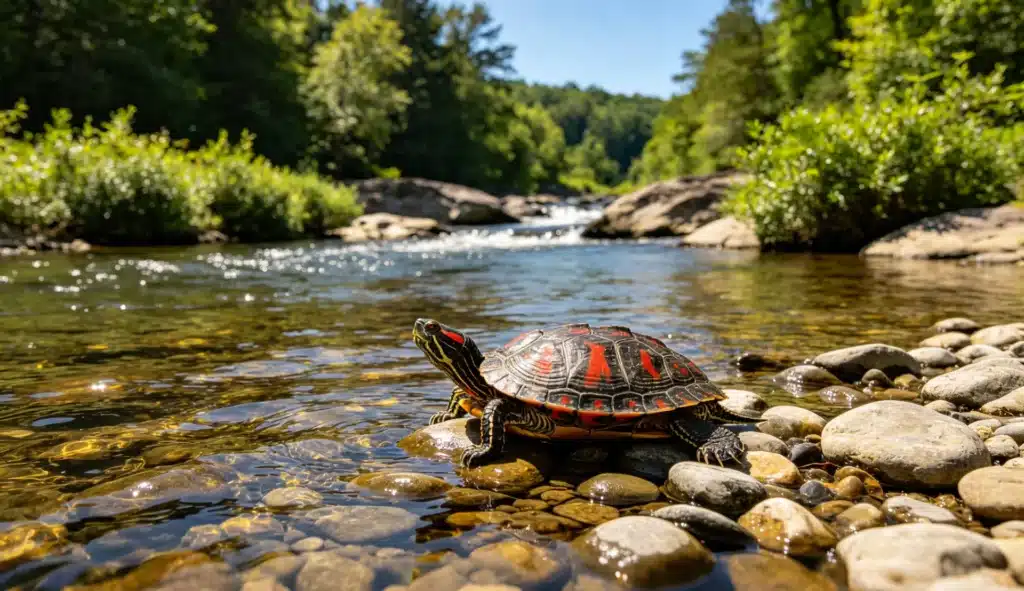
Red Eared Slider care is much more than putting a turtle in a tank, and if you’ve ever wandered into a local pet store, locked eyes with a bright red-streaked turtle quietly lounging on a rock, and thought I need one of these, you’re definitely not alone. Red Eared Sliders are hands down the most beloved aquatic pet turtle across North America—and it’s easy to see why. They’ve got that iconic eye-catching red marking, a fun, personable vibe, adaptability for days, and with proper Red Eared Slider care, they can stick around as your companion for 30+ years.
But here’s the raw truth most new turtle owners learn the hard way: Red Eared Sliders aren’t the “set it and forget it” pet people make them out to be. So many sliders end up stressed, chronically sick, or pass way too early just from simple avoidable mistakes: messed-up hibernation routines, wild temperature swings, lazy water maintenance, wrong basking habits, and untreated shell rot left to spiral.
I’ve spent years working with pet reptiles and chatting shop with seasoned herp vets, so I put together this no-BS beginner’s guide to Red Eared Slider care. Every tip follows real reptile industry standards, lines up with how these turtles live in the wild, and fixes all the most common headaches new turtle parents run into year after year.
Why Red Eared Sliders Are Perfect for New Reptile Owners
Before jumping straight into tank setup and daily routines, let’s break down exactly why sliders top the list for first-time turtle keepers: (If you’re still weighing aquatic turtles against low-maintenance terrestrial lizards, explore our blue-tongued skink selection and breed decision blueprint to see which reptile fits your home best.)
- Incredible adaptability: They handle small environment shifts way better than rare, high-maintenance exotic turtle species.
- Budget-friendly upfront cost: Juvenile sliders don’t cost an arm and a leg, and their ongoing upkeep is super affordable long-term.
- Great personality: They learn to recognize their owners, beg for meals, and swim right up to the glass whenever you walk by.
- Tough immune system: Stick to basic care rules, and they bounce back fast from minor stress and mild health issues.
- Perfect adult size: Full-grown sliders hit 8 to 12 inches, fitting easily in standard home tanks with zero need for custom oversized enclosures.
Don’t let their toughness fool you though—they’re hardy, not indestructible. Skip small daily care steps, and little issues like bad lighting or unstable hibernation slowly chip away at their health over time.
Essential Red Eared Slider Care Equipment & Tank Setup
The #1 mistake new hobbyists make? Shoving their turtle in a tiny decorative glass bowl or flimsy plastic tub. Red Eared Sliders are active swimmers, and cramped quarters equal nonstop stress, shell deformities, territorial aggression, and a weakened immune system right off the bat.
Tank Size Rule Based on Turtle Shell Length
- Baby slider (3–5 inches): Minimum 30–40 gallon tank
- Juvenile slider (5–15 inches): Minimum 50–60 gallon tank
- Adult slider (15+ inches): 80+ gallon tank highly recommended
Quick budget hack: Skip upgrading tanks down the line. Start with a 60+ gallon tank from the start—it saves you cash later and avoids stressing your turtle with repeated habitat overhauls.
Water Depth Basics
These are fully aquatic turtles, so they need enough water to swim and roam freely. Stick to this easy rule: water depth = 1.5 to 2 times your turtle’s shell length.
Baby sliders have way less stamina, so toss in small floating perches or stacked submerged rocks to give them a quick spot to rest and catch their breath. Deeper water keeps temps steady, balances water chemistry, and lets sliders get natural exercise—all huge for long-term health and solid Red Eared Slider care.
Four Non-Negotiable Tank Essentials
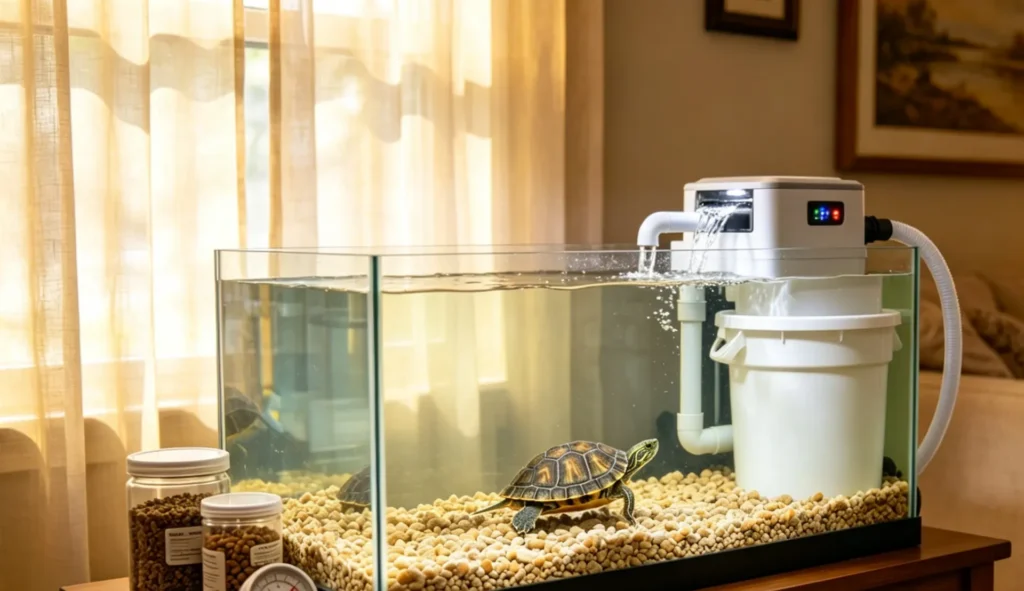
1. Water Filter
Sliders eat well and waste even more. Skip a quality filter, and your tank water turns murky, breeds harmful bacteria, and triggers eye infections plus shell rot in no time.
- Small tanks: Go with internal canister filters
- Large tanks: Opt for external bucket-style filters
- Flow rate rule: Filter 3 to 5 times your tank’s total water volume every hour
2. Basking Platform
Sliders live for basking—you’ll often see them stacking one on top of another just to soak up heat and light. Your basking spot needs to sit fully above the water line so their shell can dry out completely. Floating islands, wall-mounted docks, and natural rock platforms all work great—just steer clear of overly smooth surfaces that make climbing a hassle.
3. Water Heater
Temperature stability is the backbone of good turtle care. Wild sliders thrive in 75–82°F water, and any sudden swing over 5°F opens the door to respiratory infections and major stress. Pick a shatterproof, dry-burn protected heater, and follow the simple guideline: approximately 100W per 20 gallons (75 liters) of water.
4. UVB Basking Light
This is the most overlooked critical piece of gear out there. Red Eared Sliders rely on UVB rays to make vitamin D3, which lets their bodies absorb calcium properly. Glass blocks 90% of natural UVB rays—so setting your tank by a window does absolutely nothing for their long-term health. Reptile lighting and habitat setup follow the same core rules outlined in our pet reptile care library.
- Stick with 5.0 UVB fluorescent bulbs made for aquatic turtles
- UVB Distance: Mount 20–30 cm above the basking platform—always follow the specific distance recommendations on your bulb’s packaging.
- Run 4–6 hours daily, replace every 6–12 months (UVB fades even if the bulb still lights up)
- Skip UVB entirely, and your turtle is almost guaranteed to develop soft shell disease, metabolic bone issues, and permanent shell damage.
Red Eared Slider Feeding Guide: Diet, Schedule & Foods To Avoid
Sliders are omnivores: strictly carnivorous as babies, slowly adding plant-based meals as they mature. Mess up their diet, and you’re looking at constant eye irritation, gross surface oil film, and unnecessary obesity.
Best Go-To Food Options
- Staple diet: High-quality commercial turtle pellets (perfect balanced nutrition for daily meals)
- Protein extras: Freeze-dried river shrimp, krill, fresh small freshwater shrimp
- Plant-based bites: Lettuce, cabbage, apple slices, banana chunks (for adults only)
- Calcium boost: Cuttlebone or reptile calcium powder, sprinkle over meals 1–2 times each week
Feeding Schedule By Age
- Baby sliders (under 5 inches): 1–2 small meals daily, portion size matching their head
- Juvenile sliders (5–15 inches): One full meal per day
- Adult sliders (over 15 inches): One meal every 2–3 days
Follow the 10-minute rule: Only feed what they can finish in ten minutes, then scoop out all leftovers right away to keep water clean and balanced.
Foods You Should Never Feed Your Slider
Stay far away from raw red meat, dried mealworms, and standard fish flakes. These create thick oil film on the water surface, irritate sensitive turtle eyes, and lead to swollen, sealed-shut eye syndrome fast. Skip salted dried seafood too—salt wreaks havoc on their internal organs and causes severe edema over time.
Lighting & Basking Rules: Safe Sunning & Temperature Gap Control
Basking isn’t just a fun pastime for Red Eared Sliders—it’s mandatory for shell health, smooth digestion, and a strong immune system. That said, there are hard rules you need to follow to avoid accidentally harming your turtle.
Critical Basking Rule for Baby Sliders
If your turtle’s shell is under 5 inches long, never let them bask fully out of the water. Their tiny bodies can’t handle big temperature differences between air and water. Keep their basking platform level with the water line so their shell never fully dries out.
Temperature Gap Limit
If air temp and water temp differ by more than 5°F, don’t let your slider stick its shell fully above water. Sudden temperature shocks are one of the top causes of unexplained turtle sickness.
Natural Sunning Safety Tips
Nothing beats natural sunlight for UVB, but you have to do it safely:
- Keep sessions to 30 minutes, 2–3 times a week
- Stick to morning or late afternoon hours, skip midday blazing heat
- Always add a shaded spot and shallow water dish to avoid overheating
- Never leave them unattended outside—they’re escape artists and easy prey for backyard predators.
Water Quality Management: Clean Water = Healthy Turtles
Bad water quality is the root cause of 80% of common slider health issues: eye disease, shell rot, and bacterial infections galore. Even with a solid filter, you still need a simple consistent maintenance routine.
Water Change Schedule
- With a filter: Swap out 1/3 of tank water every week
- Without a filter: Replace half the water every 2–3 days
- Hot summer months: bump up to two partial water changes weekly
- Cold winter months: Drop to one weekly water change
Always match new water temperature to tank water to avoid cold shock. Never use straight tap water—let it sit 24 hours to burn off chlorine, or use a simple reptile water conditioner.
How to Fix Persistent Water Oil Film
Oil film sitting on the surface is a major red flag for eye irritation. Air pumps only scatter the film temporarily; for a permanent fix, add a surface skimmer or peaceful tank mates like killifish, black mollies, and gouramis. These fish naturally eat surface oil and keep your water crystal clear long-term.
Red Eared Slider Hibernation: Who Can Hibernate & Non-Negotiable Safety Rules
So many new owners make the fatal mistake of letting baby, sick, or newly stressed sliders hibernate outdoors through wild temperature swings from 30°F all the way up to 59°F. This is exactly why so many turtles turn stiff, unresponsive, and pass away mid-winter.
Turtles That Should NEVER Hibernate
- Baby sliders under 5 inches
- Turtles with shell rot, eye infections, or loss of appetite
- Newly moved sliders still dealing with habitat stress
- First-time turtle owners with zero hibernation experience
For all these cases, overwintering with steady heat is the only safe route. Keep water locked at 75–82°F, stick to normal feeding times, and run UVB lighting year-round.
Safe Hibernation Standards
Only healthy adult sliders over 15 inches are candidates for hibernation:
- Stop feeding two weeks before hibernation to fully empty their gut (prevents life-threatening intestinal inflammation)
- Keep hibernation temps steady at 41–50°F—no random spikes or drops
- Check on your turtle every 2–3 weeks, and don’t disturb them unnecessarily
- If a hibernating turtle turns dry, rigid, limbs won’t retract, and eye sockets look sunken, it’s likely passed from cold and dehydration.
Why Some Hibernating Turtles Wander Nonstop
If one slider wakes up alert, eyes open, crawling around nonstop while another stays completely still and stiff, it all boils down to unstable temperatures. Back-and-forth cold and heat mess up their hibernation cycle, forcing them to wake up and burn vital energy fast. Once this happens, move the restless turtle indoors to a heated setup immediately—don’t let it try hibernating again.
Common Red Eared Slider Diseases: Symptoms & Practical At-Home Treatment
1. Eye Infection (Most Common Issue)
Symptoms: Puffy swollen eyes, sealed eyelids, white discharge, constant rubbing at their eyes with limbs.
Causes: Dirty unmaintained water, surface oil film, vitamin A deficiency, lack of proper UVB lighting.
Management: If symptoms occur, consider increasing water temperature to 82°F and consult a vet for appropriate antibiotic eye ointments. Always prioritize professional care for eye issues.
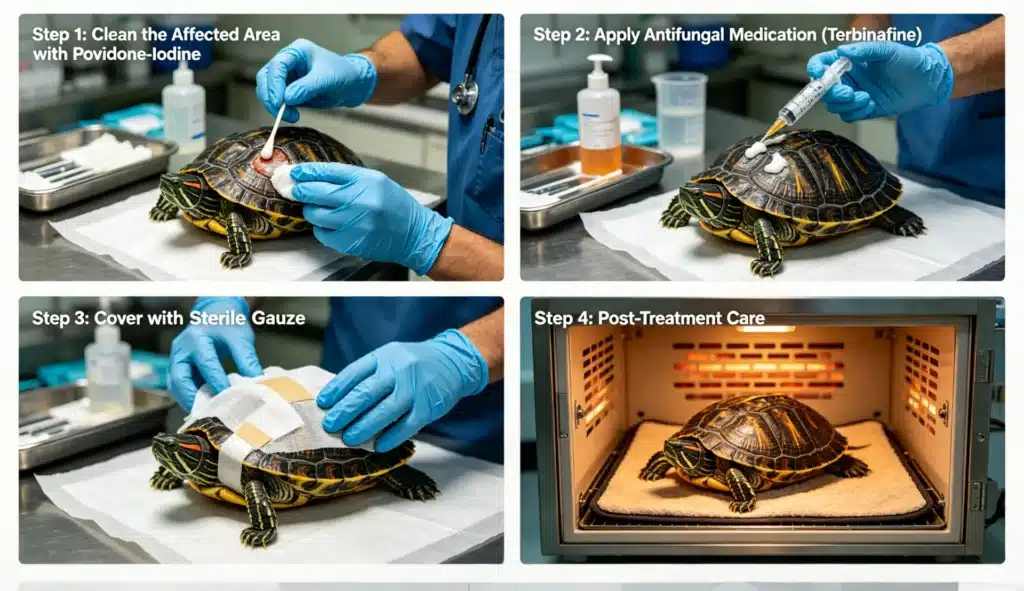
2. Severe Shell Rot
Symptoms: Soft discolored shell spots, decaying tissue, foul odor, rot digging all the way down to live tissue.
Causes: Stress from a new home environment, poor water quality, small shell wounds turning bacterial.
Treatment Breakdown:
- House the turtle in a steady 78–82°F warm space, skip all outdoor sun exposure immediately.
- Stick to daily dry care: Soak in warm water 30 minutes a day for drinking and bathroom breaks, dry rest the rest of the time.
- Clean away dead shell tissue and decay with hydrogen peroxide, then disinfect fully with povidone-iodine.
- Let the area air dry, then apply antibiotic ointment to seal the wound and keep it dry.
- Stay consistent for 2–4 weeks; even severe shell rot down to live tissue can fully heal with steady temps and daily care.
3. Soft Shell Disease
Symptoms: Spongy, bendable shell when gently pressed, sluggish movement, loss of interest in food.
Causes: Not enough UVB exposure, calcium deficiency, unbalanced daily diet.
Fix: Upgrade your UVB bulb right away, add cuttlebone to the tank, mix calcium powder into regular meals, and add safe supervised natural basking sessions weekly.
Mixed Tank Warning: Never House Size-Gap Sliders Together
Red Eared Sliders are territorial and can get surprisingly aggressive, especially full-grown males. Avoid mixing turtles with big size differences at all costs—bullying, biting, food hoarding, and shell injuries are almost guaranteed. The safest rule to live by: One turtle per tank, or only house sliders of nearly identical size together.
Final Beginner Wrap-Up
Nailing down Red Eared Slider care doesn’t have to be complicated, but it does need consistency. Stick to these core rules, and your slider will thrive for decades:
- Start with a properly sized tank, follow water depth and essential gear guidelines.
- Keep water temperature stable and never cut corners on UVB lighting.
- Follow a strict feeding schedule and skip all harmful high-oil, salty foods.
- Maintain clean water, fix surface oil film fast to avoid eye issues.
- Skip hibernation for babies and sick turtles; only let healthy adults hibernate in stable temps.
- Treat shell rot and eye infections early with heat, proper disinfection, and dry care routines.
Red Eared Sliders are lifelong pets. A little daily attention and sticking to proven care habits will reward you with years of calm, enjoyable time with your turtle.
This content is for educational purposes only and does not substitute professional veterinary diagnosis or treatment. If you observe any symptoms of illness, injury, or abnormal behavior, please consult a qualified exotic animal veterinarian immediately.
For more details, please review our full Medical Disclaimer.
Pingback: Pet Turtle Care: The Truth Pet Stores Won't Tell You
Pingback: Leopard Tortoise Respiratory Illness California: 6 Local-Only Humidity Failures in Coastal Southern California (2026 Updated for New Keepers)