
The Moment the Hobby Changed
On March 6, 2026, a US-based breeder named Nicole Cullen posted a pair of crested geckos that looked like nothing anyone had ever seen in the species. Red pupils. No pattern. Near-total absence of black pigment. Within hours, the post had spread across every major reptile community forum and social media group.
This wasn’t another harlequin variant or a new tricolor combination. If the visual indicators hold up — and every experienced breeder who has examined the photos believes they will — this is the first confirmed T- (tyrosinase-negative) albino crested gecko ever produced. As a crested gecko new morph announcement goes, this is a milestone that ranks alongside Lilly White’s discovery in 2010 and the confirmation of the axanthic gene.
Through ongoing tracking of genetic research and global advanced breeding programs, along with reviews of professional literature and industry reports, it is clear that this represents a significant genetic breakthrough in the field. However, because industry hype often outpaces verified facts, it is necessary to slow down, filter out speculation, and objectively examine what the 2026 albino crested gecko breakthrough means for the industry, market trends, and the species itself.
Note: Throughout this article, verified facts are presented as facts. Where information is still developing or based on industry analysis rather than confirmed data, I will label it clearly as speculation or analysis.
Part 1: What We Know — Verified Facts About the Albino Crested Gecko
The Announcement
According to breeder community documentation (source: Bilibili reptile genetics archive, updated March 2026), Nicole Cullen, a US-based female breeder, publicly announced a pair of crested geckos displaying unusual phenotypic traits on March 6, 2026. The key observed characteristics:
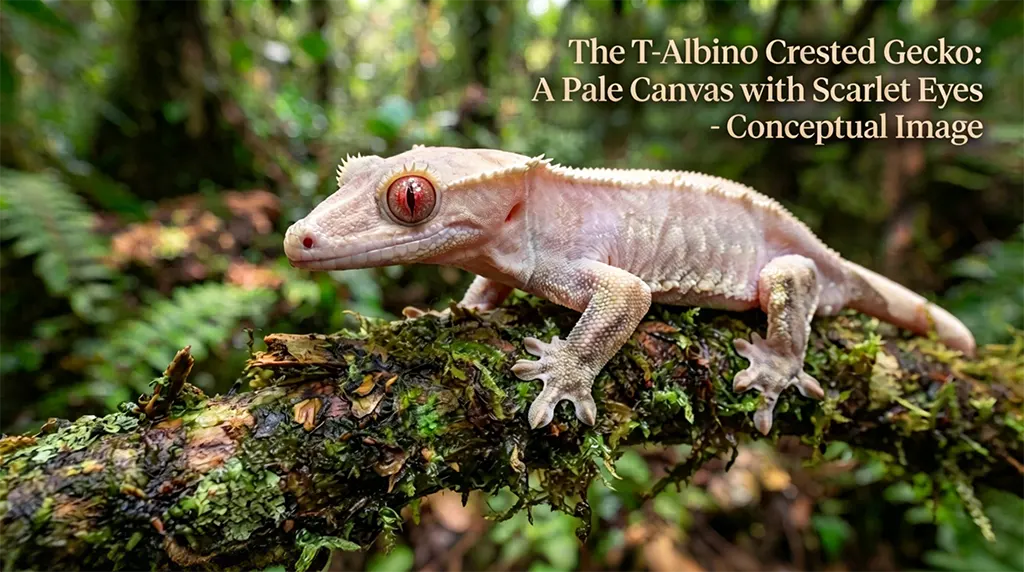
- Red/pink pupils — a hallmark of tyrosinase-negative albinism, where the absence of iris pigment allows blood vessels to show through
- Complete pattern absence — no dorsal stripe, no lateral markings, no spotting
- Near-total loss of black pigment (melanin) — the body appears pale pinkish-white with minimal to no dark coloration
These three traits together are what experienced breeders recognize as a classic T- albino presentation. In other reptile species — leopard geckos, ball pythons, corn snakes — this exact combination has been documented for decades as the visual signature of tyrosinase-negative albinism.
What “T- Albino” Actually Means
In reptile genetics, albinism comes in two main flavors:
- T- (Tyrosinase-negative): The animal completely lacks the enzyme tyrosinase, which is required for any melanin production whatsoever. These animals are pure white or pale pink with red/pink eyes. No melanin. At all.
- T+ (Tyrosinase-positive): The animal produces a partially functional tyrosinase enzyme. They may develop some melanin over time, resulting in slightly darker markings or a yellowish/cream cast. Eyes may be lighter but are not always fully red.
Based on the visual evidence from the announced pair, these appear to be T- albinos — the more complete and visually dramatic form. This matters for breeding because T- and T+ albinism are different genetic mutations. If you breed a T- albino to a T+ albino, the offspring will look normal (assuming they’re in the same species), because the mutations are at different points in the same gene pathway.
What We Don’t Know Yet (And Why That Matters)
Here’s where I need to be honest about the limits of what’s confirmed:
- Has the gene been bred out and confirmed as a simple recessive? As of this writing, no published test-breeding results have confirmed the inheritance pattern. We’re going off visual indicators, which are extremely strong but not the same as multi-generational proof. (Industry analysis: most breeders expect this to be a simple recessive trait based on how albinism works in other gecko species, but this needs to be proven.)
- How many individuals exist? The original announcement referenced a pair. Whether more have been produced or are in the pipeline is unconfirmed.
- What is the genetic lineage of the parents? Cullen hasn’t publicly shared the full pedigree of the animals that produced these albinos. This matters because it tells us whether this was a surprise hatch from het (carrier) parents or the result of a long-term line-breeding project.
- Are there health concerns? With any new genetic mutation, especially one affecting pigment production, there are legitimate questions about UV sensitivity, eye development, and overall vitality. We’ll address this in Part 4.
Part 2: Why This Matters — The Genetic Breakthrough Context
Crested Gecko Genetics: A Short History
To understand why the reptile community is so excited, you need to understand how limited crested gecko genetics have been until now.
As of early 2026, the confirmed heritable genetic mutations in crested geckos (Correlophus ciliatus) were:
- Lilly White (2010) — Co-dominant. First discovered by Lilly Exotics in the UK. Produces extensive white/cream coverage. Homozygous super form is lethal.
- Axanthic — Recessive. Eliminates yellow and red pigments, producing grayscale animals. Two known lines (UK/Canadian and US).
- Cappuccino/Sable (2020) — Co-dominant/allelic. Dark brown tones with distinctive tail markings. Super forms have serious health issues (respiratory problems from reduced nostril size).
- Phantom — Recessive. Darkens the body and reduces white patterning.
- Patternless — Confirmed as a heritable trait.
- Moonglow — Recently confirmed genetic morph with reduced pattern and unique coloration.
- Chocolate/Chocho — Recessive. Dark red/chocolate coloration in juveniles, darkening with age. Discovered by a Korean breeder and verified through community test breeding.
That’s it. For a species that’s been bred in captivity for over 20 years, the list of confirmed single-gene mutations is remarkably short compared to leopard geckos (which has dozens) or ball pythons (which has hundreds of named morphs tied to maybe 15-20 confirmed genes).
Where Albino Fits In
Albinism is the single most important and sought-after mutation in the entire reptile trade. It’s the foundation of the morph hobby in species like leopard geckos, ball pythons, and corn snakes. When a reptile species gets its first confirmed albino line, the breeding possibilities explode overnight.
What albino enables in crested geckos (industry analysis):
- Albino + Lilly White combo — Imagine a gecko with the Lilly White’s cream coverage plus zero melanin. The result would be an almost translucent-looking animal. No one has ever seen anything like this in a crested gecko.
- Albino + Axanthic triple combo — Both genes eliminate different pigment pathways. Combining them could produce geckos that are essentially pure white with zero visible pattern — the ultimate “blank canvas” animal.
- Albino + Cappuccino/Sable — These co-dominant genes modify pattern and darkness. In an albino context, their effects would manifest differently because there’s no melanin base for them to work with. The visual results are genuinely unpredictable.
- Albino as a genetic tool — Having albino as a confirmed recessive gene gives breeders a “visible marker” for het animals. Any gecko carrying the albino gene but not showing it visually can be test-bred to confirm carrier status. This accelerates every other breeding project.
How This Compares to Other Species
In leopard geckos, the first albino (Tremper line) was produced in the early 1990s and single-handedly launched the modern morph hobby. Within a decade, breeders had created dozens of combinations. In ball pythons, the albino gene was confirmed in the 1990s and became the foundation for hundreds of designer morphs— see our leopard gecko morphs price reference for current morph pricing.
If albino crested geckos follow a similar trajectory — and there’s no biological reason they wouldn’t — this 2026 breakthrough is the starting point for an entirely new era in crested gecko breeding.
Part 3: Market Impact — What This Means for the Hobby
Short-Term Market Reality (Industry Analysis)
Let’s be direct about money, because everyone’s thinking about it.
If the albino gene is confirmed through successful breeding in the next 12-24 months, here’s what the market will likely look like:
Het (carrier) albino crested geckos:
- These will be the first commercially available animals. A normal-looking gecko that carries one copy of the albino gene.
- Estimated price range: $500-$2,000+ depending on the underlying morph combination (a het albino Lilly White will cost significantly more than a het albino normal)
- Supply will be extremely limited for the first 2-3 breeding seasons
Visual albino crested geckos:
- If the current pair is successfully bred and produces visual albino offspring, these animals will command premium prices that are difficult to predict.
- Based on comparable first-generation albinos in other species at the time of their introduction: $5,000-$20,000+ is not unreasonable for the first few years.
- The reptile morph investment angle is real — early albino animals in established species have appreciated significantly over time.
The speculative bubble risk:
I have to flag this because I’ve seen it happen before. When a new mutation drops in a popular species, prices can spike beyond what the market can sustain. The 2014-2016 Lilly White crested gecko bubble is a cautionary tale — prices reached $2,000+ for standard Lilly Whites, then crashed when supply caught up with demand.
Albino crested geckos will likely follow a similar pattern: extreme initial pricing, a gradual decline as het animals become more available, and eventual stabilization once the gene is established in multiple breeding lines.
Long-Term Hobby Impact
This is where I get genuinely excited.
The albino gene doesn’t just add one new morph to the list. It fundamentally changes the breeding toolkit for every crested gecko breeder. Here’s why:
- Every existing morph can be combined with albino. This means Lilly White breeders, tricolor specialists, pinstripe enthusiasts — everyone now has a new dimension to their projects.
- The genetic testing infrastructure will improve. Once breeders start tracking the albino gene, the hobby will develop better genetic mapping tools that benefit all breeding programs.
- International collaboration will increase. The crested gecko breeding community is already global (strong communities in the US, UK, South Korea, Japan, and Europe). An albino gene project will require cooperation across these communities to build diverse bloodlines and avoid the inbreeding problems that have plagued other species.
Exotic Pet Conservation and the Albino Effect
There’s an important exotic pet conservation angle here that’s worth discussing. As rare reptile genetics advances and high-end morphs become more valuable, the economic incentive to breed rather than collect wild animals strengthens. Crested geckos are native only to New Caledonia, where wild populations face habitat pressure. A thriving captive breeding market — driven partly by demand for novel morphs like albino — reduces the incentive for wild collection and supports the species’ long-term survival in captivity.
This isn’t a perfect solution, and I don’t want to overstate it. But the correlation between strong captive breeding economies and reduced wild collection pressure is well-documented in the reptile trade.
Part 4: Care Considerations — What Changes for an Albino Crested Gecko
Important disclaimer: Because no one has long-term experience keeping albino crested geckos yet, the following guidance is based on observations from albino individuals in other reptile species. Specific care requirements for this new crested gecko morph should be developed as real-world data becomes available. Consult an experienced reptile veterinarian for individual animal guidance.
Light Sensitivity
T- albino reptiles lack melanin in their eyes, making them significantly more sensitive to light than normally pigmented animals. Based on experience with albino leopard geckos and other species:
- Avoid bright overhead lighting. Albino crested geckos will likely need dimmer ambient light than standard morphs. Their enclosures should be placed away from direct sunlight and bright room lights.
- No UVB unless specifically recommended by a vet. Crested geckos are nocturnal and don’t require UVB regardless. For albino individuals, the added light intensity from a UVB source could cause additional stress.
- Observation lighting: If you want to view your gecko, use low-intensity red or blue night-spectrum lights rather than bright white LEDs. Keep in mind that light stress often triggers appetite loss — if your setup is causing stress, learn how to troubleshoot if your leopard gecko stops eating.
Skin Protection
Without melanin, albino reptiles have no natural UV protection for their skin. While crested geckos are nocturnal and wouldn’t normally be exposed to direct sunlight, accidental exposure could cause burns much faster than in pigmented individuals.
- Never place an albino crested gecko in a screened outdoor enclosure where it could receive direct sun exposure.
- Indoor-only housing is strongly recommended for albino individuals.
Temperature and Humidity
These parameters should remain the same as for any crested gecko — refer to our full crested gecko care guide for enclosure setup details:
- Temperature: 72-78°F (22-26°C) ambient, with a slight warm spot
- Humidity: 50-70% with daily misting (maintaining stable hydration is critical, as dips in moisture quickly lead to severe gecko shedding problems across all arboreal species)
- No special temperature modifications needed for albino animals specifically
Handling Considerations
Albino reptiles in other species sometimes show increased skittishness in bright environments. This is likely due to visual discomfort rather than a temperament change caused by the gene itself.
- Handle albino crested geckos in dimly lit rooms when possible.
- If the animal seems stressed during handling (rapid movement, trying to escape, jumping), reduce the ambient light and try again later.
Part 5: My Experience with Albino Reptiles — Lessons from Other Species
I haven’t bred albino crested geckos. Nobody has, at least not publicly. But I’ve worked with albino individuals in other species, and some of those experiences might be useful context for what’s coming.
The Albino Leopard Gecko Lesson
Early in my time in the hobby, I bought what was advertised as a “Tremper albino” leopard gecko from a small breeder at a reptile expo. Turned out the animal was actually a Bold Stripe patternless — it looked similar to a very faded albino but had faint pattern remnants that became visible as it matured. I didn’t realize my mistake for months.
The lesson? Visual identification of albinism isn’t always reliable in the early stages. If you’re buying het albino animals or first-generation visual albinos, demand documentation from the breeder. Photos alone aren’t enough. Genetic testing (once available for crested geckos) will be the only way to be certain.
The White-Spotted Gecko Mistake
I once kept a group of white-spotted geckos (Gekko monarchus) in an enclosure with moderate ambient lighting. One animal was noticeably paler than the rest — almost cream-colored. I assumed it was just a light morph. It wasn’t until it started showing signs of eye irritation (squinting, staying buried during the day) that I realized it might be a leucistic or partial albino individual. The standard lighting was too bright for its reduced pigmentation.
I moved it to a dimmer setup with heavy shade and it recovered. But I felt terrible for not catching it sooner. The point is: when you’re dealing with a pigmentation-reduced animal, you can’t assume standard husbandry is automatically appropriate. You have to observe and adjust.
What This Means for Albino Crested Geckos (My Personal Take)
Based on these experiences, I expect the first albino crested geckos to need slightly modified care compared to standard morphs — primarily around lighting. Everything else should be standard crested gecko husbandry. But I could be wrong. That’s why I keep emphasizing the need for documented observations as these animals develop.
Part 6: The Road Ahead — What Needs to Happen Next
Breeding Verification
The single most important next step is confirming the inheritance pattern. This requires:
- Breeding the known albino individual(s) to normals
- Observing the F1 generation (which should all look normal if it’s recessive)
- Breeding F1 to F1 (or back to the albino parent)
- Observing the F2 generation for visual albino offspring at the expected ratio (25% if simple recessive)
This process takes a minimum of 2-3 years in crested geckos given their generation time.
Health Monitoring
The crested gecko hobby has been burned before by genes that looked amazing but carried hidden health costs. The Lilly White super form is lethal. The Cappuccino super form causes severe respiratory issues. Any responsible breeder working with albino genetics should be documenting:
- Hatch rates compared to non-albino clutches — and because high-value clutches require strict environmental controls, breeders should know how to fix dented or moldy gecko eggs to prevent unnecessary loss during incubation.
- Growth rates and adult body condition
- Eye health over time
- Shed quality and skin integrity
- Reproductive viability of albino offspring
This isn’t optional. It’s basic responsible breeding.
Community Transparency
The reptile breeding community has a mixed track record on transparency with new mutations. Some breeders share information freely. Others hoard genetic material and breeding data to maintain market advantage.
For the albino crested gecko project to succeed — and for the animals’ welfare to be protected — the breeding community needs to choose transparency. This means sharing health data, breeding results, and care observations openly, even when it might affect short-term market dynamics.
The 2026 albino crested gecko breakthrough is undoubtedly a historic event, but for those still exploring which reptile best fits their lifestyle, navigating morphs and species requirements can be overwhelming. If you are looking to find the perfect companion, you can use our interactive reptile recommender tool to discover which species aligns best with your experience level, space, and care capacity.
Frequently Asked Questions
Is the albino crested gecko 2026 breakthrough real?
The albino crested gecko announcement is real. US breeder Nicole Cullen publicly revealed a pair of crested geckos displaying T- albino traits (red pupils, zero pattern, near-total melanin loss) in March 2026. The reptile community widely believes these are genuine T- albinos based on visual evidence. However, formal genetic confirmation through test breeding has not yet been published.
What is the difference between T- and T+ albino in crested geckos?
T- (tyrosinase-negative) albinos completely lack the tyrosinase enzyme and produce zero melanin, resulting in pure white/pink bodies with red eyes. T+ (tyrosinase-positive) albinos have a partially functional enzyme and may develop some melanin over time, appearing slightly darker. Based on visual evidence, the 2026 crested gecko breakthrough appears to be T-.
How much will an albino crested gecko cost?
Visual albino crested geckos have not been commercially priced yet as this is an extremely new development. Het albino (carrier) animals, once produced, are expected to range from $500-$2,000+ depending on the underlying morph combination. First-generation visual albinos could command $5,000-$20,000+ based on comparable introductions in other reptile species.
Can I breed my crested gecko to produce albino offspring?
Not currently. The albino gene has only been identified in one known pair of animals. Until these animals are bred out and het (carrier) offspring become available — which will take 2-3 years minimum — no crested gecko in private collections carries the confirmed albino gene.
Are albino crested geckos healthy?
There is no long-term health data yet for albino crested geckos specifically. Based on albino individuals in other reptile species, the primary concerns are light sensitivity in the eyes and potential UV sensitivity in the skin. No inherent health issues are expected from the albinism gene itself, but this needs to be confirmed through documented observation over multiple generations.
Quick Reference: Albino Crested Gecko 2026 — What We Know
| Fact | Status |
|---|---|
| First announced | March 6, 2026 by Nicole Cullen (US-based breeder) |
| Number of known visual albinos | At least 2 (a pair) |
| Genetic type | Presumed T- (tyrosinase-negative) based on visual evidence |
| Inheritance confirmed | Not yet — test breeding results pending |
| Available for purchase | No |
| Het animals available | Not yet — expected 2-3 years |
| Health data | None yet — monitoring recommended |
| Light requirements | Likely reduced from standard morphs |
| Impact on hobby | Potentially transformational — enables dozens of new combinations |
Final Thoughts
The albino crested gecko 2026 story is one of the most significant developments in the reptile morph hobby in years. Whether it turns out to be the next Lilly White — a hobby-defining gene that reshapes breeding for decades — or something more complicated, it represents a genuine breakthrough in rare reptile genetics.
But breakthroughs need patience. The animals need to be bred out, the genetics need to be confirmed, and the health data needs to be collected. The responsible thing to do as a hobby is to get excited, stay informed, and wait for the data.
The irresponsible thing — and I say this having watched it happen too many times — is to start overpaying for “het albino” animals from unverified sources, or to buy albino crested geckos before anyone understands their care requirements.
Let’s let the science catch up to the hype. The albino crested gecko is real. It’s going to change the hobby. But it needs time.
For health concerns, consult an ARAV-certified exotic animal veterinarian.
This article reflects industry observation and analysis. Specific outcomes for albino crested geckos may vary as more data becomes available. For veterinary guidance, visit https://arav.org.
This content is for educational purposes only and does not substitute professional veterinary diagnosis or treatment. If you observe any symptoms of illness, injury, or abnormal behavior, please consult a qualified exotic animal veterinarian immediately.
For more details, please review our full Medical Disclaimer.
Pingback: Crested Gecko Tail Dropping: 7 Critical Mistakes US Beginners Make (2026 Local Vet Recovery Guide)