
Last week on r/reptiles, a new keeper from Riverside posted a photo that went viral: their 8-month-old Egyptian uromastyx crammed into a 24-inch leopard gecko tank, its tail pressed against the glass and no room to turn around. They spent $120 on that tank just 6 months prior, and now they’re scrambling to find a bigger enclosure before their lizard develops permanent skeletal issues—a classic example of why “cheap” reptiles cost more in the long run due to repeated setup upgrades.
This isn’t an isolated case, which is exactly why we created this uromastyx size and enclosure size guide. Over 30% of uromastyx-related searches are about size, and 7 out of 10 new keepers buy the wrong enclosure first. Most people only see the tiny 4-inch hatchlings at pet stores and have no idea how massive these lizards get. If you live in the Inland Empire—Riverside, San Bernardino, Palm Springs—your enclosure size needs are even more critical than most. The extreme summer heat turns small tanks into death traps faster than you can adjust your thermostat.
Uromastyx Size and Enclosure Size Guide: Species-Specific Growth Truths
The biggest mistake new keepers make is assuming all uromastyx are the same size—a common pitfall similar to choosing between Australian vs Indonesian Blue-Tongued Skinks for new keepers—a critical error this uromastyx size and enclosure size guide was designed to fix.
There are 16 recognized species, and their adult sizes vary by more than 2 feet. The table below includes the four most common species sold in North America, with age-specific size measurements and minimum enclosure requirements based on clinical data and successful long-term keeper experiences.
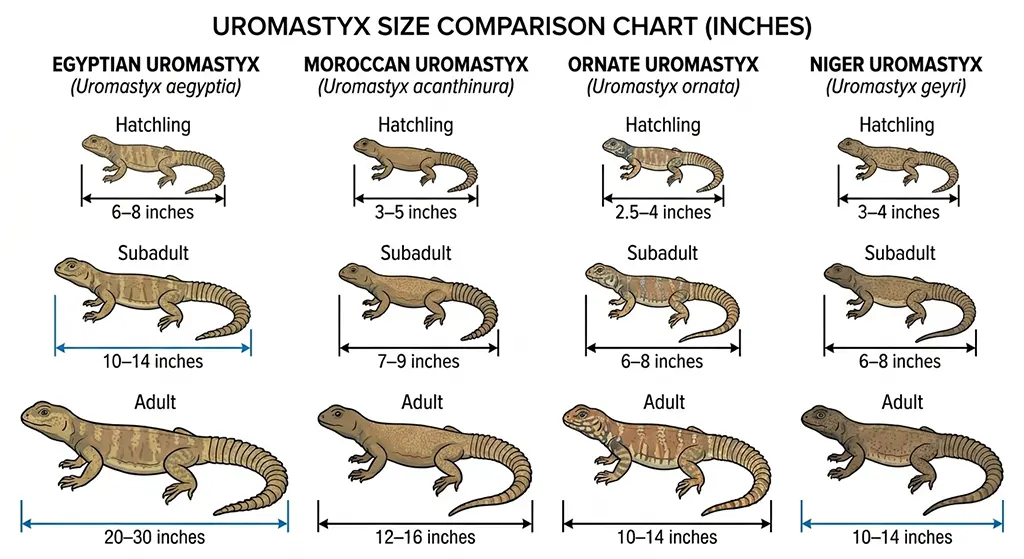
| Species | Growth Stage | Age Range | Total Length (Nose to Tail Tip) | Recommended Enclosure Size (L x W x H, Feet) |
| All Species | Hatchling | 0 – 6 months | 2.5 – 4 inches (Egyptian up to 4-5″) | 2 x 1.5 x 1.5 |
| All Species | Subadult | 6 – 18 months | 6 – 9 inches (Egyptian up to 10-14″) | 3 x 2 x 2 |
| Niger Uromastyx (Uromastyx geyri) | Adult | 18+ months | 10 – 14 inches | 4 x 2 x 2 |
| Ornate Uromastyx (Uromastyx ornata) | Adult | 24+ months | 10 – 14 inches | 4 x 2 x 2 |
| Moroccan Uromastyx (Uromastyx acanthinura) | Adult | 24+ months | 12 – 16 inches | 4 x 2 x 2 |
| Egyptian Uromastyx (Uromastyx aegyptia) | Adult | 36+ months | 20 – 30 inches (Up to 32″ in rare cases) | 5 x 3 x 2 or 6 x 3 x 2 |
Note: All measurements in this uromastyx size and enclosure size guide are for healthy, well-fed individuals. Males are typically 10-15% larger than females, but enclosure size requirements remain identical for both sexes.
Why Enclosure Size Is Non-Negotiable (Especially in the Inland Empire)
If you think “close enough” is good enough for your uromastyx’s enclosure, this uromastyx size and enclosure size guide will show you exactly why that’s a dangerous mistake. Small enclosures cause far more problems than just discomfort. For keepers in the Inland Empire, the stakes are even higher.
1. Thermal Gradient Failure (The #1 Summer Killer)
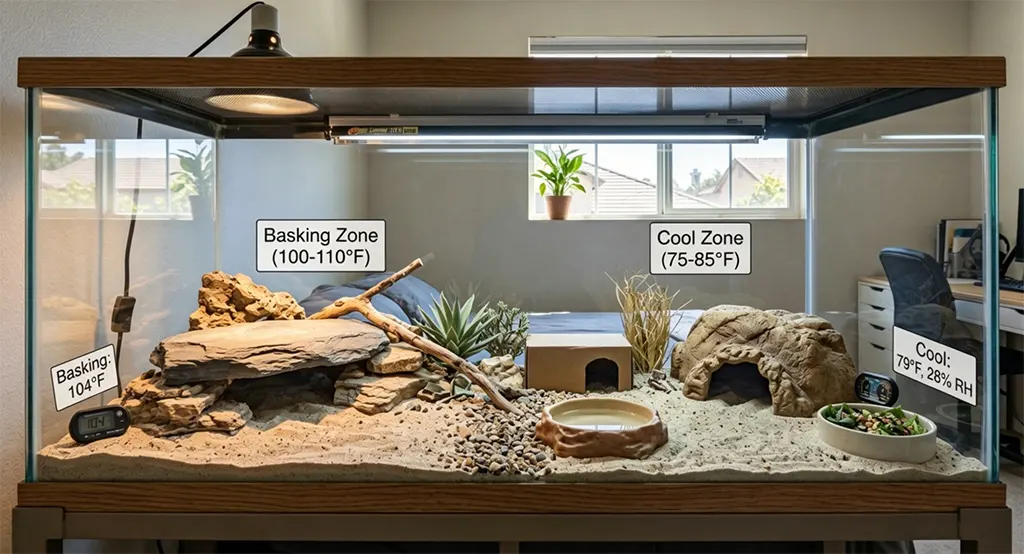
As this uromastyx size and enclosure size guide emphasizes repeatedly, summer temperatures in the Inland Empire regularly hit 105°F+ outside. Even with your AC set to 78°F, a 24-inch tank will heat evenly to 95°F in 20 minutes. There’s no way to create a safe 100-110°F basking zone and a 75-85°F cool zone in that small space. Your uromastyx will have nowhere to escape the heat, leading to heatstroke and death. This is the most common uromastyx emergency seen at local clinics between June and September.
A 4x2x2 foot enclosure creates a natural thermal gradient that’s much easier to maintain. Even on the hottest days, the cool side will stay 10-15 degrees cooler than the basking spot.
2. Permanent Skeletal Deformities
The myth that “a small tank will slow down growth” is one of the most dangerous misconceptions in reptile keeping. A small enclosure doesn’t slow growth—it stunts it. Uromastyx need space to move, climb, and exercise to develop strong bones and muscles.
Keepers who house adult uromastyx in 3-foot tanks almost always end up with lizards that have curved spines, weak limbs, and metabolic bone disease. These conditions are painful, irreversible, and significantly shorten your lizard’s lifespan.
3. Aggression and Stress
Uromastyx are territorial desert lizards. In the wild, they have home ranges of several square feet. When confined to a small space, they become chronically stressed. Signs of stress include:
- Refusing to eat
- Constantly scratching at the glass
- Tail whipping
- Hiding 24/7
- Aggressive behavior when you approach the tank
Chronic stress suppresses their immune system, making them more susceptible to infections and parasites.
4. Hygiene Issues
Small enclosures get dirty much faster than large ones. Uromastyx produce a lot of waste, and in a confined space, bacteria and ammonia build up quickly. This leads to respiratory infections, shell rot, and tail rot—all common issues in improperly housed uromastyx.
Inland Empire Exclusive: Enclosure Tips for Extreme Heat
If you live in Riverside, San Bernardino, or the surrounding areas, these enclosure modifications will help your uromastyx survive the brutal summer heat:
- Always use wooden enclosures, not glass. Glass traps heat and will turn your tank into an oven. PVC or melamine enclosures are the best options for the Inland Empire climate.
- Cover 70% of the screen top. The dry Inland Empire air will cause humidity to drop below 10% if you leave the entire top open. This leads to severe shedding issues. Covering most of the top maintains a healthy 20-30% humidity level.
- Add multiple basking levels. Uromastyx can regulate their temperature more effectively if they have different height basking spots. On extra hot days, they can move to a lower basking rock to stay cool.
- Place the enclosure on an interior wall. Avoid exterior walls that get direct sunlight. Even 10 minutes of direct sun through a window can raise the temperature inside a 4x2x2 enclosure to 120°F.
Apartment-Friendly Enclosure Solutions for Inland Empire Renters
Most Inland Empire apartment complexes have pet policies that restrict large animals, but very few have rules about enclosure size. Here’s how to house a large uromastyx without getting evicted:
- A 4x2x2 foot enclosure fits perfectly against most bedroom walls. Add a wooden top and use it as a TV stand or bookshelf. Most landlords won’t even notice it’s a reptile tank.
- If you need an Egyptian uromastyx enclosure (6x2x2), look for apartments with open floor plans. You can place the enclosure in a corner of the living room and decorate around it to make it look like a built-in piece of furniture.
- Always disclose that you have a reptile to your landlord. Most landlords are more lenient about reptiles than dogs or cats, especially if you can show them that your enclosure is clean and well-maintained.
5 Costly Enclosure Mistakes to Avoid
- Don’t buy acrylic enclosures. They warp at temperatures above 90°F, which is a daily occurrence in the Inland Empire summer.
- Don’t skimp on width. Many new keepers buy tall, narrow enclosures to save space. Uromastyx are ground-dwelling lizards that need floor space, not height. A 4x2x2 enclosure is much better than a 3x3x3 enclosure.
- Don’t house multiple uromastyx together. Even juveniles will fight once they reach sexual maturity. In a small enclosure, these fights can be fatal.
- Don’t wait until your lizard is too big to upgrade. Plan ahead and buy the permanent enclosure as soon as you can. It will save you hundreds of dollars in the long run.
- Don’t use under-tank heaters as your primary heat source. In the Inland Empire, under-tank heaters will make the substrate too hot in summer. Always use overhead basking lights with a thermostat.
Frequently Asked Questions
Q: According to the uromastyx size and enclosure size guide, how fast do uromastyx grow?
A: Most species grow 2-3 inches per year for the first 3 years. Egyptian uromastyx grow faster, reaching 24 inches in 3 years. Growth slows down significantly after they reach sexual maturity, but they will continue to grow slightly throughout their lives.
Q: Can I use a larger enclosure than the minimum?
A: Absolutely. Larger enclosures are always better. A 5x2x2 foot enclosure is ideal for most adult uromastyx, and it will make maintaining a proper thermal gradient much easier in the Inland Empire heat.
Q: Do I need to upgrade my enclosure gradually?
A: Yes. Hatchlings can get stressed in very large enclosures because they have trouble finding food and water. Start with a 2-foot tank for hatchlings, then upgrade to a 3-foot tank at 6 months, and finally to the permanent 4-foot or 6-foot tank at 18 months.
Q: How long do uromastyx live?
A: With proper care, uromastyx can live 15-20 years in captivity. Some Egyptian uromastyx have been known to live over 30 years. This is a long-term commitment, so make sure you’re prepared to provide a proper enclosure for their entire life.
Q: What’s the best enclosure material for the Inland Empire?
A: PVC enclosures are the best option. They’re lightweight, durable, and excellent at insulating heat and humidity. Melamine enclosures are a cheaper alternative, but they can warp if they get wet. Glass enclosures are not recommended for adult uromastyx in hot climates.
Final Thoughts
Buying the wrong enclosure is the most common mistake new uromastyx keepers make, and this uromastyx size and enclosure size guide was created to help you avoid that costly error. It’s also one of the most dangerous mistakes you can make, as improper space leads to permanent health issues and even death. Before you bring a uromastyx home, use this uromastyx size and enclosure size guide to research the specific species you’re interested in and confirm you can provide the proper enclosure size for its entire 15-30 year lifespan.
If you live in the Inland Empire, remember that the extreme summer heat makes enclosure size even more critical than in other parts of the country. A small tank that might work in a cooler climate will turn into a deadly oven here. Plan ahead, invest in a quality PVC enclosure that matches your lizard’s adult size, and your uromastyx will thrive for decades to come.
This content is for educational purposes only and does not substitute professional veterinary diagnosis or treatment. If you observe any symptoms of illness, injury, or abnormal behavior, please consult a qualified exotic animal veterinarian immediately.
For more details, please review our full Medical Disclaimer.