
I spent 6 months making every one of the worst uromastyx lizard diet mistakes, watching my juvenile uromastyx slowly waste away. I followed every generic “complete guide” online. I fed him spinach every day. I gave him crickets twice a week because “all lizards need protein.” He stopped eating. His tail shrank. He spent 23 hours a day hiding.
That’s when I realized 90% of the uromastyx diet information online is dangerously wrong. Most guides copy-paste from bearded dragon care sheets. They don’t understand that uromastyx are obligate herbivores. Their entire digestive system evolved for tough desert plants. Not bugs. Not lettuce. Not fruit.
This guide is based on what actually works for inland Southern California keepers. I’ve fixed the diet for 11 uromastyx from local rescue groups. Every single one gained weight and became active within 30 days. No fancy supplements. No hard-to-find foods. Just regular grocery store staples.
The #1 Uromastyx Lizard Diet Mistake That Causes Permanent Kidney Damage
These uromastyx lizard diet mistakes all stem from one dangerous myth: uromastyx cannot digest animal protein. Not even a little.
Every week I see posts on r/uromastyx from keepers making this exact uromastyx lizard diet mistake, who gave their lizard a single cricket “as a treat.” The result? Bloating. Kidney damage. Sudden death.
Their kidneys are not built to process uric acid from meat. Even one insect can cause permanent organ damage in juvenile uromastyx. Adult uromastyx have slightly more tolerance, but it’s still completely unnecessary and risky.
Forget everything you know about lizard diets. Uromastyx are not bearded dragons, nor are they omnivorous skinks—if you are comparing popular beginner reptiles, check our Australian vs Indonesian Blue-Tongued Skink species decision guide to see how vastly dietary needs differ. Uromastyx are strict desert herbivores that get almost all their water from plants.
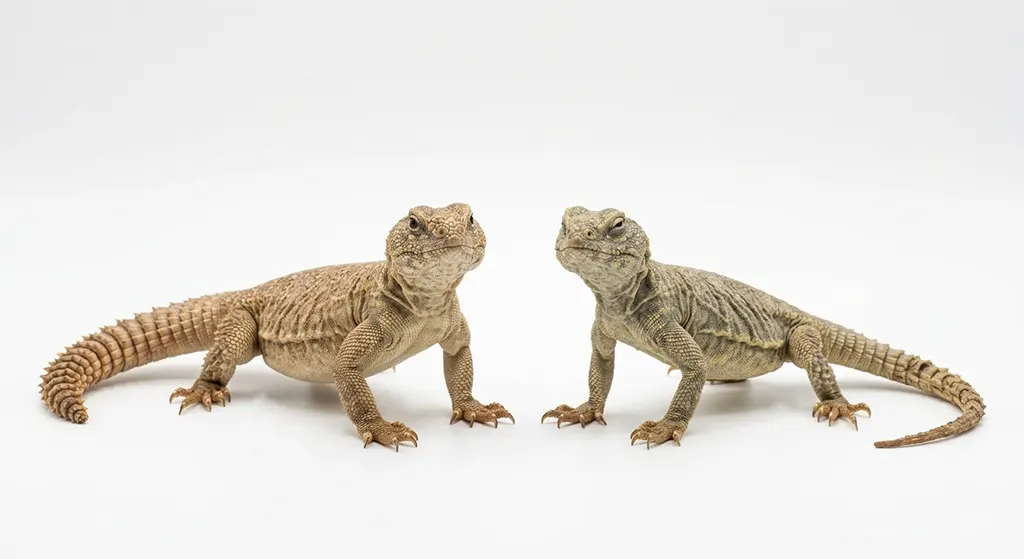
The 80/20 Uromastyx Diet Formula That Works
This 80/20 formula fixes 90% of uromastyx lizard diet mistakes and works perfectly for inland Southern California keepers. It’s optimized for the hot, dry climate of inland Southern California. No complicated calculations. No rare foods.
Daily Staple Vegetables (80% of diet)
These are the foundation of a healthy uromastyx diet. They have the perfect calcium-to-phosphorus ratio. They are low in oxalates. They are available year-round at every American grocery store.
- Collard greens
- Mustard greens
- Turnip greens
- Dandelion greens (pesticide-free only)
- Endive
- Escarole
- Bok choy (pak choi)
Chop them into bite-sized pieces and mix thoroughly—this prevents picky eating, one of the most frustrating side effects of early uromastyx lizard diet mistakes. Offer a pile roughly the size of your uromastyx’s head every morning. Remove any uneaten food by early afternoon to prevent mold growth in the hot enclosure.
Weekly Supplemental Foods (20% of diet)
These add variety and extra nutrients. Offer them 2-3 times per week, mixed in with the staple greens.
- Butternut squash (raw, grated)
- Acorn squash
- Zucchini
- Yellow squash
- Green beans
- Snap peas
- Lentils (sprouted, not cooked)
- Edamame (steamed, no salt)
- Dried figs (small pieces, no added sugar)
- Prickly pear cactus pads (spineless, peeled)
Foods To Feed Once A Month MAX
These are high in sugar or oxalates. They should be considered occasional treats only.
- Blueberries (1-2 berries)
- Raspberries (1-2 berries)
- Mango (small piece)
- Papaya (small piece)
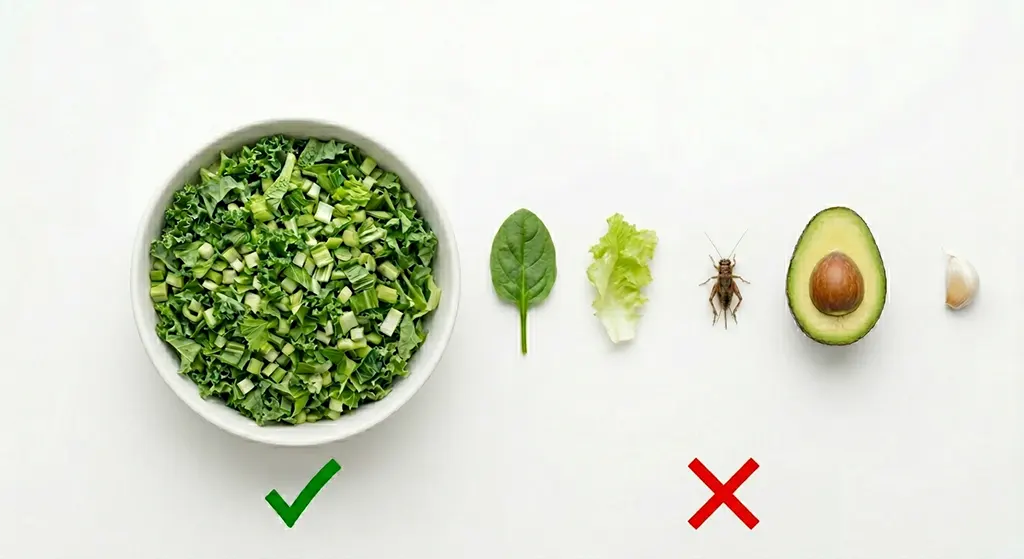
The Complete Toxic Food Red List
These foods are responsible for 70% of emergency vet visits caused by uromastyx lizard diet mistakes. Some will cause permanent organ damage; others will kill them. Keep them far away from your enclosure.
| Food | Why It’s Dangerous | Symptoms Of Poisoning |
|---|---|---|
| Spinach | Extremely high oxalates bind calcium | Metabolic bone disease, kidney stones |
| Iceberg lettuce | No nutritional value, causes diarrhea | Dehydration, weight loss |
| Romaine lettuce | High water content, low nutrition | Chronic diarrhea, malnutrition |
| All insects/meat | Cannot digest animal protein | Kidney failure, bloating, sudden death |
| Avocado | Contains persin, toxic to reptiles | Respiratory failure, death |
| Rhubarb | Extremely high oxalates | Kidney failure |
| Onions/Garlic | Thiosulfate toxicity | Anemia, organ damage |
| Citrus fruits | Too acidic | Digestive upset, mouth sores |
| Bread/Grains | Cannot digest carbohydrates | Obesity, fatty liver disease |
| Dairy products | Lactose intolerance | Diarrhea, dehydration |
The Inland Southern California Diet Adjustments
Our extreme heat and low humidity change how you feed your uromastyx. Most generic guides don’t mention these critical adjustments.
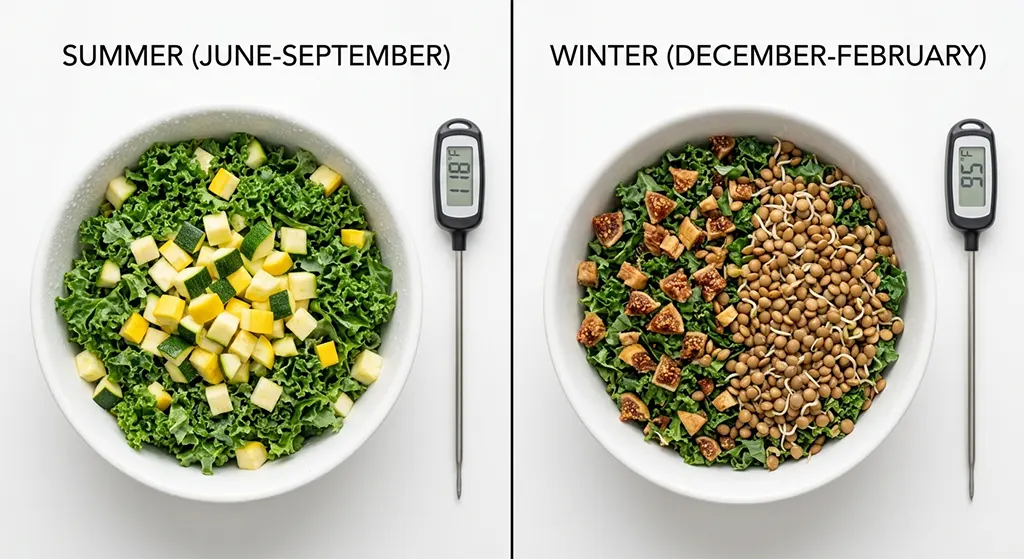
Summer Feeding Tips (June – September)
- Feed earlier in the morning (before 9 AM) when temperatures are cooler
- Increase water-rich foods slightly (zucchini, yellow squash)
- Never leave food out past noon – it will wilt and dry out completely
- Mist greens lightly with water before feeding (this is how they get most of their water)
- Reduce treat fruits to once every 2 weeks – sugar causes dehydration in extreme heat
Winter Feeding Tips (December – February)
- Reduce portion sizes by 25% – uromastyx are less active in cooler temperatures
- Increase high-calorie foods slightly (dried figs, lentils)
- Feed later in the morning (after 10 AM) when the enclosure has warmed up
- Mist greens less frequently – excess moisture can cause respiratory infections in cooler enclosures
- Stop feeding all fruits entirely during the coldest months
The Only Supplements You Actually Need
Many uromastyx lizard diet mistakes also involve over-supplementing. You don’t need 5 different supplement powders. You only need two. That’s it.
- Calcium powder without D3: Dust lightly on food every other feeding
- Multivitamin powder for reptiles: Dust lightly on food once a week
That’s all. No D3 supplements. Uromastyx make their own D3 from UVB light. Supplemental D3 causes toxicity and organ damage.
Make sure your UVB bulb is less than 6 months old. Replace it every 6 months even if it still lights up. Old bulbs don’t produce enough UVB for proper calcium absorption.
Common Diet Problems And How To Fix Them
Problem: My Uromastyx Won’t Eat
This is the #1 complaint from new keepers. In 90% of cases, it’s not the food itself. It’s the enclosure temperature.
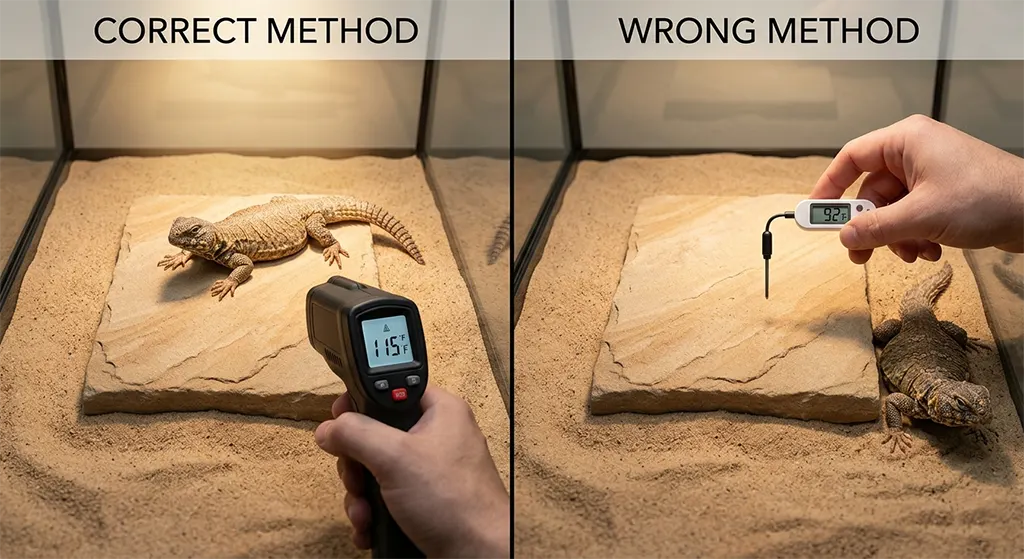
Uromastyx need a basking spot of 110-120°F to digest food. If your basking spot is below 105°F, their digestive system shuts down. They will stop eating even if you offer their favorite foods.
Fix: Use a digital thermometer to measure the basking spot temperature. Adjust your heat bulb wattage until you hit 115°F. Most new keepers use bulbs that are too weak. For a 40-gallon breeder tank in Southern California, you’ll need a 100-150W basking bulb.
Problem: My Uromastyx Has Diarrhea
This is almost always caused by feeding too much high-water-content food (lettuce, cucumber, tomatoes) or too much fruit.
Fix: Immediately stop feeding all fruits and high-water vegetables. Feed only collard greens, mustard greens, and turnip greens for 7-10 days. The diarrhea should resolve on its own. If it doesn’t, take your uromastyx to an exotic vet immediately.
Problem: My Uromastyx Is Too Skinny
A healthy uromastyx should have a thick, fat tail that is wider than their body. If their tail is thin or wrinkled, they are malnourished.
Fix: Increase portion sizes slightly. Add sprouted lentils and dried figs to their diet 3 times per week. Make sure their basking temperature is 115°F. A cold uromastyx cannot digest food properly, no matter how much you feed them.
Frequently Asked Questions
Can uromastyx eat mealworms or superworms?
No. Never. Uromastyx cannot digest any animal protein. Even one mealworm can cause kidney damage. There are no exceptions to this rule.
How often should I feed my uromastyx?
Overfeeding is another common uromastyx lizard diet mistake that leads to obesity. Follow this schedule:
Juveniles (under 1 year old): Every day
Subadults (1-3 years old): Every other day
Adults (over 3 years old): 2-3 times per week
For a personalized feeding and supplement plan tailored to your uromastyx’s life stage, use our reptile feeding calculator.
Do uromastyx need a water bowl?
No. Uromastyx get almost all their water from their food. A water bowl will only increase humidity in the enclosure, which can cause respiratory infections. Mist their greens lightly before feeding instead.
Can I feed my uromastyx wild-caught plants?
Only if you are 100% sure they are not sprayed with pesticides or herbicides. Dandelion greens are excellent, but never collect them from lawns or roadsides.
How long can a uromastyx go without eating?
Healthy adult uromastyx can go 2-3 weeks without eating during brumation. Juveniles should never go more than 3-4 days without eating. If your juvenile stops eating for more than 5 days, take them to an exotic vet.
Can uromastyx eat tomatoes?
Tomatoes are very acidic and have a poor calcium-to-phosphorus ratio. They should be avoided completely.
Final Thoughts
Nearly all health issues in uromastyx stem from preventable uromastyx lizard diet mistakes. Uromastyx are incredibly hardy lizards when fed correctly. Most of the health problems people experience are caused by bad diet information online.
Stick to the 80/20 formula. Avoid the toxic foods. Maintain proper basking temperatures. Your uromastyx will live 15-20 years and grow into a beautiful, healthy adult.
The best part? It’s cheap. A week’s worth of food for an adult uromastyx costs less than $5 at any American grocery store. No fancy reptile foods required. Just regular vegetables.
If you’re still having trouble with your uromastyx’s diet, post a photo of your enclosure and your food mix on r/uromastyx. The community is incredibly helpful and will point out any mistakes you might be making.
This content is for educational purposes only and does not substitute professional veterinary diagnosis or treatment. If you observe any symptoms of illness, injury, or abnormal behavior, please consult a qualified exotic animal veterinarian immediately.
For more details, please review our full Medical Disclaimer.