
If you’re a first-time reptile hobbyist shopping for your first blue-tongued skink in 2026, one common mistake leads to unnecessary frustration and pet care issues: choosing the wrong bloodline without understanding the major differences in humidity requirements and daily maintenance between Australian and Indonesian blue-tongued skinks.
Many pet retailers label all blue-tongued skinks as easy beginner lizards, but this generalized marketing overlooks critical care differences between bloodlines. Picking an unsuitable variety can result in respiratory issues, chronic stress, and problematic shedding for your pet, alongside costly enclosure upgrades to fix mismatched habitat conditions. This issue is especially prominent for keepers in small U.S. apartments, where limited space, busy schedules, and fluctuating indoor humidity amplify care mistakes. Always consult a licensed reptile veterinarian if your pet shows signs of health problems.
This no-nonsense beginner’s guide cuts through biased seller marketing to deliver honest, real-world comparisons of Australian and Indonesian blue-tongued skink bloodlines. We cover natural habitat needs, distinct personality traits, standard enclosure space requirements, routine maintenance workloads, and key red flags to avoid during purchase. By the end of this guide, you’ll be able to confidently select the perfect skink based on your daily schedule, local home climate, and reptile keeping experience.
Why Origin Lineage Matters Most: Humidity Is The Core Dividing Line
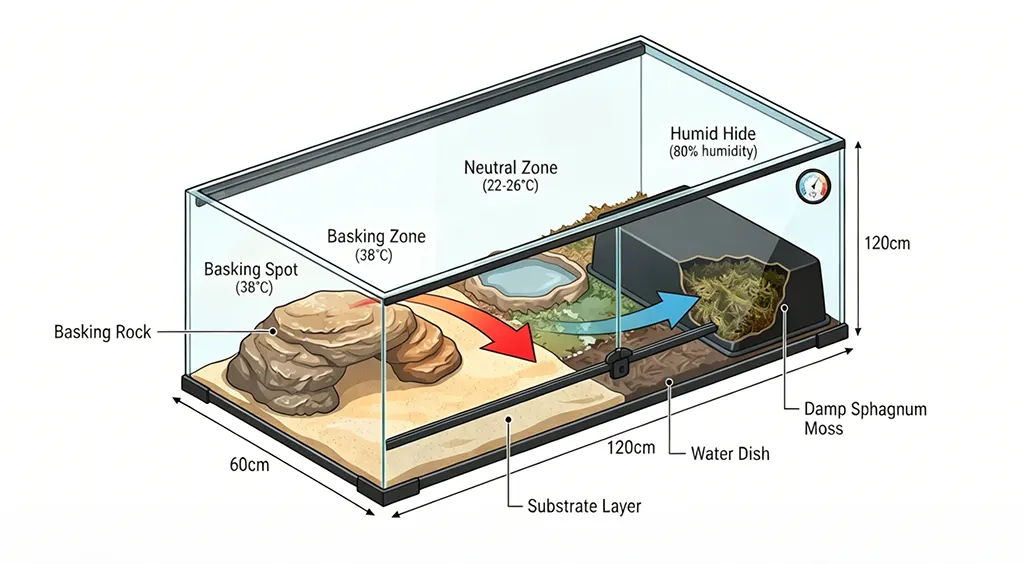
Nearly every common care struggle with blue-tongued skinks traces back to their native wild habitats. Australian and Indonesian bloodlines evolved in entirely distinct environments, meaning their captive care routines are not interchangeable and cannot be compromised for convenience.
Australian blue-tongued skinks hail from dry, semi-desert grasslands with low annual rainfall, while Indonesian blue-tongued skinks thrive in warm, tropical island environments with consistent high humidity. This single environmental divide shapes every aspect of captive care, including substrate selection, misting frequency, heating configurations, ventilation standards, mold risk prevention, and weekly cleaning routines.
For apartment keepers without dedicated reptile rooms, improper humidity management is the top cause of unhealthy skinks and moldy, foul-smelling enclosures (a delicate environmental challenge also explored in our Mexican Redknee Tarantula humidity and temperature guide). Humidity mismanagement becomes the leading source of stress and illness for captive blue-tongued skinks. Always consult a licensed reptile veterinarian for any health concerns with your blue-tongued skink.
Most new hobbyists skip researching lineage before purchasing a skink, only to discover their home’s natural indoor climate clashes drastically with their pet’s biological needs within just a few weeks of bringing their new lizard home.
Australian vs. Indonesian Blue-Tongued Skink Full Breed Breakdown
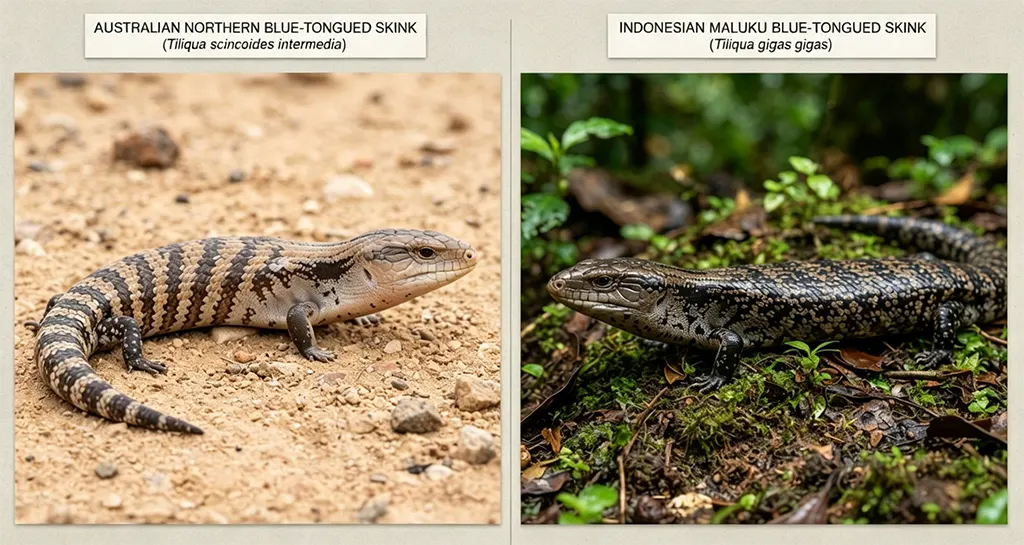
Australian Blue-Tongued Skinks (Northern & Eastern Morphs)
Australian blue-tongued skinks are universally recognized as the most beginner-friendly, low-effort option on the market. They thrive in dry indoor environments, require minimal routine upkeep, and exhibit calm, consistent temperaments. The only downsides are their higher upfront purchase cost and larger adult body size compared to Indonesian variants.
The ideal stable humidity range for Australian skinks is 30% to 40%, perfectly matching their arid natural habitat. Their growth patterns, adult dimensions, temperaments, and daily care requirements are highly predictable, making them incredibly easy for new keepers to manage consistently.
Fully grown Australian skinks need a minimum enclosure size of 120cm × 60cm × 45cm, as their larger adult bodies require ample room to move and explore. They grow slowly and steadily, reaching full mature size at 3 to 4 years old with thick, sturdy body builds.
In terms of personality, Australian skinks are calm, predictable, and far less skittish with regular gentle handling. They rarely hiss or hide defensively long-term, making them ideal for casual keepers who enjoy interacting with their pet.
Their maintenance routine is extremely manageable for busy owners. You only need light spot cleaning every few days and one full deep clean per month. Their dry preferred environment prevents mold, mildew, and bacterial buildup, which keeps apartment enclosures clean and low-maintenance year-round.
Due to strict export regulations and slower breeding cycles, captive-bred Australian morphs have a higher initial cost. However, they pair perfectly with dry inland US home climates and greatly reduce the risk of moisture-related health issues for your skink.
Northern and Eastern blue-tongued skinks are the two most popular Australian morphs kept as pets in the U.S. They feature minor differences in color patterning but follow identical dry-habitat care rules and boast the same docile, low-maintenance traits.
Indonesian Blue-Tongued Skinks (Maluku & Tanimbar Morphs)
Indonesian blue-tongued skinks are the budget-friendly, high-maintenance alternative to Australian morphs. They are widely available from domestic breeders, grow to a compact medium adult size, and feature unique coloration. However, they demand strict daily care and precise environmental stability to avoid stress and illness.
These tropical skinks require stable humidity levels between 60% and 80% to replicate their humid island native habitat. They grow quickly as juveniles but top out at a moderate adult size, and they are extremely sensitive to even minor, short-term humidity spikes or drops in their enclosure.
Even with their smaller adult stature, Indonesian skinks still require the standard minimum enclosure size of 120cm × 60cm × 45cm to thermoregulate properly and move comfortably.
Indonesian skinks tend to be more flighty and stress-prone than Australian varieties. Inconsistent humidity or poor ventilation makes them nervous, and they will hide for long periods if their enclosure conditions fall out of the ideal range.
Daily hands-on maintenance is mandatory for Indonesian skinks. Keepers need regular gentle misting, daily partial spot cleaning, and full enclosure sanitizing every 10 to 14 days. In small apartment setups, poor ventilation quickly leads to mold growth, substrate rot, scale rot, and upper respiratory infections. Seek professional care from a licensed reptile veterinarian at the first sign of illness.
Their low purchase price makes them appealing for budget-focused new keepers, but they are best suited for hobbyists living in naturally humid coastal US regions. Those in dry winter climates will need constant misting and humidity monitoring equipment to keep their skink healthy year-round.
Find Your Perfect Match: Simple Lifestyle Compatibility Check
Choosing the right skink breed ultimately comes down to three simple lifestyle factors: your daily available care time, your home’s natural humidity level, and your reptile keeping experience level. If you can only spare under 15 minutes daily for tank maintenance, Australian blue-tongued skinks are your best and most reliable option. If you live in a naturally humid home and can dedicate 30+ minutes daily to enclosure upkeep, Indonesian skinks will thrive under your care. Total beginners should always stick with low-maintenance Australian morphs, while hobbyists with tropical reptile experience can comfortably manage Indonesian skinks.
Beginner’s Guide: Spot Healthy Captive-Bred Skinks vs. Wild-Caught Skinks
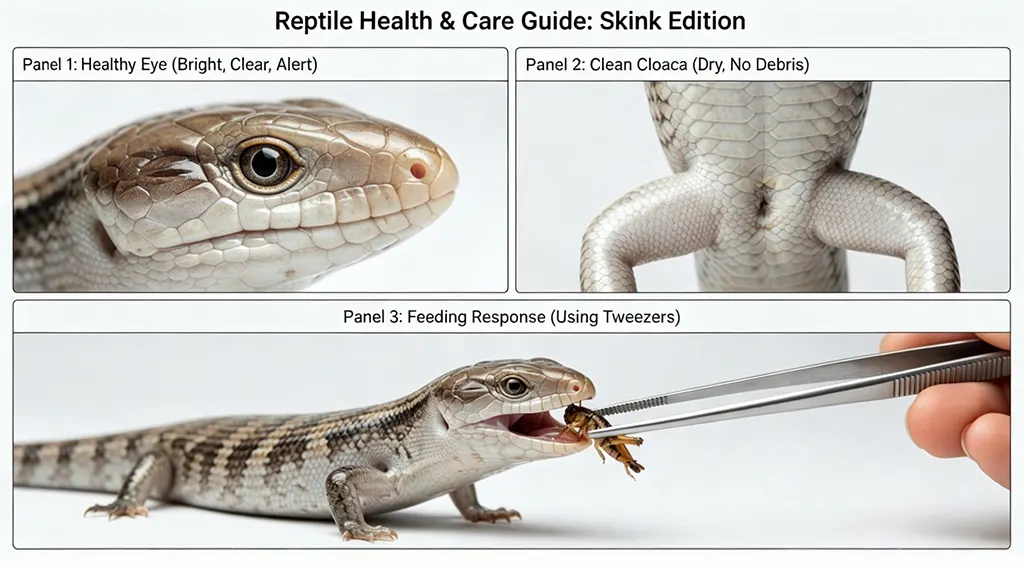
One of the most overlooked risks for new blue-tongued skink owners in 2026 is accidentally purchasing wild-caught (WC) specimens. Wild-caught skinks commonly carry internal and external parasites, suffer from chronic transport stress, exhibit inconsistent feeding habits, and have drastically shorter lifespans. They also carry potential legal import risks for U.S. pet owners. For these reasons, every new keeper must learn to distinguish healthy captive-bred (CB) skinks from problematic wild-caught ones before finalizing a purchase.
First, always check eye clarity. Healthy captive-bred skinks have bright, clear eyes with no crusting, discharge, or cloudy film. WC individuals frequently show eye irritation from wild parasites and transport stress. Always consult a licensed reptile veterinarian to diagnose and address parasite or health issues.
Second, inspect the cloaca (vent) area. A healthy skink has a dry, clean vent with no fecal buildup or red, inflamed skin. Chronic humidity stress or wild parasite load causes persistent dirty cloaca in compromised skinks. Consult a licensed reptile veterinarian for proper health evaluation and care guidance.
Third, test feeding response with feeding tweezers. Healthy captive-bred skinks show strong, consistent appetite and will readily strike at food. Wild-caught skinks often refuse food for weeks due to extreme stress.
Other key wild-caught red flags include sellers unable to provide official hatch dates, breeding records, or lineage proof, visible scale damage, chronic dehydration and wrinkled skin, and extreme defensive biting or skittish behavior that does not calm with gentle, brief handling.
Tailored Breed Recommendations By Experience & Budget
Best for Absolute Beginners & Small Apartment Keepers: Australian Northern Blue-Tongued Skink
Australian skinks are undeniably the most forgiving choice for first-time reptile owners living in compact apartments. Their low humidity requirements eliminate the need for daily misting, constant humidity monitoring, and frequent mold prevention work. With docile, predictable temperaments and only monthly deep cleaning required, they minimize routine reptile chores. While their upfront cost is higher, they avoid the frequent humidity-related illnesses that lead to costly vet visits for Indonesian skinks, saving keepers money long-term.
Best for Experienced Hobbyists & Humid Homes: Maluku Indonesian Blue-Tongued Skink
If you have existing experience caring for tropical reptiles, reside in a naturally humid coastal region, and can commit to daily enclosure monitoring and maintenance, Indonesian Maluku blue-tongued skinks are a budget-friendly, unique pet option. Always prioritize well-ventilated tank setups to combat mold and bacterial growth in small apartment living spaces.
Hard Pass for Inexperienced Budget Keepers
Inexperienced keepers on a budget should avoid Indonesian blue-tongued skinks entirely. Indoor humidity fluctuations during dry U.S. winter months frequently cause scale rot and respiratory infections in these sensitive lizards, resulting in expensive exotic vet visits. Always seek advice from a licensed reptile veterinarian to prevent and treat such health issues.
The small upfront savings of a cheaper Indonesian skink are never worth the ongoing care stress and high medical expenses—a classic trap detailed in our breakdown on why cheap reptiles cost more in the long run.
Final Conclusion
The choice between Australian and Indonesian blue-tongued skinks hinges entirely on your daily care availability, household climate conditions, and reptile keeping experience — not visual appearance or initial purchase price.
For the vast majority of first-time apartment reptile keepers across the United States, Australian blue-tongued skinks are the safest, lowest-maintenance, and most rewarding choice, thanks to their tolerant dry-habitat needs and stable, gentle personalities. Indonesian skinks remain a niche option reserved only for experienced hobbyists capable of maintaining strict, consistent tropical humidity indoors year-round.
Always select verified captive-bred skinks over wild-caught imports to avoid preventable health issues, ethical breeding concerns, and potential legal complications with your pet reptile.
The choice between Australian and Indonesian blue-tongued skinks hinges entirely on your daily care availability, household climate conditions, and reptile keeping experience — not visual appearance or initial purchase price. For the vast majority of first-time apartment reptile keepers across the United States, Australian blue-tongued skinks are the safest, lowest-maintenance, and most rewarding choice. If you are still unsure which reptile fits your lifestyle best, try our interactive reptile recommendation tool to find your perfect match based on your unique home environment and experience level.
Frequently Asked Questions (FAQ)
Are blue-tongued skinks good beginner pets for apartment living?
Yes, blue-tongued skinks are excellent apartment-friendly reptiles, but only if you pick the right bloodline. Australian varieties are perfect for beginners with limited space and time, while Indonesian skinks are too high-maintenance for new keepers in small homes.
Which is easier to care for: Australian or Indonesian blue-tongued skinks?
Australian blue-tongued skinks are far easier to care for overall. They tolerate dry indoor air, need less frequent maintenance, and are less prone to stress and illness. Indonesian skinks require daily misting, strict humidity control, and consistent monitoring to stay healthy.
Can I keep an Indonesian blue-tongued skink in a dry climate home?
You can, but it is not recommended for beginners. Dry indoor air, especially during winter heating seasons, causes constant humidity fluctuations that lead to scale rot and respiratory issues. You will need dedicated humidifiers and frequent monitoring to sustain suitable conditions.
What size tank do I need for an adult blue-tongued skink?
All full-grown blue-tongued skinks, regardless of bloodline, require a minimum enclosure size of 120cm × 60cm × 45cm. Smaller tanks restrict movement, disrupt thermoregulation, and increase stress and health risks.
How can I tell if a blue-tongued skink is captive-bred or wild-caught?
Healthy captive-bred skinks have clear eyes, clean vent areas, and a strong, consistent feeding response. Wild-caught skinks often show eye irritation, dirty vents, poor appetite, scale damage, extreme skittishness, and lack verifiable breeding records.
Do Australian blue-tongued skinks get sick easily?
Australian skinks are extremely hardy and disease-resistant when provided with their required dry habitat. Their low-humidity setup prevents mold, bacterial growth, and most common reptile ailments, making them very low-risk pets.
This content is for educational purposes only and does not substitute professional veterinary diagnosis or treatment. If you observe any symptoms of illness, injury, or abnormal behavior, please consult a qualified exotic animal veterinarian immediately.
For more details, please review our full Medical Disclaimer.
Pingback: Can Blue Tongued Skinks Eat Dog Food? 2026 Eastern US Seasonal Diet Guide
Pingback: Red Eared Slider Care: 2026 Ultimate Beginner’s Manual
Pingback: Reptile Room Lighting & Automation Guide 2026: Pro Breeding Tips
Pingback: Rankins Dragon vs Central Bearded Dragon: 5 Key Differences New Inland CA Keepers Must Know (2026 Updated)
Pingback: Uromastyx Size and Enclosure Size Guide: How Big Do They Really Get? (5 Costly Mistakes)
Pingback: Uromastyx Lizard Diet Mistakes: 7 Costly Errors That Stunt Growth (Easy 80/20 Fix)