
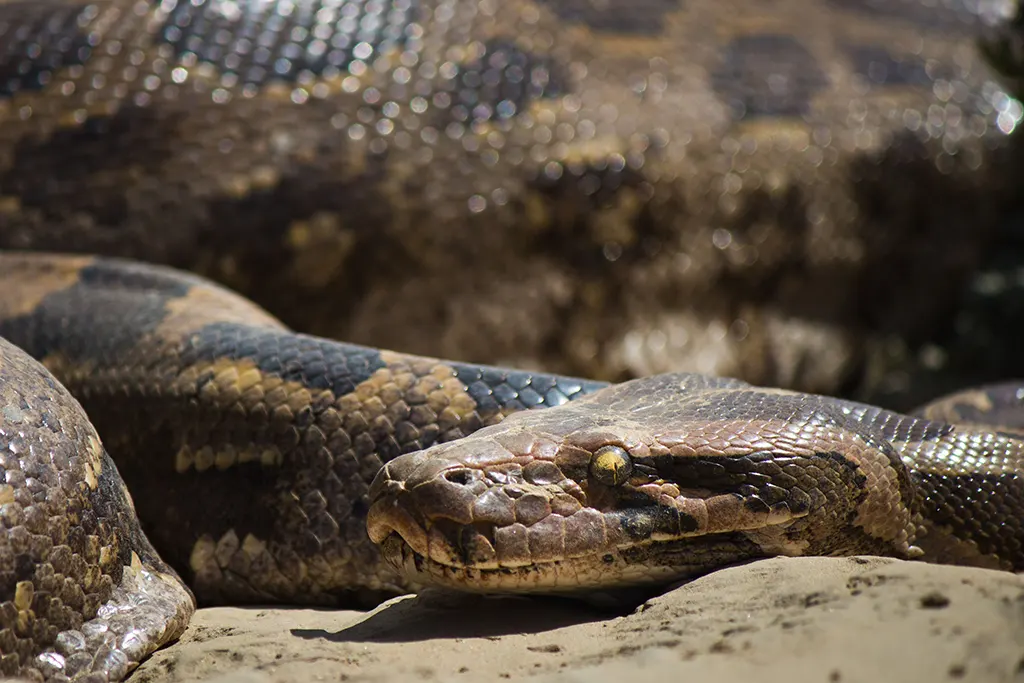
Finding a half-digested mouse or rat in your ball python’s enclosure can be frightening, especially if your snake was eating normally before this happened. If your ball python is regurgitating, the most important thing you can do is resist the urge to feed it again, handle it repeatedly, or make several husbandry changes at once.
Ball python regurgitation is not simply a missed meal. It can result from feeding mistakes, inappropriate temperatures, stress, parasites, or underlying disease. Repeated episodes can become dangerous, and the cause needs to be addressed rather than treating every incident as an isolated feeding problem.
This guide explains what to do during the first 24 hours, which symptoms require urgent veterinary attention, and how to approach feeding recovery safely.
One important clarification: the first 24 hours are an emergency stabilization and observation period, not a guaranteed recovery window. Your snake may need veterinary treatment, and the refeeding process generally begins much later.
Emergency rule: Stop feeding, minimize disturbance, maintain appropriate husbandry, and contact a reptile-experienced veterinarian promptly after a confirmed regurgitation.
1. Why Do Ball Pythons Regurgitate? (7 Common Causes)
Understanding why a ball python regurgitates is essential because the same symptom can have very different causes.
1. Feeding an Oversized Prey Item
A prey animal that is too large can increase digestive demands and may contribute to regurgitation, particularly when combined with other husbandry problems.
Prey selection should consider the snake’s body condition, feeding history, and the diameter of its body.
A useful starting point is to select prey that is approximately as wide as, or narrower than, the snake’s widest body region. Individual feeding plans may differ.
Do not assume that a snake capable of swallowing a large rat can necessarily digest it comfortably.
2. Handling Too Soon After Feeding
Handling shortly after a meal can disturb digestion and contribute to regurgitation.
Moving a recently fed ball python between enclosures, lifting it repeatedly, or allowing children to handle it can add unnecessary stress.
Prevention: Leave your snake undisturbed for at least 48 hours after an ordinary feeding, and longer if its digestion or health history warrants it — our guide to holding a ball python safely covers session length and the body-language cues that tell you when to stop.
3. Incorrect Enclosure Temperatures
Ball pythons depend on external heat to regulate their body temperature and digestive function.
An enclosure that is consistently too cold can interfere with digestion.
Excessive temperatures are equally dangerous and can cause burns, dehydration, and heat stress.
For a typical healthy ball python, commonly used husbandry targets include:
- Warm hide or warm-side surface: approximately 88–92°F (31–33°C).
- Cool side: approximately 76–80°F (24–27°C).
- Humidity: commonly around 60–80%, adjusted to enclosure conditions and shedding needs.
These are general husbandry reference ranges, not a special regurgitation treatment prescription. The temperature of the actual surface, hide, and surrounding air may differ.
Use reliable digital thermometers and a thermostat-controlled heat source — our ball python enclosure setup guide covers placement for both, plus the hide layout that keeps a snake digesting reliably.
4. Stress and Environmental Insecurity
Ball pythons are naturally secretive.
Common stressors include:
- Insufficient appropriately sized hides.
- Frequent enclosure changes.
- Excessive handling.
- Loud disturbances and repeated human activity.
- Cohabitation with other snakes.
- Unnecessary relocation after feeding.
Stress alone cannot be confirmed as the cause of an episode, but reducing avoidable stress is a sensible first step.
5. Dehydration or Poor Husbandry
Dehydration, inadequate access to clean water, and unsuitable environmental conditions can compromise health.
Check for:
- A clean, accessible water bowl.
- Proper temperature gradients.
- Appropriate humidity.
- Consistent enclosure maintenance.
Do not try to correct suspected dehydration by forcing water into your snake’s mouth.
6. Parasites or Infectious Disease
Persistent or recurrent regurgitation raises concern for underlying disease.
One important example is Cryptosporidium serpentis, a protozoan associated with gastric disease and chronic regurgitation in snakes.
Other infectious diseases may cause appetite changes, respiratory symptoms, weakness, or digestive problems.
Serpentovirus (including snake nidoviruses) is particularly relevant when respiratory signs accompany other illness. However, regurgitation alone does not establish a serpentovirus diagnosis.
Diagnosis may require veterinarian-directed testing, such as PCR sampling for appropriate pathogens, fecal testing, imaging, or other diagnostics.
A negative result from a single sample may not exclude every infection.
7. Feeding Schedule or Prey-Preparation Problems
Feeding too frequently, abruptly changing prey sizes, or repeatedly offering food to a snake that has not recovered from an earlier episode can complicate feeding problems.
Other factors include:
- Improperly thawed prey.
- Inconsistent feeding routines.
- Excessive feeding attempts.
- Feeding during periods of significant stress.
Frozen-thawed prey, prepared safely and appropriately, avoids the injury risk associated with live rodents.
2. Why Repeated Regurgitation Is Dangerous
It is tempting to think of regurgitation as the reptile equivalent of simply throwing up a meal.
That assumption can lead to dangerous mistakes.
Regurgitation may involve the expulsion of food from the upper digestive tract or stomach, depending on the process and how the term is being used clinically.
In snakes, regurgitation and vomiting are not always easily distinguishable from appearance alone.
The important issue is that repeated expulsion can be associated with inflammation, fluid loss, nutritional compromise, and damage to gastrointestinal tissues.
Does regurgitation cause chemical burns?
Not every regurgitation episode causes a proven chemical burn.
Stomach contents may contain acid and digestive substances, and repeated exposure or forceful expulsion may irritate or injure delicate tissues. However, the degree of injury cannot be determined from the expelled prey or its smell.
Calling every episode a confirmed esophageal chemical burn would overstate what can be established at home.
The practical takeaway is unchanged: the digestive tract needs time to recover, and repeated episodes warrant veterinary investigation.
Why the second episode matters
A possible cycle looks like this:
Regurgitation → discomfort and stress → disrupted husbandry or premature feeding → another episode → greater health risk.
This is not an inevitable biological cycle, but it describes how well-intentioned care mistakes can compound an existing problem.
The objective is to break that cycle by stopping feeding attempts, maintaining stable environmental conditions, and obtaining appropriate veterinary guidance.
Regurgitation vs. vomiting: Can you tell the difference?
Owners often use the words interchangeably.
| Observation | What it may suggest |
|---|---|
| Relatively intact prey | Food was expelled before extensive digestion |
| Partially digested prey | Food spent some time in the digestive tract |
| Liquid, mucus, or unusual discharge | May indicate another gastrointestinal or oral problem |
| Foul odor | May accompany decomposition, but does not diagnose infection |
| Blood or dark, abnormal material | Requires urgent veterinary assessment |
These observations are clues, not a diagnostic test.
Food that looks relatively intact does not guarantee a mild event. Likewise, partially digested food does not prove severe internal injury.
Photograph the material before disposal if you can do so without disturbing your snake.
3. First 24 Hours: Your Ball Python Regurgitation Emergency Protocol
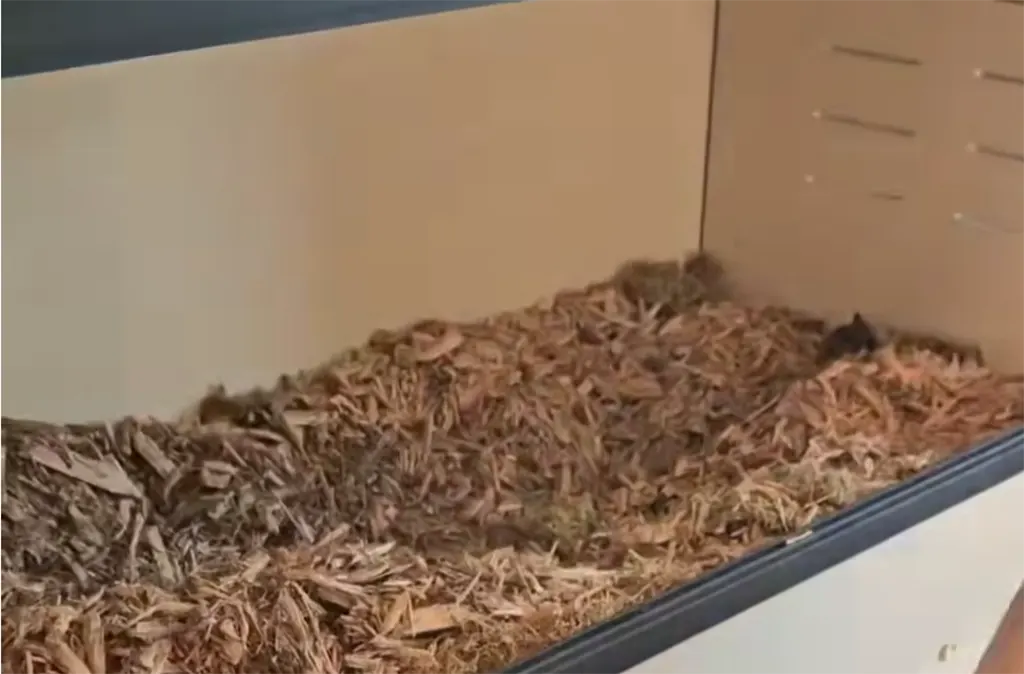
Photo via YouTube (EthiosExoticZoo)
The goal of the first day is to reduce further stress, prevent additional feeding-related problems, and identify signs that need immediate care.
Do not wait 24 hours to seek help if your snake is showing emergency symptoms.
Hours 0–2: Remove the immediate hazards
What to do
- Remove the expelled prey using disposable gloves or an appropriate cleaning tool.
- Dispose of the material safely.
- Photograph it if useful for the veterinarian.
- Remove contaminated substrate and clean the affected area with a reptile-safe method.
- Replace contaminated substrate with clean, dry paper towels temporarily if needed.
- Ensure your snake has access to clean drinking water.
- Record the time of the episode and the date of its last meal.
Wash your hands after handling the snake, its enclosure, or contaminated material. Reptiles can carry Salmonella even when they appear healthy.
What not to do
- Do not offer another mouse or rat.
- Do not bathe your snake.
- Do not squeeze its abdomen.
- Do not repeatedly open its mouth.
- Do not attempt to remove food from its throat.
- Do not administer human medication, antibiotics, antacids, or home remedies.
If your snake is having trouble breathing, bleeding, collapsing, or showing severe neurological abnormalities, seek emergency veterinary care immediately.
Hours 2–12: Verify the environment and arrange veterinary advice
Once the immediate mess is cleaned, focus on the enclosure.
Step 1: Check the warm and cool zones
Use independent thermometers or a reliable temperature-monitoring system.
Check the temperatures where the snake actually rests, including its hides.
For a typical healthy ball python, the following general reference targets are commonly used:
| Parameter | General reference |
|---|---|
| Warm hide | 88–92°F (31–33°C) |
| Cool side | 76–80°F (24–27°C) |
| Relative humidity | Approximately 60–80% |
These are not universal treatment targets for sick snakes. A veterinarian may recommend a different plan based on the animal’s condition.
Do not increase the temperature above the normal safe range to accelerate digestion.
Avoid sudden temperature changes, direct contact with heating elements, and unregulated heat sources.
Step 2: Check humidity and hydration access
Confirm that:
- The water bowl is clean and accessible.
- Humidity is being measured rather than guessed.
- The enclosure is not persistently wet or poorly ventilated.
- The snake can choose between appropriate temperature zones.
Do not force-feed water or use soaking as a substitute for veterinary fluid therapy.
Step 3: Contact a reptile veterinarian
Even if this is the first episode and your snake appears normal, contact a reptile-experienced veterinarian for advice and arrange an examination as appropriate.
Regurgitation is specifically listed among signs that warrant veterinary attention in ball python veterinary care guidance.
The urgency increases if your snake is young, underweight, chronically ill, or has a history of repeated episodes.
Hours 12–24: Zero handling and careful observation
This is the time to stop trying to fix everything.
Your snake does not need constant inspection.
Your observation checklist
Observe from outside the enclosure:
- Is breathing quiet and effortless?
- Is the snake holding its head normally?
- Is it responsive to its surroundings?
- Is there fresh blood, unusual discharge, or repeated expulsion?
- Is the enclosure temperature remaining stable?
- Is the water bowl accessible?
- Is the snake resting without repeated disturbance?
You do not need to wake it or lift it to check these things.
A ball python hiding or remaining still is not, by itself, evidence of deterioration.
The zero-handling rule
Unless necessary for emergency treatment or veterinary transport:
No handling. No weighing. No unnecessary enclosure rearrangement. No feeding attempts.
This reduces avoidable stress while allowing you to monitor the snake.
First 24 hours: Do’s and Don’ts
| DO | DON’T |
|---|---|
| Clean contaminated material | Leave expelled prey in the enclosure |
| Verify temperature and humidity | Make drastic temperature changes |
| Provide clean drinking water | Force water into the mouth |
| Record symptoms and feeding history | Repeatedly handle the snake |
| Contact a reptile vet | Assume it will resolve on its own |
| Keep the enclosure stable | Try multiple remedies at once |
4. When to Rush to the Vet: Red Flag Symptoms
A ball python that has regurgitated should not automatically be classified as stable just because it is still moving.
Certain signs require immediate veterinary attention.
Seek emergency veterinary care now if you observe:
- Open-mouth breathing or significant respiratory distress.
- Blood coming from the mouth or appearing in expelled material.
- Collapse, profound weakness, or inability to right itself.
- Seizures, marked tremors, loss of coordination, or abnormal head positioning.
- Suspected obstruction, serious injury, or severe abdominal swelling.
- Repeated regurgitation accompanied by rapid deterioration.
Call the emergency clinic before traveling so the team can prepare and advise you on safe transport.
Arrange prompt veterinary assessment if:
- Your snake regurgitates more than once.
- It repeatedly expels food after meals.
- It is losing weight or body condition.
- It has persistent appetite changes alongside other symptoms.
- It has oral discharge, abnormal droppings, or unexplained lethargy.
- The cause of the episode is unclear.
Two episodes are not a magical threshold at which disease suddenly begins. Even a single episode can be clinically important.
Likewise, a 10% body-weight loss is not a universal diagnostic cutoff. Meaningful weight loss, especially over a short period, is concerning and should be discussed promptly with a veterinarian.
What to tell your veterinarian
Prepare the following information:
- Date and time of the episode.
- Date, size, and type of the last prey item.
- Whether prey was frozen-thawed, pre-killed, or live.
- Time between feeding and regurgitation.
- Warm-side and cool-side temperatures.
- Humidity readings.
- Recent handling or enclosure changes.
- Previous episodes.
- Recent body weights, if available.
- Photographs of the expelled material and enclosure.
This history can help the veterinarian distinguish a husbandry-related event from a potentially more serious disorder.
Veterinary resources
- Association of Reptile and Amphibian Veterinarians (ARAV): Find a Vet
- Merck Veterinary Manual: Nutrition in Snakes
- Merck Veterinary Manual: Disorders and Diseases of Reptiles
ARAV provides a directory for locating reptile veterinarians. It does not replace direct veterinary evaluation.
5. Reintroducing Food: The Size and Timing Rule
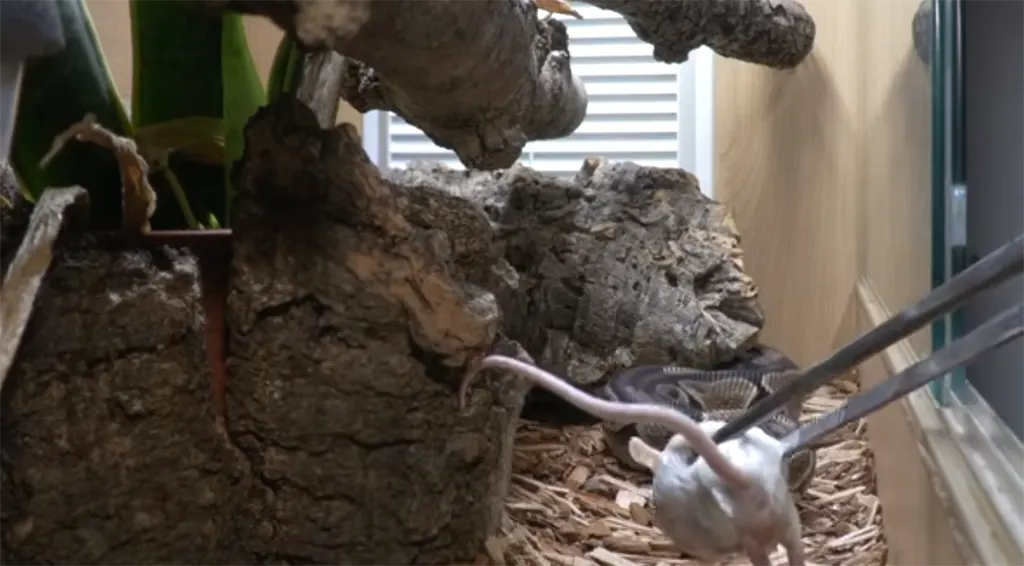
Photo via YouTube (ReptilesandResearch)
This is where many ball python owners make their most costly mistake.
After a regurgitation episode, a snake may look hungry, explore its enclosure, or respond to the smell of prey.
That does not mean it is ready to eat.
The key rule is to prioritize recovery over appetite.
How long after regurgitation should you feed a ball python?
A conservative commonly used husbandry approach is to withhold food for approximately 14 days after an uncomplicated episode, with the refeeding plan confirmed by a reptile veterinarian.
This is a practical recovery interval, not a scientifically established universal healing deadline.
There is no strong basis for claiming that every ball python has a fully repaired esophagus exactly 14 days after regurgitation.
Some snakes need longer, particularly if they have recurrent symptoms, suspected tissue injury, dehydration, infection, or another medical condition.
For a sick snake, the veterinarian should determine when and how feeding resumes.
Why wait at least two weeks?
The recovery period serves several practical purposes:
- It avoids placing another digestive burden on the snake too soon.
- It allows time for the owner to correct husbandry problems.
- It reduces repeated handling and feeding-related disturbance.
- It gives the owner time to arrange evaluation if symptoms persist.
It should not be presented as proof that a specific epithelial healing process is complete.
The first refeeding meal: How small should it be?
Start conservatively.
A frequently used approach after an uncomplicated episode is to offer approximately 25–50% of the previous prey item’s weight, subject to veterinary guidance.
For example:
| Previous prey weight | Illustrative reduced meal |
|---|---|
| 20 g | 5–10 g |
| 40 g | 10–20 g |
| 60 g | 15–30 g |
| 100 g | 25–50 g |
These are mathematical examples, not recommended prey sizes for every ball python.
The snake’s age, body condition, previous meal suitability, health, and prey dimensions all matter.
A smaller meal should also be physically appropriate. Do not select prey solely by weight if its shape or diameter is unsuitable.
If a veterinarian recommends a particular feeder size, follow that instruction.
Why downsizing prey matters
A reduced meal may be easier to accommodate during recovery.
However, it is inaccurate to claim that stomach acid is necessarily deficient after every episode or that a larger meal will inevitably rot inside the snake.
The real concern is that feeding too much, too soon, while an underlying problem remains unresolved, may increase the chance of another digestive episode.
A cautious refeeding timeline
| Recovery stage | General approach |
|---|---|
| Days 0–13 | No feeding; stabilize husbandry and monitor |
| Around day 14 or later | Reassess health and veterinary advice |
| First approved meal | Offer an appropriately reduced prey item |
| Following 48–72 hours | Avoid handling and observe |
| Next scheduled meal | Reassess appetite, body condition, and recovery |
The 48–72-hour observation period does not prove that the snake is fully recovered.
Do not immediately return to the original meal size or frequency simply because the first small meal stays down.
A veterinarian may recommend additional smaller meals or a slower recovery schedule.
A cautionary feeding lesson
Consider a hypothetical example: a first-time keeper finds a regurgitated mouse, worries that the snake has lost nutrition, and offers another full-size mouse five days later.
The snake regurgitates again.
This illustrates a plausible and preventable care mistake, but it is an illustrative scenario, not a verified real-life case or published clinical report.
A second episode does not prove that premature feeding was the only cause. Underlying disease or incorrect husbandry may also be involved.
The lesson is not that every snake must follow an identical calendar. It is that feeding again out of sympathy can make a difficult situation worse.
6. Breaking the Regurgitation Cycle
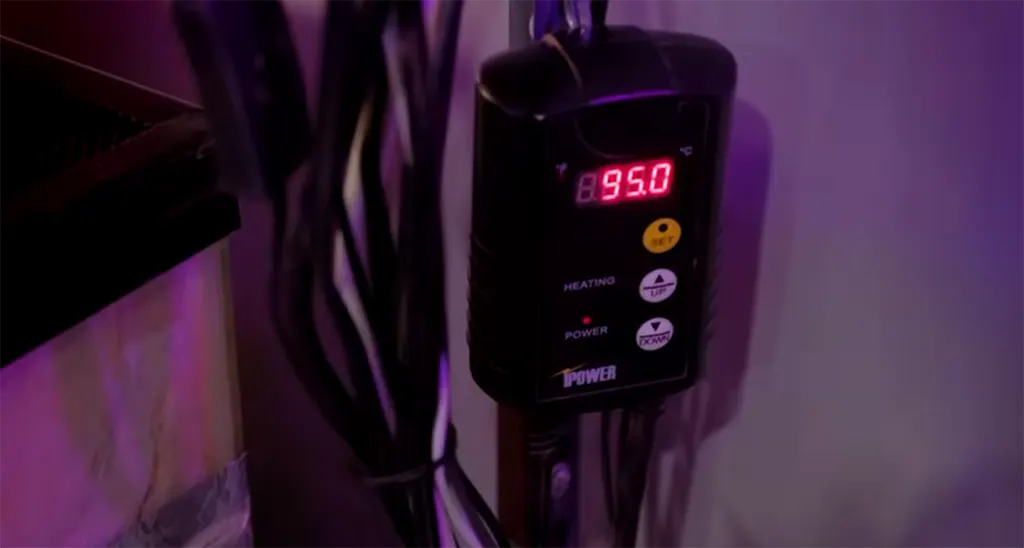
Photo via YouTube (ellesreptiles)
The objective is to remove the conditions that may be contributing to repeat episodes.
Step 1: Stop changing multiple variables
If your snake regurgitates, avoid changing its enclosure layout, heating equipment, substrate, feeding schedule, and handling routine simultaneously unless safety requires immediate correction.
Make necessary corrections, document them, and monitor the results.
This helps you and your veterinarian understand what has changed.
Step 2: Establish a stable thermal gradient
Maintain an appropriate warm hide and cooler retreat.
Use:
- A reliable thermostat.
- Digital thermometers.
- Appropriate heating equipment.
- Safe installation that prevents direct burns.
Never rely on the thermostat dial alone as proof that the enclosure is at the correct temperature.
Step 3: Reduce unnecessary stress
Provide:
- Two appropriately sized hides, one at each end of the thermal gradient.
- Secure hiding opportunities.
- Predictable husbandry routines.
- Minimal handling during recovery.
Do not cohouse ball pythons.
Step 4: Track meals and symptoms
A basic feeding record is more useful than memory.
Record:
- Date of feeding.
- Prey species and weight.
- Date and outcome of the feeding.
- Any regurgitation.
- Enclosure readings.
- Weight measurements when appropriate.
Weighing should not become another source of repeated disturbance during the initial recovery period.
Once stable, periodic measurements under consistent conditions can help identify weight loss or unhealthy weight gain.
Step 5: Investigate recurrent episodes
If regurgitation happens again, stop the refeeding process and contact your veterinarian.
Do not simply extend the fasting period indefinitely and hope the problem disappears.
Repeated episodes may warrant investigation for gastrointestinal parasites, infectious disease, obstruction, or other medical conditions.
For example, Cryptosporidium serpentis can be associated with chronic regurgitation and progressive weight loss. Merck Veterinary Manual discusses parasitic disorders of reptiles, and the Texas A&M Veterinary Medical Diagnostic Laboratory describes gastric disease associated with this organism.
Testing and treatment decisions belong with a veterinarian.
7. Prevention: How to Stop Ball Python Regurgitation From Happening Again
Prevention begins with a consistent feeding and husbandry routine.
Use a prey-size plan
Select prey based on:
- Snake body size.
- Body condition.
- Age and growth stage.
- Feeding history.
- Veterinary recommendations where relevant.
Avoid automatically increasing prey size because your snake appears interested in food.
A prey item should generally be no wider than the snake’s widest body region, with individual feeding considerations taken into account.
Maintain consistent feeding intervals
Healthy ball pythons do not all need the same schedule.
Feeding frequency varies with age, growth, prey size, metabolism, and body condition.
Adults often eat less frequently than juveniles.
Do not compensate for a missed meal by offering an oversized prey item or feeding extra meals close together.
Avoid post-feeding handling
Allow at least 48 hours without routine handling after feeding.
Longer periods may be appropriate depending on the individual snake and its digestive history.
Keep children and visitors from disturbing the enclosure during this period.
Prepare prey safely
For frozen-thawed prey:
- Thaw it safely and completely.
- Warm it appropriately before offering.
- Avoid microwaving or creating dangerous hot spots.
- Do not leave uneaten prey in the enclosure unattended.
Never leave a live rodent with a snake unattended because rodents can inflict serious injuries.
Review husbandry regularly
A prevention checklist:
- Thermostat functioning correctly.
- Warm and cool zones verified.
- Humidity measured.
- Clean water available.
- Secure hides available.
- Appropriate prey size selected.
- Feeding dates recorded.
- No unnecessary handling after meals.
- New snakes quarantined appropriately.
- Veterinary care arranged for unexplained or repeated regurgitation.
Prevention is not a guarantee, but good husbandry reduces avoidable risk.
8. Frequently Asked Questions About Ball Python Regurgitation
Is ball python regurgitation the same as vomiting?
The terms overlap in everyday reptile care discussions.
Regurgitation generally refers to the expulsion of food without the same active expulsive process associated with vomiting. Vomiting can involve material from the stomach or more distal digestive tract.
The exact distinction may not be possible from an owner’s observation.
Both deserve attention when they occur in a ball python.Can a ball python die from regurgitation?
Yes, regurgitation can be associated with serious or potentially life-threatening illness, particularly when it is recurrent or accompanied by dehydration, weight loss, infection, or obstruction.
A single episode does not automatically mean the snake will die.
Prompt assessment, appropriate husbandry, and a cautious recovery plan can improve the chances of a favorable outcome.Should I feed my ball python the next day?
No.
Do not offer another meal the following day.
A conservative approach after an uncomplicated episode commonly involves approximately 14 days without food, followed by a veterinarian-informed refeeding plan.
Recurrent episodes or other illness may require a different approach.Should I lower the temperature after regurgitation?
Not automatically.
Ball pythons need an appropriate thermal gradient for normal physiological function.
Do not deliberately cool your snake to stop digestion or increase temperatures to force digestion.
Verify the enclosure’s actual conditions and correct deviations gradually and safely.Does regurgitation mean my ball python has serpentovirus?
No.
Regurgitation is not specific to serpentovirus.
Respiratory signs, such as abnormal breathing or oral and nasal discharge, increase concern for respiratory disease but do not identify a particular pathogen.
Serpentovirus infection requires appropriate veterinary diagnostic evaluation, which may include PCR testing.Why does my ball python’s regurgitated meal smell terrible?
Partially digested food and material that has remained in a warm enclosure can develop a strong odor.
Odor alone cannot distinguish normal digestive contents from infection or serious gastrointestinal disease.
Photograph unusual material and describe the smell to your veterinarian if relevant.Should I give my ball python electrolytes or medicine?
Do not administer human electrolytes, antacids, antibiotics, or other medication without veterinary instructions.
The correct fluid type, amount, and route depend on the snake’s condition.
Some snakes need professional fluid therapy rather than home supplementation.Can I handle my ball python after it regurgitates?
Avoid routine handling during recovery.
Only move the snake when necessary for immediate safety, essential husbandry, or veterinary transport.
If transportation is needed, use a secure, ventilated container and follow the clinic’s instructions.What if my ball python refuses food after the recovery period?
Do not force-feed or repeatedly offer prey.
Confirm that the snake is otherwise stable, review husbandry, and contact your veterinarian if appetite does not return or if there are other signs of illness.
A ball python can occasionally skip meals without an emergency, but a history of regurgitation changes how cautiously feeding refusal should be approached.
9. Final Takeaway: Protect the Recovery, Not Just the Next Meal
When your ball python regurgitates, the temptation to feed it again can be strong.
But recovery is not about replacing one lost meal.
It is about identifying the cause, preventing further digestive stress, and giving the snake an appropriate opportunity to recover.
Remember these five priorities:
- Stop feeding immediately.
- Clean contaminated material and minimize handling.
- Verify safe temperatures, humidity, and water access.
- Seek veterinary advice and escalate immediately for red flags.
- Resume feeding cautiously, generally no earlier than the conservative two-week recovery interval for an uncomplicated episode, and only when appropriate.
A stable environment, careful observation, and a sensible refeeding plan are far more valuable than rushing to make your snake eat.
Related Ball Python Care Guides
Continue learning with these guides:
- Ball Python Not Eating: Understand normal fasting, feeding refusal, and when appetite changes become concerning.
- Serpentovirus in Pet Ball Pythons: Understand respiratory warning signs, diagnostic testing, and disease prevention.
- Ball Python Feeding Variety: Learn how to choose suitable prey and maintain a consistent feeding routine.
Veterinary disclaimer: This article provides general educational information, not a diagnosis or individualized treatment plan. Regurgitation may indicate an underlying medical condition. Contact a reptile-experienced veterinarian for assessment and treatment recommendations.
This content is for educational purposes only and does not substitute professional veterinary diagnosis or treatment. If you observe any symptoms of illness, injury, or abnormal behavior, please consult a qualified exotic animal veterinarian immediately.
For more details, please review our full Medical Disclaimer.