
I still remember the day I brought home my first corn snake — a tiny, caramel-colored baby that fit in the palm of my hand. Within a week, I had a dozen questions, three wrong products, and zero clue what I was doing. Sound familiar?
If you’re picking your first pet snake and feel overwhelmed by conflicting advice online, you’re not alone. After years of keeping reptiles and helping friends avoid the same mistakes I made, here’s my honest breakdown of the 5 best pet snakes for beginners — what they’re actually like to own, what goes wrong, and which one might be right for you. If you’d rather see all 15 species ranked side by side on hardiness, handleability, and cost, our ultimate pet snake tier list covers every one of them.
Quick Answer: For a first-time snake owner, the corn snake is the safest pick. It’s docile, forgiving of beginner mistakes, eats reliably, and costs as little as $30–$50. If you want something more active during the day, go with a California kingsnake. Need something tiny for a small apartment? A hognose snake is your best bet. For two more small, docile options that do well in tight spaces, consider a rosy boa or a Kenyan sand boa — both stay under 3 feet and thrive in 20-gallon setups. The hognose mentioned above as a small-space pick is a popular beginner snake — to find captive-bred individuals in the US, see our guide on captive-bred western hognose for Western US sources.
Why a Snake Might Be the Perfect First Pet
Most people’s first reaction to “pet snake” is… why? But hear me out.
Beginner-friendly snakes need feeding just once a week (sometimes once every two weeks for adults). No walks, no grooming, no daily attention. A 20-gallon tank fits on a desk or shelf. Total startup cost runs $150–$300, which is cheaper than most dogs or cats.
They also live a long time — 15 to 30 years for most species. That’s a real commitment, but also a genuinely long-term companion.
The catch? You’ll need to feed frozen-thawed mice. If that grosses you out, a snake probably isn’t the right pet. No workaround there.
The 5 Best Pet Snakes for Beginners — Ranked
1. Corn Snake — The Gold Standard for First-Timers
| Adult size | 3–5 feet |
| Lifespan | 15–25 years |
| Temperament | Extremely docile, rarely bites |
| Tank size | 20 gal (juvenile) → 40 gal (adult) |
| Temp range | 70–90°F (hot side 85–90°F, cold side 70–75°F) |
| Humidity | 40–50% |
| Feeding | Every 5–7 days (juveniles), every 7–10 days (adults) |
| Price range | $30–$200+ depending on morph |
Corn snakes are the #1 recommendation across the reptile community for good reason. Dozens of color morphs — from classic orange-red to snow-white and butter-yellow — mean you can find one that looks stunning. They eat reliably, adapt quickly to handling, and tolerate the kind of small temperature mistakes every beginner makes.
The one thing to watch: They’re escape artists. Their slim bodies squeeze through shocking gaps. Make sure your tank has a secure, locking screen lid — not just a loose-fitting top.
Best for: Absolute beginners who want a calm, colorful, low-maintenance snake.
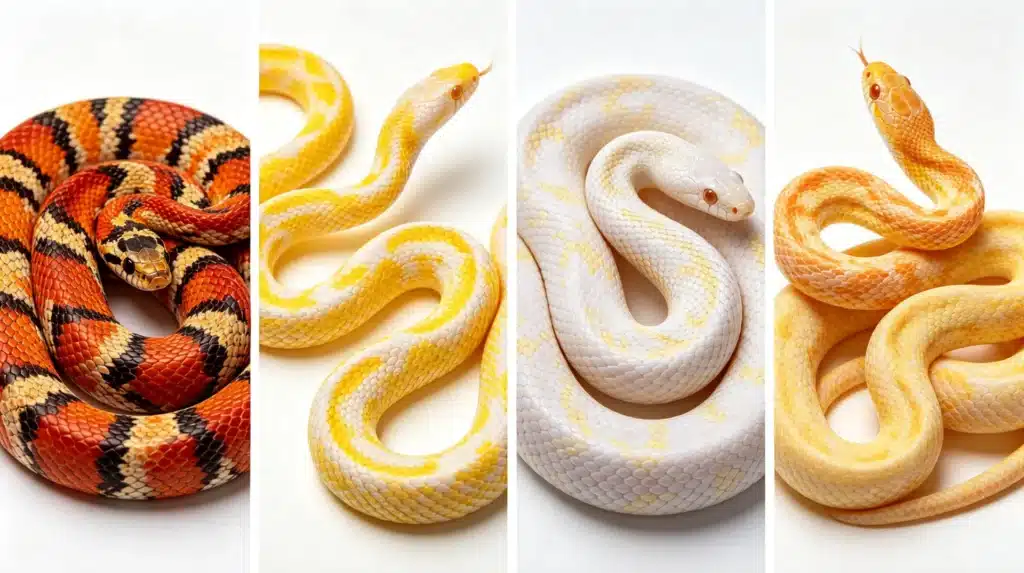
2. California Kingsnake — The Active, Hardy Pick
| Adult size | 3–6 feet |
| Lifespan | 20–25 years |
| Temperament | Confident, curious, diurnal |
| Tank size | 40–55 gallons |
| Temp range | 72–92°F (basking 88–92°F) |
| Humidity | 40–60% |
| Feeding | Every 7–10 days |
| Price range | $50–$250 |
Unlike most snakes that hide during the day, California kingsnakes are active when you’re awake. They explore their enclosure, bask openly, and seem genuinely curious about what’s happening around them. That makes them far more rewarding to watch and interact with.
They’re also built tough. Kingsnakes handle environmental fluctuations better than most species and have strong immune systems.
The trade-off: Babies can be feisty early on — nippy until they settle in after a few weeks. They also need a bigger tank than corn snakes as adults.
Best for: Beginners who want a snake they’ll actually see and interact with during the day.
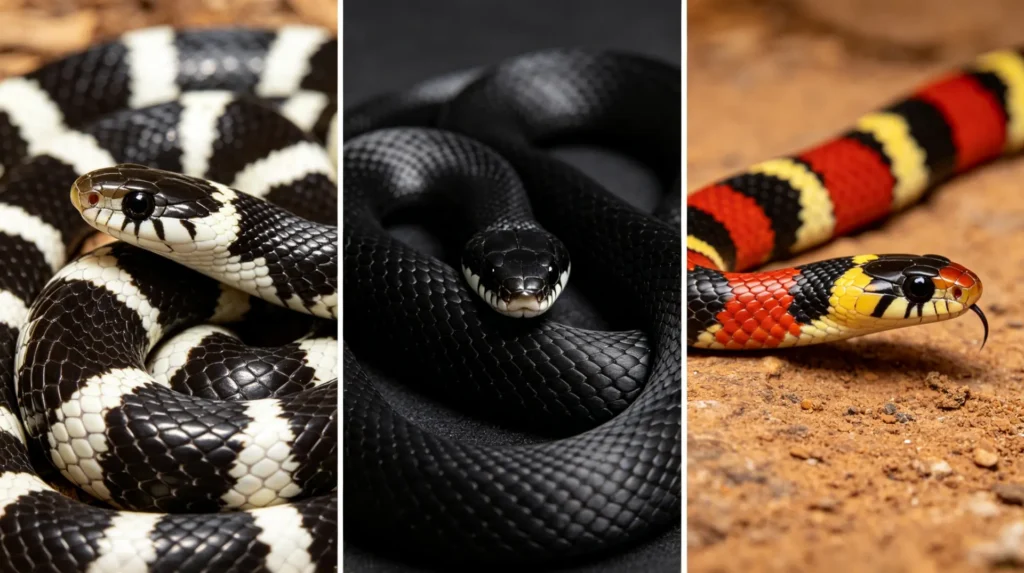
3. Milk Snake — The Underrated Showpiece
| Adult size | 2–4 feet |
| Lifespan | 15–20 years |
| Temperament | Calm, shy |
| Tank size | 30 gallons |
| Temp range | 75–88°F (basking 85–88°F) |
| Humidity | 40–50% |
| Feeding | Every 5–7 days |
| Price range | $50–$300+ |
Milk snakes — especially Honduran and Pueblan varieties — have some of the most striking patterns in the snake world. Bright bands of red, black, white, and yellow make them look almost too exotic to be beginner-friendly. But they are.
They’re smaller than kingsnakes, so they need less space, and they settle into a calm routine quickly. People often worry they look like venomous coral snakes (the “red touches yellow” rhyme), but milk snakes are completely harmless.
The trade-off: They’re shy. Milk snakes spend a lot of time tucked in hides, so don’t expect a snake that’s always on display. Some individuals are also nervous around sudden movements.
Best for: Keepers who want a visually stunning snake and don’t mind a more reserved personality.
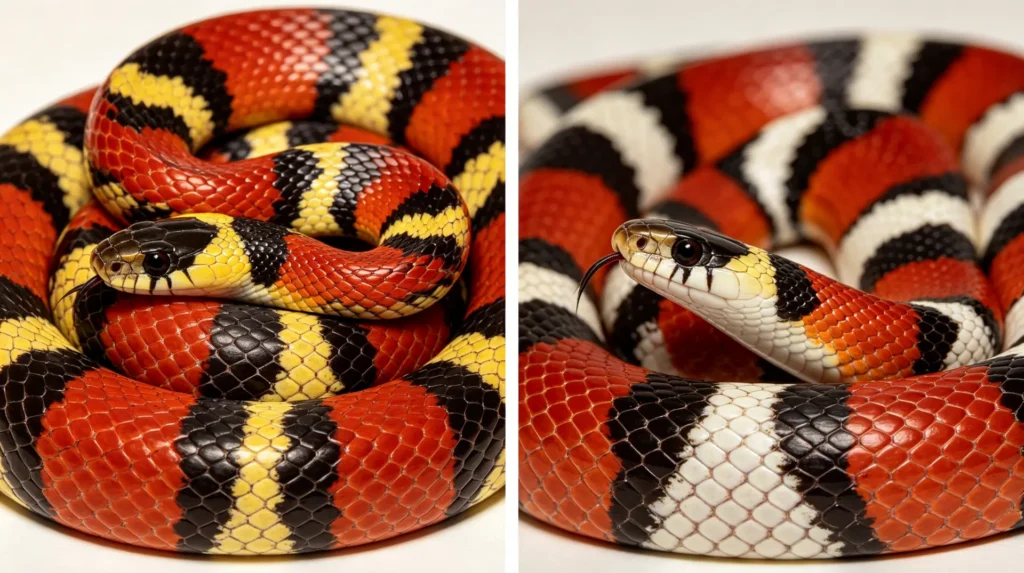
4. Hognose Snake — The Tiny Comedian
| Adult size | 1.5–2.5 feet |
| Lifespan | 10–15 years |
| Temperament | Gentle, playful, almost never bites |
| Tank size | 20 gallons |
| Temp range | 75–90°F (basking 88–90°F) |
| Humidity | 50–60% |
| Feeding | Every 5–7 days |
| Price range | $50–$250 |
Hognose snakes have an upturned snout that gives them a perpetually curious expression. When threatened, they put on one of nature’s best performances: flattening their neck, hissing loudly, and then playing dead — flipping onto their backs with their tongue hanging out. It’s dramatic and endearing.
Their compact size makes them ideal for apartments or dorm rooms. A 20-gallon tank is enough for an adult.
The trade-off: Shorter lifespan (10–15 years) compared to other species. Some individuals are picky eaters, especially after a move or environmental change.
Best for: Beginners with limited space who want a small, characterful snake.
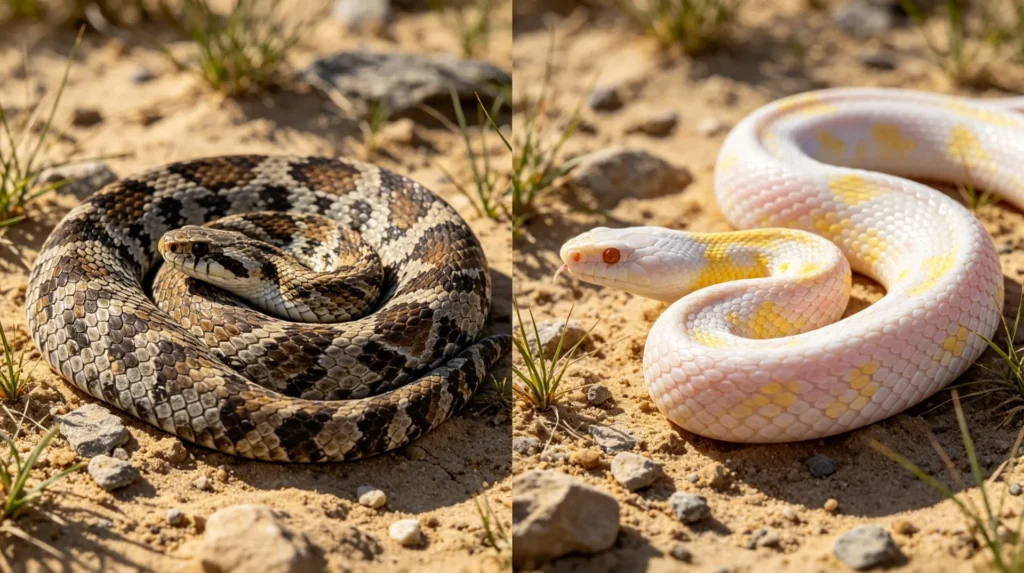
5. Ball Python — The Gentle Giant (With a Catch)
| Adult size | 3–5 feet (females larger) |
| Lifespan | 20–30 years |
| Temperament | Extremely docile, slow-moving |
| Tank size | 40 gallons |
| Temp range | 78–96°F (basking 90–96°F) |
| Humidity | 50–60% |
| Feeding | Every 7–14 days |
| Price range | $40–$500+ depending on morph |
Ball pythons earn their name from their defense mechanism: when startled, they curl into a tight ball with their head tucked inside. They’re among the most docile snakes available, and their slow, deliberate movements make handling feel safe even for nervous beginners.
Over 1,000 color morphs exist, making ball pythons a lifelong collecting passion for many keepers.
The catch — and it’s a big one: Ball pythons are notorious for going on feeding strikes. They can refuse food for weeks or even months with no obvious cause. This terrifies new owners, though it’s usually not a health emergency. They also have stricter temperature and humidity requirements than corn snakes or kingsnakes.
Important: Ball pythons are medium-sized constrictors. Check your state and local laws before buying — some areas require permits or restrict ownership.
Best for: Patient beginners who want a calm, long-lived companion and won’t panic during occasional feeding strikes.
4 Beginner Snake Mistakes That Actually Matter
1. Feeding prey that’s too big
Bigger food ≠ faster growth. Oversized prey causes regurgitation, impaction, and can be fatal. Rule: prey should be no more than 1.5× the thickest part of your snake’s body.
2. Cranking up the humidity “just in case”
Constantly high humidity leads to scale rot and bacterial infections. Only bump humidity during shedding. Otherwise, stick to species-specific ranges.
3. Housing two snakes together
Snakes are solitary. Sharing a tank causes stress, competition, and in some cases, one snake eating the other. One snake per enclosure. Always.
4. Ignoring subtle signs of illness
Weight loss, wheezing, open-mouth breathing, or lingering for more than a few days without eating — these aren’t “wait and see” situations. Find a qualified exotic animal veterinarian (not a regular dog/cat vet) as soon as you notice something off.
So, Which Snake Should You Get?
Here’s my honest recommendation:
| If you… | Go with… |
|---|---|
| Want the easiest, most forgiving first snake | Corn snake |
| Want an active snake you’ll actually see | California kingsnake |
| Want a stunning display piece | Milk snake |
| Have limited space | Hognose snake |
| Are patient and want a long-term companion | Ball python (check local laws first) |
If this is your very first reptile, start with a corn snake. The learning curve is gentle, mistakes are survivable, and you’ll build real confidence before moving to more demanding species. When you’re ready for something with a bigger presence, a boa constrictor is the classic next-step large constrictor.
Owning a pet snake is quiet, rewarding, and surprisingly bonding. They don’t need your attention — but they’ll learn your scent, recognize your routine, and settle into your presence in their own calm way. Most species live 15 to 30 years, so choose wisely and commit for the long haul.
Frequently Asked Questions
What is the easiest pet snake to take care of?
The corn snake is widely considered the easiest pet snake for beginners. They eat reliably, tolerate handling well, forgive minor husbandry mistakes, and are available in dozens of attractive color morphs at affordable prices.
What is the friendliest snake for a pet?
Ball pythons and corn snakes are generally the friendliest species. Both are docile, slow-moving, and rarely bite. Corn snakes are easier to care for overall, while ball pythons require stricter environmental conditions.
How much does it cost to keep a pet snake?
Initial setup (tank, heating, thermostat, décor) typically costs $150–$300. The snake itself ranges from $30 for a basic corn snake to $500+ for rare morphs. Ongoing monthly costs (food, substrate, electricity) average $15–$30.
Do pet snakes get lonely?
No. Snakes are solitary animals and do not experience loneliness. They don’t need companionship from other snakes or constant interaction. Gentle handling 2–3 times per week is more than enough social contact.
How long do pet snakes live?
Most beginner-friendly species live 15–30 years. Corn snakes average 15–25 years, ball pythons 20–30 years, and kingsnakes 20–25 years. This is a long-term commitment.
Find more beginner‑safe reptiles using our beginner reptile recommender tool.
This content is for educational purposes only and does not substitute professional veterinary diagnosis or treatment. If you observe any symptoms of illness, injury, or abnormal behavior, please consult a qualified exotic animal veterinarian immediately.
For more details, please review our full Medical Disclaimer.
Pingback: Corn Snake Care for Beginners | Complete 2026 Setup & Feeding Guide
Pingback: Ultimate Corn Snake Morphs Comparison 2026: Amazing Normal, Albino, Snow & Butter
Pingback: Rosy Boa Beginner Guide: Is a Rosy Boa a Good First Snake Pet? (Pros & Cons 2026)
Pingback: Best Pet Snake for Kids California: 5 Reasons Rubber Boa Tops the List