
If you’re reading this, you’ve probably grabbed the spray bottle and doused your leopard gecko’s enclosure multiple times because it has leopard gecko stuck shed on its toes or tail tip. It’s the go-to advice for incomplete shedding, and it works sometimes. But here’s the truth that most beginner guides skip: Chronic leopard gecko stuck shed is rarely just a humidity problem.
I’ve observed this common issue countless times across 20 years of working with reptile keepers and caring for leopard geckos: owners spray, spray, and spray some more, but this leopard gecko stuck shed problem keeps coming back. Worse, repeated retained shed on toes and tail tips cuts off blood flow, leading to necrosis that can cost your gecko its digits—or even its life.
The real culprits? Often, it’s a combination of aging UVB bulbs, vitamin A deficiency, and hidden fungal skin infections. These issues don’t get fixed with a mist bottle. In this guide, we’ll break down common triggers of repeated shedding struggles, walk you through safe at-home shed removal steps, and share a practical plan to prevent recurring stuck shed issues. Always consult a licensed reptile veterinarian if your gecko has persistent health or shedding concerns.
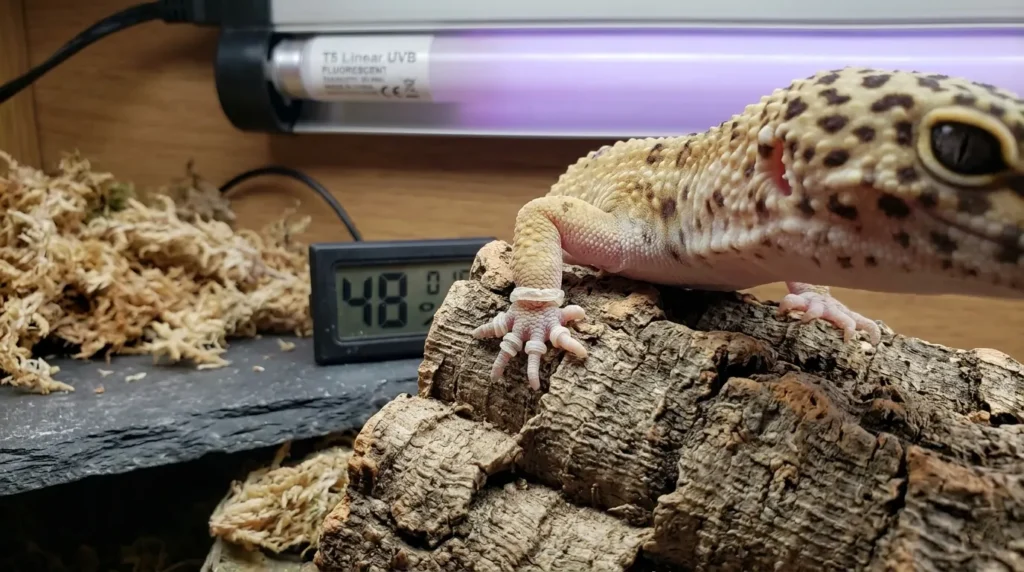
Beyond Humidity: The Hidden Causes of Chronic Shedding Issues
Most leopard gecko care guides stop at “check humidity,” but incomplete shedding is a red flag for three underdiagnosed issues. Let’s break them down:
1. Aging UVB Bulbs: The Silent Shedding Saboteur
You probably know UVB light helps reptiles make vitamin D3 for calcium absorption. But what you might not know is that UVB is also critical for healthy skin cell turnover and shedding.
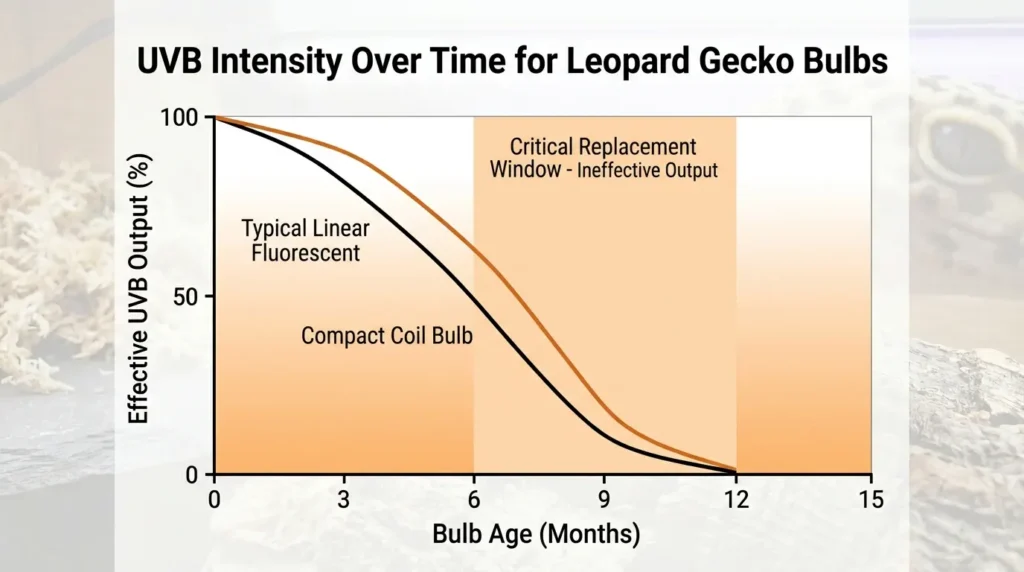
Leopard geckos need low levels of UVB (2-5% output) to regulate keratinocyte differentiation—the process that keeps their skin healthy and able to separate cleanly. The problem? UVB bulbs lose their effectiveness long before they stop glowing. Even if your bulb still lights up, most stop producing usable UVB after 6-12 months.
How Aging UVB Affects Shedding:
- As UVB levels drop, your gecko’s skin cells don’t mature properly, leading to thickened, rigid skin that can’t shed cleanly
- Weakened calcium metabolism from poor D3 absorption slows the shedding cycle, making old which is a common trigger for leopard gecko stuck shedskin stick
- You might notice other clues, like reduced activity, weak bones, or dull, patchy skin, long before visible problems appear
Table
| UVB Bulb Age | Effective UVB Output | Typical Shedding Impact |
|---|---|---|
| 0–6 months | 90–100% | Healthy, complete sheds |
| 6–12 months | 40–70% | Occasional minor retained skin on toes |
| 12+ months | <30% | Chronic, widespread issues despite ideal humidity |
2. Vitamin A Deficiency: The Nutritional Root of Skin Problems
Leopard geckos are insectivores, and their diet relies on vitamin A (retinol) for healthy skin, eyes, and immune function. Many beginners unknowingly feed a diet deficient in this key nutrient, especially when using supplements that rely on beta-carotene (which geckos can’t convert efficiently to retinol).
Vitamin A deficiency (hypovitaminosis A) doesn’t just cause eye problems—it directly impairs the skin’s ability to shed. The cells lining your gecko’s skin and mucous membranes stop maturing properly, leading to thicleading to the skin issues that cause leopard gecko stuck shedkened, keratinized skin that traps shed.
Key Signs of Vitamin A Deficiency (Beyond Skin Issues):
- Swollen, crusty eyes with discharge (one of the earliest red flags)
- Dull, discolored skin with a rough, scaly texture
- Reduced appetite and gradual weight loss
- Frequent respiratory infections due to weakened immunity
Skin problems from vitamin A deficiency can also cause facial discomfort — nose and chin rubbing is a common stress response that looks like shedding behavior but isn’t. Our leopard gecko nose rubbing guide explains how to tell the difference.
The problem is compounded by common feeding mistakes:
- Feeding only store-bought crickets that aren’t properly gut-loaded
- Using supplements with beta-carotene instead of preformed vitamin A
- Over-supplementing, which can lead to toxicity in high doses
To avoid these issues, always follow a balanced feeding routine, like the one outlined in our Leopard Gecko Feeding Guide for Beginners.
3. Fungal Skin Infections: The Hidden Culprit of Persistent Shedding
Fungal infections (like those caused by Nannizziopsis species) are a common but underdiagnosed cause of incomplete shedding in leopard geckos. These infections thrive in humid, dirty environments and attack the skin, causing it to thicken and shed irregularly.
How to Spot Fungal Infections Early:
- White, powdery patches on the skin that don’t rub off with gentle handling
- Raised, ulcerated nodules on the belly or limbs
- Retained skin that sticks in the same spots every time, even after humidity adjustments
- Lethargy, loss of appetite, or increased hiding behavior
Fungal skin concerns often develop due to long-term improper humidity levels, dirty living environments, or a weakened immune system. These skin issues can damage skin texture and structure, leading to ongoing incomplete shedding even after humidity levels are corrected. Always consult a licensed reptile veterinarian for any suspected skin irregularities or persistent shedding problems. If you suspect an infection, it’s critical to consult a licensed reptile veterinarian right away. You can refer to professional nutritional advice for reptiles from VCA Hospitals official guidance.
The 3-Question Test: Diagnose the Root Cause
Before you reach for the spray bottle, use this simple diagnostic test to pinpoint the root cause of your leopard gecko stuck shed.
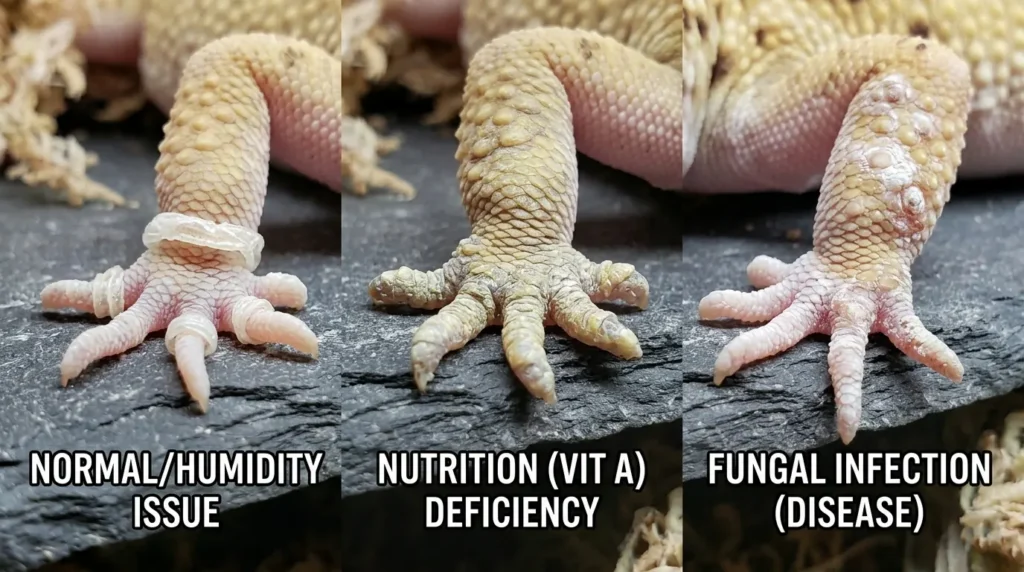
Table
| Scenario | Humidity Issue | Nutrition (Vitamin A) Issue | Disease (Fungal) Issue |
|---|---|---|---|
| Shed Location | Stuck on toes, tail tip, or body in isolated patches | Widespread, patchy retained skin across the body | Localized to one spot (often legs or belly) |
| Skin Appearance | Normal color and texture, just with trapped shed | Dull, rough, or discolored skin with poor elasticity | White powdery patches or raised lesions |
| Other Symptoms | No eye issues, active eating and behavior | Swollen eyes, reduced appetite, gradual weight loss | Lethargy, reduced appetite, or foul odor from affected areas |
| Response to Humidity | Improves within 1–2 sheds after adjustments | No improvement, even with consistent humid hides | No improvement; may worsen with high humidity |
Step-by-Step Root Cause Check:
- Rule out basic husbandry first: Check that your humid hide is properly set up (moist substrate, enclosed space) and that ambient humidity stays at 40–50%.
- Check your UVB bulb: If it’s older than 12 months, replace it immediately with a new, reptile-specific bulb.
- Assess diet and supplements: Confirm you’re using a supplement with preformed vitamin A (retinol) and gut-loading your feeder insects.
- Look for infection signs: If the retained skin is localized to one spot and the skin looks abnormal, seek professional guidance from a licensed reptile veterinarian for further testing. Always rely on a licensed reptile veterinarian to evaluate and diagnose potential health conditions.
Safe Removal of Retained Skin (Especially Toes and Tail Tips)
If your gecko has skin stuck on its toes or tail tip, you need to act fast to prevent necrosis. Never pull or peel dry shed—it can tear the new skin underneath, leading to infection or permanent damage.
The 4-Step Safe Removal Method:
- Prepare a warm soak: Fill a shallow container with 85–90°F (29–32°C) water just deep enough to cover your gecko’s feet. Place your gecko in the water for 10–15 minutes to soften the skin.
- Create a “sauna”: If soaking alone doesn’t work, place your gecko in a humid hide lined with damp paper towels for 30 minutes. The warm, moist environment will further loosen stubborn retained skin.
- Gently work the skin loose: After soaking, use a damp cotton swab to roll the shed off your gecko’s toes toward the tip (never pull upward). For tight rings around toes, gently roll the swab in one direction to lift the skin.
- Repeat if needed: If the skin doesn’t come off easily, stop and repeat the soak/sauna process. Forcing it can cause more harm than good.
When to Call the Vet:
- The retained skin has been stuck for more than 48 hours
- The toe or tail tip looks dark, swollen, or discolored (signs of reduced blood flow)
- Your gecko shows signs of pain, like avoiding using the affected limb
- You see signs of infection (redness, discharge, or foul odor)
The Long-Term Fix: Stopping the Cycle of Shedding Problems
Once you’ve removed the current retained skin, you need to address the root cause to prevent it from coming back. Here’s your action plan:
1. Optimize UVB Lighting
- Replace bulbs on schedule: Even if they still light up, replace low-output UVB bulbs every 6–12 months.
- Use the right bulb strength: Leopard geckos need 2–5% UVB bulbs, placed 6–12 inches above their basking spot.
- Monitor output: Use a UVB meter annually to ensure your bulb is producing adequate levels. For more details on setup, read our guide to Leopard Gecko UVB Lighting Setup.
2. Fix Vitamin A Deficiency
- Adjust your supplements: Use a reptile multivitamin with preformed vitamin A (not just beta-carotene) 2–3 times a week.
- Gut-load feeders: Feed your crickets or dubia roaches with vitamin A-rich foods like carrots, sweet potatoes, or commercial gut-load mixes 24 hours before feeding.
- Consult a vet if needed: Severe vitamin A deficiency may require specialized injectable supplements that must be prescribed by a licensed reptile veterinarian.
3. Manage Fungal Skin Concerns
- Seek care from a licensed reptile veterinarian immediately: Persistent fungal skin issues need professional assessment and prescription antifungal care from a certified pet medical provider.
- Improve enclosure hygiene: Clean and disinfect the enclosure every 2–4 weeks, and replace substrate regularly.
- Adjust humidity temporarily: While addressing fungal skin concerns under professional veterinary guidance, keep ambient humidity at the lower end of the range (40%) to slow fungal growth. Always consult a licensed reptile veterinarian for all fungal skin-related issues and treatment plans.
4. Create a Shed-Friendly Enclosure
- Add a humid hide: This is non-negotiable for leopard geckos. Use a plastic container with a hole cut in the top, lined with damp sphagnum moss or paper towels.
- Provide rough surfaces: Include rocks, logs, or reptile-safe decor for your gecko to rub against during shedding.
- Maintain proper temperatures: Basking spot temperatures of 88–92°F (31–33°C) support healthy shedding by keeping your gecko’s metabolism working efficiently.
Final Thoughts: Shedding Is a Window Into Your Gecko’s Health
Problems with shedding aren’t just a nuisance—they’re a warning sign. When you see your leopard gecko struggling to shed, don’t just reach for the spray bottle. Take a step back and ask:
- Is my UVB bulb still effective?
- Am I feeding a balanced diet with proper supplements?
- Could there be an underlying infection or health issue?
Fixing the core cause of repeated shedding issues, rather than only fixing visible stuck shed, will permanently resolve shedding problems and support your leopard gecko’s long-term health and quality of life. Remember, a clean shed is a sign of a happy, healthy gecko.
This content is for educational purposes only and does not substitute professional veterinary diagnosis or treatment. If you observe any symptoms of illness, injury, or abnormal behavior, please consult a qualified exotic animal veterinarian immediately.
For more details, please review our full Medical Disclaimer.
Pingback: 7 Hidden Reasons Leopard Gecko Rubbing Nose Chin Is Not Affection