
Most new leopard gecko keepers in the US run into the same frustrating problem: they follow generic online heating tutorials, yet their leopard gecko 40gal heat setup fails to maintain a stable temperature gradient. Some geckos refuse food in Minnesota winters due to low ambient temps, while others suffer dry skin and bad sheds in California’s arid indoor air, or deal with moldy hides in Florida’s humid household environment.
Generic global heating guides fail to account for US regional home climate differences—central heating cycles, dry forced-air systems, summer AC drafts, and extreme seasonal temperature swings. A reliable leopard gecko 40gal heat setup must adapt to these local conditions. This guide skips all universal filler content and delivers only US & Canada-specific, actionable heating setup steps for 40gal leopard gecko enclosures.
Every step aligns with 2026 American reptile husbandry standards, tailored for three major North American climate zones, to help you build a stable, safe heat gradient that eliminates seasonal stress, feeding issues, and common tank heating failures. Always consult a licensed reptile veterinarian if your leopard gecko shows persistent health or behavioral issues.
Why Generic Guides Ruin Your Leopard Gecko 40Gal Heat Setup
Leopard geckos depend entirely on environmental heat for digestion, immune function, and shedding health. For 40gal breeder-style tanks (the most popular size for US hobbyists), a one-size-fits-all heating setup never works. American homes have unique structural and climate-related issues that generic overseas guides ignore, and they are the main reason a basic leopard gecko 40gal heat setup stops working properly:
- Northern US & Canadian homes: Winter forced-air heating drops room temps overnight, causing chronic cold stress
- West Coast (CA, AZ) homes: Year-round dry indoor air + heater usage drains tank humidity, frequently triggering leopard gecko stuck shed on toes and toe necrosis risks if moisture gradient fails.
- Southeast US (TX, FL) homes: Summer high humidity + AC temperature swings create mold risk and inconsistent basking temps
A proper 40gal tank heating setup for US keepers does not just add heat—itbalances heat, humidity, and seasonal indoor temperature fluctuations to maintain a permanent safe gradient: 88–92°F basking surface, 80–85°F warm ambient, 70–75°F cool side.
Choose Gear for Your Leopard Gecko 40Gal Heat Setup (US Regional Guide)
Only two heating devices are approved for stable 40gal tank operation in North American households: under-tank heat mats (UTH) and 40W/60W ceramic heat emitters (CHE). Your regional climate dictates which setup you use—no random combination needed.Use our reptile equipment checklist to gather all supplies for your setup.
Below is a US zone-specific heating equipment selection chart to build a durable leopard gecko 40gal heat setup optimized for local home conditions:
| North American Climate Zone | Recommended 40Gal Heating Setup | Wattage Spec | Local Pain Solved |
|---|---|---|---|
| Cold Northern States & Canada (NY, MN, MI, ON) | UTH Primary + 40W CHE Secondary Night Heat | 40W CHE | Fixes overnight room temp drops below 65°F, stops winter feeding refusal and digestion slowdown |
| Dry Western US (CA, AZ, NV) | UTH Only (CHE optional winter backup) | No CHE for daily use | Prevents excessive humidity loss, eliminates stuck sheds and dehydrated gecko skin |
| Humid Southeast US (TX, FL, GA) | UTH Primary + 60W CHE Ventilated Setup | 60W CHE (seasonal) | Reduces stagnant humid air, prevents hide mold and bacterial growth in warm zones |
US Keeper Rule of Thumb: Never use colored night bulbs or plug-in heat rocks. These products are widely banned in US professional herpetology circles for causing sleep disruption and hidden thermal burns. Always consult a licensed reptile veterinarian if your gecko shows signs of illness linked to unsanitary enclosure.
9 Step US-Localized Heat Source Setup for 40Gal Leopard Gecko Tanks
This step-by-step workflow is built exclusively for standard US 40×20×20 inch front-opening glass/PVC enclosures, matching the exact tank size 80% of American beginner keepers own.
Step 1: Zone Your 40Gal Tank for US Home Temperature Swings
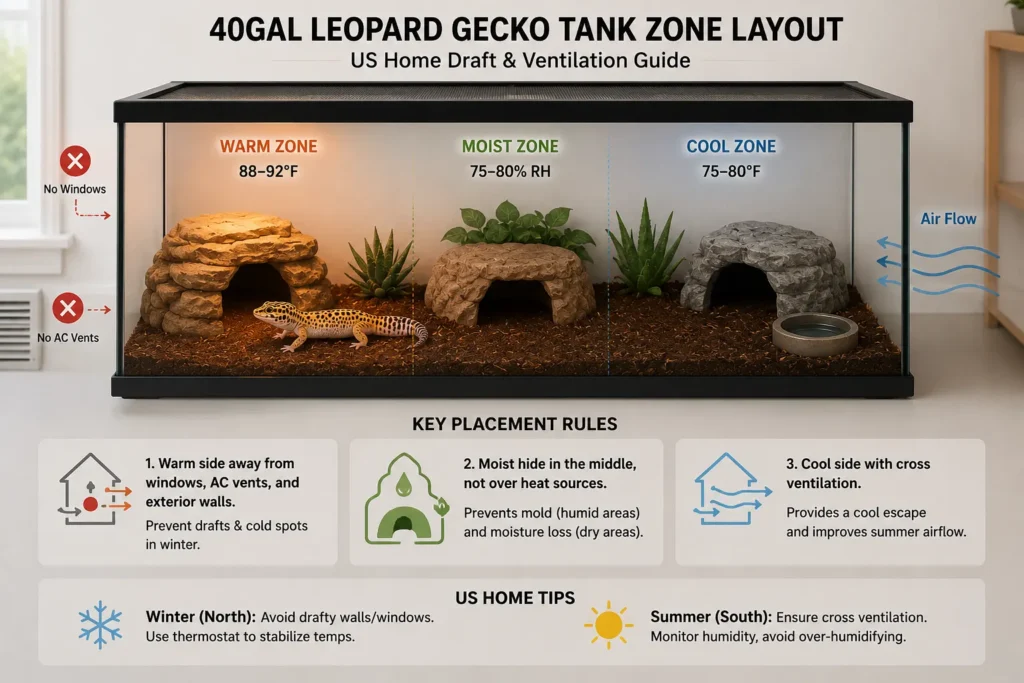
Before installing any heater, lock in your tank zone layout to counteract common US home issues: AC drafts, window cold spots, and furnace heat cycling. This layout is the foundation of a functional leopard gecko 40gal heat setup.
- Position the warm basking side away from windows, AC vents, and exterior walls (critical for northern US winter draft prevention)
- Reserve the tank’s opposite end as the cool escape zone, with slight cross ventilation for Florida/Texas humid summer days
- Place the moist shed hide in the tank middle—never over heat sources (reduces mold growth in humid southern states and prevents rapid moisture evaporation in dry western states. Always consult a licensed reptile veterinarian for concerns related to your gecko’s living environment and health.)
Step 2: Install UTH (Primary Heat for All US Zones)
Belly heat from UTH is non-negotiable for leopard gecko digestion, regardless of US region, and it acts as the core of every solid leopard gecko 40gal heat setup. regardless of US region. All setup rules below fix the most common US keeper mistakes from home heating interference.
- Mount the UTH on the external bottom 1/3 of the warm side only. Full tank coverage removes the cool escape zone, a top mistake reported in US reptile forum discussions.
- Elevate the tank 0.5–1 inch with plastic risers. US wooden shelf and carpeted floor insulation traps heat, causing unregulated overheating.
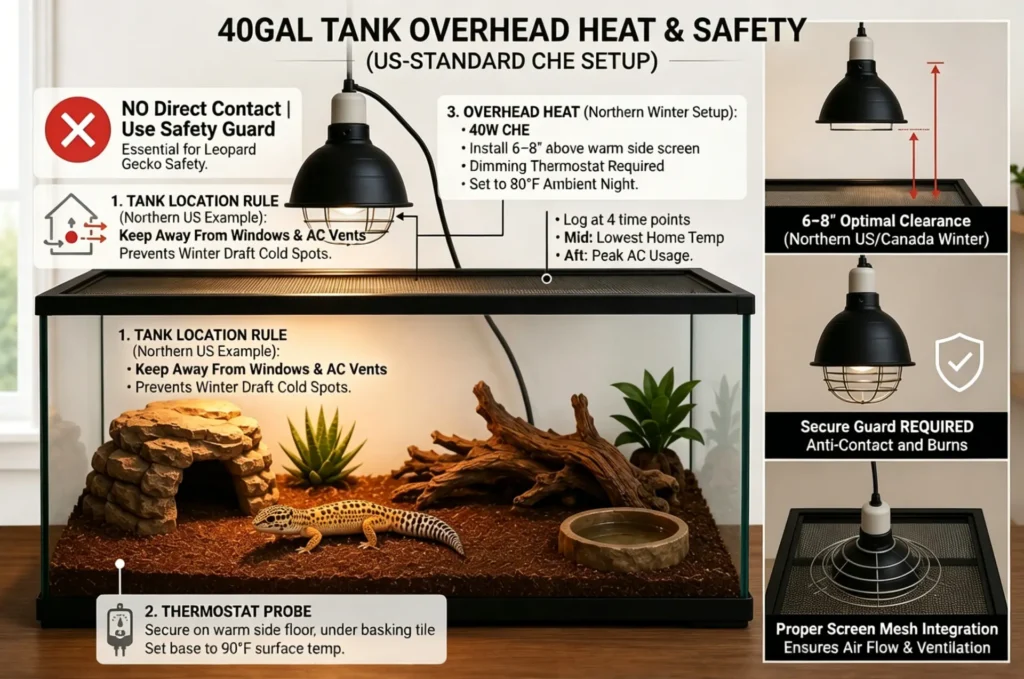
- Secure thermostat probe directly on the glass under basking tile, not in open air. Home furnace/AC air swings make air temp readings completely inaccurate for US households.
- Set base thermostat target to 90°F surface temp, adjustable by region: +2°F for northern winters, -2°F for southwest dry summers.
Step 3: Regional CHE Installation (Seasonal & Zone Specific)
CHE usage is not universal—it’s strictly seasonal and geographic for US keepers:
- Northern US/Canada Winter Only: Install 40W CHE 6–8 inches above warm side, dimming thermostat set to 80°F ambient night heat to counteract furnace overnight temperature drops
- Southeast US Summer Only: Run 60W CHE with top screen ventilation open 50% to circulate humid air and prevent bacterial growth
- Western US: CHE off 100% of the time; backup use only during rare winter cold snaps
Step 4: 24-Hour US Home Temperature Calibration Test
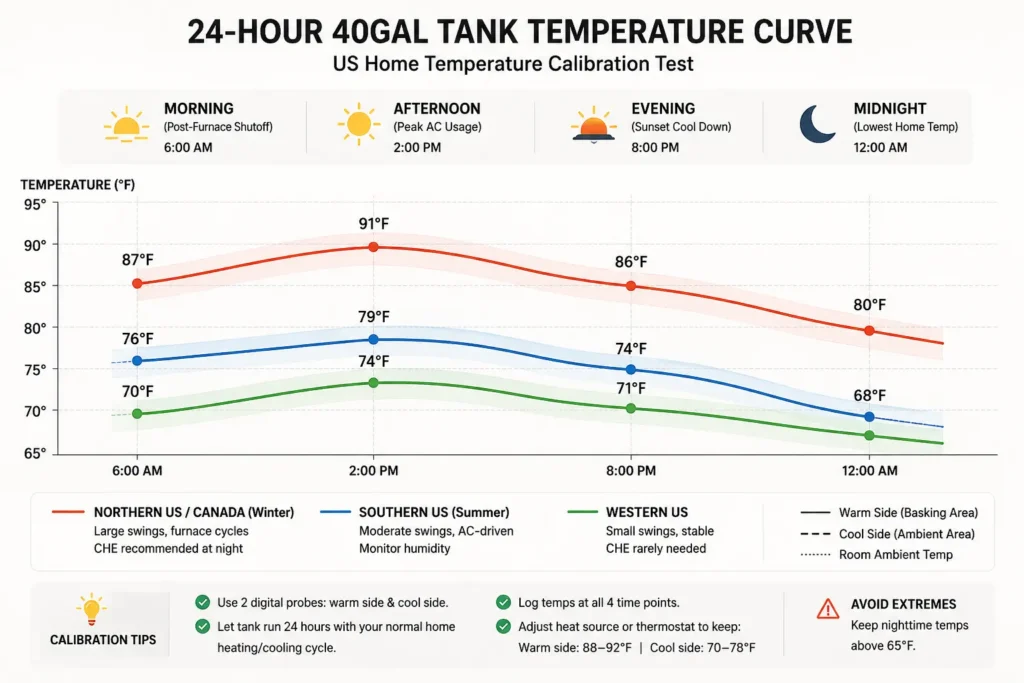
US homes have drastic day/night temp shifts that break generic gradient setups. Complete a full 24-hour calibration to match your home’s heating/cooling cycle.
Test and log temperatures at 4 key time points: Morning (post-furnace shutoff), Afternoon (peak AC usage), Evening (sunset cool down), Midnight (lowest home temp).
Step 5–9: Targeted US Regional Fine-Tuning
5. Dry West Coast Humidity & Heat Balance: CA/AZ forced-air heating drops indoor humidity below 25%. Add a small water dish on the warm side and limit CHE usage to prevent stuck sheds. Keep basking surface locked 88–90°F to avoid dehydrating geckos.
6. Southeast Humid Heat Correction: FL/TX summer indoor humidity often hits 65%+. Open top ventilation slightly when running CHE, and replace moist hide substrate twice weekly to eliminate mold growth unique to southern US climates.
7. Northern State Winter Night Heat Lock: MN/MI/NY overnight room temps can plummet 10–15°F after heating cycles stop. Set night thermostat floor at 68°F to prevent digestion stasis and gecko lethargy.
8. US Rental Home Heating Adjustment: For renters with fixed thermostat settings and frequent temp swings, use a pulse-proportional thermostat to smooth heat cycling—avoids the “too hot/too cold” tank fluctuation common in US apartment buildings.
9. Seasonal Spring/Fall Transition Tuning: US shoulder seasons have inconsistent HVAC cycles. Reduce CHE wattage usage entirely in spring, and pre-emptively raise UTH baseline in early fall before cold snaps hit.
Most Common US Household Leopard Gecko Heating Failures & Fixes
These issues are exclusive to North American home environments and rarely covered in global guides:
| US-Specific Heating Issue | Regional Cause | Immediate Fix |
|---|---|---|
| Gecko refuses food in winter | Northern US overnight furnace temp drops | Enable 40W night CHE backup heat, lock min ambient temp 68°F |
| Frequent stuck sheds | Western US dry forced-air heat | Disable CHE daily use, add localized moist hide misting routine |
| Tank hide mold & slime | Southeast US high indoor humidity | Vent tank top, run intermittent CHE air circulation, weekly substrate changes |
| Unstable hot/cold swings | US apartment HVAC cycling | Upgrade to pulse thermostat, insulate tank exterior side panels |
Key Takeaways for US Leopard Gecko Keepers
A successful 40gal tank heating setup in North America is never static. It requires aligning your UTH/CHE configuration with your local state climate, seasonal HVAC changes, and home living environment. Generic global temperature ranges will fail your gecko—regional tuning is mandatory for long-term health.
Stable, region-adjusted heat gradients reduce 90% of common leopard gecko health issues seen in US home collections, including poor digestion, stuck sheds, seasonal stress, and low appetite. Always consult a licensed reptile veterinarian for any persistent health concerns with your leopard gecko.
FAQ
1. Do I need a CHE for my 40gal leopard gecko tank in California?
Most CA keepers do not need daily CHE usage. The state’s dry indoor heating causes excessive tank humidity loss, so UTH-only setups are preferred. Use a 40W CHE only during rare winter cold snaps.
2. How do I heat a 40gal gecko tank in Florida’s humid summer weather?
Use a UTH as primary heat with a 60W CHE for intermittent air circulation. Keep partial top ventilation open to prevent stagnant humid air and mold growth, a common issue for Florida indoor reptile enclosures.
3. Is a 40W or 60W CHE better for northern US winter heating?
40W CHE is ideal for night backup heat in northern states. A 60W bulb overheats 40gal tanks in insulated winter homes and causes unnecessary humidity loss.
4. Why does my gecko’s tank temp fluctuate so much in US apartments?
US central HVAC cycling creates drastic day/night temp shifts. A pulse-proportional thermostat and tank side insulation will stabilize gradients far better than basic on/off thermostats.
This content is for educational purposes only and does not substitute professional veterinary diagnosis or treatment. If you observe any symptoms of illness, injury, or abnormal behavior, please consult a qualified exotic animal veterinarian immediately.
For more details, please review our full Medical Disclaimer.