
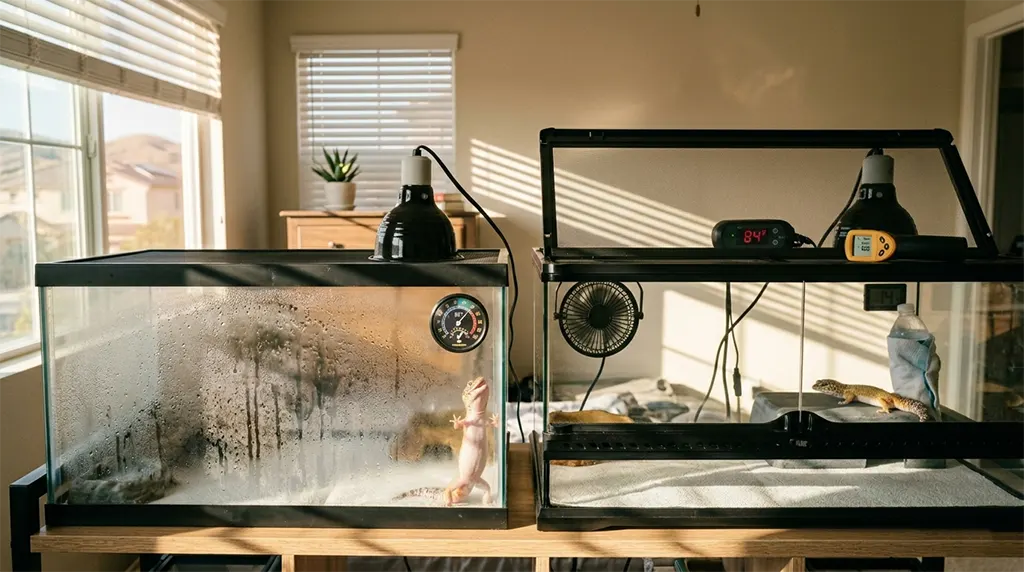
How to cool down overheated leopard gecko tank in summer is a top concern for keepers in Southern California’s inland valleys. Summer indoor air regularly spikes above 90°F, and leopard gecko keepers hit the same terrifying crisis every June through August: even your cool side tank zone creeps past the safe 80°F hard limit. A single night of unregulated high heat triggers thermal stress, reduced appetite, organ strain, and fatal heat shock in captive leopard geckos—many first-time owners seek professional reptile care support after failing basic cooling hacks that only work for coastal or northern U.S. setups. This guide is compiled from real summer heat emergency experiences shared by Southern California inland leopard gecko owners and popular community breeding and care discussions, zero generic reptile advice, only apartment-safe, low-cost adjustments built for dry, extreme inland California summer heat waves.
Safe Temperature Benchmarks for Leopard Geckos (Non-Negotiable CA Summer Standards)
Before attempting any cooling fix, confirm your tank readings match these clinical baseline ranges; most overheating incidents stem from owners misreading analog dials or only checking basking zones and ignoring cool hide microclimates, verify accurate temperature and humidity data via our reptile environment lookup tool. Always consult a licensed reptile veterinarian for any pet health-related concerns.
- Cool side ambient tank air: Max 78°F permanent summer cap, never cross 80°F even during afternoon heat peaks
- Basking hot spot surface: 88–90°F daytime only; turn all heat emitters off entirely if room air hits 87°F+
- Humidity baseline (inland dry CA): 30–40% average tank humidity; cooling methods cannot drop humidity below 25%
- Critical stress temperature threshold: Sustained tank air above 82°F for 3+ hours = immediate emergency cooling required
Reference Comparison Table: Safe vs Dangerous Summer Tank Conditions
| Tank Zone Metric | Safe Inland CA Summer Range | Heat Stress Trigger Range | Fatal Risk Range |
|---|---|---|---|
| Cool Side Ambient Air | 72–78°F | 80–84°F | Over 86°F |
| Basking Surface Temp | 88–90°F (day only) | 92–95°F | Over 96°F |
| Hide Microclimate Temp | 74–79°F | 81–83°F | Over 84°F |
| Average Tank Humidity | 30–40% | Below 25% / Above 50% | Below 20% |
Why Inland Southern CA Leopard Gecko Tanks Overheat & How to Cool Down Overheated Leopard Gecko Tank in Summer
Coastal California keepers rarely face this crisis, but inland areas like Riverside, San Bernardino, and Victorville carry four location-specific heat traps new owners miss entirely:
- Unfiltered afternoon west-facing window radiation Inland summer sunlight carries far stronger infrared heat than coastal fog-filtered rays. Even closed double-pane glass tanks trap solar radiation; 1 hour of direct window sun can lift tank internal temps 12–18°F above room air temperature. Many renters cannot install blackout film on apartment windows per lease rules, creating an unavoidable passive heat source.
- Continuous room heat retention with poor cross ventilation Most inland residential AC units only cycle at night; midday home air sits at 88–92°F while cooling systems pause. Small studio apartments with no cross breeze trap hot air around reptile tank racks, stacking heat between stacked enclosures.
- Misused year-round ceramic heat emitters (CHE) 90% of reported heat stress cases among inland leopard geckos involve owners leaving CHE heat bulbs plugged in 24/7 through summer. These devices emit invisible radiant heat that accumulates inside sealed tanks even if room air feels mild, raising hide surface temperatures undetected by cheap analog thermometers.
- Low inland ambient humidity amplifies heat exhaustion risk Dry desert air accelerates leopard gecko moisture loss through skin and respiratory tracts. A tank that hits 81°F with 28% humidity causes faster thermal collapse than an identical temperature tank with 40% humidity, a detail absent from national generic reptile guides written for humid eastern U.S. climates.
7 Step-by-Step Emergency Fixes: How to Cool Down Overheated Leopard Gecko Tank in Summer (Apartment-Friendly, Inland CA Optimized)
All tactics below require no permanent wall modifications, comply with standard California apartment rental policies, and avoid humidity crashes common with generic cooling tricks. Follow in order from fastest emergency intervention to long-term heat wave prevention.
Step 1: Instant Emergency Tank Heat Reduction (For Tanks Already Over 82°F)
This 2-minute intervention stops acute heat shock for geckos showing stress signs: gaping mouth breathing, constant glass climbing, refusing hides, lethargy.
- Unplug every heat source: CHE bulbs, under-tank heating mats, basking halogen lights—no exceptions during peak heat hours 10 AM–8 PM inland CA time.
- Slide tank lid open 1–1.5 inches along the back edge to release trapped hot air; secure a small screen barrier over the gap to prevent escape, required for apartment safety inspections.
- Place a sealed frozen water bottle wrapped in 2 thin paper towels against the cool tank glass side wall, outside the enclosure. Do not set ice directly against tank glass or inside the habitat—direct ice contact creates dangerous cold shock and condensation flooding substrate.
- Monitor microclimate hide temperature every 10 minutes with an infrared temp gun; remove ice bottle once cool hide falls to 74°F to avoid overcooling.
Step 2: Block Radiant Window Heat (Lease-Compliant Renter Hack)
Permanent blackout film violates most inland CA apartment leases, use these temporary removable barriers to cut solar heat gain by 70%:
- Hang removable fabric blackout curtain panels with tension curtain rods; no drilling required.
- Line tank exterior back/side glass with reusable static cling window tint sheets, easily peeled off at lease move-out with zero residue.
- Relocate tank racks entirely to north-facing interior walls with zero afternoon sun exposure if floor space allows; avoid closet nooks with stagnant trapped hot air.
Step 3: Controlled Cross Ventilation Cooling Without Humidity Crash
Dry inland air makes regular box fan cooling risky—unregulated airflow drops tank humidity below safe 25% thresholds, triggering shedding complications. Follow these airflow rules:
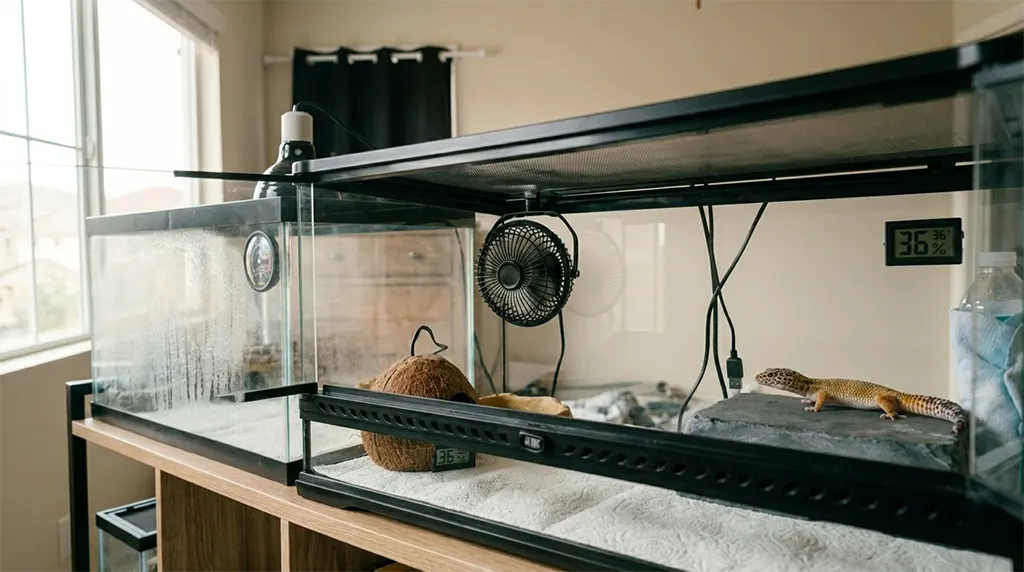
- Position a low-speed USB desk fan 12–18 inches away from the tank’s open lid gap; set fan to oscillate on its lowest power setting only.
- Aim fan airflow parallel across the tank top, never blowing direct wind straight down into the enclosure interior. Direct wind dehydrates leopard gecko skin rapidly in dry inland heat.
- Limit fan operation to midday peak heat hours only; power off once indoor room air falls below 82°F overnight to maintain baseline humidity, this balanced airflow trick is one of the simplest tactics to master how to cool down overheated leopard gecko tank in summer.
Step 4: Modify Tank Hides to Create Natural Cool Microclimates
Standard plastic commercial hides trap hot stagnant air in summer; swap and adjust hides to build passive cool zones without electricity:
- Add one large damp coconut fiber hide on the tank’s far cool side; lightly mist interior hide walls once daily at sunrise only to hold steady 35–40% humidity. Avoid afternoon misting—evaporation spikes localized tank heat briefly.
- Place flat natural slate rock slabs on the cool side substrate; stone retains lower ambient temperatures and gives geckos a heat-escape surface to press their bellies against.
- Remove all stacked decor and dense wood logs from the cool zone; clutter blocks air circulation and traps residual radiant heat inside small hide spaces.
Step 5: Adjust Under-Tank Heater (UTH) Usage for Summer Heat Waves
Many owners leave UTH mats on thermostats year-round, unaware mats still radiate residual heat even at low thermostat settings during 90°F room days. Inland CA summer rules for UTH equipment:
- Turn UTH thermostat dial down 15–20°F from winter baseline settings; set maximum surface cap at 88°F only overnight after room air drops below 78°F.
- Slide a ¼-inch thick cork insulation sheet between UTH mat and tank glass during daytime heat peaks to reduce radiant transfer into substrate.
- Fully disconnect UTH power during multi-day heat advisories issued by California’s National Weather Service.
Step 6: Long-Term Rack Cooling for Multi-Tank Breeders/Hobbyists
Owners with stacked leopard gecko rack systems face compound heat buildup between enclosure layers; inland dry climate rack adjustments:
- Leave 2-inch vertical gaps between each tank shelf to allow hot air vertical escape; remove solid wood rack back panels entirely for cross airflow.
- Mount silent low-voltage rack exhaust fans at the top of rack units to vent accumulated rising hot air out of the room, wired to plug timers that activate automatically 11 AM–7 PM daily.
- Position entire rack units 6+ inches away from exterior house walls that absorb outdoor daytime heat, a key rack adjustment for anyone learning how to cool down overheated leopard gecko tank in summer with multiple enclosures.
Step 7: Nighttime Heat Recovery Guardrail (Prevent Overnight Temperature Swings)
Inland CA nights often drop sharply after brutal hot afternoons; rapid temperature swings between day and night stress gecko digestion and immune function, a detail many owners miss when they search how to cool down overheated leopard gecko tank in summer:
- Restore low-wattage heat sources only once indoor room air falls below 75°F after sunset.
- Keep one damp cool hide maintained overnight to buffer rapid tank temperature shifts between evening and morning.
- Avoid placing tanks directly next to AC unit air vents overnight; blasting cold conditioned air creates extreme 15°F+ hourly temperature fluctuations inside enclosures.
Top 8 Costly Mistakes That Stop You From Learning How to Cool Down Overheated Leopard Gecko Tank in Summer
This checklist compiles recurring errors summarized from Southern California inland leopard gecko owners’ heat wave care mistakes and r/leopardgeckos community discussion threads; cross-reference your setup to eliminate hidden heat risks that block your efforts to learn how to cool down overheated leopard gecko tank in summer:
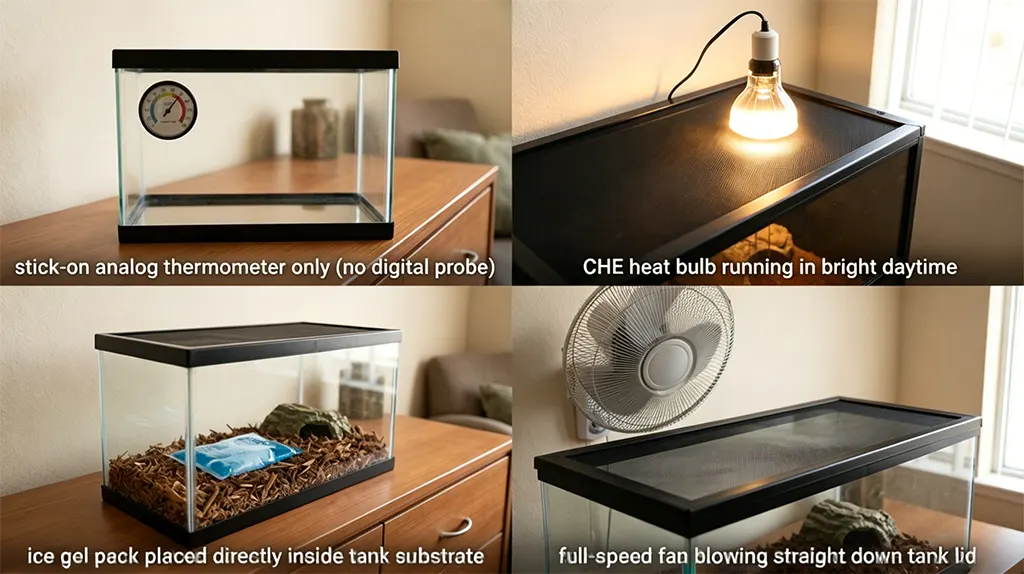
- Relying solely on analog stick-on tank thermometers Stick dial thermometers measure surface glass heat instead of actual air/hide temperatures, regularly reading 5–10°F lower than real microclimate values. Always pair with an infrared temp gun and digital ambient probe thermometer.
- Leaving ceramic heat emitters running 24 hours daily Invisible radiant heat accumulates inside sealed tanks overnight even when room air feels cool; CHEs are unnecessary for inland CA summer days entirely and are one of the biggest roadblocks if you want to know how to cool down overheated leopard gecko tank in summer.
- Using ice packs directly inside the reptile enclosure Frozen items placed within tank boundaries create rapid condensation, mold growth on substrate, and dangerous cold thermal shock when geckos make direct contact.
- Blasting high-speed box fan wind straight into tank interiors Aggressive direct airflow strips critical moisture from gecko skin in dry inland air, leading to stuck eye caps, incomplete sheds, and respiratory irritation alongside temperature drops.
- Blocking tank lid ventilation gaps with decor or towel covers Many owners cover lids to hold humidity in dry climates; covered ventilation traps hot air and creates a heat dome effect inside the full enclosure.
- Relocating tanks to small enclosed closets for sun protection Closets lack cross ventilation and retain stagnant hot air, pushing internal tank temperatures higher than sun-exposed living room setups.
- Over-misting tank substrate during afternoon heat hours Midday mist triggers fast surface evaporation that temporarily spikes localized tank heat before humidity falls too low, creating dual heat and moisture stress.
- Ignoring west-facing window solar radiation through double-pane glass Tempered glass magnifies infrared sunlight; window sun exposure is the single largest avoidable heat source for inland CA apartment reptile tanks.
Heat Stress Symptom Checklist: When Your Leopard Gecko Needs Immediate Cooling Intervention
Catch early thermal stress before permanent organ damage develops, even if you already follow guides showing how to cool down overheated leopard gecko tank in summer; reach out to a licensed California exotic reptile care professional if 2+ of these signs persist after 30 minutes of emergency cooling. Always consult a licensed reptile veterinarian for any abnormal pet symptoms:
- Constant glass climbing, refusing all hide spaces entirely
- Open-mouth gaping, rapid shallow respiratory movements
- Lethargic, unable to lift limbs when gently handled
- Total refusal of food for 2+ consecutive days during active summer feeding windows
- Pale washed-out skin coloration, reduced tail fat storage utilization
- Frequent digging deep into substrate attempting to escape surface heat
FAQ (Sorted: Diagnostic Heat Problems First, Then Cooling Solutions)
My indoor AC runs all day, but my leopard gecko tank cool side still hits 81°F—what inland CA-specific factor am I missing?
Nearly always unfiltered afternoon west window solar radiation trapped inside tank glass. Even with 72°F conditioned room air, infrared sunlight can raise internal tank air 8–14°F independently of household AC output. Apply static cling tint sheets and temporary blackout curtains first to eliminate passive solar heat gain before adjusting fans or heat equipment, this step solves 70% of struggles with how to cool down overheated leopard gecko tank in summer for inland renters.
Can I use regular household cooling gel ice packs wrapped in cloth against the tank exterior long-term during heat waves?
Yes for emergency daytime use only; remove all ice packs once sunset lowers room air below 78°F to avoid dangerous overnight temperature drops. Gel packs hold cold longer than disposable plastic water bottles and create less condensation on outer tank glass in dry inland humidity. Never leave ice cooling equipment unattended for 8+ hour stretches.
Will removing the tank lid fully open permanently fix consistent overheating in my inland CA studio apartment?
Partial lid gaps (1–1.5 inches) work better than fully removed lids. Full lid removal creates extreme dry airflow that crashes tank humidity below 25% daily, triggering severe shedding issues common in Southern California’s arid summer climate. A partially open lid balances heat venting and stable moisture retention.
My leopard gecko stays pressed against the cool tank glass all day—does this mean the enclosure is dangerously overheated?
This behavior signals mild thermal discomfort first; immediately test cool hide microclimate temperature with an IR temp gun. If hide readings sit at 80°F or higher, deploy the frozen gel pack emergency cooling step and disconnect all daytime heat sources. If hide temperatures stay under 78°F, your gecko is only regulating minor surface warmth and no urgent cooling adjustments are needed.
Are under-tank heating mats safe to run overnight during inland California multi-day heat advisories?
Only if your evening indoor air drops below 74°F after sunset, and you add cork insulation between the mat and tank glass to limit radiant transfer. If overnight room temperatures remain above 76°F, fully unplug UTH mats until the heat advisory expires to prevent cumulative overnight heat buildup inside substrate layers.
How do I maintain required 30–40% tank humidity while running cooling fans in dry inland summer air?
Limit fan runtime strictly to midday heat peaks, add one damp coconut fiber cool hide misted only at sunrise, and avoid wide-open tank lid gaps larger than 1.5 inches—these humidity rules are non-negotiable while you learn how to cool down overheated leopard gecko tank in summer. Supplemental light morning misting replaces moisture lost to oscillating fan airflow without triggering midday evaporation heat spikes.
Can window air conditioning units placed near reptile tanks create temperature swing risks for leopard geckos?
Yes, if the AC vent blows direct cold airflow onto enclosure glass. Position tanks a minimum of 3 feet away from AC vents, use oscillating fans set on low parallel airflow instead of direct vent cooling, and monitor hide temperatures hourly during AC cycling periods to avoid rapid 10°F+ temperature shifts.
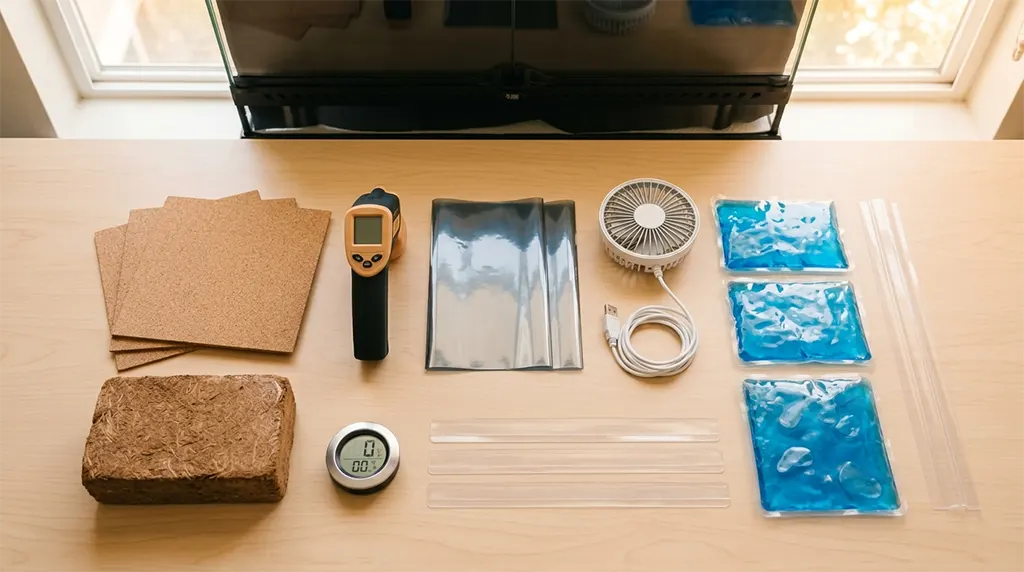
What emergency cooling supplies should inland CA leopard gecko owners stock before annual June–August heat waves hit?
IR temperature gun, static cling removable window tint, USB low-speed oscillating desk fan, reusable gel ice packs, cork insulation sheets for UTH mats, coconut fiber substrate for damp cool hides, and screen barrier strips to secure partial tank lid gaps for ventilation. All items are widely available at California local pet supply chains and general retail stores year-round, stock these supplies ahead of heat waves to master how to cool down overheated leopard gecko tank in summer fast.
This content is for educational purposes only and does not substitute professional veterinary diagnosis or treatment. If you observe any symptoms of illness, injury, or abnormal behavior, please consult a qualified exotic animal veterinarian immediately.
For more details, please review our full Medical Disclaimer.
Pingback: Leopard Gecko Diarrhea: Non-Parasite Causes & Easy Home Fixes
Pingback: Leopard Gecko Feeding Schedule by Season: Expert Care Guide