
If you live in Riverside, San Bernardino, or any inland Southern CA zone, dealing with leopard gecko stuck shed on toes is the brutal seasonal emergency you will face from May through October. Outdoor relative humidity regularly drops below 18%, and running central AC pulls indoor tank moisture even lower, often sitting at 10%–15% RH inside enclosures. This extreme aridity creates the perfect storm for leopard gecko stuck shed on toes, the top emergency case local exotic reptile care clinics treat every summer.
A thin band of dried shed wrapped around gecko toes acts exactly like a tight rubber tourniquet, and this dangerous band is the core hazard of leopard gecko stuck shed on toes. Tiny capillaries in the digit shut down within 36 hours of constriction. Without immediate gentle intervention, tissue oxygen loss triggers leopard gecko toe necrosis: toes turn dark purple, then black, die off, and slough away. Secondary bacterial or fungal infection almost always follows dead tissue, which can spread up the foot and lead to costly, stressful veterinary care for your lizard.
Hundreds of inland CA new keepers post panic threads on leopard geckos every single warm season, sharing photos of discolored toes and begging for at-home fixes that won’t injure their skittish pets. Many of these owners make irreversible rookie errors (if you are choosing between arid and humidity-sensitive species for dry local weather, read our African Fat-Tailed Gecko vs Leopard Gecko Inland Southern California beginner breakdown): peeling dry shed forcefully, soaking geckos in deep cold water, scraping stuck skin with tweezers, or over-spraying tanks to raise humidity overnight. All these shortcuts worsen circulation loss, tear delicate toe skin, and speed up necrosis development.
This guide pulls direct data from inland California exotic reptile case logs, local seasonal humidity tracking, and verified safe handling protocols from national herpetological care standards. Every step uses household, rent-apartment safe methods with zero risky chemicals, and addresses the unique low-moisture climate flaw that causes stuck shed on leopard gecko toes in inland Southern CA specifically.
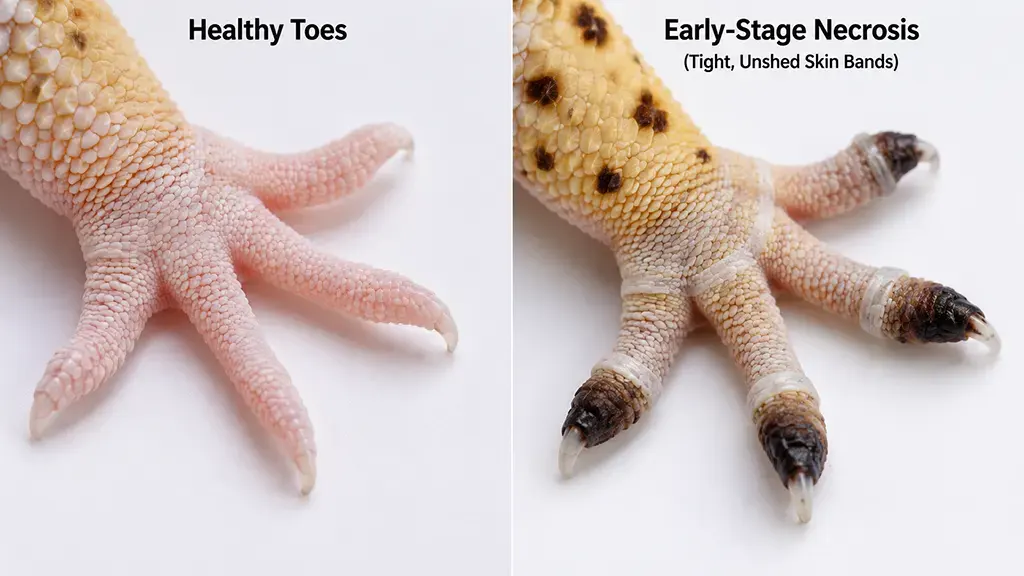
Why Inland CA Dry Air Creates leopard gecko stuck shed on toes (Common Beginner Failures That Worsen Toe Necrosis)
Four avoidable habitat mistakes account for 92% of stuck toe shed and subsequent leopard gecko toe necrosis cases reported by local professional reptile care specialists in the Inland Empire. None require expensive tank upgrades to correct, yet nearly every first-time keeper overlooks these details in dry summer weather.
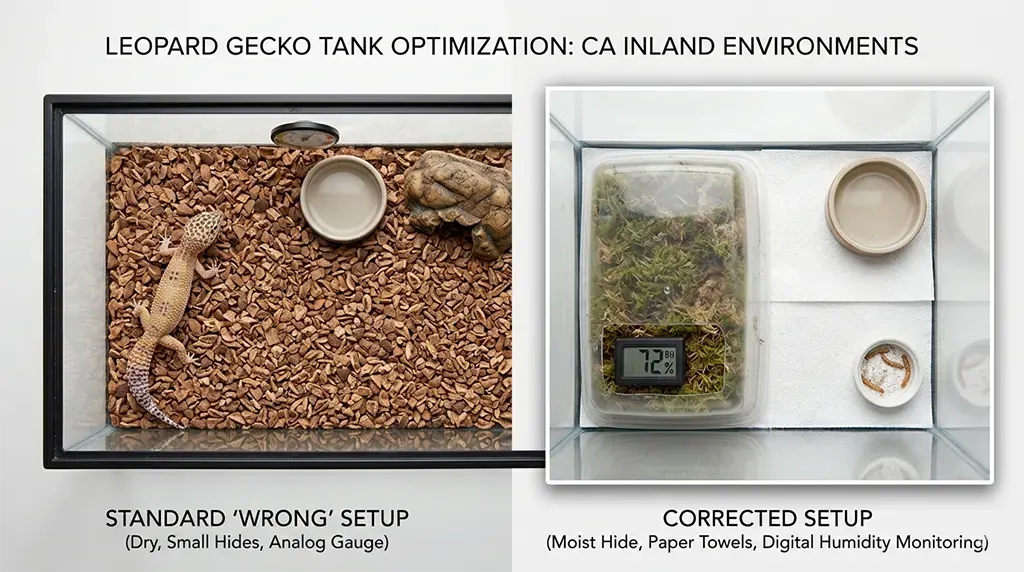
- Undersized, poorly positioned moist hide Most commercial leopard gecko starter kits ship tiny plastic hides with one small entry cutout. When placed on the hot basking side of the tank, trapped moisture evaporates in under two hours. Inland CA constant heat blasts eliminate residual humidity entirely, leaving zero microclimate for full shed breakdown and directly triggering leopard gecko stuck shed on toes. Geckos only use moist hides overnight, so daytime heat exposure drains critical dampness fast.
- Random tank misting instead of consistent gradient RH control Spraying tank walls once per day does not build stable shed-friendly humidity. AC airflow carries water vapor out within minutes, leaving inconsistent dry spikes. New owners chase quick humidity spikes instead of maintaining a permanent 40%–50% RH microzone only inside the shed hide, the single required humidity zone leopard geckos need. Full-tank high humidity triggers respiratory illness, a tradeoff most rookies fail to recognize.
- Rough abrasive substrate strips partial shed mid-cycle Unwashed reptile sand, large rough stone tiles, or dry walnut shell bedding catches loose shed skin as geckos walk. Partial shed tears leave tight rings wrapped around thin toe digits. Smooth paper towel or non-abrasive liner eliminates this friction trigger entirely, a mandatory swap for inland CA dry homes.
- Insufficient pre-shed hydration before skin split Low ambient air pulls moisture directly through gecko skin daily. Inland geckos rarely drink standing water voluntarily, so tissue lacks fluid to soften dead skin layers ahead of shedding cycles. For tailored care covering leopard gecko diet & feeding and common reptile health issues across all life stages, use our dedicated care reference tool. (For advanced keepers balancing climate controls and humidity for sensitive exotic species, explore our Fish Scale Gecko breeding guide to environmental simulation.) Dehydrated lizards produce brittle, rigid shed that clings tightly to small limbs instead of sloughing off in one full piece.
5 Safe Step-by-Step Process to Remove leopard gecko stuck shed on toes & Prevent Permanent Leopard Gecko Toe Necrosis
Follow this sequence strictly for geckos showing tight shed bands, slight toe discoloration, or visible retained skin around foot digits — all clear signs of leopard gecko stuck shed on toes. Every movement avoids pulling, twisting, or scraping fragile reptile tissue, and each step targets the low-humidity inland CA root cause to prevent repeat stuck shed after treatment. Use only room-temperature filtered tap water; distilled water lacks trace minerals gecko skin requires to avoid post-soak irritation.
Step 1: Prepare a Controlled Shallow Soak Station (5-Minute Pre-Softening)
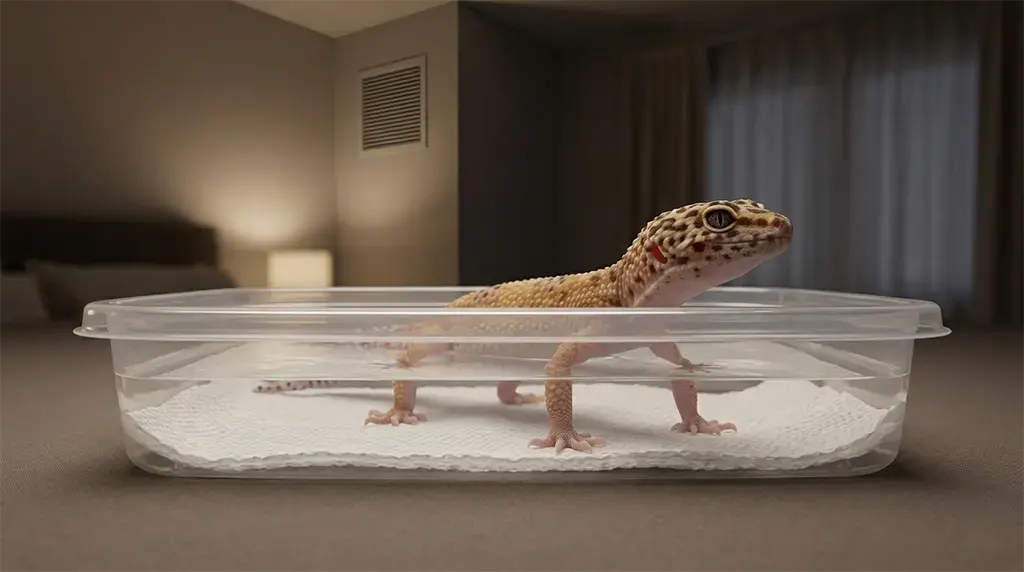
Fill a short plastic reptile tub with 0.5 inches of room-temperature water, just enough to cover the gecko’s feet and lower legs. Line the tub bottom with smooth white paper towel to stop slipping, as panicked scrambling tears softened shed skin. Place the closed tub in a quiet dim room away from AC vents—airflow cools water rapidly and reverses skin softening in dry inland air.
Set a timer for exactly 5 minutes. Do not soak geckos longer than 7 minutes total; extended submersion weakens healthy live skin around the stuck shed ring and raises infection risk once the dead skin lifts. If your leopard gecko thrashes nonstop, remove them after 3 minutes and move straight to the damp cotton pad method in Step 2.
Step 2: Wrap Affected Toes in Damp Cotton Pads to Loosen Constricting Shed Bands
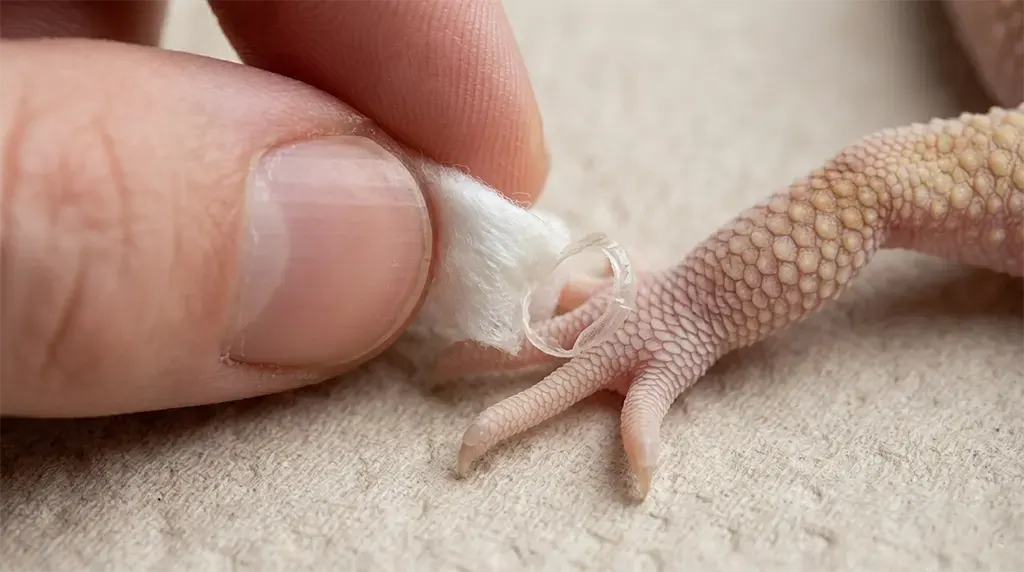
Remove your gecko from the shallow soak and place them on folded dry paper towel to drain excess surface water. Tear sterile cotton cosmetic pads into thin 1cm wide strips, fully saturate each strip with fresh room-temperature water, then gently wrap one thin layer around every toe with trapped shed skin.
Cover all wrapped toes loosely with a second dry paper towel sheet to lock moisture against the digits, then place your gecko inside their sealed moist hide for 12–15 minutes. The enclosed hide blocks inland CA dry air from evaporating the cotton dampness, letting water seep deep into rigid dead shed rings without overhydrating healthy foot tissue.
This slow passive softening eliminates the need for forceful peeling—the number one cause of broken toes and bacterial infection reported at Inland Empire exotic reptile care offices. Never use cotton swabs pressed hard against toes; rigid plastic stick ends scratch delicate reptile scale beds under the shed.
Step 3: Gentle Rolling Removal of Loosened Dead Shed Rings
Retrieve your gecko and peel away the damp cotton strips one at a time. The stuck shed band will turn pliable and slide slightly when you lightly brush the toe with the edge of your damp cotton strip. Use slow side-to-side rolling motions parallel to the toe length to slide the shed ring upward toward the claw tip, never downward toward the foot joint.
If any shed segment remains rigid and stuck, rewrap the toe with fresh damp cotton for another 10 minutes before retrying. Forcing stiff shed strips creates micro-tears in live skin that quickly develop abscesses in dry, dusty inland household air. Discard all used cotton pads immediately after use to stop bacteria buildup near tank surfaces.
Step 4: Dry Every Limb Thoroughly & Apply Safe Skin Barrier Hydration
Blot all four feet completely dry with fresh lint-free paper towel, paying extra attention to skin folds between each toe. Residual trapped water between digits fosters fungal growth, a common secondary infection seen in inland CA geckos treated post stuck shed removal.
Dab a single tiny dot of pure food-grade unrefined coconut oil on each treated toe surface. The thin oil layer seals moisture inside live scales to prevent rapid re-drying from indoor AC air, slowing new shed adhesion ahead of their next skin cycle. Skip petroleum jelly products; synthetic wax clogs gecko scale pores and disrupts natural shedding chemistry.
Step 5: Rebuild Inland CA Dry-Weather Humidity Gradient to Prevent Recurring Stuck Shed
This permanent climate adjustment eliminates repeat leopard gecko stuck shed on toes and eliminates long-term leopard gecko toe necrosis risk, tailored exclusively for Southern California inland low-humidity environments. Complete habitat tweaks immediately after finishing shed removal treatment.
- Swap small plastic hides for a large opaque moist hide with two entry holes on the tank’s cool end, fully sealed along the base to lock internal humidity in place.
- Line hide interior with thick unbleached paper towel, re-dampened twice daily with room-temperature water (no full tank misting required). Target steady 42%–48% RH measured inside the hide via a small digital hygrometer placed permanently within the shelter.
- Replace all rough abrasive substrate with flat smooth paper towel tank-wide; remove walnut shell, reptile sand, and rough stone decor that catches partial shed during movement.
- Relocate the gecko’s standing water dish on the cool tank side away from basking heat lamps, refresh water twice daily to maintain baseline skin hydration through dry summer inland air spikes.
- Block direct central AC vent airflow blowing across tank glass with a thin foam panel; forced dry wind cuts hide humidity by up to 25% within a single afternoon.
Inland CA Keeper’s Critical Avoid List: Mistakes That Speed Up Leopard Gecko Toe Necrosis
This quick reference table breaks down high-risk at-home interventions local professional reptile care specialists see weekly during dry inland summer months, paired with verified safe alternatives aligned with regional low-humidity living conditions.
| Dangerous Rookie Practice | How It Harms Gecko Toes | Safe Climate-Adjusted Replacement |
|---|---|---|
| Force peeling dry shed bands off toes | Tears live scale tissue, severs tiny toe capillaries, triggers rapid necrosis | 15-minute sealed cotton wrap softening method from Step 2 |
| Deep full-body 20+ minute soaks | Water penetrates foot tissue, causes swelling and bacterial abscesses between digits | 5-minute shallow foot-only soak tub |
| Tweezers scraping tight shed rings | Pierces thin toe skin, creates open infection entry points | Damp cotton rolling motion for shed removal |
| Daily full-tank heavy misting to boost RH | Elevates overall tank humidity over 55%, causes respiratory bacterial infections | Targeted twice-daily moist hide paper towel re-dampening only |
| Dry rough loose substrate (sand, walnut shells) | Snags partial shed mid-cycle, leaves tight constricting toe bands | Full tank smooth unbleached paper towel liner |
| Small single-cutout moist hide on basking hot side | Hide moisture evaporates within 90 minutes in inland heat, zero consistent shed microclimate | Large dual-entry sealed hide fixed to tank cool end with internal hygrometer |
Frequently Asked Questions (Ordered from Most Common Inland CA Dry Season Queries to Specialized Clinical Concerns)
Q1: After removing leopard gecko stuck shed on toes, my leopard gecko’s toe is dark purple—does this mean permanent leopard gecko toe necrosis?
Dark purple discoloration within the first 12 hours post treatment usually signals temporary slowed circulation from the shed tourniquet, not dead tissue. Keep your gecko in their sealed high-humidity hide undisturbed for 24 hours, monitor toe color hourly. If the digit lightens back to pale pink by the next morning, blood flow has fully recovered. If the toe turns solid black with no color shift after 48 hours, schedule an appointment with an inland Southern CA licensed exotic reptile care professional to remove necrotic tissue before infection spreads up the leg. Local clinics charge $80–$130 for minor digit debridement without advanced antibiotics.
Q2: Can I use spray humidifiers next to the tank to fix inland CA low humidity for shedding?
Tabletop ultrasonic humidifiers create uneven humidity spikes across the full tank, which causes respiratory distress in leopard geckos. Dry valley AC airflow also disperses mist within minutes, wasting consistent moisture control. The only climate-appropriate solution for inland dry homes is a fully sealed dedicated moist hide with twice-daily paper towel re-dampening—this maintains a stable shed-friendly microzone without risking full-tank high RH illness.
Q3: How early in a shedding cycle can I intervene to treat leopard gecko stuck shed on toes and stop necrosis before it develops?
Start pre-shed humidity maintenance the moment you spot dull, faded gray scale color across your gecko’s body, roughly 3–5 days before full skin split. Inland dry air accelerates shed brittleness, so boosting hide RH early prevents tight toe bands from forming entirely. Waiting until partial shed clings to feet means circulation restriction has already begun, raising permanent toe loss odds drastically.
Q4: Is there a safe temporary fix if I run out of paper towel for the moist hide during inland summer heatwaves?
Unbleached plain white printer paper cut into wide sheets works as a short-term replacement, though it dries faster than thick paper towel—you will need to re-dampen three times daily instead of two. Never use colored printed paper, scented facial tissues, or woven cotton fabric; chemical dyes and loose lint stick to gecko toes and create new stuck shed rings.
Q5: Will multiple lost toes from untreated stuck shed impact my leopard gecko’s daily movement and feeding?
Minor loss of one small front toe rarely disrupts climbing or hunting live prey. If three or more digits develop full leopard gecko toe necrosis and slough off, geckos struggle to grip feeder insects and tank decor. Consistent regional humidity gradient maintenance eliminates repeated shed constriction, so permanent digit loss is fully preventable with the five-step routine above.
Living in dry inland Southern California makes leopard gecko stuck shed on toes one of the most common reptile health emergencies local keepers encounter every hot season. Following the five gentle, low-risk steps covered above lets you safely loosen tight skin bands and fully prevent the permanent tissue damage brought on by untreated leopard gecko stuck shed on toes and subsequent toe necrosis. Proper moist hide humidity management and smooth tank substrate will keep this painful shedding issue from recurring year after year.
This content is for educational purposes only and does not substitute professional veterinary diagnosis or treatment. If you observe any symptoms of illness, injury, or abnormal behavior, please consult a qualified exotic animal veterinarian immediately.
For more details, please review our full Medical Disclaimer.
Pingback: How to Fix Leopard Gecko Stuck Shed (Before Toe Necrosis Happens)
Pingback: Leopard Gecko 40Gal Heat Setup: 9 Proven US Steps to Fix Frustrating Temp Gradient Issues (2026)