
Introduction
The Leopard gecko arrived. You set up the enclosure. You bought crickets. And now, three days later, that insect is still alive in the cage while your Leopard gecko watches it from the cool side like it’s watching a nature documentary.
Or maybe the opposite: your Leopard gecko ate everything, and now you’ve noticed a tail thicker than its spine and a belly dragging when it moves.
Feeding Leopard geckos seems straightforward. Insects go in. Gecko eats. How complicated can it be?
Complicated enough that feeding-related issues dominate Leopard gecko health forum posts. Refusal to eat. Obesity. Picky eating. Nutritional deficiencies manifesting as wobbly legs or curved spines. These problems rarely emerge from malicious neglect. They emerge from well-meaning keepers following vague or outdated guidance.
Part 1: The Pain Points Every New Keeper Encounters
The Refusal Spiral
Your Leopard gecko stopped eating. Not for one day—it’s been a week. Food refusal has multiple potential causes. Some are benign and self-resolving. Others indicate husbandry problems requiring intervention.
The Obesity Trap
Leopard geckos store fat in their tails. A thick tail signals health. But fat storage and obesity aren’t the same thing. Excessive feeding produces distended abdomens and increased risk of fatty liver disease.
The Picky Eater Problem
Some Leopard geckos refuse certain insect types while readily accepting others. When keepers accommodate picky eating by offering only preferred prey, nutritional gaps develop. Variety isn’t optional—it’s essential.
Part 2: Common Feeding Mistakes (And Why They Persist)
Mistake 1: Feeding Without Temperature Verification
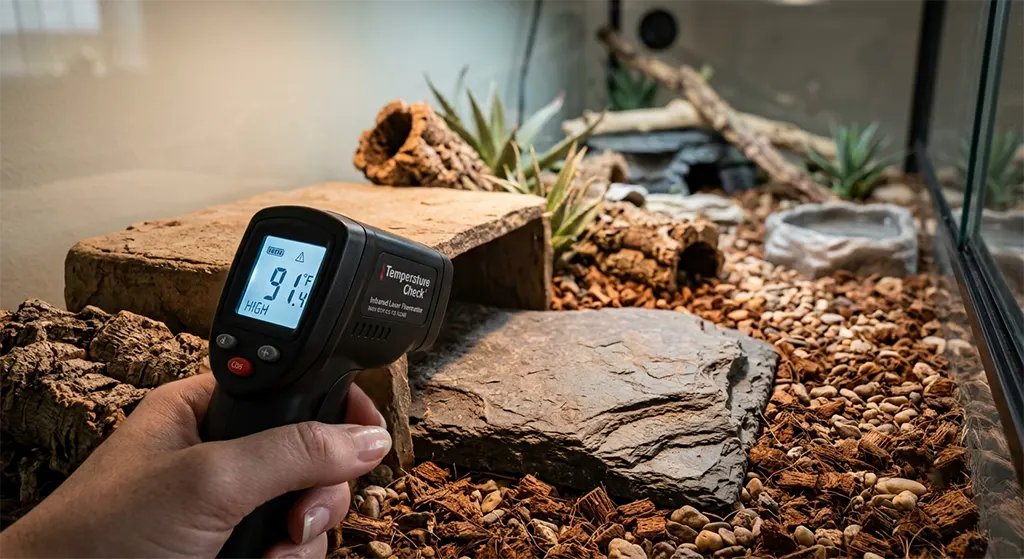
Leopard geckos are ectothermic. Their digestive function depends on achieving appropriate body temperatures. A Leopard gecko at 75°F digests food slowly or not at all. One at 88-90°F processes meals efficiently.
Without probe thermometers at substrate level, warm side and cool side, you don’t actually know if your Leopard gecko can digest its meal.
Mistake 2: Ignoring Calcium-to-Phosphorus Ratios
Insects naturally contain phosphorus in higher proportions than calcium. Metabolic bone disease (MBD) develops when calcium absorption cannot keep pace with bone maintenance demands. For detailed information on MBD symptoms and prevention, consult resources from ARAV.
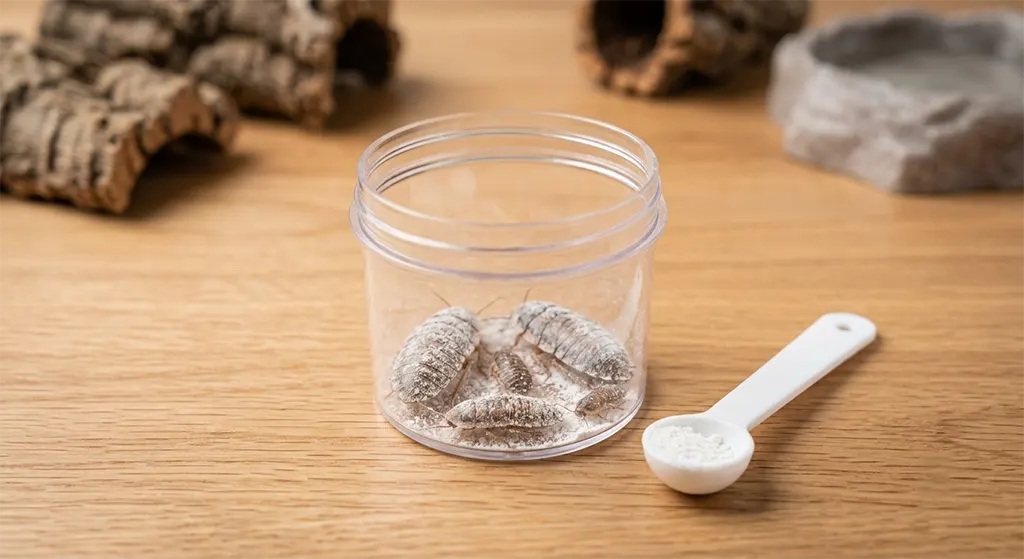
Current herpetological husbandry standards suggest calcium dusting addresses this imbalance when performed consistently. Additional guidance on Leopard gecko nutritional requirements is available through Reptifiles.com.
Mistake 3: Oversized Prey Items
Established reptile veterinary guidance specifies: prey width should not exceed the space between the Leopard gecko’s eyes. Larger prey increases regurgitation risk and can cause physical damage during consumption attempts.
Mistake 4: Feeding During Brumation Without Adjustment
Leopard geckos naturally reduce activity during cooler months (brumation). Metabolic rate drops. Digestion slows or pauses. Many new keepers continue feeding schedules. The result: dead insects, stress, and potential impaction.
Part 3: Life Stage Feeding Schedules
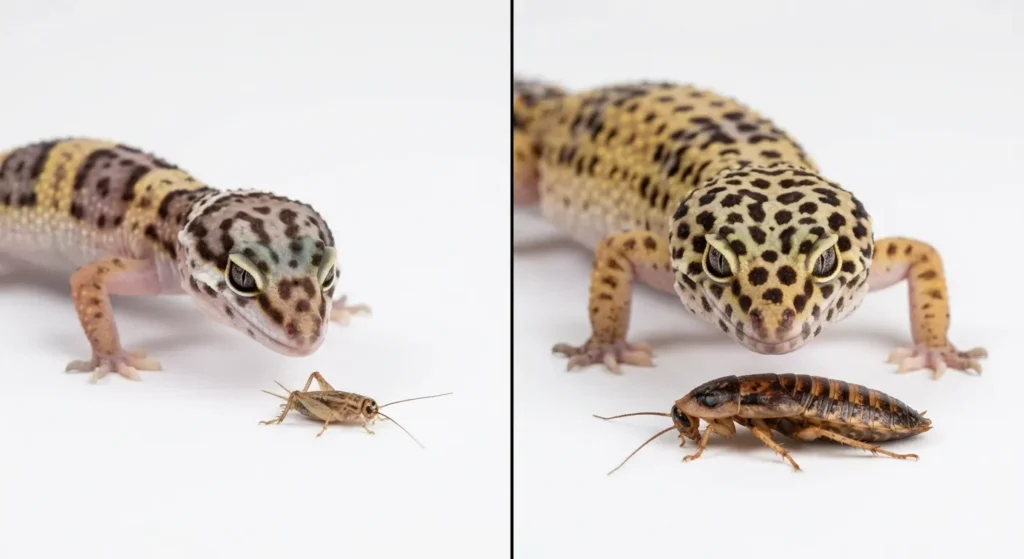
Hatchling Stage (0-6 Months)
Hatchlings face their first challenge: transitioning from yolk reserves to independent feeding, typically within the first week after hatching.
Daily feeding supports rapid growth demands. Multiple small prey items rather than single large meals accommodate small stomach capacity.
Hatchlings typically accept:
- Small crickets (1/8″ to 1/4″)
- Small dubia roach nymphs
- Black soldier fly larvae (if small enough)
Dust prey with calcium at every feeding. Current herpetological husbandry standards suggest adding vitamins at every second or third feeding.
Juvenile Stage (6-12 Months)
Growth rate begins declining. Every-other-day feeding typically suits Juvenile Leopard geckos. Response to feeding cues matters more than strict adherence to schedules.
Subadult Stage (12-18 Months)
Every 2-3 days often suits Subadult animals. Body condition assessment becomes increasingly important. A tail thicker than the body with visible fat deposits indicates overfeeding.
Adult Stage (18+ Months)
Every 3-5 days suits most adult Leopard geckos. This frequency sounds minimal, but adult animals don’t require frequent feeding.
While general guidelines provide a solid foundation, every Leopard gecko’s metabolism and growth rate are unique. To get a precise, tailored plan for your specific gecko, you can use our Leopard gecko feeding and health calculator. This tool generates custom feeding schedules and common health reference guides based on your pet’s age and current condition, ensuring your care routine remains accurate as they grow.
Insect Nutrition Comparison
| Insect Type | Protein | Fat | Notable Considerations |
|---|---|---|---|
| Dubia Roaches | High | Moderate | Excellent protein source, easy to digest |
| Crickets | High | Moderate | Higher activity increases hunting engagement |
| Mealworms | Moderate | Higher | Hard exoskeleton can challenge digestion |
| Waxworms | Moderate | High | Treat only—high fat, easy to overfeed |
| Black Soldier Fly Larvae | Moderate | Moderate | High calcium content reduces dusting needs |
Current herpetological husbandry standards support dubia roaches and crickets as dietary staples.
Where to Source Feeder Insects in the US
Local reptile specialty shops provide immediate availability and physical inspection. Build relationships with staff—they provide species-specific guidance.
Reptile expos offer breeder-direct pricing. Inspect insects carefully before purchasing—verify movement, check for dead individuals, confirm appropriate sizing.
Online breeding suppliers such as Dubia Roach Breeder, Josh’s Frogs, and Armageddon Worm Company ship live insects directly. These operations maintain controlled breeding environments.
What to verify when purchasing:
- Live movement: Active insects indicate healthy stock
- Size consistency: Uniform sizing ensures appropriate prey selection
- No odor: Strong smells indicate poor husbandry
- Traceable source: Reputable suppliers provide identification and care information
Never purchase insects from uncertain sources. Wild-caught insects from bait shops may carry pesticide contamination.
Part 4: Common Supplementation Mistakes
Mistake 5: Over-Supplementing with Vitamin A
Retinol (preformed vitamin A) accumulates in Leopard gecko tissues. Excess supplementation produces hypervitaminosis A. Beta-carotene (provitamin A) converts to vitamin A as needed and doesn’t accumulate. Read labels carefully.
Mistake 6: Ignoring Hydration
Always provide fresh water in a ceramic dish. Change water every 24-48 hours. Some Leopard geckos never drink from dishes—this doesn’t mean water dishes are unnecessary.
Mistake 7: Feeding Dead Insects
Limit quantities to what your Leopard gecko consumes within 10-15 minutes. Remove uneaten insects after feeding sessions.
Part 5: Foods to Never Feed
Fireflies (Photinus spp. and related species)
Fireflies contain lucibufagins, highly toxic to reptiles. A single firefly can kill a Leopard gecko. This toxicity is not dose-dependent. Remove any fireflies entering the enclosure immediately.
Wild-Caught Insects
Insects captured outdoors may carry pesticide residues, herbicides, or environmental contaminants. Obtain all feeder insects from known, controlled breeding sources.
Oversized Prey and Dangerous Species
Adult superworms (Zophobas morio) possess strong mandibles capable of injuring Leopard geckos. Never offer prey larger than recommended sizing—no matter how hungry your gecko appears.
Human Food
Leopard geckos are obligate insectivores. They cannot process mammalian proteins, dairy products, fruits, vegetables, or processed human foods. Stick exclusively to commercially-bred feeder insects.
Part 6: Refusal to Eat — Systematic Troubleshooting
Environmental Factors:
- Temperature: Verify warm side reaches 88-92°F
- Recent relocation: New Leopard geckos often refuse food during 1-2 week adjustment periods
- Enclosure changes: Rearranging furniture creates stress
If your gecko is showing stress-related behaviors beyond appetite loss — such as compulsively rubbing its nose or chin against tank surfaces — our guide on why leopard geckos rub their nose and chin covers the three most overlooked environmental triggers.
Physiological Factors:
- Pre-shedding (blue phase): Refuse food 1-3 days before visible shedding
- Brumation: Seasonal temperature drops trigger reduced appetite
- Reproductive activity: Breeding season produces appetite variation
Health Factors:
- Impaction: Substrate ingestion or temperature problems cause blockage
- Parasites: Fecal examination identifies issues
- Respiratory infection: Open-mouth breathing indicates problems
When in doubt: consult a reptile-specialist veterinarian.
Frequently Asked Questions
How often should I feed my Leopard gecko?
Hatchlings (0-6 months): daily. Juveniles (6-12 months): every 1-2 days. Adults (18+ months): every 3-5 days.
What size prey should I offer?
Prey width should not exceed the space between your Leopard gecko’s eyes.
Do Leopard geckos need vitamins?
Calcium supplementation and vitamin D3 are essential. Current herpetological husbandry standards suggest dusting insects with calcium at most feedings for juveniles.
What should I never feed my Leopard gecko?
Never offer fireflies (lethal toxicity), wild-caught insects (pesticide risk), oversized prey (injury risk), or any human food.
Conclusion: Feed Smarter, Not More
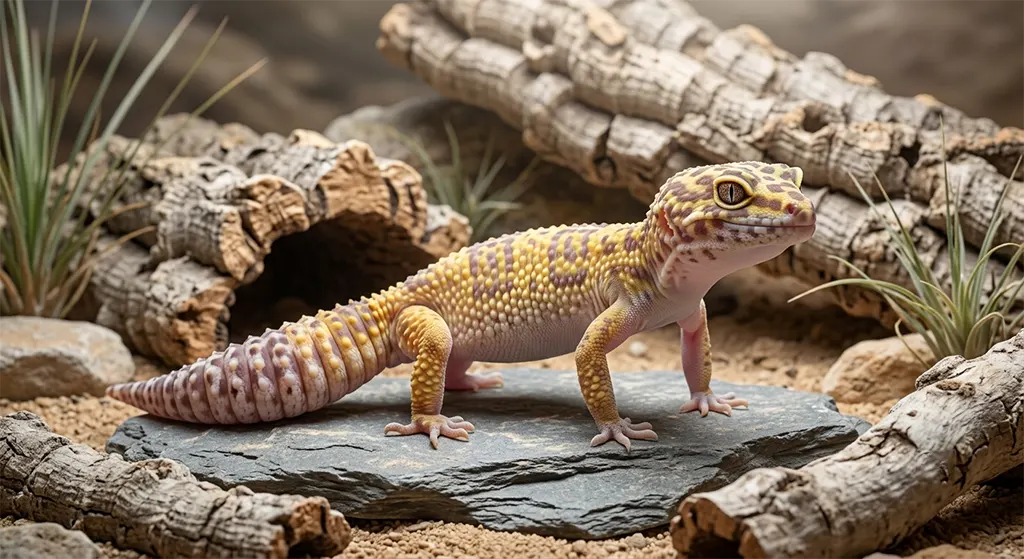
The feeding schedule isn’t a rigid prescription—it’s a framework for observation. Your Leopard gecko’s actual appetite, body condition, and behavior tell you more than any generic feeding chart.
Healthy Leopard geckos hunt enthusiastically. They maintain appropriate body condition. They defecate regularly and shed completely.
For health concerns, consult a reptile-specialist veterinarian.
This content is for educational purposes only and does not substitute professional veterinary diagnosis or treatment. If you observe any symptoms of illness, injury, or abnormal behavior, please consult a qualified exotic animal veterinarian immediately.
For more details, please review our full Medical Disclaimer.
Pingback: Why Is My Leopard Gecko Not Eating? Hidden Causes Beyond Temperature & Calcium