
First — Take a Breath
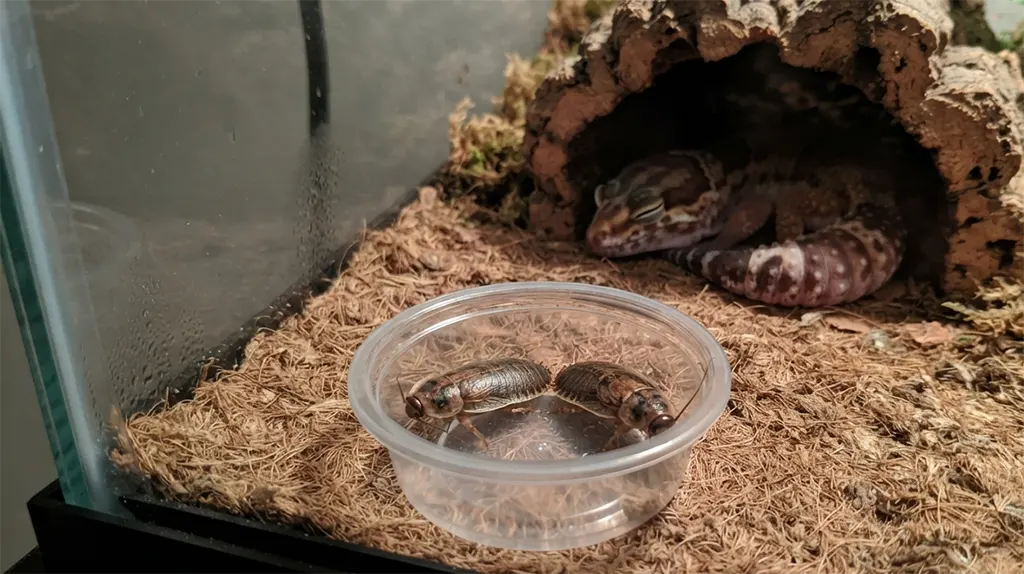
Your African Fat-Tailed Gecko isn’t eating. You’ve probably been staring at that food dish, refreshing the tank, wondering if something is seriously wrong.
Here’s what I need you to hear before anything else: this is almost always an environment problem, not a health problem.
I know that sounds too simple. When I first got into keeping these geckos, I had one go off food for nine days and I was already Googling “how long can a gecko go without food before dying” at 2 AM. Turned out my hot spot had drifted down to 74°F because the heat mat controller failed. Fixed the controller, gecko ate the next night. Nine days of panic over a $12 thermostat.
So before you do anything drastic — before you try force-feeding, before you hand-feed, before you dump supplements into their water — let’s walk through this systematically. African Fat-Tailed Geckos are tough little animals. They don’t just stop eating for no reason, and the reason is usually something you can see and fix.
This guide is the exact checklist I wish I had during those first panicky months. We’ll walk through every common reason your gecko isn’t eating — from the most boring environment fixes to the ones that actually need a vet. And if you’re wondering what to do if gecko won’t eat after checking everything, we’ve got that covered too.
Step 1: Check Your Environment First — The Boring Stuff That Fixes 80% of Problems
When you’re dealing with an African Fat-Tailed Gecko that won’t eat, the environment is your starting point. Every single time. No exceptions. These geckos are desert-edge animals from West Africa. They’re adapted to specific care parameters for African fat-tailed geckos, and when those parameters drift even a few degrees, they’ll shut down their appetite as a stress response.
Temperature — The Number One Reason Geckos Stop Eating
Target parameters:
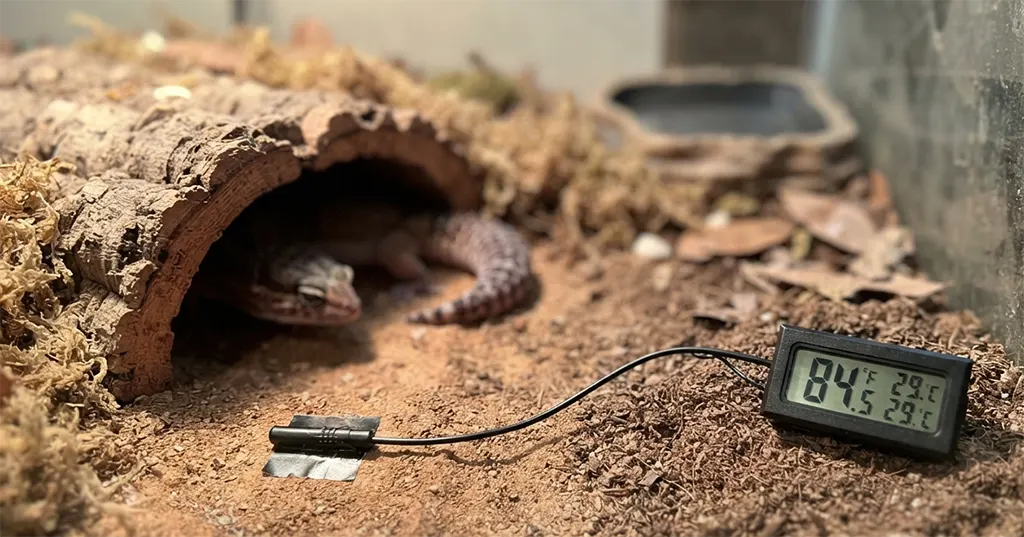
- Hot spot (basking area surface temp): 82-86°F (28-30°C)
- Cool side ambient: 72-77°F (22-25°C)
- Nighttime drop: 68-72°F (20-22°C) is fine
The reptile temperature gradient matters enormously for these geckos. They’re ectotherms — they need external heat to digest food. If the hot spot is too cool, they physically can’t process what they eat, so they stop trying. It’s not a choice. Their bodies just say “nope.”
What to check:
- Is your heat mat or ceramic heat emitter actually working? Don’t trust the dial — use a digital thermometer with a probe placed directly on the hot spot surface
- Is the heat mat plugged into a thermostat? If not, it’s probably overheating or underheating and you don’t know it
If unsure, see our California-tested leopard gecko thermostat picks — they work for African fat-tails too.
My embarrassing temperature story:
I kept my first fat-tail on a heat mat with no thermostat for about three months. The gecko was eating occasionally but losing weight slowly. I kept thinking “maybe he’s just a slow grower.” One day I touched the substrate under the heat mat out of curiosity and nearly burned my finger. The mat was running at 105°F on the surface. No thermostat. Just raw heat pumping into a small enclosure for 90 days straight. The gecko wasn’t eating because it was basically sitting on a griddle. I felt terrible. Bought a thermostat that day, and the gecko was eating normally within a week.
Substrate temperature is only part of the problem — the substrate itself can be swallowed and cause impaction. If you keep a knob-tail gecko, see our guide on knob-tail gecko substrate impaction for the drainage paradox.
Humidity — The Silent Appetite Killer
Target range: 50%-70%
This is where people get tripped up because African Fat-Tailed Geckos are burrowers. They naturally dig into substrate and create humid microclimates for themselves. That’s great in the wild. In a captive setup, it means things can go wrong in two directions:
Too dry (below 50%): Geckos get dehydrated. Dehydrated geckos don’t eat. Simple as that.
Too wet (above 80%, sustained): Here’s the thing nobody talks about. If your humidity stays above 80% for extended periods without adequate airflow, your gecko can develop respiratory irritation. Not a dramatic illness — just a low-grade irritation that makes them feel sluggish and uninterested in food. I’ve seen this happen to experienced keepers who figured “more humid must be better for a tropical-ish species.” It’s not.
What to check:
- Hygrometer at the cool end (not the hot end — that reading is skewed by the heat mat)
- Substrate moisture — press your finger in. It should feel slightly cool but never wet or spongy
- Ventilation — is there cross-airflow? A fully sealed tank with no ventilation is a humidity trap
The humidity mess I made:
Early in my keeping days, I read that these geckos came from humid environments and I went overboard. I soaked the substrate, misted daily, used a solid lid with zero ventilation. Humidity was sitting at 85-90%. My gecko was lethargic, not eating well, and I thought “oh no, something is wrong.” Turns out I’d basically created a swamp. I didn’t know then that sustained high humidity without airflow causes breathing issues in these geckos. Switched to a screen lid half, kept substrate damp but not soaked, humidity dropped to 60%, and the gecko bounced back. To this day I’m not sure if it was the humidity drop or just the improved airflow that fixed things — probably both, but I genuinely can’t say which mattered more.
Lighting — Simple But Often Wrong
African Fat-Tailed Geckos are nocturnal. They don’t need UVB lighting. This isn’t debatable — it’s well-established in the keeper community. But here’s where people overcomplicate things:
What they actually need:
- A consistent day/night cycle (12 hours light, 12 hours dark — or just match your room schedule)
- No bright, direct lighting hitting the enclosure. A softly lit room is plenty
What they don’t need:
- UVB bulbs (unless specifically recommended by a vet for a particular health situation)
- Basking spot lights (the heat mat handles warmth; these geckos don’t bask like bearded dragons)
I once left a UVB bulb on over my fat-tail’s tank for weeks because it was in a “reptile rack” that had a UVB strip for the bearded dragon enclosure next door. The fat-tail spent most of its time buried under the substrate during the day. I assumed that was normal burrowing behavior. It might have been. Or it might have been hiding from the UVB it didn’t need. I took the UVB off and honestly couldn’t tell any difference — but I also couldn’t tell if the gecko was more comfortable. Better to just not add unnecessary stress.
Hides and Security — Feeling Safe Enough to Eat
Your gecko needs at least two hides: one on the warm side, one on the cool side. African Fat-Tailed Geckos are shy. If they don’t feel secure, they won’t eat. Period.
Quick hide checklist:
- At least one hide should be snug-fitting. These geckos like to feel “hugged” by their hiding spot. If the hide is too big, they won’t use it
- The warm-side hide should have some moisture retained underneath it — this is where they’ll go to shed properly
- Avoid transparent or semi-transparent hides. They need darkness to feel safe
If you are unsure whether your current setup matches your gecko’s specific needs, you can use our Environment Parameter Calculator to instantly check the required temperature and humidity ranges for your gecko’s specific life stage and prevent stress-related appetite loss.
Step 2: Check the Food — Maybe It’s Not You, It’s the Crickets
If your environment checks out and the gecko still won’t eat, the next thing to look at is what you’re offering and how you’re offering it.
Feeding Frequency and Portion Size
Fat-tailed gecko feeding frequency for adults: Every 2-3 days, offering 2-3 appropriately sized insects per feeding.
For juveniles (under 6 months): Daily feeding with 1-2 small insects.
“What appropriately sized” means: no wider than the space between the gecko’s eyes. That’s the standard rule.
Common Feeding Mistakes
1. Crickets that are too large
This is probably the most common reason a gecko won’t eat in a setup where everything else looks fine. I’ve watched geckos stare at crickets twice their head size and just… not care. They’re not being stubborn. They literally can’t catch or subdue prey that big.
2. Dead or dying feeder insects
African Fat-Tailed Geckos are ambush predators. They track movement. A cricket that’s sitting still or dying isn’t triggering the hunt response. Make sure your feeders are active and healthy when you put them in the tank.
3. Wrong feeder types
These geckos aren’t as aggressive as leopard geckos. Some won’t touch mealworms. Some prefer dubia roaches over crickets. Some will only eat hornworms. It varies by individual.
The feeder type discovery that took me forever:
I spent about two months wondering why my gecko wouldn’t eat. Offered crickets every other day, left them in for hours, gecko ignored them. I thought something was wrong with the gecko. Turned out the gecko just didn’t want crickets. I tried a dubia roach one day on a whim — gecko nailed it in two seconds. Tried another cricket the next day — nothing. Tried another roach — gone in a flash. The gecko wanted roaches, not crickets. Two months of worry over a preference I could have tested in a week.
Now I offer a variety: dubia roaches as the staple, with occasional crickets, hornworms, and waxworms (treats only — too fatty for regular feeding).
4. Feeding time mismatch
These geckos are nocturnal. If you’re feeding them at noon and wondering why they’re not eating, try feeding at dusk or after lights-off. You might be surprised how differently they respond.
Gut-Loading and Dusting
This isn’t why your gecko isn’t eating, but it matters for long-term health:
- Gut-load feeder insects for 24 hours before offering them
- Dust with calcium powder (no D3) at every feeding for juveniles, 2-3 times per week for adults
- Dust with a multivitamin supplement once per week
Step 3: What to Watch For — Observing Your Gecko Without Playing Vet
I’m not going to tell you how to diagnose your gecko. That’s not my job and it’s not yours. What I can do is teach you what to look at and what those observations might mean — so you can give your vet useful information when the time comes.
The Tail Base Test
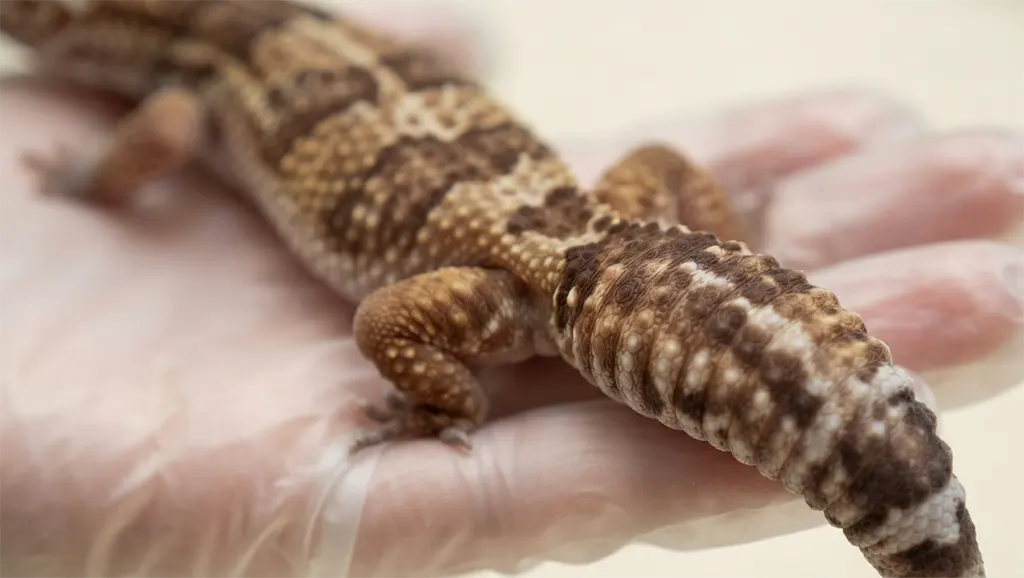
This is the single most useful visual check you can do on a fat-tailed gecko. Their tails are fat storage organs. A healthy, well-fed gecko has a tail that’s at least as wide at the base as its body — ideally wider.
What to check:
- Look at where the tail meets the body. Is it plump and rounded? Good.
- Is it noticeably thinner than the body? That’s a sign of weight loss or insufficient feeding over time.
- Is it wrinkled or shrunken? That’s more serious — the gecko is burning through its fat reserves.
A note on normal variation: Some geckos naturally have thinner tails than others. Breed lines vary. If your gecko has always had a slim tail and is otherwise active and eating, it’s probably fine. You’re looking for changes, not absolute measurements.
Mouth Check
Look inside your gecko’s mouth when it opens to eat (or when it yawns — they do that). You’re checking for:
- Redness or swelling around the mouth — what keepers commonly call mouth rot or mouth inflammation. This isn’t something you treat at home. Note it and call a vet.
- Tongue movement — the tongue should move freely. Any stiffness or discoloration is worth mentioning to your vet.
- Food debris or discharge — anything lingering around the jawline isn’t normal.
Shed Quality
How well your gecko sheds tells you a lot about overall health:
- A clean, complete shed in one piece? Your gecko is healthy and hydrated.
- Stuck shed on toes, tail tip, or around the eyes? That’s a sign of chronic low humidity or dehydration. It can also mean the warm hide isn’t humid enough.
- Repeated partial sheds over multiple cycles? Something in your husbandry is off. Check humidity first, then temperatures.
The shed thing I overcomplicated:
I had a gecko that kept getting stuck shed on its toes. I bought every shed-in-a-box product on the market, started doing humidity boxes, soaked the gecko in warm water — the whole overcomplicated routine. My vet at the time looked at me like I was nuts and said “your warm hide has no moisture in it. Put a piece of damp sphagnum moss under the warm hide and move on with your life.” That was it. Fixed the problem. All those humidity boxes and soaking sessions were solving a problem I’d already over-engineered past the solution.
Step 4: When to See a Vet — Red Lines and Timelines
Here’s where I need to be straight with you. Most of the time, an African Fat-Tailed Gecko not eating is fixable at home by correcting the environment. But not always. And knowing when to stop troubleshooting and start calling a vet is important.
How Long Can a Gecko Go Without Food?
Adult fat-tailed geckos (healthy weight, good tail): Up to 2-3 weeks without food is survivable, but this doesn’t mean you should wait that long. These animals have fat reserves in their tails specifically for lean periods, but those reserves aren’t infinite.
Juveniles and sub-adults: Much shorter window. A juvenile under 6 months old going more than 5-7 days without food should be seen by a vet. They don’t have the fat reserves that adults do.
Gravid females: Female geckos also routinely refuse food 1–2 weeks before laying. If your gravid female lays a dehydrated or shriveled clutch, learn how to rescue dented gecko eggs during incubation.
The general rule:
- 1-3 days off food: Normal. Check environment, don’t panic.
- 4-7 days: Start checking everything systematically. Verify all parameters with tools (thermometer, hygrometer). Try different feeders.
- 7-14 days (adult): See a vet if environment is confirmed correct and gecko is still refusing food.
- Any time + visible weight loss (tail thinning): See a vet regardless of how many days it’s been.
- Any time + juvenile + 5+ days: See a vet.
Red Flag Signs — Go to the Vet Now
Don’t wait and don’t try to home-treat any of these:
- Mouth inflammation or redness — open mouth, red or swollen jaw, discharge. This is what keepers call mouth rot and it needs professional attention.
- Severe stuck shed covering large body areas — especially if it’s constricting toes or tail circulation. Don’t try to peel it off yourself.
- Lethargy combined with not eating — gecko is listless, not moving, not responding to handling. This isn’t the same as a gecko resting in its hide. This is a gecko that’s unresponsive.
- Visible weight loss — tail significantly thinner than normal, spine becoming visible.
- Discharge from nose or mouth — any fluid, bubbling, or crusting around the nostrils or jawline.
- Swelling anywhere on the body — unusual bumps, puffy areas, or asymmetry.
The vet visit I waited too long to make:
I had a gecko that stopped eating and I spent two weeks checking every parameter, trying every feeder, adjusting humidity up and down. Everything looked fine on paper. But the gecko kept getting thinner. I should have gone to a vet on day five. I didn’t — partly because I was stubborn, partly because I was convinced I was missing something obvious. The vet found an internal issue that had nothing to do with husbandry. Two weeks of waiting didn’t help the gecko, and it probably made things harder to fix. If your gut says something is wrong after a few days of troubleshooting, go. Don’t be like me.
Finding the Right Vet
Not all vets see reptiles. You need an ARAV-certified exotic animal veterinarian — these are vets who’ve specifically certified in reptile and amphibian medicine.
How to find one:
- Check the ARAV directory online
- Ask in local reptile keeper groups
- Call exotic animal clinics and specifically ask if they see geckos
Don’t go to a standard cat-and-dog vet and expect them to know reptile medicine. They might be wonderful vets, but reptile physiology is a different specialty entirely.
Step 5: Quick-Reference Checklist
Use this table as a walkthrough whenever your gecko goes off food:
| Check | What to Look For | Target Range |
|---|---|---|
| Hot spot temperature | Digital thermometer on surface | 82-86°F (28-30°C) |
| Cool side temperature | Ambient air temp | 72-77°F (22-25°C) |
| Humidity | Hygrometer at cool end | 50-70% |
| Ventilation | Cross-airflow, not sealed | Partial screen lid minimum |
| Hide availability | Two hides minimum, snug fit | Warm side + cool side |
| Warm hide humidity | Damp moss or substrate | Slightly moist, not wet |
| Feeder size | No wider than eye spacing | Matched to gecko size |
| Feeder type | Variety offered | Dubia roaches, crickets, hornworms |
| Feeding time | Dusk or after dark | Nocturnal schedule |
| Tail base width | Visual check, compare to body | As wide or wider than body |
| Mouth condition | Open mouth check | No redness, swelling, or discharge |
| Shed quality | Post-shed check | Clean, complete, no stuck areas |
| Activity level | General observation | Active during evening hours |
| Duration of not eating | Count from last confirmed feeding | See timeline in Step 4 |
Frequently Asked Questions
How long can an African Fat-Tailed Gecko go without food before dying?
Healthy adults can survive 2-3 weeks without food thanks to fat stored in their tails. However, you should seek veterinary help if an adult hasn’t eaten in 7-14 days. Juveniles under 6 months need attention after 5-7 days without food.
What are the most common gecko not eating reasons for African Fat-Tailed Geckos?
The top reasons are incorrect temperature (hot spot too cool or too hot), humidity that’s too high or too low, stress from improper hides, feeders that are too large, and simply not being a nocturnal feeder — offering food during daytime hours.
What should I do first if my fat-tailed gecko won’t eat?
Check your reptile temperature gradient first. Use a digital thermometer to verify the hot spot is 82-86°F and the cool side is 72-77°F. Then check humidity (50-70%), verify hides are in place, and try offering food at dusk. Most issues resolve with these corrections.
What is the correct fat-tailed gecko feeding frequency?
Adults should be fed every 2-3 days with 2-3 appropriately sized insects. Juveniles under 6 months should be fed daily. Always gut-load feeders and dust with calcium.
Can stress cause an African Fat-Tailed Gecko not to eat?
Absolutely. New tank, new tank mates, loud environment, excessive handling, or changes in routine can all cause temporary appetite loss. Give the gecko time to settle and make sure the enclosure feels secure with proper hides.
Do African Fat-Tailed Geckos need UVB lighting?
No. They’re nocturnal and don’t require UVB for health. A consistent 12-hour light/dark cycle in a dimly lit room is sufficient. Avoid bright direct lighting on the enclosure.
The Bottom Line
An African Fat-Tailed Gecko that won’t eat is stressful. I’ve been there, probably more times than I’d like to admit. But the vast majority of these situations are environment fixes, not emergencies.
Go through the checklist. Check temperatures with real tools — not the dial on your heat mat. Check humidity with a hygrometer — not by feel. Try different feeders at different times. Give it a few days.
If nothing works after a week, or if you see any of the red flag signs, find an ARAV-certified exotic animal veterinarian. There’s no shame in getting help. These geckos are worth it.
And honestly? Half the time you’ll fix the problem, feel relieved, and then a month later make the same mistake again. I know I have. Keeping reptiles is a learning process, not a destination.
For health concerns, consult an ARAV-certified exotic animal veterinarian.
This content is for educational purposes only and does not substitute professional veterinary diagnosis or treatment. If you observe any symptoms of illness, injury, or abnormal behavior, please consult a qualified exotic animal veterinarian immediately.
For more details, please review our full Medical Disclaimer.